A Beginner's Guide to Stainless Steel Service Sinks: Types and Applications
Hi there! I'm excited to share my knowledge about a super important, yet often overlooked, piece of equipment: the stainless steel service sink. In the demanding environments of commercial and industrial facilities, these fixtures are the unsung heroes, tirelessly supporting daily operations. They are more than just a place to dump water; they are a cornerstone of hygiene, efficiency, and safety.
In this guide, I'll walk you through everything a beginner needs to know about these versatile fixtures. We will explore their different types, their most effective applications, and why selecting the right one is absolutely essential for maintaining a clean and productive workspace. Whether you're outfitting a new restaurant, managing a healthcare facility, or setting up a workshop, understanding the nuances of a service sink will empower you to make an informed decision that pays dividends for years to come.
Key Takeaways
For those in a hurry, here are the essential points to remember from this guide:
- Definition and Purpose: A stainless steel service sink, also known as a utility or mop sink, is a heavy-duty basin designed for tasks that a standard sink cannot handle. Its primary functions include filling and emptying mop buckets, cleaning bulky equipment, and disposing of non-hazardous liquids, making it indispensable for janitorial and maintenance work.
- Main Types: Service sinks primarily come in three configurations. Freestanding models offer placement versatility and easy installation. Wall-mounted units save valuable floor space and simplify cleaning underneath. Specialized sinks, such as floor-level mop sinks and multi-compartment units, are designed for specific, intensive tasks like sanitation protocols.
- Sizing is Critical: The dimensions of a service sink directly impact workflow efficiency and safety. A sink that is too small can lead to splashing, water damage, and difficulty cleaning large items, while an appropriately sized sink improves productivity and hygiene.
- Why Stainless Steel?: Stainless steel is the preferred material for service sinks due to its exceptional durability (resistance to rust, corrosion, and impact), hygiene (non-porous and easy to sanitize), and long-term cost-effectiveness. Brands like Samsink specialize in high-quality stainless steel fixtures that offer a superior return on investment.
- Wide Range of Applications: These sinks are vital in numerous industries, including foodservice, healthcare, education, manufacturing, and hospitality. They support cleaning protocols, ensure sanitary conditions, and streamline maintenance operations across the board.
- Proper Maintenance: Regular cleaning with mild soap and water, avoiding harsh chemicals and abrasive pads, and promptly rinsing and drying the surface are key to preserving the sink's appearance and longevity.
What Exactly Is a Stainless Steel Service Sink and Why Do We Need One?
At its core, a stainless steel service sink—also known as a utility sink, janitorial sink, or mop sink—is a large, deep basin engineered for heavy-duty cleaning tasks that are simply too demanding for a standard kitchen or restroom sink. Unlike their residential counterparts, these sinks are the designated workhorses in commercial, industrial, and institutional settings. Their entire design philosophy centers on durability, functionality, and hygiene.
The primary role of a service sink is to handle the "dirty work" of a facility. This includes filling and emptying large mop buckets, rinsing off cleaning equipment, washing bulky items like floor mats or large pots, and safely disposing of non-hazardous liquid waste. In virtually all commercial facilities, especially in foodservice, health codes mandate the presence of at least one utility sink to be used exclusively for janitorial purposes, strictly separated from any food preparation or hand-washing areas to prevent cross-contamination.
My Experience with Essential Utility Fixtures
Throughout my career advising facilities on operational efficiency, I've seen firsthand how a well-chosen utility sink can streamline a workflow, while a poor choice can create constant headaches. I recall a bustling restaurant that tried to save space by forgoing a dedicated service sink. Their staff were forced to empty dirty mop buckets in a food-prep sink after hours—a major health code violation and a logistical nightmare that increased labor time and risked the health of their patrons. Conversely, a school I worked with installed several appropriately sized, freestanding stainless steel service sinks from a quality brand like Samsink in their janitorial closets. The result was a dramatic improvement in cleaning efficiency, better-protected floors and walls from splashes, and a janitorial staff that could perform their duties more safely and effectively. These experiences solidified my belief that the utility sink is not an afterthought but a critical piece of infrastructure.
The Underrated Workhorse: Essential Functions of Stainless Steel Service Sinks
The value of a stainless steel service sink is defined by its versatile and essential functions. They are built to withstand the rigors of daily, heavy use in demanding environments.
Here are some of their core functions:
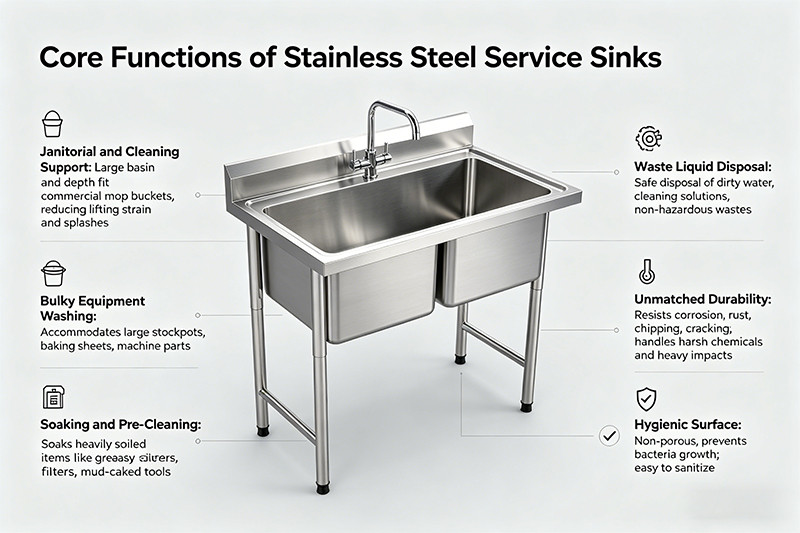
- Janitorial and Cleaning Support: This is their most recognized role. The large basin and significant depth are specifically designed to accommodate commercial mop buckets, reducing the strain of lifting and minimizing messy splashes.
- Bulky Equipment Washing: From large stockpots and baking sheets in a commercial kitchen to machine parts in a workshop, service sinks provide the necessary space and durability for cleaning items that would be impossible to handle in a smaller sink.
- Waste Liquid Disposal: They provide a safe and appropriate place for disposing of dirty water, used cleaning solutions, and other non-hazardous liquid wastes, keeping other sinks sanitary.
- Soaking and Pre-Cleaning: In many settings, these sinks are used for soaking heavily soiled items, such as greasy filters or mud-caked tools, before a more thorough cleaning.
- Unmatched Durability: Stainless steel is the material of choice for good reason. It is resistant to corrosion, rust, chipping, and cracking. This makes it ideal for handling harsh cleaning chemicals and the inevitable impacts from heavy equipment.
- Hygienic Surface: The non-porous nature of stainless steel prevents bacteria from harboring and growing, which is a critical feature in environments like hospitals and restaurants. It can be easily and effectively sanitized to meet strict health standards.
In short, the stainless steel service sink is a fundamental component of a facility's operational and sanitation plan. It centralizes messy tasks, protects other fixtures, and provides a durable, long-lasting solution for the toughest cleaning jobs.
Exploring the Different Types of Stainless Steel Service Sinks
Stainless steel service sinks are not a one-size-fits-all solution. They come in various types and configurations, each designed to meet specific needs related to space, function, and workflow. Understanding these differences is key to selecting the right fixture that will serve your facility reliably for years.
Freestanding Stainless Steel Service Sinks: Versatility and Placement
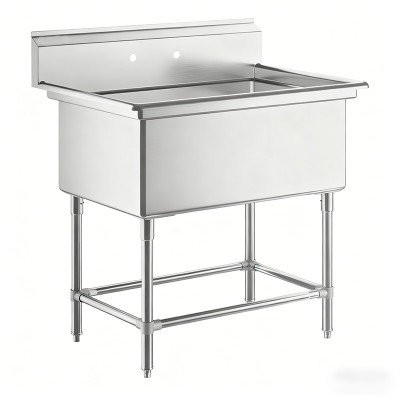
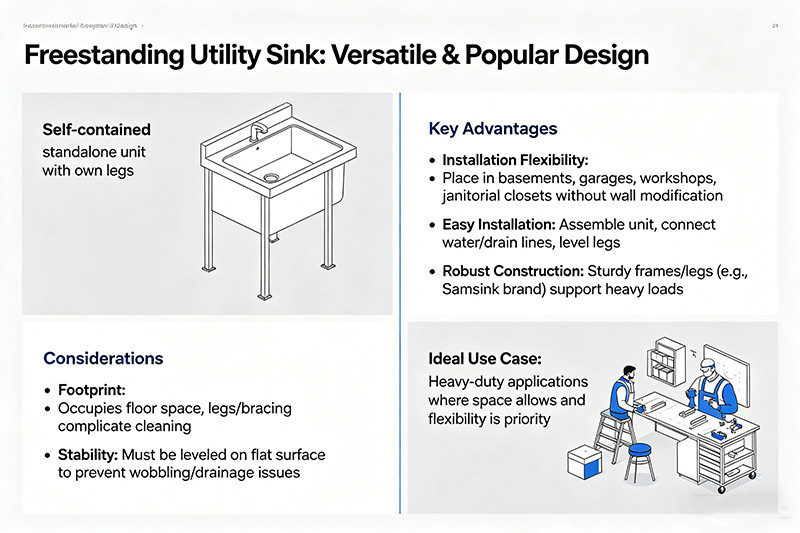
A freestanding utility sink is a self-contained, standalone unit supported by its own legs. This design is perhaps the most versatile and popular, offering unparalleled flexibility in placement. Because it doesn't require wall reinforcement or custom cabinetry for support, it can be installed anywhere there is access to plumbing.
Advantages:
- Installation Flexibility: This is their biggest selling point. You can place them in basements, garages, workshops, or janitorial closets without needing to modify wall structures.
- Easy Installation: The process is generally straightforward: assemble the unit, connect the water and drain lines, and level the legs.
- Robust Construction: Freestanding models, especially high-quality ones from brands like Samsink, are built with sturdy frames and legs designed to support the weight of a large basin filled with water and heavy equipment.
Considerations:
- Footprint: They occupy floor space, which can be a drawback in smaller, cramped areas. The legs and bracing can also make cleaning the floor around and underneath the sink more challenging.
- Stability: Ensure the sink is properly leveled on a flat surface to prevent wobbling and ensure proper drainage.
Freestanding sinks are the go-to choice for most heavy-duty applications where space allows and flexibility is a priority.
Wall-Mounted Stainless Steel Service Sinks: Maximizing Space and Cleanliness
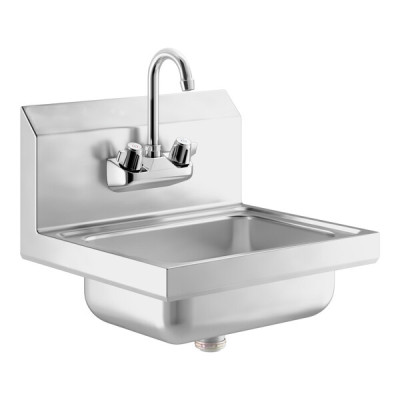
As the name implies, a wall-mounted service sink is attached directly to the wall with heavy-duty brackets. This design is the ultimate space-saver, making it an excellent choice for smaller rooms or high-traffic corridors where maximizing floor space is critical.
Advantages:
- Space Efficiency: By lifting the sink off the ground, you create open floor space underneath. This can be used for storage or simply to make the area feel larger and less cluttered.
- Ease of Cleaning: The open space beneath the sink makes it incredibly easy to sweep and mop the floor, preventing the buildup of dirt and grime that can occur around the legs of a freestanding unit. This is a significant hygienic advantage.
- Sleek, Unobstructed Look: These sinks offer a clean, integrated appearance that can be desirable in more visible or modern-looking utility areas.
Considerations:
- Wall Structure: This is the most critical factor. The wall must be strong enough to support the substantial weight of the sink, especially when filled with water. Reinforcement within the wall is often necessary, making installation more complex and costly.
- Weight Limitation: They may not be suitable for the absolute heaviest-duty tasks compared to a robust floor-supported model.
- Exposed Plumbing: The water supply lines and drain P-trap are typically visible, which might be a cosmetic issue for some.
Wall-mounted sinks are ideal for facilities where floor space is at a premium and a clean, hygienic environment is paramount.
Specialized Stainless Steel Service Sinks: Mop Sinks and Multi-Compartment Units
Beyond the two primary mounting styles, there are specialized service sinks tailored for very specific functions.
Mop Sinks (Floor-Mounted) Often called floor basins, these are designed specifically for janitorial staff. They are typically low to the ground or even recessed into the floor, eliminating the need to lift heavy, sloshing mop buckets. This design greatly reduces physical strain and the risk of spills and injuries. They are almost always found in dedicated janitorial closets or maintenance areas.
Multi-Compartment Sinks While most service sinks have a single large basin, multi-compartment stainless steel units are essential in certain environments, particularly commercial kitchens.
- Two-Compartment Sinks: These allow for multitasking, such as soaking items in one basin while rinsing in another.
- Three-Compartment Sinks: This is the industry standard for manual dishwashing in foodservice, facilitating the mandatory wash, rinse, and sanitize process required by health codes.
- Four-Compartment Sinks: These offer an additional basin for pre-soaking or other dedicated tasks.
The table below summarizes the key differences between these common utility sink types:
| Sink Type | Primary Advantage | Best For | Key Consideration |
|---|---|---|---|
| Freestanding | Placement versatility, easy installation. | Garages, workshops, large janitorial closets, areas without strong wall support. | Takes up floor space; cleaning around legs can be cumbersome. |
| Wall-Mounted | Saves floor space, easy to clean underneath. | Small rooms, corridors, healthcare settings, modern utility areas. | Requires strong wall reinforcement; complex installation. |
| Mop Sink (Floor) | Eliminates lifting heavy buckets, reduces strain and spills. | Dedicated janitorial closets in any commercial or industrial building. | Highly specialized; not suitable for general utility tasks. |
| Multi-Compartment | Facilitates specific workflows like wash-rinse-sanitize. | Commercial kitchens, laboratories, food processing plants. | Requires more space and plumbing than single-basin units. |
The Critical Role of Right-Sizing Your Stainless Steel Service Sink for Efficiency
Selecting a service sink isn't just about picking a type; the physical dimensions—width, length, and particularly depth—are critically important. Choosing the wrong size can lead to daily frustration, reduced productivity, and even safety hazards. In contrast, a correctly sized sink acts as a force multiplier for your facility's cleaning and maintenance operations. It's an investment in a smoother, more efficient workflow.
Why Sink Size Matters for Optimal Cleaning Performance and Splash Reduction
The dimensions of your service sink directly influence its utility and the cleanliness of the surrounding area. Here’s why size is a paramount consideration:
- Accommodating Equipment: The most basic function of a service sink is to handle items that regular sinks can't. This primarily includes large commercial mop buckets. The sink must be wide and long enough for a bucket to be placed inside it completely, allowing it to be filled and emptied without awkward tilting or maneuvering. The same principle applies to washing large pots, pans, equipment parts, or floor grates.
- Preventing Splashes and Spills: A sink that is too shallow is a recipe for disaster. When filling a deep bucket or rinsing a large, soiled item under a high-pressure faucet, a shallow basin will inevitably lead to water splashing onto the floor and walls. A deep sink basin, typically 10 to 14 inches or more, effectively contains this water, keeping the area dry, safe, and hygienic.
- Improving Workflow: An appropriately sized sink streamlines tasks. Staff can work more quickly and confidently, knowing they have adequate space without needing to be overly cautious about making a mess. This improves overall productivity, whether in a restaurant kitchen at closing time or during routine maintenance in a hospital.
Common Pitfalls: How Incorrect Stainless Steel Service Sink Dimensions Hinder Operations
An undersized service sink is more than an inconvenience; it can actively disrupt and degrade your facility's operations. The problems created by a sink that's too small or too shallow are numerous and significant.
Here are some of the most common pitfalls:
- Increased Slip and Fall Hazards: Constant splashing creates puddles on the floor, posing a serious slip hazard for employees. This is a major liability and safety concern in any commercial environment.
- Water Damage: Over time, consistent splashing can damage surrounding walls, flooring, and cabinetry. This can lead to mold growth, wood rot, and costly repairs that far exceed any initial savings on a smaller sink.
- Reduced Cleaning Effectiveness: When staff struggle to fit items into the sink, they may not be cleaned as thoroughly. Trying to wash a large pot in a small basin often means only parts of it get properly submerged and scrubbed.
- Employee Strain and Inefficiency: Forcing staff to lift and awkwardly tilt heavy, full mop buckets to empty them into a small sink increases the risk of back strain and injury. The task also takes longer and requires more effort, reducing overall labor efficiency.
- Cross-Contamination Risks: In desperation, employees might resort to using other, more adequately sized sinks (like a food prep sink) for janitorial tasks, creating a serious risk of cross-contamination and health code violations.
Boosting Facility Management: The Advantages of a Properly Sized Stainless Steel Service Sink
Investing in a generously and correctly sized service sink provides immediate and long-term benefits that extend across the entire facility. It is a strategic decision that enhances efficiency, safety, and hygiene.
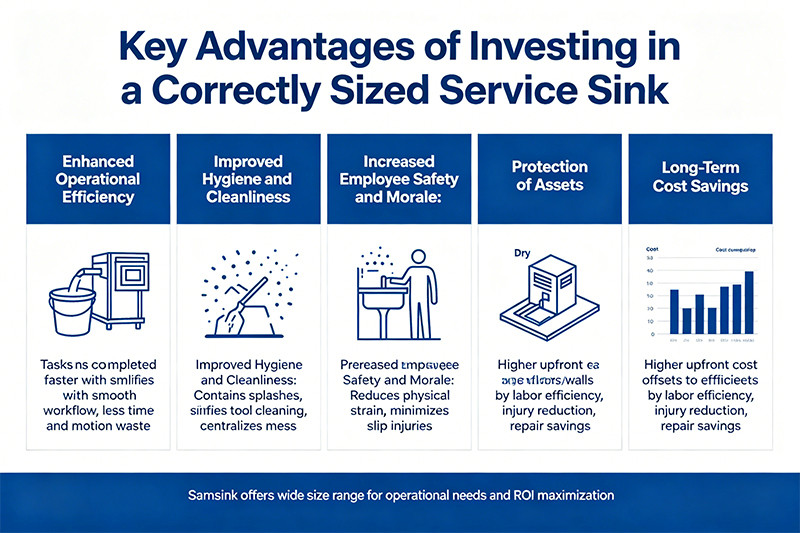
Key Advantages:
- Enhanced Operational Efficiency: With the right sink, tasks are completed faster and more effectively. The smooth flow from filling a bucket to cleaning equipment without struggling with space constraints means less wasted time and motion. This allows your staff to move on to other important duties more quickly.
- Improved Hygiene and Cleanliness: By containing splashes and simplifying the cleaning process for janitorial tools, a large, deep sink directly contributes to a cleaner and more sanitary facility. It centralizes the mess, making it easier to manage and control.
- Increased Employee Safety and Morale: Providing the right tools for the job shows a commitment to employee well-being. A properly sized sink reduces physical strain and minimizes the risk of slip-related injuries, leading to a safer and more positive work environment.
- Protection of Assets: Preventing water damage to floors and walls protects your facility's infrastructure and saves significant money on future repairs. A dry floor is also crucial in areas with sensitive equipment.
- Long-Term Cost Savings: While a larger sink may have a higher upfront cost, it pays for itself over time through increased labor efficiency, reduced risk of injury-related costs, and savings on building repairs. Quality manufacturers like Samsink offer a wide range of sizes, ensuring you can find the perfect dimensions to fit your specific operational needs and maximize your return on investment.
Ultimately, taking the time to measure your space and consider the specific items you'll be cleaning is a critical step. Don't underestimate the impact that a few extra inches in width or depth can have on the daily functionality of your workspace.
Key Applications and Unbeatable Benefits of Stainless Steel Service Sinks
The versatility and inherent advantages of stainless steel make it the premier material for service sinks across a multitude of industries. Its unique combination of strength, hygiene, and long-term value is nearly impossible to match, making it a fixture in any professional environment where cleanliness and durability are non-negotiable.
Where You'll Find Stainless Steel Service Sinks: Ideal Settings and Industries
The application for a heavy-duty stainless steel service sink is extensive. You will find these indispensable fixtures in any setting that involves rigorous cleaning and maintenance.
- Foodservice and Hospitality: This is perhaps the most common application. In restaurants, hotels, and catering kitchens, service sinks are legally mandated for janitorial tasks to prevent cross-contamination with food prep areas. They are used for washing large pots and pans that don't fit in dishwashers, as well as for all floor cleaning duties.
- Healthcare and Laboratories: Hospitals, clinics, and research labs rely on the hygienic properties of stainless steel. The non-porous surface is easy to sterilize, which is critical for preventing the spread of pathogens. Service sinks in these environments are used for cleaning medical equipment, janitorial tasks, and safe disposal of certain liquid wastes.
- Educational Institutions: Schools, from elementary to university level, use service sinks in janitorial closets, art classrooms, and science labs. They stand up to the heavy use and occasional abuse that comes with a school environment—perfect for cleaning up art supplies, lab equipment, and daily maintenance.
- Manufacturing and Industrial Workshops: Factories, garages, and workshops need sinks that can handle grease, chemicals, and heavy tools. A durable stainless steel sink is perfect for washing parts, cleaning equipment, and allowing workers to clean up after a shift.
- Residential and Multi-Family Buildings: Even outside of commercial settings, service sinks are incredibly useful. They are commonly found in laundry rooms, basements, and garages for tasks like hand-washing delicates, cleaning muddy boots, washing pets, or handling gardening messes.
The table below illustrates the primary uses in each key sector:
| Industry | Primary Applications |
|---|---|
| Foodservice | Mop bucket filling/emptying, pot washing, equipment cleaning, health code compliance. |
| Healthcare | Sanitizing medical tools, janitorial cleaning, waste disposal, maintaining sterile environments. |
| Education | Art supply cleanup, science lab equipment washing, general facility maintenance. |
| Manufacturing | Cleaning machine parts, washing greasy tools and hands, handling industrial fluids. |
| Residential | Laundry pre-soaking, pet washing, gardening cleanup, garage and workshop tasks. |
Durability, Hygiene, and Cost-Effectiveness: The Winning Attributes of Stainless Steel
There's a reason stainless steel is the gold standard for commercial equipment. Its material properties offer a trifecta of benefits that make it an unparalleled investment.
- Exceptional Durability: Stainless steel is incredibly tough. It is highly resistant to impacts, chipping, and cracking, which is essential for a sink that will have heavy buckets and equipment dropped into it. It also has excellent heat resistance, so hot water or even placing a hot pan in the sink won't cause damage.
- Superior Hygiene: The surface of stainless steel is non-porous, meaning it provides no microscopic crevices for bacteria, mold, or germs to hide and multiply. This makes it exceptionally easy to clean and sanitize, a critical factor for complying with health and safety standards.
- Corrosion Resistance: The chromium in stainless steel creates a passive, invisible layer that protects it from rust and corrosion when exposed to water, detergents, and most chemicals. This ensures the sink maintains its structural integrity and appearance for years.
- 304 vs. 316 Stainless Steel: Most high-quality sinks, like those from Samsink, are made from Type 304 stainless steel, which offers excellent corrosion resistance for general purposes. For environments with extreme exposure to chlorides (like coastal areas with saltwater) or harsh industrial chemicals, Type 316 stainless steel is an even better option. It contains molybdenum, an element that significantly enhances its resistance to pitting and corrosion.
- Long-Term Cost-Effectiveness: While the initial investment in a quality stainless steel sink might be higher than for a plastic or acrylic model, its longevity makes it far more cost-effective over time. A well-maintained stainless steel sink can last for decades, avoiding the need for frequent replacements and offering an excellent return on investment.
Simple Care Tips for Maintaining Your Stainless Steel Service Sink
Maintaining the look and function of your stainless steel sink is straightforward. Following a few simple rules will keep it in prime condition for its entire service life.
Daily Care:
- Rinse and Dry: After each use, rinse the sink thoroughly to remove any soap or particle residue. Wiping it dry with a soft cloth is the single best way to prevent water spots and mineral buildup.
- Use Mild Soap: For daily cleaning, all you need is a soft cloth or sponge and mild dish soap with warm water.
For Deeper Cleaning:
- Baking Soda Paste: For tougher grime or stains, create a paste of baking soda and water. Apply it with a soft cloth, scrubbing gently in the direction of the steel's grain to avoid micro-scratches. Rinse thoroughly.
- Vinegar for Hard Water: To remove hard water deposits, spray the sink with white vinegar, let it sit for a few minutes, then rinse and dry.
What to AVOID:
- Abrasive Pads: Never use steel wool, wire brushes, or abrasive scouring pads. These will scratch the surface and can compromise its protective layer, potentially leading to rust.
- Harsh Chemicals: Avoid letting cleaners containing chlorine bleach, ammonia, or other harsh chlorides sit on the sink's surface for extended periods, as they can cause pitting and corrosion. If you use a bleach-based cleaner, rinse the sink immediately and thoroughly.
- Leaving Metal Items: Don't leave wet cast iron pans, steel wool pads, or other metal objects sitting in the sink, as they can leave rust stains on the surface.
By following these simple care tips, your stainless steel service sink will remain a functional and aesthetically pleasing asset in your facility for many years.
Frequently Asked Questions (FAQs)
1. What is the difference between a service sink, a utility sink, and a mop sink?
While the terms are often used interchangeably, there can be subtle distinctions. "Utility sink" is a broad term for a large, deep basin used for heavy-duty tasks in residential or commercial settings. A "service sink" is essentially the commercial-grade version of a utility sink, built to higher durability standards. A "mop sink" is a specialized type of service sink, usually floor-mounted or with a very low basin, designed specifically for the ergonomic filling and emptying of mop buckets.
2. What is "gauge" in stainless steel sinks, and what should I look for?
Gauge refers to the thickness of the stainless steel. Counterintuitively, a lower gauge number means thicker steel. For a busy commercial or industrial environment, a 16-gauge or 18-gauge sink is highly recommended. A 16-gauge sink is the most durable option, offering the best resistance to dents and warping from heavy use. An 18-gauge sink provides a great balance of durability and affordability for most applications. Higher gauges (like 20 or 22) are thinner, less expensive, and best suited for very light-duty use, as they can dent and vibrate more easily.
3. Can I use bleach to clean my stainless steel sink?
This should be done with extreme caution, if at all. While you can use a heavily-diluted bleach solution for a quick sanitization, it should be rinsed off immediately and thoroughly. Chlorine bleach is a harsh chemical that can attack the protective chromium oxide layer of stainless steel, leading to corrosion, pitting, and discoloration over time if left to sit. For regular cleaning, it is much safer to use mild dish soap, baking soda, or specialized non-abrasive stainless steel cleaners.
4. How do I prevent scratches on my new service sink?
While high-quality stainless steel is durable, it can still be scratched. Here are a few tips to minimize scratches:
- Clean with the grain: Always scrub or wipe in the direction of the fine lines (the "grain") in the steel, not against them.
- Use soft materials: Use only soft cloths or non-abrasive sponges. Avoid steel wool or harsh scouring pads.
- Consider a sink grid: A stainless steel grid that sits on the bottom of the sink is an excellent accessory. It elevates pots and buckets, preventing them from directly scraping the sink's surface.
- Choose a brushed finish: A brushed or satin finish is much better at hiding minor scratches than a shiny or mirrored finish.
5. How difficult is it to install a freestanding service sink?
For a direct replacement where plumbing lines are already in place, installing a freestanding sink is a manageable DIY project for someone with basic plumbing knowledge. The process generally involves assembling the legs, attaching the faucet and drain assembly to the sink, positioning the sink, and then connecting the faucet to the water supply lines and the drain P-trap to the waste pipe. However, if you need to run new water lines or create a new drain connection, the job becomes much more complex, and hiring a professional plumber is strongly recommended to ensure all connections are leak-free and up to code.
Conclusion
I truly hope this guide has given you a clearer understanding of stainless steel service sinks, their diverse types, and their invaluable applications. From the space-saving efficiency of wall-mounted units to the robust versatility of freestanding models and the specialized function of mop basins, there is a solution perfectly suited for every demanding environment. We've explored why stainless steel is the champion material—offering unmatched durability, superior hygiene, and long-term value—and how choosing the right size is not a minor detail but a critical decision that impacts safety and workflow.
Making the right choice for your facility's stainless steel service sink is an investment in efficiency, hygiene, and lasting quality. Trust me, it makes a world of difference! A well-chosen sink from a reputable brand like Samsink will not only meet the rigors of daily use but will also support a safer, cleaner, and more productive operation for years to come. I encourage you to consider your specific needs carefully and invest in a fixture that will be a reliable workhorse for your team.
If you found this guide helpful, please share it with others who might benefit from this information, and feel free to leave a comment with any further questions