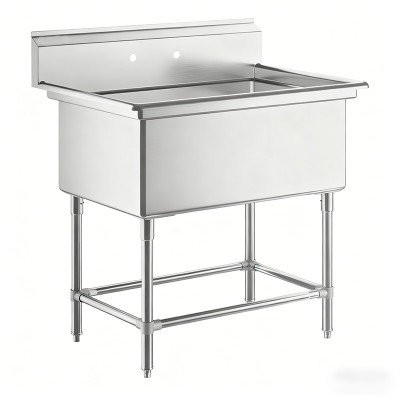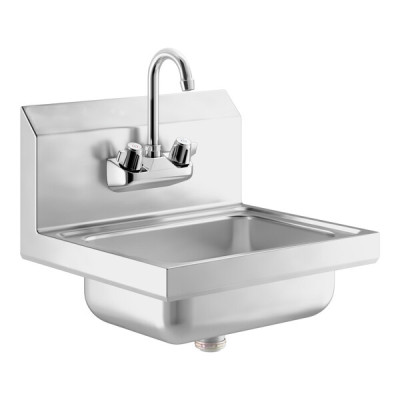
A Comprehensive Guide to Freestanding Stainless Steel Utility Sinks: Types, Features, and Maintenance
Hello there! Have you ever wondered about the workhorse behind many busy kitchens, workshops, and cleaning stations? We're talking about the trusty utility sink. These aren't your average kitchen sinks; freestanding stainless steel utility sinks are built tough for heavy-duty tasks that regular sinks just can't handle, from washing large pots to cleaning muddy tools or even giving a pet a bath. Join me as we dive into a comprehensive guide to understanding the different types, essential features, and important maintenance tips for these indispensable fixtures.
Key Takeaways
Choosing the ideal freestanding stainless steel utility sink is a crucial decision for any commercial or heavy-duty environment. The primary consideration is the number of compartments, which directly relates to your operational needs and local health code requirements. Single-compartment sinks are best for tight spaces and simple tasks, while two-compartment models offer versatility for food prep. The three-compartment sink remains the industry standard for the complete wash, rinse, and sanitize process mandated by most health departments. For high-volume operations, a four-compartment sink provides maximum flexibility.
Material and construction are equally vital. Type 304 stainless steel is the preferred material due to its excellent corrosion resistance. The steel's gauge, or thickness, determines its durability; a lower gauge number signifies a thicker, more robust sink. For demanding commercial use, 14-gauge or 16-gauge steel is recommended. Finally, always look for NSF certification to ensure the sink meets public health and safety standards, and follow a consistent maintenance routine to guarantee longevity and hygiene.
Choosing the Right Freestanding Stainless Steel Utility Sink: Understanding Compartment Needs
The journey to a cleaner, more efficient workspace begins with choosing the right number of sink compartments. This decision isn't just about space or convenience; it's fundamentally tied to your operational workflow and, crucially, local health and safety regulations. For any establishment that serves food, from a bustling restaurant to a small food truck, having the correct sink setup is non-negotiable for passing health inspections.
Single-Compartment Freestanding Stainless Steel Utility Sinks: Space Savers
A freestanding utility sink with a single basin is the epitome of efficiency in a compact form. Its space-saving design makes it an excellent choice for smaller kitchens, workshops, or areas with limited square footage.
Ideal for small spaces or specific tasks like handwashing or vegetable prep.
Single-compartment sinks excel when dedicated to a specific function. They are perfect for simple, isolated tasks such as washing produce, filling large pots, or as a dedicated handwashing station completely separate from food prep areas. This separation is a cornerstone of preventing cross-contamination in a commercial setting.
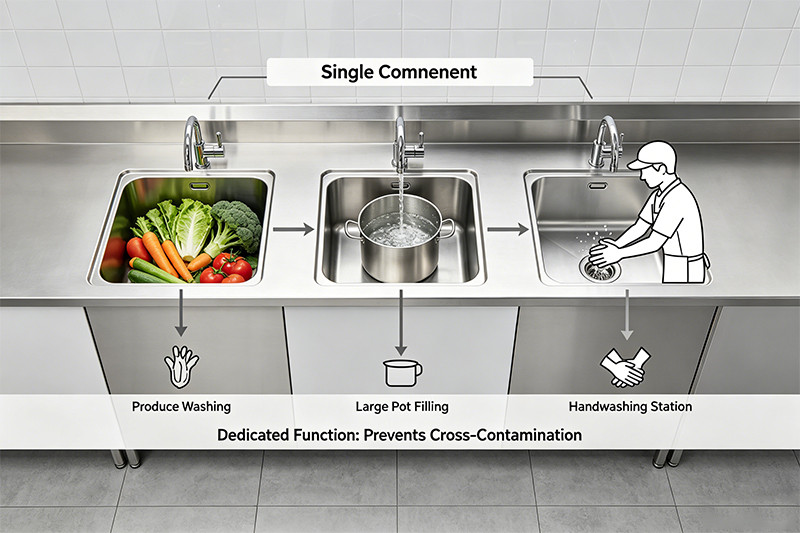
Please note: A single-compartment sink doesn't meet FDA standards for dishwashing.
It's critical to understand that a single basin is insufficient for manual warewashing in a commercial food establishment. Health codes, guided by the FDA Food Code, mandate a multi-step process for cleaning and sanitizing dishes that simply cannot be performed in one compartment.
Two-Compartment Freestanding Stainless Steel Utility Sinks: Versatility in Prep
Stepping up to a two-compartment sink offers greater flexibility while maintaining a relatively compact footprint. These units, with two separate, independently drained basins, allow for the simultaneous handling of different tasks, which can significantly improve workflow.
Great for food thawing and preparation, but remember to avoid cross-contamination by designating separate basins for different items.
A two-basin sink is a great asset for food preparation. For instance, one bowl can be used for thawing frozen food under running water while the other is used for washing vegetables. However, this flexibility comes with responsibility. It is crucial to designate each basin for a specific task to prevent the cross-contamination of bacteria from raw meats to fresh produce. While versatile for prep, a two-compartment sink is generally not approved for a full manual dishwashing process in most jurisdictions, as it lacks the third basin required for sanitizing.
The Gold Standard: Three-Compartment Freestanding Stainless Steel Utility Sinks
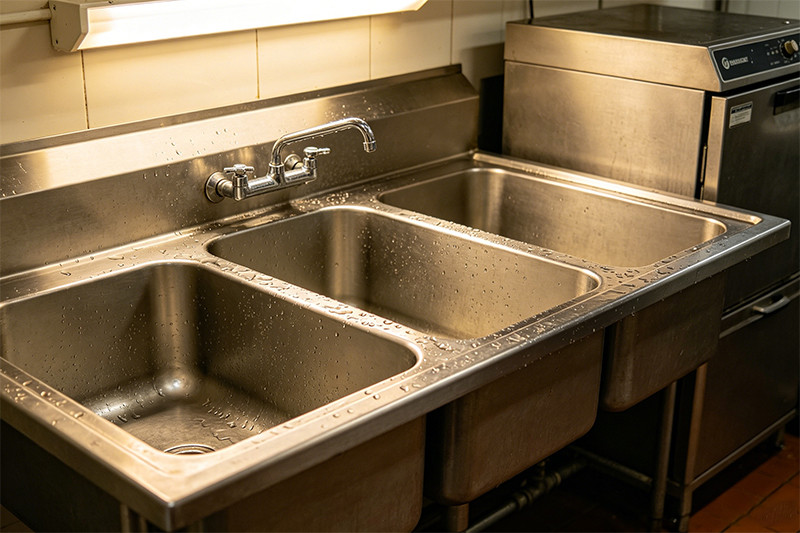
In the world of commercial kitchens, the three-compartment sink is the undisputed champion and the industry standard. Most local health codes across the United States require a three-basin sink for manual warewashing, making it an essential fixture for any restaurant, bar, or food service business.
The classic choice for commercial kitchens, meeting wash, rinse, and sanitize requirements to ensure hygiene and food safety.
The three-compartment system is designed to follow the strict wash, rinse, and sanitize sequence mandated by the FDA and local health authorities.
- Wash: The first compartment is filled with hot, soapy water (often required to be at least 110°F) to scrub dishes and remove food particles and grease.
- Rinse: The second compartment contains clean, hot water to rinse away all soap residue.
- Sanitize: The third compartment is used to sanitize the clean items, either with a chemical sanitizing solution or by immersion in water heated to at least 171°F.
This methodical process is your frontline defense against foodborne illnesses. Brands like Samsink specialize in creating durable, code-compliant three-compartment sinks that are the backbone of a safe kitchen.
Offers a versatile and space-efficient solution for various dishware.
Beyond compliance, these sinks are incredibly practical. They must be large enough to fully submerge the biggest pots and pans used in your kitchen, ensuring every item can be properly cleaned. Even establishments with a commercial dishwasher often need a three-compartment sink as a reliable backup.
Four-Compartment Freestanding Stainless Steel Utility Sinks: For High-Demand Operations
For the busiest, highest-volume commercial kitchens, a four-compartment freestanding utility sink provides the ultimate level of efficiency and flexibility.
Provides extra flexibility for busy kitchens, allowing for separation of different items or an additional scraping basin.
The fourth basin offers a dedicated space for an additional step in the cleaning process. It is most commonly used as a pre-scraping or soaking station, allowing staff to remove heavy food debris before the items enter the "wash" basin. This not only makes the washing process more effective but also helps keep the wash water cleaner for longer. Alternatively, the extra compartment can be used for separating delicate glassware from heavy pots and pans during the washing cycle.
The Core of Durability: Material and Gauge for Your Freestanding Stainless Steel Utility Sink
A freestanding utility sink is an investment in functionality and hygiene, and the foundation of that investment is the material it's made from. In commercial and heavy-duty environments, nothing compares to stainless steel for its blend of strength, hygiene, and aesthetic appeal. However, not all stainless steel is created equal. Understanding the type of steel and its thickness is crucial for selecting a sink that will withstand the test of time.
Why Type 300 Series Stainless Steel is Best for Your Utility Sink
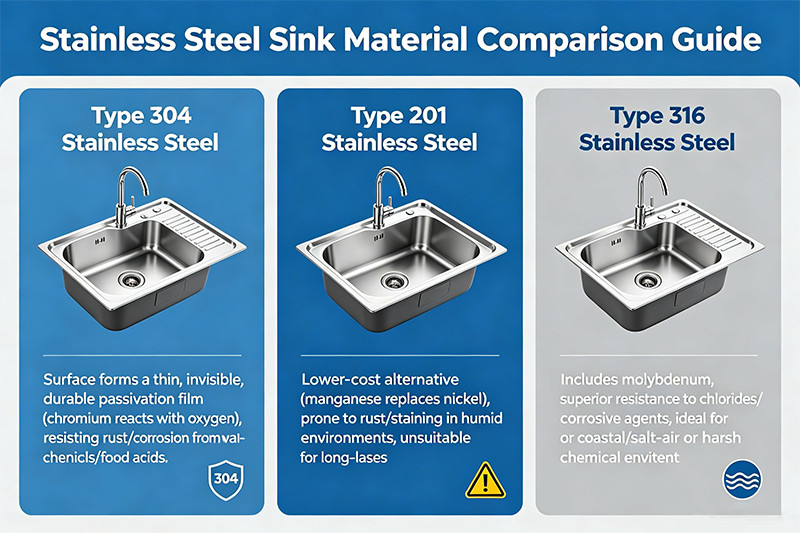
When selecting a sink, you'll encounter different grades of stainless steel, most commonly Type 304 and Type 201. For any wet and demanding environment, Type 304 stainless steel is the superior choice and the industry standard for food service equipment. It's an alloy typically containing 18% chromium and 8% nickel. This composition is key to its performance.
This heavy-duty material offers excellent resistance to rust and corrosion, making it perfect for wet environments.
The chromium in Type 304 stainless steel reacts with oxygen in the air to form a thin, invisible, and highly durable protective layer on the sink's surface. This "passivation film" is what gives the steel its "stainless" quality, providing robust defense against rust and corrosion from water, cleaning chemicals, and food acids. Type 201 stainless steel, a lower-cost alternative that replaces much of the nickel with manganese, is far more prone to rust and staining in humid environments, making it a poor choice for a long-lasting utility sink. For extreme conditions, such as coastal areas with salt in the air or facilities using harsh chemicals, Type 316 stainless steel is an even better option. It includes molybdenum, an element that provides superior resistance to chlorides and other corrosive agents.
Understanding Gauge: How Thickness Affects Your Freestanding Stainless Steel Utility Sink's Durability
Beyond the type of steel, the second critical factor is its thickness, which is measured in "gauge." This is where things can get a bit counterintuitive.
Remember, a smaller gauge number means thicker, more durable metal.
The gauge system for sheet metal works in reverse: the lower the number, the thicker and stronger the steel. For example, a 16-gauge sheet of stainless steel is thicker and more robust than an 18-gauge sheet. This thickness directly impacts the sink's resistance to dents, bowing, and even the amount of noise it makes when in use. Thicker steel provides better sound dampening, resulting in a quieter operation.
The following table breaks down the common gauges for utility sinks:
| Gauge | Thickness (approx. inches) | Best For | Characteristics |
|---|---|---|---|
| 14-Gauge | 0.0781" | Extreme heavy-duty, industrial, high-volume commercial | The most durable and dent-resistant option; ideal for the most demanding environments. |
| 16-Gauge | 0.0625" | Commercial kitchens, workshops, busy utility rooms | The gold standard for commercial use, offering an excellent balance of durability and value. |
| 18-Gauge | 0.0500" | Light commercial, residential laundry/utility rooms | A popular choice for residential sinks, but can be prone to denting and vibration under heavy commercial loads. |
14-Gauge: The Heavy-Duty Champion, ideal for the toughest commercial applications.
For environments where the sink will face constant, punishing use—think industrial processing facilities or 24/7 restaurant kitchens—14-gauge stainless steel is the ultimate choice. Its superior thickness makes it exceptionally resistant to dents from heavy pots and equipment, ensuring maximum longevity. While it is the most expensive option, its durability is unmatched.
16-Gauge: Reliable and Cost-Effective, a common choice offering a great balance of durability and value.
16-gauge stainless steel is widely considered the sweet spot for most commercial applications. It is significantly more durable than its 18-gauge counterpart, offering strong resistance to denting and vibrations from garbage disposals without the premium cost of 14-gauge steel. This makes it the go-to choice for restaurants, bakeries, and workshops looking for a reliable, long-lasting sink.
Why 18-Gauge Might Not Be Enough for multi-compartment utility sinks, as it may not support heavy loads over time.
While 18-gauge steel is a popular and perfectly suitable option for many residential kitchen sinks, it often falls short in a freestanding utility setting. The thinner metal is more susceptible to denting and can feel "tinny." More importantly, on larger multi-compartment sinks, an 18-gauge construction may flex or bow under the weight of multiple basins filled with water and heavy dishes, potentially leading to long-term structural issues.
Beyond Cooking: Specialized Freestanding Stainless Steel Utility Sinks Like Mop Sinks
While most people associate utility sinks with kitchens and food prep, a crucial category of specialized sinks serves the equally important function of keeping facilities clean and sanitary. These janitorial workhorses are essential for maintaining hygiene and operational efficiency in any commercial space.
What is a Mop Sink and Why is a Freestanding Stainless Steel Mop Sink Essential?
A mop sink, also known as a floor sink or service sink, is a specialized plumbing fixture designed specifically for janitorial tasks. Unlike a standard utility sink, which is mounted at counter height, a mop sink is installed at or near floor level.
Mop sinks, also known as floor sinks, are crucial for commercial cleaning, providing an easy way to dispose of dirty water without heavy lifting.
The low-profile design of a mop sink is its most important feature. It allows custodial staff to easily fill and empty heavy mop buckets without the physical strain of lifting them over a high basin edge, which is a common cause of back injuries. This makes cleaning floors faster, safer, and more efficient.
They are typically installed at ground level and are not meant for food-related purposes.
Health codes are very clear: sinks used for cleaning and janitorial purposes must be kept completely separate from any sinks used for food preparation, dishwashing, or handwashing. A dedicated mop sink located in a utility closet or service area is fundamental to preventing cross-contamination and maintaining a hygienic environment, especially in restaurants, hospitals, and schools.
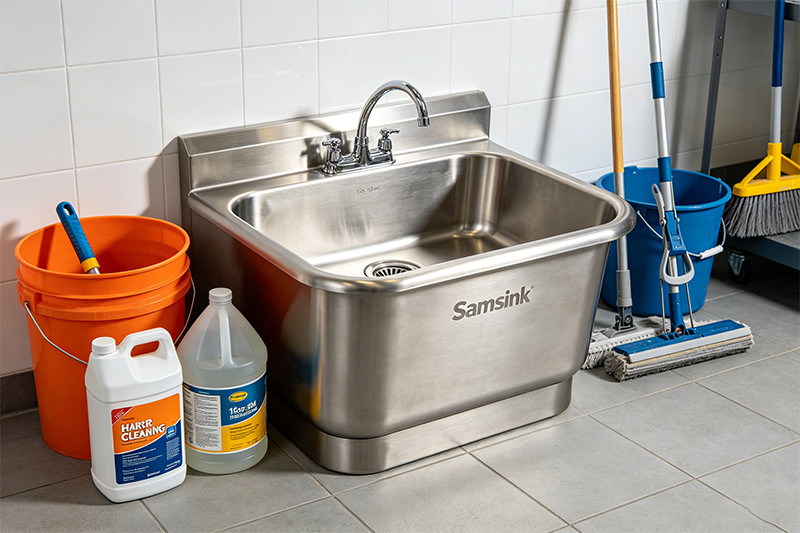
High-quality mop sinks are constructed from 16GA Type 300 series fully welded stainless steel with features like coved corners and sloped drains.
Just like their kitchen counterparts, the best mop sinks are made from durable, corrosion-resistant stainless steel. A robust 16-gauge Type 304 construction ensures the sink can withstand harsh cleaning chemicals, constant use, and the inevitable bumps from heavy buckets. High-quality models, such as those made by Samsink, feature fully welded construction and coved (rounded) corners, which eliminate crevices where bacteria can grow and make the sink easier to clean. They also have a basin that is pitched toward the drain to ensure fast and complete drainage of dirty water.
Exploring Different Freestanding Stainless Steel Mop Sink Varieties
Mop sinks are not a one-size-fits-all product. They come in various designs to meet the specific needs of different facilities and spaces.
- Standard models offer basic, reliable functionality with a floor-mounted basin, making them a common choice for many businesses.
- Anti-splash designs feature taller backsplashes and side splashes that are crucial for containing water and preventing dirty wastewater from splashing onto surrounding walls and floors.
- Medium-duty options are designed with a smaller footprint, making them perfect for facilities with limited space in their janitorial closets.
- Heavy-duty choices provide deeper bowls, often 12 inches or more, which are ideal for high-traffic institutions like hospitals and schools that require constant, heavy-duty mopping.
- Corner-fitting designs have an angled shape that allows them to be tucked neatly into a corner, making efficient use of otherwise awkward spaces.
- Drop-front models feature a lowered front rim, which further reduces the height staff need to lift buckets, maximizing ergonomic safety.
- ADA compliant sinks are designed to meet the standards of the Americans with Disabilities Act, ensuring accessibility for all employees.
Customization and Accessories for Your Freestanding Stainless Steel Utility Sink
To get the most out of a mop sink, a range of accessories can enhance its functionality and keep the surrounding area organized and safe.
Enhance functionality with mop strainers, utility shelves, and even custom sink dimensions.
Outfitting your mop sink with the right accessories can transform a simple basin into a complete cleaning station.
- Mop Strainers: These removable baskets sit inside the sink drain to catch large debris like food wrappers, hair, and other solids, preventing them from clogging your plumbing.
- Service Faucets: These are specialized faucets with features like a pail hook for hanging buckets and a threaded spout for attaching hoses, making filling buckets easier.
- Utility Shelves and Racks: Wall-mounted shelves or hangers provide a designated space to store cleaning chemicals, tools, and mops, keeping everything organized and off the floor.
- Splash Guards: If not already integrated, side and backsplashes can be added to protect walls from water damage.
- Custom Dimensions: For unique spaces, some manufacturers can create mop sinks with custom dimensions to perfectly fit your facility's layout.
Ensuring Longevity: Maintenance and Certification for Your Freestanding Stainless Steel Utility Sink
Purchasing a high-quality freestanding stainless steel sink is the first step. The next, equally important step is ensuring it remains a safe, hygienic, and durable asset for years to come. This involves understanding the importance of sanitation certifications and adhering to a proper maintenance routine.
The Importance of NSF Certification for Your Freestanding Stainless Steel Utility Sink
When you see the NSF mark on a piece of commercial equipment, it's more than just a label—it's a sign of quality and a commitment to public health. For any sink used in a food service or health-related environment, this certification is critical.
NSF certification guarantees that your sink meets strict public health and safety standards.
NSF International (formerly the National Sanitation Foundation) is an independent organization that develops and enforces rigorous standards for the design, construction, and material safety of commercial foodservice equipment. An NSF-certified sink has been thoroughly tested to ensure it is non-toxic, corrosion-resistant, and designed in a way that promotes easy and effective cleaning. For business owners, this certification is essential for passing health inspections and avoiding costly fines.
This includes features like rounded interior corners and sloped bottoms to prevent bacterial growth and ensure thorough cleaning.
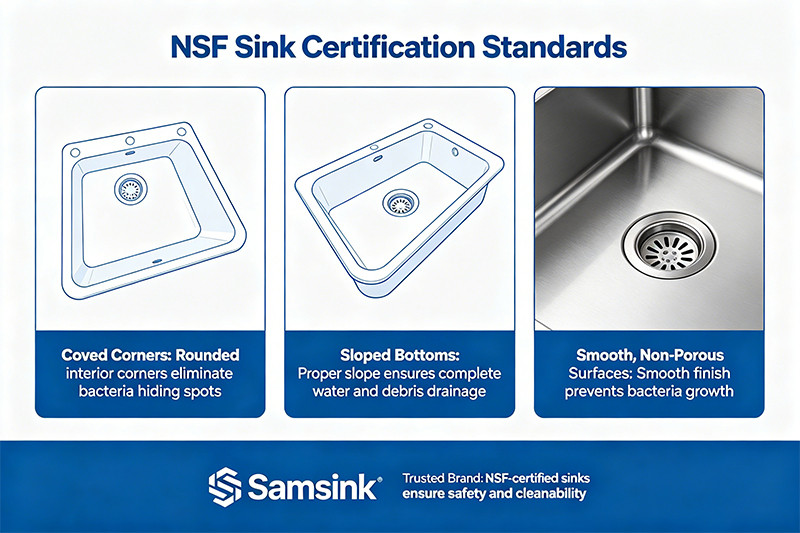
NSF standards for sinks are highly specific and focus on hygienic design. To earn certification, a sink must have features that eliminate places for bacteria to hide and grow. This includes:
- Coved Corners: The interior corners of the sink bowls must be rounded. Sharp 90-degree angles are difficult to access and clean, making them prime spots for bacteria buildup.
- Sloped Bottoms: The basin of the sink must be properly sloped toward the drain to ensure that all water and debris drain completely, preventing pooling.
- Smooth, Non-Porous Surfaces: The stainless steel must have a smooth finish, free of pits and crevices, that is easy to sanitize.
Choosing an NSF-certified sink from a trusted brand like Samsink provides peace of mind that you are investing in a product designed for maximum safety and cleanability.
Practical Tips for Maintaining Your Freestanding Stainless Steel Utility Sink
Stainless steel is incredibly resilient, but it's not indestructible. A consistent and correct cleaning routine is key to preserving its protective layer, preventing stains, and ensuring it always looks its best.
Regular cleaning and inspections are key to preserving your sink's appearance and functionality.
The best way to maintain your sink is through simple, regular actions. After each use, rinse the sink thoroughly with water and wipe it dry with a soft cloth. This simple step is highly effective at preventing water spots and mineral deposits from forming, especially in areas with hard water. For daily cleaning, a soft sponge or cloth with mild dish soap and warm water is all you need.
Avoid harsh chemicals that can compromise the protective layer of stainless steel.
While stainless steel is tough, certain chemicals and abrasive materials can damage its passive layer, leading to corrosion, pitting, or discoloration. To protect your investment, strictly avoid the following:
- Chlorine Bleach: Never use bleach on your stainless steel sink. Even when diluted, prolonged contact can cause corrosion.
- Abrasive Cleaners and Pads: Do not use scouring powders, steel wool, or wire brushes. These will scratch the surface of the steel, which can not only mar its appearance but also create crevices for bacteria to grow. Always scrub in the direction of the steel's grain.
- Harsh Chemicals: Cleaners containing ammonia, hydrofluoric acid, or high concentrations of salt should be avoided as they can damage the finish.
- Leaving Items in the Sink: Avoid leaving wet sponges, rubber mats, or metal cookware in the sink for long periods, as this can trap moisture and lead to stains or rust spots.
For stubborn stains or hard water buildup, a paste of baking soda and water or a spray of white vinegar can be effective, gentle alternatives. Always rinse thoroughly after cleaning and wipe the sink dry to restore its shine.
Frequently Asked Questions (FAQs)
1. What is the best gauge for a commercial utility sink? For most commercial applications, a 16-gauge stainless steel sink is the ideal choice. It offers a superior balance of durability, dent resistance, and value. For extremely heavy-duty or industrial use, a 14-gauge sink provides maximum strength, while an 18-gauge sink is generally considered too thin for the demands of a commercial freestanding unit.
2. Why is a three-compartment sink required in most restaurants? A three-compartment sink is mandated by most health departments and the FDA Food Code for manual dishwashing. It allows staff to follow the required wash, rinse, and sanitize procedure, which is critical for preventing cross-contamination and ensuring that all dishware and utensils are hygienically clean.
3. Can I use bleach to sanitize my stainless steel sink? No, you should never use chlorine bleach on a stainless steel sink. Bleach is highly corrosive to stainless steel and can damage the protective passive layer, leading to rust and pitting. For sanitizing, use a quaternary ammonium solution or other sanitizers specifically approved for food-contact surfaces.
4. What is the difference between Type 304 and Type 316 stainless steel? Type 304 stainless steel is the industry standard for most commercial kitchens due to its excellent corrosion resistance. Type 316 stainless steel contains an added element, molybdenum, which gives it superior resistance to corrosion from chlorides (like salt) and other harsh chemicals. Type 316 is recommended for marine environments, coastal areas, or facilities that use aggressive cleaning agents.
5. How can I remove hard water stains from my utility sink? Hard water stains and mineral deposits can be effectively removed using white vinegar. Spray the affected areas with vinegar and let it sit for 15-20 minutes. Then, gently scrub the area with a soft sponge in the direction of the steel's grain. For tougher stains, you can also create a paste of baking soda and water. Rinse the sink thoroughly afterward and wipe it dry to prevent new spots from forming.
Conclusion
Choosing the right freestanding stainless steel utility sink is a foundational decision for any functional and hygienic workspace. It involves a thoughtful evaluation of your specific needs, from the number of compartments required for your workflow to the strength of its material. By prioritizing a durable construction of 16-gauge, Type 304 stainless steel, you ensure a sink that can withstand the rigors of heavy use. Opting for specialized models like mop sinks where needed further enhances operational efficiency and safety.
Ultimately, by selecting an NSF-certified sink and committing to simple, consistent maintenance routines, you are not just buying a piece of equipment; you are investing in a long-lasting asset that will support a clean, efficient, and compliant environment for years to come. I hope this guide helps you make an informed decision tailored perfectly to your needs! Please feel free to share this guide with others who might find it useful, and let us know your thoughts in the comments below.