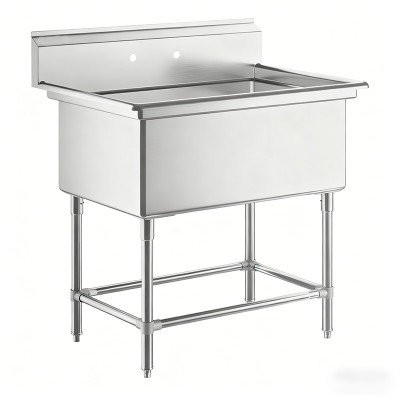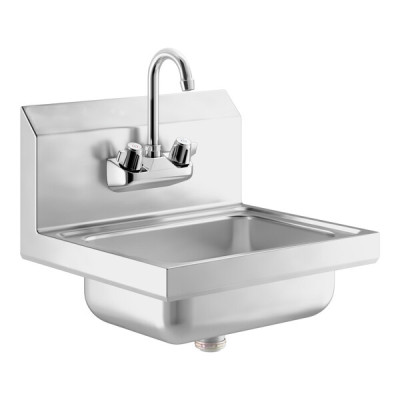
Everything You Need to Know About Choosing a Stainless Steel Trough Sink for Commercial Settings
We understand that choosing the right fixtures for a commercial setting is a crucial decision, impacting both functionality and hygiene. Today, we're diving deep into everything you need to know about selecting the perfect stainless steel trough sink, a versatile and robust solution for many businesses. Let's walk through the key considerations, from placement to faucet types, to help you make an informed choice.
Key Takeaways
Choosing the right stainless steel trough sink is a significant investment in your commercial facility's functionality, hygiene, and overall operational efficiency. This guide covers the critical factors to consider, but here are the essential takeaways to keep in mind:
- Application is Key: Trough sinks are not a one-size-fits-all solution. They excel in high-traffic, multi-user environments like schools, event venues, factories, and restaurant kitchens where simultaneous use is common. Their design accommodates multiple users efficiently, reducing wait times and improving flow. However, for small spaces or settings requiring strict sterility between individual wash stations (like certain medical clinics), separate, partitioned sinks might be a better choice.
- Design and Installation Have Long-Term Impacts: Your choice between a wall-mounted or freestanding unit will affect cleaning, maintenance, and floor space. Wall-mounted sinks offer a modern aesthetic and make floor cleaning easier, while freestanding models provide robust, go-anywhere solutions, often with integrated storage. Similarly, deciding between a standard, off-the-shelf model and a custom-fabricated sink depends on your timeline, budget, and specific spatial requirements. Customization allows for perfect integration but comes at a higher cost and longer lead time.
- Faucet Technology Drives Hygiene and Efficiency: The faucets you pair with your trough sink are just as important as the sink itself. Manual faucets are simple and cost-effective but can contribute to cross-contamination. Hands-free options, such as knee/foot pedals or electronic sensors, significantly enhance hygiene by eliminating a common touchpoint. While sensor faucets offer a modern, water-saving solution, they require power and more complex maintenance. Knee and foot pedals are highly reliable, require no electricity, and are a durable choice for industrial or back-of-house applications.
- Compliance and Sourcing are Non-Negotiable: Every commercial installation must adhere to local health regulations, plumbing codes, and accessibility standards like the Americans with Disabilities Act (ADA). This includes specifications for faucet spacing, basin depth, and clear floor space. Partnering with a reputable supplier is crucial. A reliable manufacturer or distributor will not only provide a high-quality, durable product (typically made from 14 or 16-gauge 304 stainless steel), but will also offer expertise on code compliance, customization options, and long-term support. A trustworthy supplier ensures your investment is sound, safe, and built to last.
By carefully considering these core points—the intended use, design implications, faucet technology, and regulatory requirements—you can confidently select a stainless steel trough sink system that will serve as a long-term asset for your facility.
Understanding the Versatility and Placement of Your Commercial Stainless Steel Trough Sink
The first step in selecting a commercial sink is to understand its intended application. A stainless steel trough sink, also known as a wash trough or multi-user sink, is a long, continuous basin designed to serve multiple people at once. This design offers a compelling alternative to a row of individual basins, but it's crucial to identify where it truly adds value and where another solution might be more appropriate.
Identifying When a Stainless Steel Trough Sink Excels
Stainless steel trough sinks are workhorses, built for efficiency and durability. Their primary advantage lies in their ability to handle high volumes of users quickly and effectively, making them a cornerstone of well-designed commercial and public facilities.
Benefits for High-Traffic, Multi-User Environments
In any setting where groups of people need access to handwashing facilities simultaneously, the trough sink is an unparalleled solution. Consider the rush in a school restroom between classes, the shift change at a factory, or the intermission at a concert venue. In these scenarios, individual sinks create bottlenecks, leading to long queues and user frustration.
A key benefit is space efficiency. A single trough sink with multiple faucet stations can replace several individual sinks, reducing countertop clutter and freeing up valuable floor and wall space. This consolidated design also leads to cost savings; installing one large basin requires fewer plumbing connections and drains than installing multiple separate units, reducing both initial installation costs and long-term maintenance needs. Furthermore, the streamlined, often seamless design of a trough sink makes it significantly easier to clean than multiple individual basins, promoting better hygiene with less effort.
Ideal Applications: From Schools to Industrial Settings
The robust and practical nature of stainless steel trough sinks makes them suitable for a wide array of commercial environments.
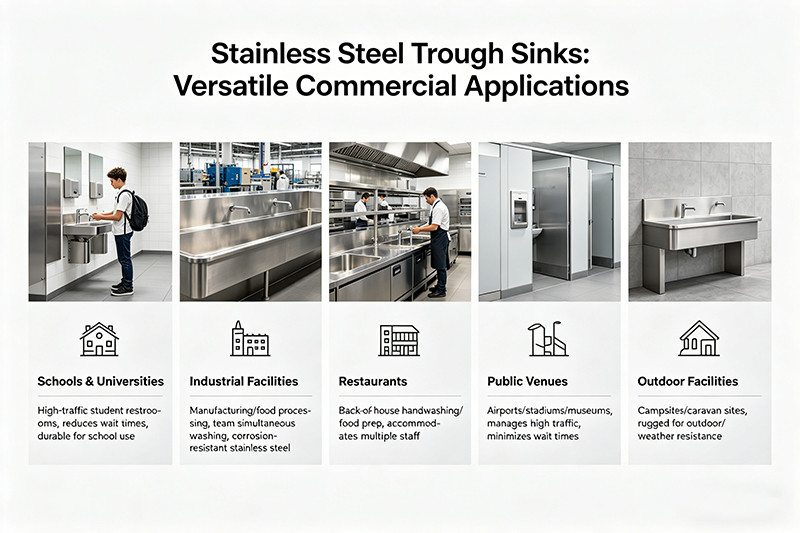
- Schools and Universities: Trough sinks are perfect for student restrooms, efficiently managing the high traffic between classes and reducing wait times. Their durability stands up to the rigors of a school environment.
- Industrial Facilities and Factories: In manufacturing and food processing plants, hand hygiene is critical. Trough sinks allow entire teams of workers to wash up simultaneously at the beginning or end of shifts, ensuring compliance with safety protocols. Stainless steel, in particular, is tough and resistant to corrosion.
- Restaurants and Commercial Kitchens: Back-of-house operations in restaurants benefit from large, durable sinks that can accommodate multiple staff members for handwashing or food prep tasks.
- Public Venues: Airports, stadiums, museums, and convention centers all experience waves of high traffic. Trough sinks help manage this flow, improving the visitor experience by minimizing restroom wait times.
- Campsites and Outdoor Facilities: The ruggedness of stainless steel allows it to endure outdoor use in various weather conditions, making trough sinks a practical choice for campgrounds and caravan sites.
Situations Where a Stainless Steel Trough Sink May Be Less Suitable
Despite their versatility, trough sinks are not the universal solution for every commercial space. In certain contexts, their size and communal nature can be a disadvantage.
Space Constraints and Small Facilities
The most apparent limitation is size. By design, trough sinks are long and require a significant amount of wall space. In a small office, a boutique retail store, or a small café with a single-user restroom, a large trough sink would be impractical and visually overwhelming. For these smaller footprints, a traditional single-basin or a compact corner sink is often a more logical and space-conscious choice.
Requirements for Strict Sterility and Cross-Contamination Concerns
While the non-porous surface of stainless steel is inherently hygienic, the open, continuous design of a trough sink can be a concern in environments where strict user separation is required. In healthcare settings like dental offices or certain clinical labs, the risk of splash and aerosolized particles traveling from one user's space to another's is a significant consideration. Although trough sinks are used in some healthcare contexts, facilities with the most stringent infection control protocols often opt for fully separate, partitioned handwashing stations to eliminate any chance of cross-contamination between users. In these cases, individual sinks, sometimes with physical dividers, are the mandated choice.
Exploring the Design and Structural Options for Your Stainless Steel Trough Sink
Beyond identifying the need for a trough sink, you must consider its physical form and how it will integrate into your space. Key decisions revolve around the installation style—whether it will be mounted to the wall or stand on its own—and whether a standard, off-the-shelf model or a custom-fabricated unit is the right path for your project.
Installation Styles: Freestanding vs. Wall-Mounted Stainless Steel Trough Sinks
The choice between a freestanding and a wall-mounted trough sink affects aesthetics, cleanability, installation complexity, and use of space.
Wall-Mounted Trough Sinks are hung directly on the wall, with the basin appearing to "float" above the ground.
-
Pros:
- Superior Cleanliness: This is a significant advantage in commercial settings. With the floor completely clear underneath, mopping and sanitizing are quick and thorough, preventing the buildup of dirt and grime around sink legs.
- Modern Aesthetics: Wall-mounted sinks offer a clean, minimalist, and contemporary look that can make a restroom feel more spacious and upscale.
- Space Saving: By freeing up the floor, these sinks create a more open feel, which is especially beneficial in smaller or narrower restrooms.
-
Cons:
- Installation Requirements: The primary drawback is the need for a structurally sound wall with proper reinforcement (carriers) to support the weight of the sink, especially when filled with water. This must be planned for during construction or a major renovation.
- Exposed Plumbing: Unless a shroud or panel is used, the drain and water supply lines are often visible, which may detract from the minimalist aesthetic.
Freestanding Trough Sinks are self-contained units that stand on their own legs or a pedestal base.
-
Pros:
- Installation Flexibility: Because they support their own weight, freestanding sinks can be installed against almost any wall without needing special structural reinforcement. This makes them ideal for retrofits or in buildings where wall integrity is a concern.
- Robustness: These units are often perceived as more rugged and are a staple in industrial or back-of-house settings. Many models come with integrated backsplashes and can include undershelves for extra storage.
- Plumbing Concealment: The legs or pedestal base can effectively hide plumbing lines from view, providing a tidy and contained appearance.
-
Cons:
- Cleaning Challenges: The main disadvantage is that cleaning the floor around and under the sink is more difficult. Legs and cross-bracing create obstacles where dirt and moisture can accumulate.
- Larger Footprint: These sinks occupy a fixed amount of floor space, which can make smaller rooms feel more cluttered.
| Feature | Wall-Mounted Trough Sink | Freestanding Trough Sink |
|---|---|---|
| Cleaning | Easy to clean floor underneath; promotes hygiene. | More difficult to clean around legs and base. |
| Aesthetics | Modern, minimalist, "floating" appearance. | Traditional, robust, functional look. |
| Installation | Requires significant wall reinforcement (carriers). | Flexible installation; no wall reinforcement needed. |
| Space | Creates an open, spacious feel. | Occupies a fixed floor footprint. |
| Plumbing | Can leave plumbing exposed. | Often conceals plumbing within legs or pedestal. |
| Best For | New builds, modern designs, hygiene-critical areas. | Retrofits, industrial use, spaces without strong walls. |
Custom vs. Standard: Sourcing the Perfect Stainless Steel Trough Sink
Once you've decided on an installation style, the next question is whether to buy a standard model or commission a custom piece. This decision hinges on your budget, timeline, and the uniqueness of your spatial requirements.
Leveraging Standard Models for General Needs
Standard, pre-fabricated stainless steel trough sinks are manufactured in common lengths (e.g., 48", 60", 72", 96") and configurations. They are readily available from commercial plumbing suppliers and are an excellent choice for many projects.
-
Advantages:
- Cost-Effective: Mass production makes standard models significantly more affordable than custom ones.
- Quick Availability: These sinks are typically in stock or have short lead times, which is ideal for projects with tight deadlines.
- Proven Designs: Standard models are based on tested and widely used designs that comply with general industry and code requirements.
-
Disadvantages:
- Limited Flexibility: You are restricted to the sizes, depths, and feature sets offered by the manufacturer. If you have an awkward space or unique functional need, a standard model may not be a perfect fit.
Partnering with Custom Manufacturers for Unique Projects
Custom fabrication allows you to design a stainless steel trough sink tailored to your exact specifications. This is the ideal route when a standard product just won't do.
-
Advantages:
- Perfect Fit and Space Optimization: Custom sinks can be built to any length, width, or shape, allowing you to maximize every inch of a non-standard space. This is perfect for fitting a sink into an alcove or along an oddly angled wall.
- Unique Features: You can specify the precise bowl depth, backsplash height, faucet hole placement, and even integrate features like soap dispenser cutouts or trash chutes.
- Aesthetic Control: Customization gives you complete control over the final look, allowing you to create a one-of-a-kind fixture that serves as a design statement.
-
Disadvantages:
- Higher Cost: A custom-fabricated sink will have a higher initial price point due to the specialized design work and manufacturing process.
- Longer Lead Times: Designing, approving, and fabricating a custom piece takes considerably more time than ordering a standard model.
- Requires a Skilled Partner: The success of a custom project depends on finding a reputable and experienced stainless steel fabricator who can translate your vision into a high-quality, functional product.
Ultimately, the choice between custom and standard comes down to balancing project needs. For a straightforward restroom in a new office building, a standard sink is likely the most sensible and economical choice. For a high-end restaurant with a uniquely shaped open kitchen or a historic building renovation with specific spatial constraints, the investment in a custom sink can provide unparalleled value and functionality.
A Comprehensive Look at Faucet Selections for Your Stainless Steel Trough Sink
The faucets installed on your trough sink are as critical to its performance as the basin itself. This choice directly influences hygiene, water consumption, ADA compliance, user experience, and maintenance requirements. From traditional manual controls to sophisticated hands-free technologies, understanding the available options is key to creating a truly functional handwashing station.
Traditional Manual Faucet Designs
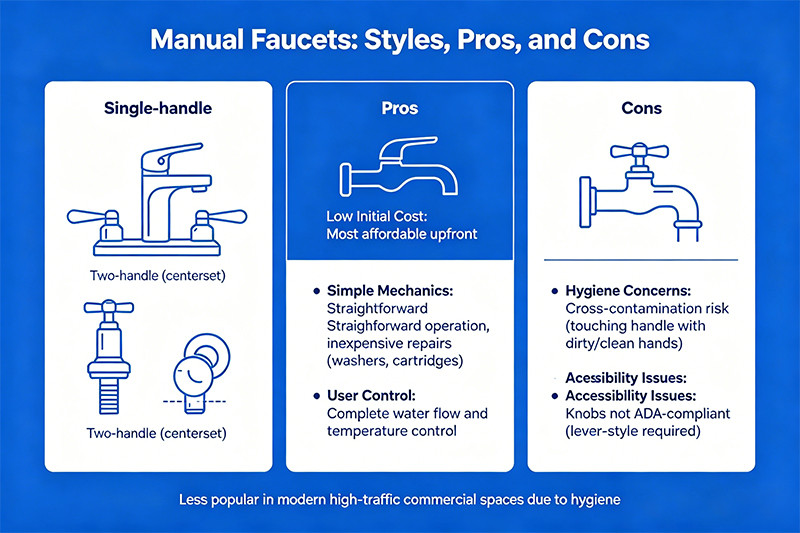
Manual faucets, operated by hand with knobs or levers, are the most basic and long-standing option. They are available in various styles, most commonly single-handle or two-handle (centerset) configurations.
-
Pros:
- Low Initial Cost: Manual faucets are generally the most affordable option upfront, making them an attractive choice for projects with tight budgets.
- Simple Mechanics: Their operation is straightforward, and repairs are typically simple and inexpensive, involving common parts like washers and cartridges.
- User Control: They offer users complete control over water flow and temperature.
-
Cons:
- Hygiene Concerns: The primary drawback is that they create a major point of cross-contamination. Users must touch the handle with dirty hands to turn the water on and then touch it again with clean hands to turn it off, potentially re-contaminating their hands.
- Water Waste: Users can easily leave manual faucets running, leading to significant water waste, especially in public or high-traffic settings.
- Accessibility Issues: Knobs that require tight grasping or twisting of the wrist do not comply with the Americans with Disabilities Act (ADA). ADA-compliant manual faucets must use lever-style handles.
While their simplicity and low cost are appealing, the hygiene disadvantages of manual faucets have made them a less popular choice for modern, high-traffic commercial spaces.
Advanced Hands-Free Faucet Technologies
To combat the hygiene issues of manual faucets, a range of hands-free technologies has become the standard in many commercial environments. These systems allow users to wash their hands without ever touching the faucet hardware, dramatically reducing the spread of germs.
Understanding Knee and Foot-Operated Valves: Reliability and Cost-Efficiency
Mechanically activated hands-free faucets have been used for decades, especially in healthcare and food service settings, due to their exceptional reliability.
- Knee-Operated Valves: These systems feature large panels or buttons mounted under the front of the sink. The user presses a panel with their knee to activate the flow of water. Models may have a single valve for tempered water or dual valves for hot and cold.
- Foot-Operated Pedals: Similar in principle, these systems use pedals on the floor. Stepping on a pedal starts the water flow, and releasing it stops the flow. Like knee valves, they can come in single- or dual-pedal configurations.
Pros of Mechanical Hands-Free Valves:
- Excellent Hygiene: They provide a completely touch-free handwashing experience.
- Extreme Durability: With no electronics to fail, these mechanical systems are incredibly robust and have a long service life, making them ideal for demanding industrial or back-of-house environments.
- No Power Required: They are not dependent on batteries or an electrical connection, ensuring they function at all times and have no ongoing power costs.
- Water Conservation: Because water only flows when the valve is actively pressed, they are very effective at preventing waste.
Cons of Mechanical Hands-Free Valves:
- User Learning Curve: First-time users may not immediately understand how to operate them.
- Accessibility: While hands-free, some foot pedal designs may be difficult to operate for individuals with certain mobility impairments. Knee-operated designs are often considered more accessible.
Electronic Sensor Faucets: Pros, Cons, and Maintenance for Your Trough Sink
Electronic sensor faucets, also known as automatic or touchless faucets, use an infrared sensor to detect the presence of hands, activating the water flow automatically.
-
Pros:
- Superior Hygiene: As a completely touch-free solution, they are highly effective at preventing the spread of germs and are a top choice for public restrooms.
- Water Conservation: Most sensor faucets are programmed to run for a specific duration or only while hands are within the sensor's range, then automatically shut off. This dramatically reduces water waste from faucets being left on.
- Modern Aesthetic: Sensor faucets offer a sleek, modern, and high-tech appearance that enhances the design of a contemporary restroom.
- Ease of Use: Operation is intuitive for most users—simply place hands under the spout.
-
Cons:
- Power Dependency: Sensor faucets require a power source, either hardwired electricity or batteries. Power outages can render them inoperable (though some models have manual overrides), and batteries need to be replaced periodically, adding to maintenance tasks.
- Higher Initial Cost and Complexity: They are more expensive upfront than manual faucets and involve more complex installation and maintenance.
- Sensor Issues: The sensors can sometimes be finicky. Reflective surfaces (like a shiny watch or the stainless steel sink itself) can sometimes cause false activations, while dark or non-reflective objects might not trigger the sensor reliably. Calibration may be required to get the sensitivity right.
| Faucet Type | Hygiene | Water Conservation | Cost | Maintenance |
|---|---|---|---|---|
| Manual | Poor | Poor | Low | Simple |
| Knee/Foot Operated | Excellent | Excellent | Medium | Very Low (Mechanical) |
| Electronic Sensor | Excellent | Excellent | High | Medium (Batteries/Electronics) |
Configuring Faucets for Optimal Functionality of Your Stainless Steel Trough Sink
Proper configuration is essential for a trough sink to be both functional and compliant. This involves more than just selecting a faucet type; it includes placement, spacing, and adherence to accessibility codes.
Key considerations include:
- Faucet Spacing: Faucets should be spaced adequately to give each user comfortable access without crowding. A common recommendation is 24 to 30 inches of space per user.
- ADA Compliance: This is a critical legal requirement for public accommodations in the United States. ADA guidelines dictate several key measurements for accessibility:
- Knee Clearance: There must be a clear space under the sink of at least 27 inches high and 30 inches wide to accommodate a wheelchair user.
- Reach: Controls must be easily reachable, and operable with one hand using less than 5 pounds of force, without tight grasping or twisting. This makes hands-free or single-lever faucets ideal choices.
- Deck-Mounted vs. Wall-Mounted: Faucets can be mounted directly on the flat "deck" of the sink or on the backsplash/wall behind it. Deck-mounted faucets are common, while wall-mounted options can offer easier cleaning of the sink surface. The choice must match the pre-drilled holes in your selected sink.
By carefully selecting a faucet system that balances hygiene, cost, and maintenance, and ensuring the final configuration adheres to accessibility standards, you create a handwashing station that is safe, efficient, and user-friendly for everyone.
Essential Decision-Making Factors for Your Commercial Stainless Steel Trough Sink
Choosing the right stainless steel trough sink involves more than aesthetics and size. A successful installation is one that functions seamlessly within your operations, complies with all legal requirements, and provides long-term value. To ensure this, you must focus on three critical factors: regulatory compliance, alignment with user needs, and the choice of your supplier.
Adhering to Health Regulations and Building Codes
For any commercial facility, compliance with local health and building codes is non-negotiable. Failure to do so can result in costly fines, forced renovations, or even business closure. When installing a trough sink, several key codes must be addressed:
- Health Codes: Local health departments have stringent rules, especially for foodservice and healthcare environments. Based on the FDA Food Code, these often require dedicated handwashing sinks to be separate from food prep or warewashing sinks to prevent cross-contamination. Handwashing stations must be conveniently located, typically within a short distance of every food prep and warewashing area, to encourage frequent use by employees. The sink must supply hot water (often specified at a minimum of 85°F or higher) and be stocked with soap and a hygienic hand-drying method.
- Plumbing Codes: The International Plumbing Code (IPC) and Uniform Plumbing Code (UPC) set the standards for installation. These codes govern everything from the diameter and slope of drain lines to the necessity of traps to prevent sewer gases from entering the building. Many codes also require indirect waste connections for food-handling equipment to prevent backflow contamination. It is mandatory to use a licensed plumber who understands local code variations.
- ADA Compliance: The Americans with Disabilities Act (ADA) ensures that facilities are accessible to people with disabilities. For trough sinks, this means ensuring at least one station is compliant, with specific requirements for knee clearance (minimum 27" high), sink rim height (maximum 34" from the floor), and clear floor space for wheelchair approach. Faucets must also be operable with one hand and minimal force, making hands-free or lever-handle designs preferable.
Aligning Your Stainless Steel Trough Sink with Intended Use and User Volume
A sink that is perfectly compliant but wrong for your operational needs is still a failure. The design you choose must be directly aligned with how it will be used and by how many people.
- Calculating Capacity: Consider your peak user volume. A rule of thumb for commercial kitchens is to have one hand sink for every five employees or every 300 square feet of facility space. In a public restroom, observe peak traffic times to determine how many faucet stations are needed to prevent queues. A sink that is too small leads to frustrating bottlenecks, while one that is excessively large is an inefficient use of space and capital.
- Matching Design to Task: The sink's purpose will dictate its features. For a public restroom, a sleek, easy-to-clean trough with sensor faucets is ideal. For a factory or "back-of-house" kitchen setting, a more rugged, deeper trough sink with durable knee-operated valves might be more appropriate to withstand heavy use and accommodate the washing of larger items. In high-volume restaurants, a 3-compartment sink setup for the wash-rinse-sanitize process is often a health code requirement for dishwashing.
The Importance of a Reliable Supplier in Your Trough Sink Selection Process
The final, and perhaps most crucial, decision is choosing where to source your sink. A reliable supplier is a partner in your project's success, providing more than just a product.
- Quality and Material Verification: A trustworthy supplier will provide sinks made from high-quality, commercial-grade stainless steel—typically 14 or 16-gauge Type 304. This ensures the sink is durable, resistant to corrosion and dents, and will last for years in a demanding environment. They should also offer products with NSF (National Sanitation Foundation) certification, which guarantees the sink meets public health and safety standards.
- Expertise and Guidance: A great supplier doesn't just sell; they consult. They have a deep understanding of health codes and can help you select a sink configuration that is compliant and optimized for your workflow. They can advise on the pros and cons of different gauges, mounting types, and faucet systems.
- Customization and Support: Whether you need a standard size or a fully custom-fabricated unit, a good supplier can accommodate your needs. They provide clear communication on lead times, stand behind their products with a solid warranty, and offer after-sale support. Sourcing directly from a quality-focused factory or a reputable distributor eliminates middlemen and ensures you receive a product that has passed rigorous quality control checks.
Investing in a sink is a long-term decision. By prioritizing compliance, matching the design to your specific needs, and partnering with a supplier who values quality and service, you ensure that your stainless steel trough sink will be a durable, efficient, and valuable asset to your facility for years to come.
Frequently Asked Questions (FAQ)
1. What is the best type of stainless steel for a commercial trough sink?
The industry standard and most recommended material for commercial trough sinks is Type 304 stainless steel. This grade contains a high percentage of chromium and nickel, which gives it superior resistance to rust, corrosion, and stains, a critical feature in environments with constant moisture and exposure to various chemicals or acidic foods. For durability, look for a thicker gauge of steel. A 14-gauge or 16-gauge sink is preferred for high-volume commercial use, as it offers better resistance to dents and damage from heavy pots, pans, and daily wear-and-tear compared to thinner gauges like 18 or 20.
2. How many faucets can I have on a trough sink, and how far apart should they be?
The number of faucets depends on the length of the sink and your anticipated user volume. As a general rule, you should plan for about 24 to 30 inches of space per user to ensure comfortable access without crowding. For example, a 72-inch (6-foot) trough sink can comfortably accommodate three faucet stations spaced 24 inches apart on center. Always check local ADA (Americans with Disabilities Act) requirements, as you must ensure at least one station provides adequate clearance and reach for individuals in wheelchairs.
3. Are trough sinks hygienic for public restrooms?
Yes, trough sinks can be extremely hygienic, especially when paired with the right features. The benefits include:
- Seamless Design: Many trough sinks, particularly those made from stainless steel or solid surface materials, have a smooth, non-porous surface with coved corners, which minimizes seams and crevices where bacteria can grow, making them easier to clean and sanitize.
- Hands-Free Faucets: When equipped with electronic sensor faucets or knee/foot-operated valves, trough sinks eliminate a primary source of cross-contamination—the faucet handle.
- Improved Cleaning: Wall-mounted trough sinks allow for easy and thorough cleaning of the floor underneath, further enhancing the overall hygiene of the restroom. The communal basin itself does not pose a significant hygiene risk as long as proper handwashing is practiced and water drains efficiently.
4. How do I clean and maintain a stainless steel trough sink to keep it looking new?
Maintaining a stainless steel trough sink is straightforward. For daily cleaning, use a soft cloth or sponge with mild soap and water, then rinse and wipe dry with a microfiber cloth to prevent water spots and mineral buildup. For more stubborn stains or to restore shine, you can use a specialized stainless steel cleaner or a paste of baking soda and water. Avoid using harsh abrasives like steel wool, scouring powders, or abrasive cleaners, as they will scratch the surface. Also, do not use cleaners containing chlorine or bleach, as they can damage the protective layer of the stainless steel and lead to corrosion over time. Always clean in the direction of the metal's grain or finish.
5. What is the difference between a wall-mounted and a freestanding trough sink?
The primary difference lies in their installation and support structure.
- A wall-mounted trough sink is attached directly to the wall, creating a "floating" appearance. This design makes it very easy to clean the floor underneath, offering superior hygiene and a modern look. However, it requires a strong, reinforced wall (often with internal carriers) to support its weight.
- A freestanding trough sink stands on its own legs or a pedestal base. It is easier to install as it doesn't rely on wall strength, making it ideal for retrofits. It is very robust but can be harder to clean around the legs, which can trap dirt and moisture. The choice depends on your facility's structural conditions, cleaning priorities, and desired aesthetic.
In summary, selecting the ideal stainless steel trough sink involves balancing usage needs, regulatory compliance, and practical design choices. By carefully evaluating these factors, we can ensure you invest in a solution that is durable, efficient, and perfectly suited for your commercial environment. Remember, a well-chosen stainless steel trough sink is a long-term asset that supports hygiene, efficiency, and the smooth operation of your facility.