Guide to the Best Stainless Steel Ice Storage Bins for Commercial Use
Choosing the right commercial ice equipment is a critical decision for any business in the food and beverage industry. It's a choice that directly impacts customer satisfaction, operational efficiency, and your bottom line. The quality of ice you serve can enhance the taste of drinks and elevate the overall customer experience, while a reliable supply prevents disruptions during peak hours.
This guide will walk you through the essential factors to consider when selecting the perfect ice machine and its companion: the stainless steel ice storage bin. Making an informed decision ensures your investment aligns perfectly with your daily operational needs and workflow, setting your business up for success.
Key Takeaways
- Match Machine Type to Business Needs: Under-counter units are ideal for small spaces like cafes, while modular machines with separate stainless steel bins are better for high-volume establishments like hotels and large restaurants.
- Calculate Ice Needs Accurately: Estimate your daily ice usage based on your business type (e.g., 1.5-2 lbs per restaurant customer) and add a 25% buffer to handle peak demand and prevent shortages.
- Ice Type Matters: The type of ice—whether crescent, cube, flake, or nugget—affects drink quality and has specific applications. Your choice will influence the design of the stainless steel ice storage bin you require.
- Prioritize Maintenance and Hygiene: Regular cleaning and sanitation of both the ice machine and the stainless steel storage bin are crucial for producing safe, high-quality ice. Models with antimicrobial features can simplify this process.
- Consider Custom Solutions: For unique operational needs, a custom-designed stainless steel ice storage bin can provide a tailored fit and optimized workflow that standard models cannot match.
Understanding Commercial Ice Machine Types and Complementary Stainless Steel Ice Storage Bins
Commercial ice machines are broadly categorized into three types, each designed for different business scales and workflows. Understanding their distinct features is the first step in choosing a system that works for you, including the all-important stainless steel ice storage bin that will hold your product.
Under-Counter Ice Machines with Integrated Stainless Steel Ice Storage
Under-counter ice machines are all-in-one units that combine the ice maker and storage bin into a single, compact appliance. These are designed to fit seamlessly under most standard 40-inch-high counters, making them a space-saving solution for many businesses.
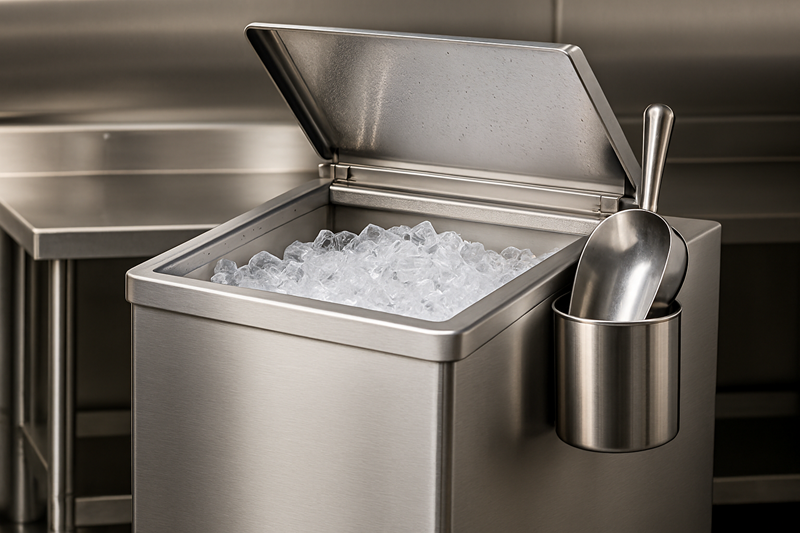
Ideal for small spaces and lower volume, such as cafes, bars, and auxiliary workstations.
Because of their compact design, under-counter units are perfect for establishments where space is at a premium. They provide immediate access to ice right where it's needed most, such as behind a cocktail bar or at a server's station, streamlining workflow and improving service speed. This makes them an excellent choice for small cafes, intimate bars, office breakrooms, and as supplemental units in larger restaurants.
Produce 50-100 lbs of ice daily, with built-in stainless steel ice storage.
Most under-counter ice makers are designed for low to moderate demand, with production capacities typically ranging from 50 to over 350 pounds of ice per day. For smaller operations, models producing between 50 and 100 pounds daily are often sufficient to meet daily needs without interruption. The integrated stainless steel ice storage bin typically holds between 25 and 90 pounds of ice, ensuring a ready supply is always on hand.
Simple installation.
Installation for under-counter units is relatively straightforward. Most models require a standard water line, a nearby drain for meltwater, and a standard 115V electrical outlet. Proper ventilation is also key, as most are air-cooled and need space for air to circulate to prevent overheating.
Modular Ice Machines and Standalone Stainless Steel Ice Storage Bins
For businesses with significant ice demands, a modular ice machine is the industry standard. These systems consist of a separate ice-making "head" unit that sits on top of a standalone stainless steel ice storage bin. This separation offers unmatched flexibility and scalability.
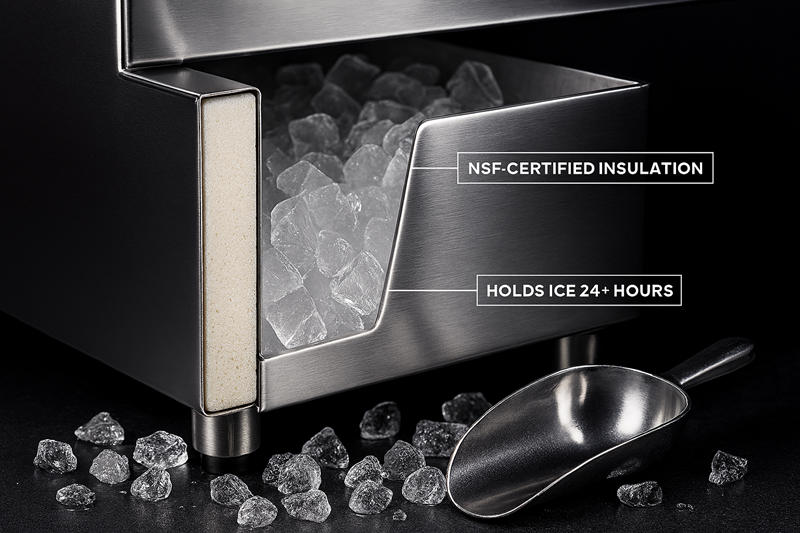
Suited for high-capacity needs in restaurants, hotels, and healthcare facilities.
Modular units are the workhorses of the commercial world, built for high-volume environments like large restaurants, busy hotels, event venues, hospitals, and institutional cafeterias. Their ability to produce and store large quantities of ice ensures that an operation never runs dry, even during the busiest rushes.
Produce 200-1000+ lbs of ice daily.
The production capacity of modular ice machines is vast, ranging from around 200 pounds to well over 1,000 pounds of ice per day. Some industrial models can even produce close to 2,000 pounds daily. This broad range allows businesses to select an ice maker head that precisely matches their projected peak usage.
Requires a separate stainless steel ice storage bin, offering greater flexibility.
The key advantage of a modular system is the ability to mix and match the ice maker head with a stainless steel ice storage bin of your desired capacity. A bin can be chosen to hold several hundred to over 1,200 pounds of ice, allowing a business to store enough ice to cover several hours or even a full day of service. This flexibility ensures you can build a system tailored to your exact needs.
Installation is moderate to complex, often requiring coordination with a refrigeration specialist.
Setting up a modular system is more involved than an under-counter unit. It requires careful planning for plumbing, drainage, and electrical connections. Due to the high-capacity nature and the separate components, professional installation by a refrigeration contractor is often recommended to ensure proper alignment, sealing, and performance.
Store-and-Dispense Ice Makers with Integrated Stainless Steel Ice Storage
Store-and-dispense units, also known as ice dispensers, combine ice making, storage, and dispensing into a single piece of equipment. They are commonly found in self-service environments where hygiene and convenience are top priorities.
Combines ice making and storage, common in restaurants and bars.
These all-in-one solutions are perfect for fast-food restaurants, hotel corridors, office breakrooms, and healthcare facilities. They offer a touch-free or lever-activated dispensing method, which minimizes cross-contamination by preventing users from scooping ice by hand.
Typically produces 300 to 1000 pounds of ice daily.
Production capacities for these dispensers are robust, often starting around 300 pounds and going up to 1000 pounds per day to meet consistent, high-traffic demand. The integrated stainless steel ice storage bin ensures a reserve is always ready to be dispensed.
Offers high capacity, efficiency, and convenience, making it an excellent choice for a dedicated stainless steel ice storage bin solution.
By combining three functions into one unit, ice dispensers save space and streamline operations. They provide unmatched convenience for both staff and customers, ensuring a fast and hygienic way to get ice. For any business focused on self-service, this integrated system is a top-tier choice.
Calculating Your Ice Needs and Selecting the Right Stainless Steel Ice Storage Bin
Choosing the right size ice machine and storage bin is a balancing act. Undersizing leads to frustrating shortages during peak hours, while oversizing results in wasted energy, water, and capital. By accurately estimating your daily consumption and planning for peak demand, you can invest in a system that perfectly supports your operations.
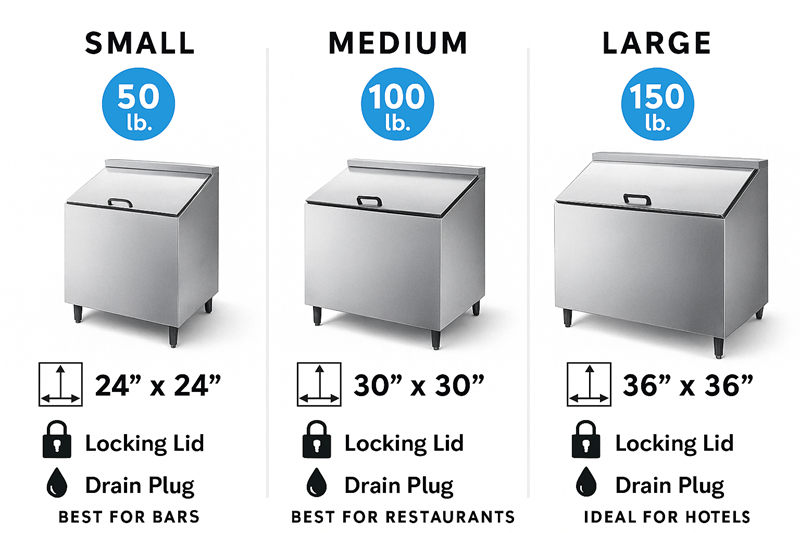
Estimating Daily Ice Usage
Ice consumption varies significantly across different types of businesses. Using established industry benchmarks is the best starting point for an accurate calculation.
Restaurants: 1.5-2 lbs per customer.
For a full-service restaurant, a standard guideline is to calculate 1.5 to 2 pounds of ice per guest. This accounts for ice in beverages, water glasses, and some back-of-house use.
Bars: Approximately 3 lbs per seat.
Bars and cocktail lounges have a much higher ice demand. With a focus on mixed drinks, cocktails on the rocks, and frozen beverages, the rule of thumb is to plan for approximately 3 pounds of ice per seat.
Cafes/Fast Food: 0.8-1.5 lbs per drink.
In quick-service restaurants or cafes where self-service beverage stations are common, ice usage can be high due to refills. A safe estimate is between 2 to 3 pounds per customer. For drive-thru or counter-service-only models, usage is lower, and calculations should be based on the average drink size sold.
Hospitals: 5-10 lbs per bed.
Healthcare facilities use ice for patient hydration, therapeutic applications like ice packs, and food service. Due to these varied needs, a higher estimate of 5 to 10 pounds of ice per hospital bed is recommended to ensure a safe and steady supply.
Adding a Buffer for Peak Demand for Your Stainless Steel Ice Storage Bin
Your average daily use is just a baseline. To ensure you never run out of ice during a dinner rush, heatwave, or special event, building a buffer into your calculations is crucial.
Always add a 25% buffer to your estimated daily usage.
A good general rule is to add at least a 20% to 25% buffer to your total estimated daily ice need. This extra capacity accounts for unexpected busy periods, seasonal demand spikes, and provides room for business growth without needing an immediate upgrade.
Consider an additional 20-30% capacity to avoid shortages during peak hours.
An ice machine produces ice over a 24-hour period, but your business consumes it in concentrated bursts. A larger stainless steel ice storage bin allows you to accumulate ice during slower periods and have a substantial reserve ready for peak hours. Sizing your bin to hold 20-30% more than your immediate peak demand is a smart strategy to prevent running out.
Matching Demand to Your Stainless Steel Ice Storage Bin Capacity
Once you have a clear picture of your total daily ice requirement, including the buffer, you can decide which type of ice machine and storage system is the right fit.
Assess if an under-counter unit with integrated stainless steel ice storage is sufficient or if a modular unit with a separate, larger stainless steel ice storage bin is needed.
- Low to Moderate Demand (under 300 lbs/day): If your daily need is relatively low, an under-counter machine with its integrated bin is often sufficient. It is compact, convenient, and cost-effective.
- High Demand (300+ lbs/day): If your calculations show a need for several hundred or even thousands of pounds of ice, a modular system is the only practical choice. This allows you to pair a high-production ice machine head with a large-capacity stainless steel ice storage bin that can keep up with your demanding workflow.
Ultimately, the goal is to select a machine that meets your regular ice needs comfortably, rather than sizing for a once-a-year event, which can lead to wasted ice and potential hygiene issues in an oversized bin.
Key Factors for Considering Your Stainless Steel Ice Storage Bin
Beyond production capacity, several other critical factors influence the ideal ice machine and storage bin for your business. Your available space, the type of ice you serve, and maintenance requirements all play a significant role in making the right long-term investment.
Space Limitations and Workflow for Your Stainless Steel Ice Storage Bin
The physical layout of your kitchen or service area is a primary constraint in choosing your equipment. An improperly placed machine can disrupt workflow and create inefficiencies.
Under-counter units save space and are convenient for quick access.
Under-counter ice machines are specifically designed for tight spaces. By fitting under bars or workstations, they provide immediate access to ice where it is most needed, reducing staff movement and speeding up service. Many models feature front-breathing ventilation, allowing them to be installed snugly between other pieces of equipment without needing side or rear clearance.
Modular units with dedicated stainless steel ice storage bins require more floor space but offer greater capacity.
Modular systems require a larger footprint to accommodate both the ice machine head and the separate storage bin. However, this setup offers logistical advantages. You can place a high-capacity bin in a centralized location for broad access or even use multiple smaller bins fed by one machine to serve different stations. Planning the placement is crucial to ensure it integrates smoothly into your kitchen's workflow.
Ice Type and Its Impact on Your Stainless Steel Ice Storage Bin
The shape and size of the ice you choose significantly affect beverage quality, presentation, and even your profit margins. Each ice type has specific applications and benefits.
| Ice Type | Description | Best For |
|---|---|---|
| Crescent Ice | Half-moon shape, moves freely in liquid, and packs tightly. | General restaurant and bar use, soft drinks, and self-service dispensers. |
| Cube Ice | Classic square shape (full or half cube), melts slowly, minimizing drink dilution. | Premium cocktails, high-end spirits, and general beverage service. |
| Flake Ice | Soft, snow-like texture that molds around objects. | Seafood and produce displays, salad bars, healthcare for cold compresses, and blended cocktails. |
| Nugget/Chewblet Ice | Soft, chewable pellets that absorb the flavor of the drink. | Healthcare facilities, cafes, smoothie shops, and for its popular "chewable" quality in sodas. |
The ice type you choose will influence the design and functionality of your stainless steel ice storage bin.
Different ice shapes have different storage densities. For example, softer ice like flake or nugget can be more prone to clumping or bridging in a bin if not managed properly. The design of the stainless steel ice storage bin, including the slope of the interior walls and the placement of the drain, helps ensure proper rotation and easy access, regardless of ice type.
Maintenance Requirements for Stainless Steel Ice Storage Bins
Ice is classified as a food by the FDA, making the cleanliness of your ice machine and storage bin a critical aspect of food safety. Regular maintenance prevents the buildup of scale, slime, and bacteria, ensuring you serve a safe and high-quality product.
Regular cleaning, descaling, and sanitation are crucial for both types of machines.
A consistent cleaning schedule is non-negotiable. Most manufacturers recommend a professional deep cleaning and sanitization at least every six months. Daily and weekly tasks, such as wiping down the exterior, inspecting air filters, and sanitizing the ice scoop, should be part of your staff's routine.
Under-counter units in cramped kitchens may need more frequent coil cleaning.
Because under-counter machines are often placed in tight, busy areas, their air filters and condenser coils can quickly become clogged with dust and grease. This restricts airflow, reduces efficiency, and can lead to equipment failure. Weekly checks and cleanings are essential in these environments.
Consider models with antimicrobial components and easy-to-clean designs to reduce maintenance costs for your stainless steel ice storage bin.
Many modern ice machines and bins are designed with maintenance in mind. Features like antimicrobial agents built into key components can inhibit the growth of bacteria and slime, extending the time between deep cleanings. Additionally, stainless steel ice storage bins with smooth, coved corners and easily removable baffles are much simpler to wipe down and sanitize thoroughly. By choosing equipment from a reputable Ice Storage Bin Manufacturer, you can ensure your investment is both durable and easy to maintain.
Installation and Operational Considerations for Your Stainless Steel Ice Storage Bin
Proper installation is fundamental to the performance and longevity of your commercial ice machine and its stainless steel storage bin. Each type of system has unique requirements for power, water, drainage, and ventilation that must be met to ensure efficient and trouble-free operation.
Under-Counter Ice Machine Installation with Integrated Stainless Steel Ice Storage
Installing an under-counter unit is generally less complex than a modular system, but it still requires careful planning to ensure it functions correctly within a confined space.
Requires a dedicated power outlet, cold water supply, nearby drain or optional drain pump, and ventilation space.
- Power: Most under-counter models operate on a standard 115V electrical circuit. It is essential to provide a dedicated, grounded outlet to avoid electrical issues.
- Water Supply: A cold water line, typically a 1/4-inch soft copper tube with a shut-off valve, must be accessible. For optimal performance, the incoming water temperature should be between 41°F (5°C) and 90°F (32°C).
- Drainage: All ice makers produce meltwater that needs to be drained. If a floor drain is conveniently located and lower than the machine's drain outlet, a gravity drain can be used. If the drain is elevated or far away, a model with a built-in drain pump or an external condensate pump will be necessary to actively remove the water and prevent backups.
- Ventilation: Since most under-counter units are air-cooled, they need adequate clearance for air circulation. Front-venting models are ideal for built-in installations, as they draw in and exhaust air from the front, but some models require several inches of clearance at the back and sides.
Modular Ice Machine Installation and Separate Stainless Steel Ice Storage Bins
Setting up a modular ice system is a more involved process that often benefits from professional expertise. The key is ensuring the ice maker head and the storage bin are compatible and correctly installed to work as a unified system.
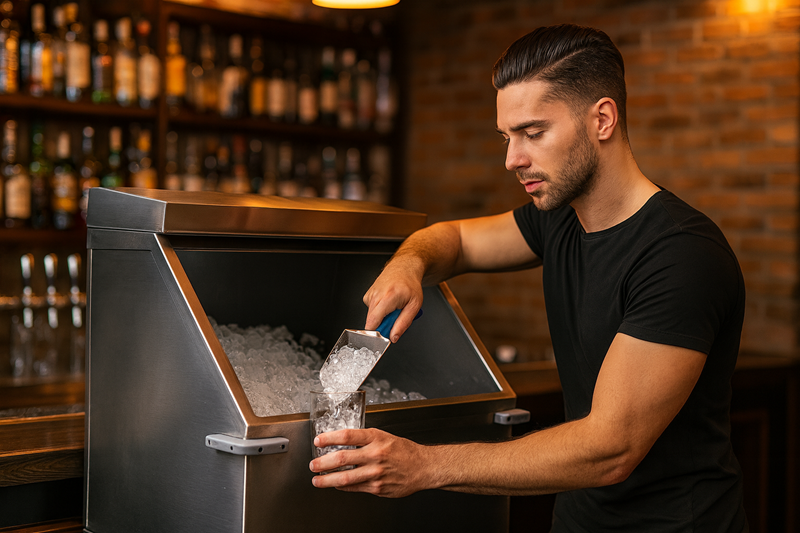
Requires selection of a stainless steel ice storage bin that matches production needs.
The first step is choosing a stainless steel ice storage bin that aligns with your machine's daily production capacity. The bin should be large enough to hold the ice produced during off-hours without overflowing, but not so large that ice sits unused for long periods. A bin that holds 10-20% more than the machine's daily output is a common recommendation for many businesses.
Ensure proper drainage and airflow, plan for electrical and plumbing, and coordinate with a refrigeration contractor.
- Drainage: Like under-counter units, modular systems require a drain for the ice maker head and another for the storage bin to handle meltwater. A floor drain is the most common solution.
- Airflow: Modular heads also need ample ventilation. Sufficient clearance—often at least 6 inches around the sides and back—is critical for air-cooled models to dissipate heat effectively.
- Coordination: Due to the complexity of connecting water lines, drains, and electrical systems, and the need to properly seal the ice maker to the bin, it is highly recommended to work with a licensed plumber and a certified refrigeration contractor. This ensures the installation is done correctly and complies with all local health and safety codes.
Cooling Systems and Their Impact on Your Stainless Steel Ice Storage Bin
The cooling system, or condenser, is the component responsible for removing heat from the refrigeration system, allowing water to freeze. The type of condenser you choose will depend on your kitchen's environment and budget.
Air-cooled: Most common and practical, dissipates heat via fans and vents.
Air-cooled systems are the most popular choice for commercial ice machines due to their lower upfront cost and simpler installation. They use fans to blow ambient air over the condenser coils to remove heat. However, they require a well-ventilated space to operate efficiently and will exhaust warm air into the surrounding area, which can increase the ambient temperature of a small kitchen.
Water-cooled: More efficient but uses significant water, quieter.
Water-cooled machines use a continuous flow of water to cool the condenser, making them independent of the surrounding air temperature. This allows them to operate efficiently in hot, cramped, or poorly ventilated kitchens where an air-cooled unit would struggle. They are also significantly quieter since they don't have condenser fans. The primary drawbacks are higher water consumption and potentially complex installation, as they require a separate water line for cooling.
Remote condensers: Installed outdoors for quiet operation, but with higher installation costs.
A remote condenser system, also known as a "split system," separates the noisy, heat-producing condenser from the ice-making unit. The condenser is installed outside—typically on a roof or behind the building—while the ice maker head remains inside the kitchen. This is the ultimate solution for creating a cool and quiet kitchen environment. Although the initial installation is more complex and expensive, it offers unparalleled performance, especially for high-capacity machines in open or noise-sensitive settings.
Custom Stainless Steel Ice Storage Bins by Samsink
Sometimes, standard, off-the-shelf equipment just doesn’t meet the unique demands of a specialized commercial operation. When your workflow, space, or capacity needs require a more tailored approach, a custom solution is the answer.
Tailored Solutions for Your Business
While Samsink is renowned for its expertise in manufacturing high-quality stainless steel sinks, our 30 years of experience extends to developing a wide range of custom stainless steel products. We understand that a standard ice storage bin may not fit perfectly into every kitchen layout or workflow. Whether you need specific dimensions, a unique configuration, or specialized access points, our team can engineer a solution designed for your exact requirements.
Direct from the Factory: Unmatched Customization for Your Stainless Steel Ice Storage Bin
As a direct Ice Storage Bin Manufacturer{:target="blank"}, Samsink offers an unparalleled level of customization that distributors and resellers simply cannot provide. We work with you to design and produce commercial stainless steel ice storage bins—whether freestanding, built-in, or mobile—that are tailored to your precise specifications. This factory-direct relationship eliminates communication gaps and allows for true innovation, delivering a bespoke product that integrates seamlessly into your operations. If you're looking for a custom solution that standard options can't match, Contact Samsink{target="blank"} to discuss how we can build the perfect stainless steel ice storage bin for your business.
Frequently Asked Questions (FAQ)
1. How often should I clean my stainless steel ice storage bin?
It's recommended to empty and thoroughly clean the interior of your ice bin with a food-grade sanitizer at least once a month to prevent the buildup of slime and bacteria. The exterior should be wiped down daily, and the ice scoop should be sanitized daily and stored in a clean holder, never in the ice itself.
2. What is the best type of ice for a bar? For high-end cocktails and spirits, full cube ice is ideal because it melts slowly and minimizes dilution. For general use in soft drinks and mixed drinks, half-cube or crescent ice are both excellent, cost-effective choices.
3. Can I stack a new ice machine head on an old storage bin? It is possible, but not always recommended. You must ensure that the new ice machine head is fully compatible with the make and model of the old bin. An improper fit can lead to air leaks, reducing efficiency, and creating hygiene issues. It's often best to purchase a compatible head and bin together.
4. Why is my ice machine not producing as much ice as it's rated for? Ice machine production rates are typically tested under ideal conditions (e.g., 70°F air and 50°F water). If your kitchen is hot or your incoming water is warm, production will decrease. A dirty condenser or clogged water filter can also significantly reduce output.
Conclusion
Selecting the right ice machine and pairing it with a durable, appropriately sized stainless steel ice storage bin will significantly enhance your business's efficiency, hygiene, and customer satisfaction. By taking the time to accurately calculate your ice needs, evaluate your available space, understand different ice types, and plan for proper installation and maintenance, you can avoid the common pitfalls of ice shortages and equipment failures.
Investing in high-quality equipment is a strategic move for long-term success. Understanding the unique requirements of your operation and the benefits of a well-chosen system is key. And remember, for those instances where a standard product doesn't quite fit, a custom solution can make all the difference. To explore a truly tailored approach for your industrial stainless steel needs, Contact Samsink and let our experts help you design the perfect solution.