How to Choose: Undermount vs. Top Mount Sink Explained
When renovating or designing a kitchen, one of the most critical decisions is choosing the right sink. The two primary options, undermount versus top-mount sinks, each offer distinct advantages and disadvantages that significantly impact both functionality and aesthetics. As we explore the differences between these two popular styles, we'll delve into installation, materials, cleaning, cost, and overall kitchen design to help you make an informed decision that best suits your home and lifestyle.
Key Takeaways
Choosing between an undermount and a top-mount sink is a significant decision in any kitchen design or renovation project, with implications for aesthetics, functionality, budget, and long-term maintenance. Understanding the core differences is the first step toward making a choice that aligns with your needs.
Undermount sinks are defined by their installation method: they are mounted from underneath the countertop, creating a seamless, continuous flow from the counter surface directly into the sink basin. This installation results in a sleek, modern, and often high-end look that is highly sought after in contemporary kitchen designs. One of the most significant functional advantages of this design is the ease of cleaning; crumbs and liquid can be wiped directly from the counter into the sink without being obstructed by a lip or rim. This feature not only streamlines daily cleanup but also contributes to a more hygienic kitchen environment by eliminating a common trap for grime and bacteria. Furthermore, by removing the sink's rim from the countertop, undermount sinks can free up a small but valuable amount of usable counter space. However, these benefits come with certain trade-offs. The installation of an undermount sink is more complex and labor-intensive, requiring a precise cut in the countertop and secure mounting with clips and adhesives to support the sink's weight. This complexity typically translates to higher installation costs. Additionally, undermount sinks are not compatible with all countertop materials; they require solid, non-porous surfaces like granite, quartz, or solid surface materials that can handle moisture exposure at the cutout's edge. Laminate or tile countertops are generally unsuitable.
Top-mount sinks, also known as drop-in or overmount sinks, are characterized by a visible rim or lip that rests on top of the countertop, supporting the sink's weight. This design makes installation significantly simpler and more forgiving than that of an undermount sink. A hole is cut into the counter, and the sink is simply "dropped" in and secured from below. This ease of installation makes top-mount sinks a popular choice for DIY projects and more budget-conscious renovations, as both the sink itself and the labor costs are typically lower. Top-mount sinks are also versatile in terms of countertop compatibility, working well with virtually any material, including laminate, which is a significant advantage for many homeowners. The primary disadvantages of top-mount sinks are related to aesthetics and cleaning. The visible rim breaks the smooth line of the countertop and can accumulate dirt, food particles, and grime in the seam between the sink and the counter, making it more challenging to keep the area perfectly clean. This lip can also take up a small amount of counter space and may not offer the same premium, modern aesthetic as its undermount counterpart.
Ultimately, the choice hinges on prioritizing these factors. If your primary goals are a sleek, modern aesthetic, ease of countertop cleaning, and you have a budget that can accommodate a solid surface countertop and professional installation, an undermount sink is an excellent choice that may even add to your home's resale value. Conversely, if you are working with a tighter budget, planning a DIY installation, or have laminate countertops, a top-mount sink offers a practical, affordable, and durable solution that comes in a wide variety of styles to suit any kitchen.
Understanding the Basics: Undermount vs Top Mount Sink Installation
Choosing a kitchen sink goes beyond just picking a style or material; the installation method is a fundamental difference that defines its look and function. The two main competitors in this arena are undermount and top-mount sinks, and their names say it all: one sits below the counter, and the other drops in from above. This core distinction in installation dictates everything from countertop compatibility and cleaning ease to the overall aesthetic of your kitchen.
What is an Undermount Sink?
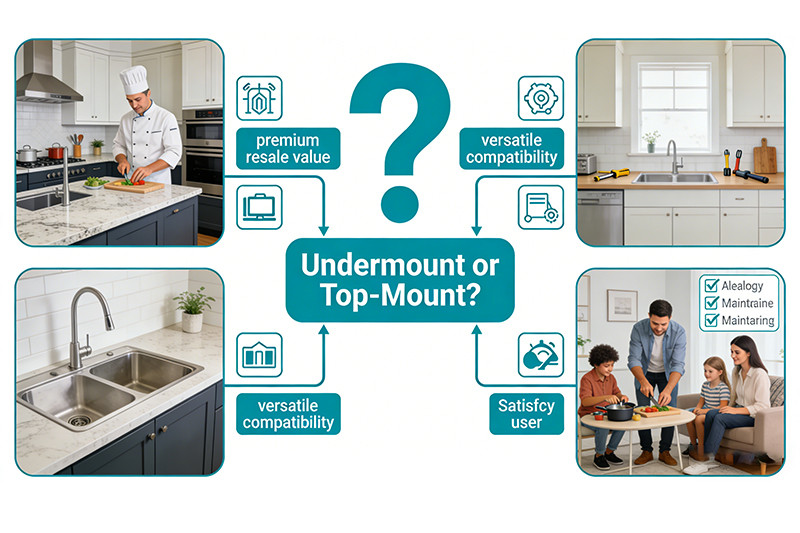
An undermount sink is installed from beneath the countertop, meaning there is no visible rim or lip on the counter surface. The edge of the sink is attached directly to the underside of the counter, typically with special clips and a strong silicone sealant to create a waterproof bond. This method results in a clean, uninterrupted flow from the countertop straight into the sink basin.
Seamless Aesthetics and Design
The primary appeal of an undermount sink is its sleek, modern, and minimalist appearance. By hiding the sink's rim, it creates a continuous and visually clean line across the kitchen, making the space feel more open and high-end. This seamless design is perfect for contemporary and minimalist kitchens, as it allows the countertop material to be the star of the show. With the sink out of the way, beautiful stone or quartz patterns are fully visible right up to the edge of the sink cutout. Many homeowners feel this "built-in" look elevates the entire kitchen's style and can even contribute to a higher resale value for the home.
Installation Complexities
The sophisticated look of an undermount sink comes at the cost of a more complex installation process. The cutout in the countertop must be perfectly precise, with a smooth, polished edge, since it will be visible. The sink, which can be quite heavy, must be securely supported from below using a combination of epoxy, silicone caulk, and specialized mounting clips or brackets to hold it firmly in place against the countertop. This process requires a high degree of skill and is typically not recommended for a novice DIYer; professional installation is often necessary to ensure a watertight seal and proper support. Failure to install it correctly can lead to leaks or even sink failure down the line.
What is a Top Mount Sink?
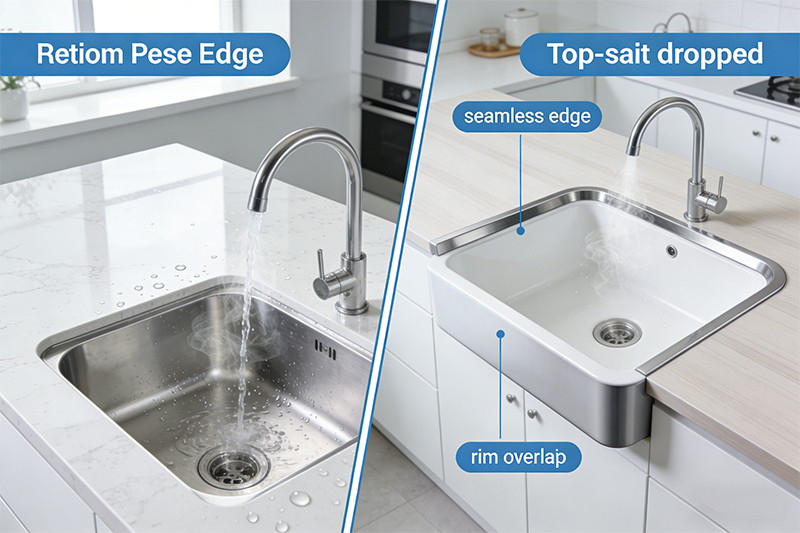
A top-mount sink, also commonly called a drop-in or overmount sink, is installed by dropping it into a pre-cut hole in the countertop. It features a visible rim or lip that rests on top of the counter, which bears the full weight of the sink. This rim is then sealed with caulk to prevent water from seeping underneath.
Traditional Appeal and Simpler Installation
Top-mount sinks are known for their incredibly straightforward installation. The cutout in the countertop does not need to be as precise as with an undermount sink, as the sink's rim will cover the edges of the hole. This makes them an ideal choice for DIY enthusiasts and quick kitchen updates. After the sink is placed, it is typically secured from below with clips. Because the process is less demanding, installation costs are generally lower. They are also compatible with nearly any countertop material, including laminate, which cannot be used with undermount sinks.
The Visible Rim and its Implications
The most defining characteristic of a top-mount sink is its visible rim. While this rim helps protect the edges of the countertop from chipping, it also creates a barrier between the counter and the sink. This lip can be a trap for food crumbs, grime, and gunk, making it slightly more challenging to keep the surrounding area perfectly clean. Modern designs have slimmed down this rim for a more streamlined look, but it remains a notable difference from the seamless undermount style. While some people find this look more traditional, others feel it can appear dated compared to the sleek alternative.
Performance and Practicality: Undermount vs Top Mount Sink in Daily Use
Beyond aesthetics and installation, the practical, day-to-day experience of using a sink is paramount. How easy is it to clean? How does it affect your available workspace? Is it compatible with your dream countertop? These questions are where the differences between undermount and top-mount sinks become truly tangible.
Ease of Cleaning and Hygiene Considerations
When it comes to cleaning the countertop, the undermount sink is the undisputed champion. Its signature feature—the lack of a rim on the counter surface—allows you to wipe water, crumbs, and other food debris directly into the sink basin without any obstruction. This creates a seamless and highly efficient cleaning process. This design not only saves time but also enhances kitchen hygiene by eliminating the crevice between the sink lip and the counter, which is a notorious breeding ground for grime and bacteria in top-mount sinks.
However, the area where the undermount sink meets the countertop underneath can be a small challenge. This hidden gap requires occasional cleaning to prevent potential mold or mildew buildup. In contrast, top-mount sinks are easier to clean within the basin and around their hardware, as all surfaces are visible and accessible. The main drawback remains the outer rim, where sealant can degrade and collect dirt over time, requiring diligent cleaning and occasional re-caulking to maintain a hygienic seal.
Countertop Space Utilization: Undermount vs Top Mount Sink
In the quest for a functional kitchen, every inch of counter space counts. Undermount sinks provide a slight but meaningful advantage in this area. By eliminating the lip that sits on the countertop, an undermount installation frees up that surrounding surface area, making the countertop feel more expansive. This not only contributes to a cleaner look but also provides a little extra usable space for prep work, small appliances, or a dish drainer right up to the sink's edge.
Top-mount sinks, by definition, occupy a portion of the countertop with their rim. While this "lost" space is often minimal, in smaller kitchens where every square inch is precious, the uninterrupted surface provided by an undermount sink can make a noticeable difference in both workflow and visual clutter. The continuous plane of an undermount setup allows for greater flexibility in how you use the space immediately around your sink.
Compatibility with Countertop Materials
The choice between an undermount and a top-mount sink is heavily influenced by your countertop material. This is perhaps the most critical technical constraint to consider.
Undermount sinks require strong, solid-surface countertops that are waterproof through and through. Because the edge of the countertop cutout is exposed, it must be able to withstand constant exposure to moisture without swelling, warping, or degrading. This makes materials like granite, quartz, marble, and solid-surface composites the ideal partners for an undermount sink. Laminate and most tile countertops are incompatible because their core materials (particleboard or grout lines) are vulnerable to water damage, which can lead to catastrophic failure.
Top-mount sinks, on the other hand, are the universal solution. Since their rim covers and protects the edge of the countertop cutout, they are compatible with virtually every material on the market, including budget-friendly options like laminate. This versatility makes top-mount sinks the go-to choice for renovations where existing laminate countertops are being kept, or where budget dictates the use of more affordable materials. The sink's rim provides a protective barrier, preventing water from reaching the vulnerable core of the countertop.
Here is a simple compatibility chart:
| Countertop Material | Undermount Sink | Top-Mount Sink |
|---|---|---|
| Granite / Quartz | ✔️ (Ideal) | ✔️ |
| Marble | ✔️ (Ideal) | ✔️ |
| Solid Surface | ✔️ (Ideal) | ✔️ |
| Concrete | ✔️ (Ideal) | ✔️ |
| Stainless Steel | ✔️ | ✔️ |
| Hardwood (Butcher Block) | ✔️ (With proper sealing) | ✔️ |
| Laminate | ❌ (Not Recommended) | ✔️ (Ideal) |
| Tile | ❌ (Not Recommended) | ✔️ |
This compatibility factor is often the ultimate decider for many homeowners, as the countertop investment can significantly influence the sink selection process.
Cost and Long-Term Value: Evaluating Undermount vs Top Mount Sink Choices
Your kitchen sink is an investment, so it's crucial to look beyond the initial appearance and consider the complete financial picture. This includes the upfront cost, ongoing maintenance expenses, and even the potential impact on your home's resale value. Both undermount and top-mount sinks have distinct financial profiles that can influence your decision.
Initial Costs: Undermount vs Top Mount Sink
When it comes to the initial outlay, top-mount sinks are the clear winner for budget-conscious homeowners.
- Top-Mount Sinks: These are generally more affordable in terms of both the sink unit itself and the installation. The simpler "drop-in" installation process requires less precision and time, which translates to lower labor costs if you're hiring a professional. Their compatibility with affordable countertop materials like laminate further reduces the overall project cost. This makes them an excellent choice for DIY renovators or those on a tight budget.
- Undermount Sinks: The sleek, seamless look of an undermount sink comes at a premium. The sinks themselves can be more expensive, especially handmade models. The primary cost driver, however, is the complex installation. It requires a precise, polished cutout in a solid surface countertop and meticulous mounting, which almost always necessitates a professional installer, adding significantly to the labor cost. You must also factor in the higher price of a compatible countertop (like granite or quartz), as laminate and tile are not suitable.
Maintenance Expenses and Lifespan
Over the long term, maintenance costs for both sink types are relatively low, but they have different areas that require attention.
- Top-Mount Sinks: The main maintenance task for a top-mount sink is managing the silicone or caulk seal around the rim. This seam can collect grime and may need to be cleaned regularly to maintain hygiene. Over several years, this sealant can degrade, discolor, or peel, and will need to be scraped out and reapplied to prevent water from seeping underneath and damaging the countertop. While this is a minor and inexpensive DIY task, it is a recurring maintenance point.
- Undermount Sinks: For undermount sinks, the critical maintenance area is the seal between the sink and the underside of the countertop. While less prone to trapping food debris than a top-mount rim, it's still important to clean this area to prevent mildew. The silicone caulk used here is robust, but experts recommend checking it every few years and potentially replacing it to ensure the waterproof seal remains intact. In terms of durability, a well-installed undermount sink, supported by a strong countertop, is very secure and can last for decades.
Both sink types, when made from quality materials like stainless steel or fireclay, are designed for a long lifespan. The durability of the sink material itself is often a more significant factor in its longevity than the installation style.
Impact on Home Resale Value: Undermount vs Top Mount Sink
While a kitchen sink alone may not make or break a home sale, it contributes to the overall impression and value of the kitchen, which is a major selling point.
- Undermount Sinks: An undermount sink is widely seen as a premium, modern feature that can increase a home's market appeal. Its clean, high-end look is strongly associated with upgraded kitchens featuring granite or quartz countertops. Potential buyers often perceive homes with undermount sinks as more valuable and stylish. This investment can therefore provide a tangible return by making your kitchen—and your home—more attractive to a competitive market.
- Top-Mount Sinks: A top-mount sink is a standard, functional choice that is unlikely to deter buyers, but it typically doesn't add the same "wow" factor or perceived value as an undermount model. In a highly modern or luxury-focused home, a top-mount sink could be seen as a dated feature. However, in most homes, especially those with laminate counters or in rental properties, it is a perfectly acceptable and practical option that meets expectations without necessarily exceeding them.
In summary, a top-mount sink is the more economical choice upfront, while an undermount sink is a long-term investment in style and potential resale value.
Materials Matter: Exploring Options for Undermount vs Top Mount Sink
The material of your kitchen sink is just as important as its installation style. It dictates the sink's durability, appearance, maintenance needs, and cost. Fortunately, most popular sink materials are available in both undermount and top-mount configurations, allowing you to find the perfect combination for your kitchen.
Stainless Steel Sinks
Stainless steel is the most popular choice for kitchen sinks, prized for its affordability, durability, and versatile appearance.
- Pros: Stainless steel sinks are lightweight, resistant to heat and rust, and easy to clean. They have a sleek, neutral look that complements a wide range of kitchen styles, from industrial to contemporary. High-quality, thicker-gauge steel (a lower number, like 16 or 18 gauge, is better) is more resistant to denting and noise.
- Cons: Lower-quality, thinner-gauge stainless steel can be noisy and prone to denting from heavy pots. The material can also show water spots and fingerprints and can be scratched by abrasive cleaners or utensils, though these scratches often blend into a patina over time.
Granite and Quartz Composite Sinks
Composite sinks, made from a mixture of crushed stone (like granite or quartz) and acrylic resins, offer the look of natural stone with enhanced durability.
- Pros: These sinks are incredibly tough, offering excellent resistance to scratches, chips, stains, and heat. They are non-porous, making them highly hygienic and easy to maintain. Available in a wide array of uniform colors, from matte black to classic white, they provide a modern and consistent look. Quartz composite is often noted for having a smoother, less porous surface compared to some granite composites.
- Cons: While extremely durable, they can be brittle. A hard impact from a dropped dish could potentially crack the sink or break the dish. Darker colored sinks may show mineral deposits from hard water, and some lower-quality composites can fade or discolor over time.
Cast Iron and Fireclay Sinks
For those seeking a classic, timeless look, particularly for farmhouse-style kitchens, cast iron and fireclay are premier choices.
- Cast Iron: These sinks are made from a heavy iron base coated in a thick layer of glossy enamel.
- Pros: Cast iron is exceptionally durable and has a beautiful, high-gloss finish that is easy to clean and resistant to stains. It's available in a variety of vibrant colors.
- Cons: They are extremely heavy, often requiring reinforced cabinetry for support. The enamel coating can chip if a heavy object is dropped on it, exposing the iron underneath which can then rust.
- Fireclay: Made from a special clay fired at extremely high temperatures, fireclay fuses the clay and glaze together into one solid, durable piece.
- Pros: Fireclay is highly resistant to scratches, staining, and chipping. Since the color is consistent throughout the material, a chip, if it occurs, is less noticeable than on a cast iron sink. It offers a timeless, elegant look ideal for traditional and farmhouse kitchens.
- Cons: Like other ceramic materials, it can be prone to cracking from severe thermal shock or a very hard impact. There is also less color variation available compared to enameled cast iron.
Other Materials for Undermount vs Top Mount Sink Applications
For a truly unique kitchen design, you might consider less common but equally striking materials.
- Copper: A copper sink develops a unique "living finish" or patina over time, which adds warmth and character to the kitchen. Copper also has natural antimicrobial properties, making it a very hygienic choice. However, they require more care to maintain their appearance and can be quite expensive.
- Stone: Sinks carved from a solid block of natural stone like marble or soapstone offer unparalleled luxury and a one-of-a-kind appearance. They are incredibly durable but also extremely heavy and are among the most expensive options. They also require regular sealing and careful maintenance.
- Solid Surface: These sinks can be integrated seamlessly with a solid surface countertop of the same material, creating a completely unified and continuous look with no joints or seams at all. They are non-porous and easy to repair if scratched.
Each material brings its own set of strengths and considerations, allowing you to tailor your sink choice to your lifestyle, budget, and design vision.
Making Your Decision: Which Undermount vs Top Mount Sink is Right for You?
The final decision between an undermount and a top-mount sink rests on a careful balance of your personal circumstances, including your property type, daily usage habits, aesthetic vision, and, of course, your budget. By evaluating these key factors, you can move from comparison to confident choice.
Consider Your Property Type and Usage
How you use your kitchen and the type of property it's in can steer you toward the most practical choice.
- For High-Traffic Family Homes: A busy kitchen with lots of cooking and cleaning benefits greatly from the easy countertop cleanup offered by an undermount sink. Being able to wipe messes directly into the basin simplifies daily chores. The durability of materials like stainless steel or granite composite in an undermount style can stand up to heavy use.
- For Rental Properties or Apartments: Top-mount sinks are often the superior choice for rental units. Their lower initial cost and ease of installation and replacement make them a more economical and practical option for landlords. Their compatibility with durable and affordable laminate countertops is another significant advantage in a rental setting.
- For the Aspiring Chef: If you spend a lot of time in the kitchen, functionality is key. The extra, seamless counter space around an undermount sink can be valuable for food prep. Additionally, options like large, single-basin undermount sinks are ideal for washing oversized pots and pans.
Budget, Aesthetics, and Long-Term Goals
Your financial plan and design dreams are powerful drivers in this decision.
- Budget-Focused Renovations: If keeping costs down is your top priority, a top-mount sink is the clear winner. Both the sink itself and the installation are cheaper, and you save money by being able to use less expensive countertop materials like laminate.
- Aesthetics-Driven Design: For those dreaming of a sleek, modern, or high-end kitchen, the undermount sink is almost always the preferred choice. Its seamless integration with stone or quartz countertops provides a clean, luxurious look that is difficult to replicate with a top-mount model. This style is an investment in your home's overall aesthetic and can enhance its resale value.
- Long-Term Goals: If this is your "forever home," investing in an undermount sink and a quality countertop might be a worthwhile expenditure for the daily convenience and lasting style it provides. If you plan to sell in the near future, an undermount sink could be a strategic upgrade to attract buyers. Conversely, a top-mount sink is a perfectly sound choice for a more temporary living situation or if you anticipate another renovation in several years.
Professional vs. DIY Installation for Undermount vs Top Mount Sink
Your comfort level with home improvement projects should also play a role in your choice.
- DIY Installation: Top-mount sinks are significantly more DIY-friendly. The process involves cutting a hole (which the sink's rim will cover, hiding minor imperfections) and securing the sink with clips from below. With basic carpentry skills and the right tools, many homeowners can successfully install a top-mount sink themselves, saving on labor costs.
- Professional Installation: Undermount sink installation is a job best left to the professionals. It requires a precise, perfectly finished cutout, and the sink must be securely mounted with specialized adhesives and supports to bear its weight filled with water. Improper installation can lead to leaks, countertop damage, or even the sink detaching, making the cost of a professional installer a wise investment for peace of mind.
By thoughtfully weighing these personal factors against the pros and cons of each sink type, you can select the perfect model that not only looks great but also seamlessly fits your life.
Frequently Asked Questions (FAQ)
1. Which sink is more expensive, undermount or top mount?
Undermount sinks are consistently more expensive than top-mount sinks when considering the total cost. There are two main reasons for this. First, the installation process for an undermount sink is more complex and labor-intensive, requiring precise cutting of the countertop and secure mounting from below, which usually necessitates hiring a professional. This increases labor costs. Second, undermount sinks must be paired with solid, waterproof countertop materials like granite, quartz, or solid surface, which are more costly than the laminate countertops that are perfectly suitable for top-mount sinks. While the sink units themselves might be comparably priced, the associated installation and material requirements make the overall undermount project a bigger investment.
2. Can I install an undermount sink with a laminate countertop?
It is strongly advised against installing an undermount sink with a laminate countertop. Laminate countertops are typically made with a particleboard core that is highly susceptible to water damage. An undermount installation exposes the raw edge of this core around the sink cutout. Constant exposure to splashes and moisture can cause the particleboard to swell, warp, and crumble, leading to the failure of the countertop and the sink's mounting. Top-mount sinks are the appropriate choice for laminate counters because their rim covers and protects this vulnerable edge from water.
3. Which sink type is easier to clean?
This question has a two-part answer. For cleaning the countertop, an undermount sink is far easier. You can sweep crumbs and wipe spills directly into the sink without the obstruction of a rim, which is a major advantage for daily tidiness and hygiene. For cleaning the sink itself, a top-mount sink can be slightly easier, as all its parts are visible and accessible. The main challenge with a top-mount sink is cleaning the crevice where the rim meets the countertop, as this area can trap grime. An undermount sink's hidden mounting area beneath the counter can also gather gunk and requires occasional cleaning, but it's generally less of a daily concern.
4. Do undermount sinks add more to a home's resale value?
Yes, undermount sinks are generally considered a feature that adds to a home's resale value. They are associated with modern, high-end kitchens and are seen by many potential buyers as a desirable upgrade. Because they are paired with premium countertops like granite or quartz, their presence signals a more luxurious and well-appointed kitchen, which is a significant selling point for a home. While a top-mount sink is perfectly functional, it doesn't typically carry the same "premium" connotation and is less likely to be a standout feature that boosts perceived value.
5. What is the most durable kitchen sink material?
Durability can be measured in different ways (resistance to scratches, stains, heat, or impact), but some of the top contenders are granite/quartz composite, fireclay, and high-quality, thick-gauge stainless steel.
- Granite/Quartz Composite: These sinks are exceptionally resistant to scratches, chips, stains, and heat. Their non-porous surface is very hard and stands up well to heavy daily use.
- Fireclay: Fired at extremely high temperatures, fireclay is incredibly tough and resistant to staining and scratching. It is less prone to chipping than enameled cast iron.
- Stainless Steel (16-gauge): While it can be scratched, high-quality, thick-gauge stainless steel is highly resistant to heat, rust, and impact. It won't chip or crack like stone or ceramic materials can.
Cast iron is also extremely durable, but its enamel coating can be susceptible to chipping under heavy impact.
6. Can a top-mount sink look modern?
Absolutely. While undermount sinks are more closely associated with modern design, top-mount sinks have evolved significantly. Many manufacturers now offer top-mount sinks with very slim, low-profile rims that minimize the traditional bulky look. When paired with a modern faucet and crafted from contemporary materials like black granite composite or sleek stainless steel, a top-mount sink can fit beautifully into a modern kitchen aesthetic. The key is to choose a model with clean lines and a minimal edge.
7. How often does the sealant need to be replaced on a kitchen sink?
For both sink types, the 100% silicone sealant used is very durable, but it doesn't last forever. For a top-mount sink, where the sealant is exposed, you may notice it peeling, discoloring, or shrinking after 3-5 years, especially with heavy use and cleaning. This is a good time to replace it. For an undermount sink, the sealant is protected underneath the counter. It's recommended to inspect it every few years for any signs of gaps or degradation. A high-quality installation may last 10 years or more, but it's wise to consider resealing as a preventative measure every 5-7 years to ensure a perfectly waterproof bond.
Conclusion
Ultimately, the choice between an undermount and a top-mount sink is a personal one, influenced by your specific needs, aesthetic preferences, budget, and the practical characteristics of your kitchen. There is no single "best" option, only the best option for you.
By carefully weighing the pros and cons—the seamless, easy-to-clean counters of an undermount sink versus the affordable, DIY-friendly installation of a top-mount—you can make a confident decision. Considering factors like material compatibility, long-term maintenance, and your design vision will empower you to select the perfect sink. This choice will not only complement your kitchen's style but also enhance your daily life by making your most-used workspace more functional and enjoyable. Whatever you choose, a well-considered sink is a cornerstone of a well-loved kitchen.