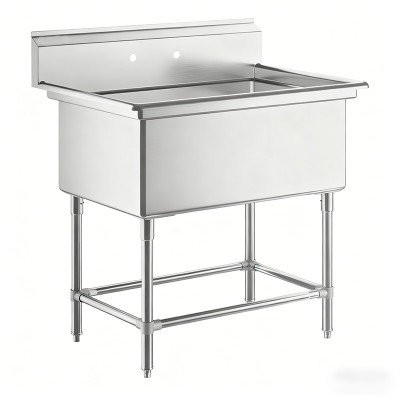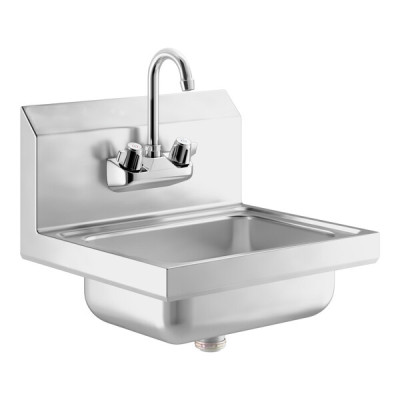
Medical Sinks and Pharmaceutical Waste Management: Explained
You might not think much about it, but what happens to old medicines and medical waste is critically important for our health and the planet. When we talk about healthcare, waste management is a monumental topic, and its impact reaches far beyond the walls of a hospital or clinic.
Pharmaceutical waste includes everything from expired pills and unused prescriptions to specialized liquids and contaminated materials from healthcare procedures. Safely disposing of this waste isn't just a good idea—it's a legal and ethical imperative to protect our environment and ourselves from potential harm.
Today, we're going to explore how medical facilities handle this complex challenge, focusing on the unsung heroes of proper disposal: specialized medical sinks. We'll uncover the crucial role these fixtures play in keeping healthcare environments and the world outside them safe and clean.
Why Specialized Medical Sinks Are Our First Line of Defense Against Pharmaceutical Waste
Before we dive into the specifics of medical sinks, it's essential to understand the gravity of the problem they help solve. Improper disposal of pharmaceutical waste poses significant threats, and the specialized design of medical sinks is a direct response to these dangers.
Understanding Different Types of Medical Waste We Deal With
Medical waste isn't a single category; it's a broad term encompassing various materials generated by healthcare activities. The U.S. Environmental Protection Agency (EPA) provides guidance on classifying this waste, which generally falls into several key types. Pharmaceutical waste is a significant part of this stream and is broadly divided into two main categories: non-hazardous and hazardous.
Non-Hazardous Pharmaceutical Waste: This is the most common type, making up about 90% of all pharmaceutical waste. It includes expired or unused medications that are not classified as hazardous under the Resource Conservation and Recovery Act (RCRA). Examples include:
- Over-the-counter (OTC) medications like ibuprofen or nutritional supplements.
- Most expired prescription drugs (that are not RCRA hazardous).
- IV bags and saline solutions without hazardous additives.
- Empty pill bottles, used ointment tubes, and blister packs.
Even though it's called "non-hazardous," this waste still requires special handling and cannot be simply thrown in the trash or washed down the drain.
Hazardous Pharmaceutical Waste: This category includes drugs that pose a substantial threat to human health or the environment. A pharmaceutical is considered hazardous if it is specifically listed by the RCRA or exhibits one or more of four characteristics: ignitability, corrosivity, reactivity, or toxicity. This waste represents only 5-10% of pharmaceutical waste but requires the strictest disposal protocols.
Examples of hazardous waste include:
- P-listed and U-listed wastes: These are specific commercial chemical products, which include certain chemotherapy agents (like Warfarin), nicotine patches, and other potent drugs.
- Chemotherapy drugs: Many of these are cytotoxic, meaning they are toxic to cells, and are considered hazardous.
- Endocrine disruptors: Certain hormones fall into this category.
- Heavy metals: Some pharmaceuticals contain heavy metals like mercury.
Beyond pharmaceuticals, healthcare facilities also generate other types of regulated medical waste, such as:
- Infectious Waste: Anything contaminated with blood, body fluids, or other potentially infectious materials. This includes used swabs, cultures, and lab samples.
- Pathological Waste: Human tissues, organs, and body parts.
- Sharps Waste: Needles, scalpels, and other items that can cause punctures or cuts.
The table below provides a simplified breakdown of these waste categories.
| Waste Category | Examples | Disposal Consideration |
|---|---|---|
| Non-Hazardous Pharmaceutical | Expired OTC meds, most prescription drugs, IV solutions | Must be segregated and sent for incineration. |
| Hazardous Pharmaceutical | Chemotherapy drugs, P/U-listed drugs, some hormones | Requires strict handling, specialized containers, and disposal at a hazardous waste facility. |
| Infectious Waste | Blood-soaked bandages, cultures, contaminated gloves | Must be treated (e.g., autoclaved) before landfill disposal. |
| Sharps Waste | Used needles, syringes, scalpels | Must be placed in puncture-proof containers. |
The Big Risks If We Don't Handle Waste Properly
Failing to manage pharmaceutical and other medical waste correctly has severe and far-reaching consequences. These risks affect public health, environmental stability, and the legal standing of healthcare facilities.
Environmental Contamination: One of the most significant dangers is water pollution. When medications are flushed down a sink or toilet, they enter the wastewater system. Most treatment plants are not designed to filter out the complex active pharmaceutical ingredients (APIs) found in these drugs. As a result, these chemicals are discharged into rivers, lakes, and oceans, where they can have devastating effects.
- Aquatic Life: Research shows that APIs in waterways can alter the reproductive systems of fish, leading to "feminization" in males and threatening population stability. Hormonal disruptions and other toxic effects jeopardize the survival of many aquatic species.
- Antibiotic Resistance: The release of antibiotics into the environment contributes to the rise of antibiotic-resistant bacteria, a major global health threat that makes infections harder to treat in humans.
- Soil and Groundwater Contamination: Pharmaceuticals thrown in the trash can end up in landfills, where they can leach into the soil and contaminate groundwater, potentially entering the food supply.
Public Health Crises: Improper disposal also creates direct risks for people.
- Accidental Poisoning and Diversion: Unused medications, especially controlled substances like opioids, left in homes or thrown in the trash can be found and misused, contributing to the opioid epidemic and accidental poisonings in children and pets.
- Spread of Disease: Contaminated sharps and infectious waste discarded in public areas can lead to needlestick injuries, exposing sanitation workers and the general public to serious infections like HIV, Hepatitis B, and Hepatitis C. The World Health Organization has noted that a significant percentage of hepatitis cases globally are linked to improper medical waste disposal.
- Contaminated Drinking Water: With trace amounts of pharmaceuticals being detected in drinking water supplies across the country, there is growing concern about the long-term health effects of low-level exposure to these chemicals.
Legal and Financial Penalties: Healthcare facilities that fail to comply with disposal regulations face severe consequences. The EPA and state agencies can levy massive fines for violations. For example, a Wisconsin hospital was fined $360,000 for pharmaceutical waste violations. Beyond financial penalties, non-compliance can lead to a loss of licensing and severe damage to a facility's reputation.
Why Regular Sinks Just Aren't Enough for Medical Waste
Given the stakes, it might be tempting to think any sink will do for liquid waste. However, this is a dangerous misconception. The EPA explicitly warns against flushing most pharmaceuticals down the drain. A standard residential or commercial sink is fundamentally ill-equipped to handle the demands of medical waste disposal for several reasons.
Lack of Durability and Proper Materials: Regular sinks are often made from materials like porcelain or lower-grade stainless steel that can crack, chip, or corrode. These imperfections can harbor bacteria and are difficult to properly sanitize, increasing the risk of cross-contamination. Medical sinks, in contrast, are built from high-grade, non-porous stainless steel with seamless construction to eliminate crevices where pathogens can hide.
Design Flaws for Infection Control: Standard sinks are not designed with infection control in mind. They often have overflow drains, plug stoppers, and faucet designs that can become breeding grounds for germs. Water can splash back from a shallow basin, contaminating surfaces and the user. Clinical sinks, however, are engineered to prevent splash-back, often feature deeper basins, and may lack plugs to ensure waste is immediately dispatched.
Inability to Connect to Appropriate Drainage Systems: Pouring hazardous chemicals or certain pharmaceuticals into a standard sink sends them directly into the public sewer system. As discussed, wastewater treatment plants are not designed to remove these substances. Specialized medical disposal sinks, or "sluice" sinks, are often connected to a dedicated sanitary sewer system or holding tanks designed to manage and treat hazardous effluent before it ever reaches public waterways.
No Features for Safe Handling: Standard sinks rely on manual faucets, which require users to touch potentially contaminated surfaces. Medical sinks often incorporate hands-free controls, such as foot pedals, knee-operated panels, or infrared sensors, to minimize contact and reduce cross-contamination. This is a critical feature in a sterile environment.
In short, a regular sink is a liability in a clinical setting. To manage pharmaceutical waste safely and effectively, a specialized solution is not just an option—it is a mandatory line of defense. Brands like Samsink specialize in manufacturing these high-specification sinks, designed from the ground up to meet the stringent demands of healthcare environments and ensure compliance with safety regulations.
The Smart Design and Function of Medical Sinks for Waste Segregation
Medical sinks are much more than simple basins for washing hands; they are sophisticated, purpose-built tools engineered to handle the rigorous demands of healthcare environments. Their design prioritizes safety, infection control, and efficient waste segregation. Manufacturers like Samsink have refined these features to create fixtures that are indispensable in modern medical facilities.
Cool Features That Make Medical Sinks Special
Also known as sluice sinks, slop hoppers, or clinical disposal units, these sinks incorporate specific design elements that set them apart.
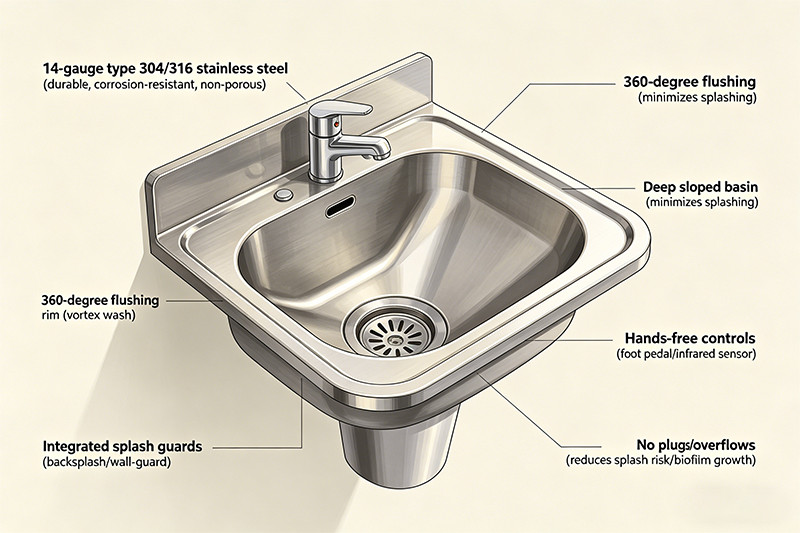
- Durable, Hygienic Material: The gold standard for medical sinks is heavy-duty, 14-gauge type 304 or 316 stainless steel. This material is chosen for its exceptional durability, resistance to corrosion from harsh chemicals and disinfectants, and non-porous surface that makes it difficult for bacteria to adhere and form biofilms.
- Flushing Rim: A key feature is the flushing rim, which functions much like a toilet. It provides a powerful, 360-degree vortex or spiral wash down of the entire basin, ensuring that all liquid waste is completely and quickly removed from the sidewalls and evacuated efficiently.
- Deep, Sloped Basin: Medical disposal sinks feature a deep, conical bowl to minimize splashing—a major contributor to the spread of pathogens in clinical settings. The sloped design prevents waste from pooling and encourages rapid drainage into a large outlet, further reducing contact with contaminants.
- Hands-Free Operation: To minimize cross-contamination, many medical sinks are equipped with hands-free controls. These can include foot pedals, knee-operated panels, or infrared sensor-activated flushing and water flow. This design eliminates the need for staff to touch faucet handles or flush levers with contaminated hands.
- Integrated Splash Guards: Backsplashes and wall-guard shrouds are often part of the design to contain splashes and prevent contamination of the surrounding environment, such as countertops where sterile supplies might be placed.
- Absence of Plugs and Overflows: Unlike residential sinks, clinical disposal units typically do not have plugs or overflow channels. This is a deliberate design choice to prevent the sink from being filled—which increases splash risk—and to eliminate hard-to-clean areas where pathogenic biofilms can thrive.
How Different Medical Sinks Help Sort Different Waste Types
Not all medical sinks are the same; they are designed and situated to facilitate waste segregation at the point of generation. This is a critical step in a successful waste management program.
- Sluice Sinks/Slop Hoppers: Located in "dirty utility rooms" or sluice rooms, these are the workhorses for liquid clinical waste. They are specifically designed for the disposal of non-regulated biological fluids, such as contents from bedpans, urinals, and drainage bags. Their robust flushing mechanism and connection to the soil pipe ensure this waste is handled hygienically and kept separate from general wastewater.
- Combination Units: Some designs integrate a sluice sink with a separate basin and drainboard. This allows staff to dispose of liquid waste in the hopper and then clean the reusable container (like a bedpan) in the adjacent sink without moving to a different station, streamlining workflow and preventing cross-contamination between dirty and clean areas.
- Specialized "Smart Sinks": For high-risk pharmaceutical waste, particularly controlled substances, advanced systems have been developed. The Cactus Smart Sink, for example, is a self-contained unit designed to render drugs "unrecoverable and unusable." It has separate receptacles for liquid and solid controlled substances. When waste is added, internal cartridges deactivate the active pharmaceutical ingredients. This type of sink ensures that potent drugs are not diverted and do not enter the environment.
- Plaster and Clay Sinks: Found in orthopedic or dental clinics, these sinks have special traps to catch materials like plaster of Paris, which would otherwise clog standard plumbing. This segregates a specific type of non-hazardous but problematic solid waste.
By strategically placing these different types of sinks, a healthcare facility creates a clear, intuitive system for staff to follow, ensuring that different waste streams are properly segregated from the very start.
Keeping It Clean: How Medical Sinks Stop Contamination Right Away
Recent studies have shown that sink drains can become significant reservoirs for multidrug-resistant organisms (MDROs), which form resilient biofilms in the plumbing. The design of medical sinks directly combats this risk.
By enabling immediate and contained disposal, sluice sinks prevent waste from being left in open containers where it could aerosolize and contaminate the air and surrounding surfaces. A study highlighted in Infection Control & Hospital Epidemiology found that splashes from contaminated sinks can spread pathogens to nearby patient care items. The anti-splash features of medical sinks—like deep basins and gooseneck faucets aimed to the side of the bowl rather than directly into the drain—are crucial for minimizing this risk.
The separate "dirty" and "clean" pathways promoted by sluice room design are fundamental to infection control. Disposing of waste in a designated sluice sink prevents the contamination of handwashing sinks or areas used for preparing medications, a separation that is essential for patient and staff safety.
Simple Steps for Flushing and Cleaning Medical Sinks
Proper use and maintenance are as important as the sink's design itself. Following strict cleaning protocols ensures the sink remains a tool for infection control, not a source of it.
Flushing Protocol:
- Wear Appropriate PPE: Always don gloves, an apron, and face protection (goggles or a face shield) before handling and disposing of waste.
- Minimize Splashing: When pouring liquid waste into the hopper, do so slowly and carefully to prevent splashes.
- Activate Flush: Use the hands-free mechanism (foot pedal, sensor, or lever) to activate the powerful rim flush, which will wash down the bowl and send the waste down the soil pipe.
- Rinse the Container (if applicable): If cleaning a reusable item, use the adjacent hand-spray or sink to rinse it thoroughly after emptying.
Cleaning and Disinfection Protocol:
- Gather Equipment: Use color-coded cloths and buckets designated for dirty utility areas to prevent cross-contamination. Prepare fresh cleaning and disinfecting solutions according to manufacturer instructions.
- Initial Cleaning: After a disposal task, clean the sink bowl and surrounding surfaces. Remove any visible soil or debris with a disposable wipe or cloth saturated in detergent.
- Disinfect Surfaces: Apply a hospital-grade disinfectant to the sink surfaces, including the flushing rim, basin, and surrounding splash guards. Follow the manufacturer's specified contact time to ensure pathogens are killed.
- Clean from Clean to Dirty: When performing a full clean, work from the cleanest areas to the dirtiest. Start with the faucets and outer surfaces, move to the inner basin, and finish at the drain, which is the most contaminated area.
- Rinse and Dry: After disinfection, thoroughly rinse all surfaces with clean water to remove chemical residues, which can be corrosive over time. Dry the sink completely with a lint-free cloth to prevent water spots and inhibit bacterial growth.
- Regular Flushing: Even when not in use, some protocols recommend flushing taps for several minutes daily to prevent water stagnation and disrupt biofilm formation in the pipes.
By combining intelligent design with rigorous protocols, medical sinks become a cornerstone of a facility's strategy to manage pharmaceutical and clinical waste safely and effectively.
Following the Rules: How Medical Sinks Help Us Stay Compliant with Waste Laws
Properly managing pharmaceutical waste isn't just about best practices; it's about adhering to a complex web of stringent federal and state regulations. Medical sinks are not merely fixtures but essential tools that enable healthcare facilities to comply with these laws, avoid hefty penalties, and ensure public and environmental safety.
Important Rules and Regulations We Need to Know
The disposal of pharmaceutical waste is governed by several key federal agencies, with state laws often adding another layer of requirements.
Environmental Protection Agency (EPA): The primary regulation governing hazardous waste is the Resource Conservation and Recovery Act (RCRA). The EPA provides a framework for identifying which pharmaceuticals are considered hazardous waste. In 2019, the EPA enacted a final rule under 40 CFR Part 266 Subpart P, which specifically addresses the management of hazardous waste pharmaceuticals by healthcare facilities.
Key provisions of this rule include:
- Sewer Ban: A nationwide ban on disposing of hazardous waste pharmaceuticals down the drain (i.e., in sinks or toilets) is a cornerstone of this regulation. This makes the use of appropriate collection containers and disposal sinks for non-hazardous liquids paramount.
- Simplified Management: The rule simplifies how healthcare facilities manage their hazardous pharmaceutical waste, relieving them from some of the more burdensome requirements applied to industrial generators.
- Nicotine Exemption: The rule excludes over-the-counter (OTC) nicotine replacement therapies (patches, gums, and lozenges) from the P075 hazardous waste listing, which simplifies their disposal.
Drug Enforcement Administration (DEA): The DEA regulates controlled substances through the Controlled Substances Act. The DEA's "Disposal of Controlled Substances Final Rule" (21 CFR Parts 1300, 1301, etc.) aims to prevent drug diversion. A key requirement is that controlled substances must be rendered "non-retrievable," meaning they are permanently altered and cannot be reused.
- The rule clarifies that simply flushing drugs or mixing them with coffee grounds is not acceptable for registrants (like hospitals).
- While the DEA does not explicitly regulate "pharmaceutical wastage" (the small residual amount left after administering a dose to a patient), this waste must still be destroyed in accordance with all applicable federal, state, and local laws.
- Destruction of inventoried controlled substances must be documented on a DEA Form 41 and witnessed by two employees.
Occupational Safety and Health Administration (OSHA): OSHA's standards, like the Bloodborne Pathogens Standard (29 CFR 1910.1030) and the Hazard Communication Standard, focus on worker safety. These regulations mandate that employees be trained on the hazards of the chemicals and wastes they handle, use appropriate personal protective equipment (PPE), and know the procedures for safe handling and spill response.
Centers for Disease Control and Prevention (CDC): The CDC provides guidelines on infection control. It specifically recommends avoiding the disposal of body fluids, IV fluids, and medications in patient room sinks, as this can promote the growth of dangerous biofilms in the drains. It also emphasizes that handwashing sinks should be separate from those used for waste disposal.
Specialized medical sinks help facilities adhere to these overlapping regulations. Sluice sinks ensure that liquid waste is handled in a dedicated, hygienic manner, supporting the CDC's call for separating waste disposal from handwashing. For hazardous waste, these sinks become part of a larger compliant workflow where liquids are either captured for treatment or disposed of in a system that aligns with EPA and DEA requirements.
Keeping Records: What Happens at the Medical Sinks
Thorough documentation is a legal requirement and a critical component of a compliant waste management program. What happens at and around the disposal sink must be logged meticulously to create a "cradle-to-grave" trail for the waste.
Waste Generation and Disposal Logs: Facilities must maintain detailed logs of the pharmaceutical waste they generate and dispose of. For hazardous waste regulated by the EPA, manifests that track the waste from the facility to the final disposal site are required. These records must be kept for years and serve as proof of compliance during an audit.
Controlled Substance Wastage Records: Even for residual amounts of controlled substances disposed of in a sink or specialized system, documentation is crucial. Although a DEA Form 41 may not be required for this "wastage," internal records must be kept. These logs typically require:
- Patient identification
- Drug name, strength, and amount administered
- Amount wasted
- The date and time of the disposal
- Signatures of two employees who witnessed the disposal/destruction
These records demonstrate that the facility is taking active measures to prevent drug diversion.
Smart Systems with Automated Record-Keeping: Advanced disposal systems, like the Cactus Smart Sink, often include features that aid in documentation. These systems can have audible and visual alerts for when they are full and can track usage, providing an electronic record that supplements manual logs and enhances accountability. These features help simplify the complex logging processes required by the DEA.
Learning the Ropes: Training for Using Medical Sinks Safely
Effective training is not just a good practice—it is a legal mandate from agencies like OSHA. All employees who handle or may be exposed to medical and pharmaceutical waste must receive comprehensive training before they begin their duties and annually thereafter.
Key Components of Staff Training: Training programs must be role-specific and cover all aspects of the waste management process, including the safe use of disposal sinks. Essential topics include:
- Waste Identification and Segregation: Staff must be taught how to distinguish between non-hazardous, RCRA hazardous, and controlled substance waste streams. Training should cover the use of color-coded containers and clear instructions on what can and cannot be put down a sluice sink.
- Safe Handling Procedures: This includes proper techniques for pouring liquids to minimize splashing, understanding the hands-free operation of the sink, and knowing which materials should never be placed in a disposal unit (e.g., solid waste in a sink without a macerator).
- Use of Personal Protective Equipment (PPE): All employees must be trained on when and how to use PPE, such as gloves, gowns, and face shields, to protect themselves from exposure to chemicals and pathogens.
- Cleaning and Disinfection Protocols: Staff responsible for cleaning must be trained on the specific procedures for disinfecting medical sinks, including the correct disinfectants, contact times, and the "clean-to-dirty" wiping method.
- Emergency and Spill Response: Training must cover the facility's spill response plan, including how to safely clean up spills of hazardous pharmaceuticals and who to contact in an emergency.
By investing in continuous and documented training, healthcare facilities ensure that their staff can use medical sinks and other disposal equipment safely and effectively, transforming a regulatory burden into a cornerstone of a safe and compliant workplace.
Putting It All Together: Best Practices for Pharmaceutical Waste with Medical Sinks
Having the right tools, like specialized medical sinks, and understanding the regulations are foundational. However, true success in pharmaceutical waste management lies in integrating these elements into a cohesive and practical daily workflow. Here are the best practices for a system that begins at the point of generation and ends with safe, compliant disposal.
Sorting Waste Right Where It's Made
The single most effective principle in waste management is segregation at the point of generation. This means that the person creating the waste is responsible for sorting it into the correct container immediately. Medical waste is most hazardous the moment it is created, before it has been secured. Waiting to sort it later at a central collection area increases the risk of spills, cross-contamination, and worker exposure.
To facilitate this, healthcare facilities must implement a clear and intuitive system:
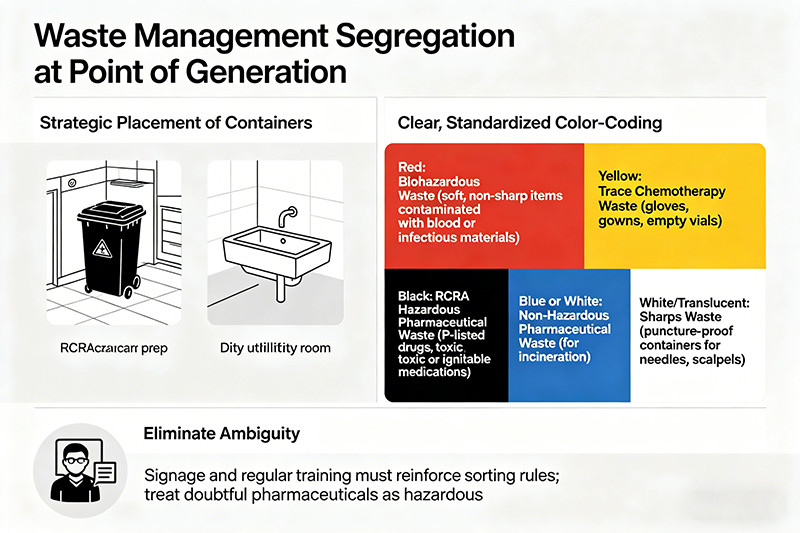
Strategic Placement of Containers: Place the correct waste containers as close as possible to the areas where waste is generated. For example, a black RCRA hazardous waste container should be in the medication prep room where chemotherapy drugs are handled, while a sluice sink is located in the dirty utility room for liquid waste from patient care.
Clear, Standardized Color-Coding: A consistent color-coding system is essential for quick and accurate sorting. While some variations exist by state, a common U.S. standard is:
- Red: Biohazardous Waste (soft, non-sharp items contaminated with blood or infectious materials).
- Yellow: Trace Chemotherapy Waste (gloves, gowns, empty vials).
- Black: RCRA Hazardous Pharmaceutical Waste (P-listed drugs, toxic or ignitable medications).
- Blue or White: Non-Hazardous Pharmaceutical Waste (for incineration).
- White/Translucent: Sharps Waste (puncture-proof containers for needles, scalpels).
Eliminate Ambiguity: Staff should never have to guess. Signage and regular training must reinforce what goes into each container. If there's any doubt about a pharmaceutical, it should be treated as hazardous to err on the side of caution.
Labeling and Storing Waste Containers Near Our Medical Sinks
Proper labeling and storage are not just organizational tools; they are legal requirements enforced by the EPA and DEA. Containers for pharmaceutical waste must be correctly identified and securely stored before collection.
Labeling Requirements:
- Hazardous Waste (Black Containers): Under EPA rules, these containers must be clearly marked with the words "Hazardous Waste Pharmaceuticals". The date on which waste was first added to the container must also be visible. While individual hazardous waste codes are no longer required on the container label in many cases, this clear, general identification is mandatory.
- Controlled Substances: The DEA requires that containers holding controlled substances waiting for disposal be securely sealed and properly labeled to prevent tampering and facilitate tracking. The schedule of the controlled substance (e.g., C-II) must be prominently displayed on its original commercial packaging.
- Biohazard and Sharps: All containers for infectious waste or sharps must bear the universal biohazard symbol.
Storage Best Practices:
- Secure and Inaccessible: All waste containers, especially those for hazardous drugs and controlled substances, must be kept in a secure area that is inaccessible to unauthorized persons, patients, and visitors. This could be a locked room or a secure cabinet.
- Structurally Sound Containers: Waste must be stored in containers that are leak-proof, puncture-resistant (for sharps), and compatible with the waste inside. Lids must be kept closed when not in use.
- Designated Storage Area: A specific area should be designated for the temporary storage of medical waste. This area should never be used to store food, beverages, or clean medical supplies. It must also be protected from weather, pests, and water.
- Time Limits: Regulations dictate how long waste can be stored on-site. For biohazardous waste, this is often no more than 90 days. For hazardous pharmaceuticals, facilities can accumulate waste for up to one year under Subpart P.
Safe Ways to Collect and Store Waste Before It Leaves
The final step before waste is transported off-site involves consolidating it safely from various generation points into a central accumulation area.
Collection Procedures:
- Minimize Handling: Staff should handle waste containers as little as possible. When moving bags or bins, they should wear appropriate PPE and use carts or trolleys to reduce the risk of injury.
- Seal Containers Properly: Before moving a container, ensure it is properly sealed to prevent leaks or spills during transport within the facility. Sharps containers must be closed when they are filled to the designated line.
- Use a Licensed Transporter: Pharmaceutical and medical waste cannot be disposed of in the regular trash or hauled by the facility itself. It must be collected by a licensed medical waste transporter who will manage its transportation to a permitted treatment and disposal facility (e.g., an incinerator).
Central Storage Requirements: The central storage area where waste awaits pickup must meet strict criteria. It should:
- Be clearly marked with biohazard warning signs in English and Spanish.
- Have restricted access.
- Be well-ventilated and, if necessary, refrigerated to prevent decomposition and reduce odors from putrescible waste.
- Have secondary containment in place for liquid hazardous waste to contain any potential spills.
By integrating these best practices—from sorting at the source using medical sinks and color-coded bins to meticulous labeling and secure storage—healthcare facilities can create a robust, compliant, and safe system for managing the entire lifecycle of pharmaceutical waste.
Key Takeaways
Properly managing pharmaceutical waste is a critical responsibility for every healthcare facility. It involves a multi-faceted approach that protects public health, preserves the environment, and ensures legal compliance. Specialized medical sinks are at the heart of this process, providing the first line of defense against contamination and facilitating a safe and efficient workflow.
Here are the key points to remember:
- Understanding Waste Types is Crucial: Pharmaceutical waste is divided into hazardous and non-hazardous categories, each with distinct disposal rules. Segregating waste correctly at the point of generation is the most important step in a successful management program.
- Risks of Improper Disposal are Severe: Flushing medications or throwing them in the trash can lead to polluted waterways, the rise of antibiotic-resistant bacteria, harm to wildlife, and public health crises. It also exposes facilities to massive fines and legal penalties.
- Medical Sinks are Engineered for Safety: Unlike regular sinks, medical disposal sinks (sluice sinks) are made from durable, non-porous stainless steel and feature designs like flushing rims, deep basins, and hands-free controls to minimize contamination and ensure hygienic disposal of liquid waste. A quality brand like Samsink provides sinks that meet these rigorous standards.
- Compliance with Regulations is Non-Negotiable: Healthcare facilities must adhere to a complex web of rules from the EPA (RCRA), DEA (Controlled Substances Act), and OSHA. This includes the nationwide ban on sewering hazardous pharmaceuticals, documenting waste from cradle-to-grave, and providing comprehensive staff training.
- Best Practices Create a Safe Workflow: A successful system integrates proper sorting using color-coded containers, clear labeling, secure storage in designated areas, and using licensed transporters for final disposal. Every step must be supported by rigorous documentation and ongoing staff education.
By embracing these principles and investing in the right equipment, healthcare facilities can effectively manage pharmaceutical waste, turning a complex challenge into a demonstration of their commitment to safety and environmental stewardship.
Conclusion
As we've seen, managing pharmaceutical waste is a complex but crucial job, fundamentally centered on protecting public health and our planet. It requires a deep understanding of regulations, a commitment to best practices, and the right tools for the task.
Specialized medical sinks are far more than just faucets and basins; they are a cornerstone of any safe and effective waste management system. They empower healthcare professionals to stop pollution at its source, prevent the spread of infection, and ensure that hazardous materials are handled with the care they demand. By providing a dedicated and hygienically designed point of disposal, these sinks help keep everyone—staff, patients, and the wider community—healthy and safe.
By understanding and properly using these vital tools, we can all contribute to a cleaner, safer future. It truly is a team effort, and every action, from correctly sorting waste to following a flushing protocol, makes a difference. We encourage you to share this information with your colleagues and start a conversation in your facility about how you can strengthen your own waste management practices.
Frequently Asked Questions (FAQ)
1. What is the main difference between hazardous and non-hazardous pharmaceutical waste? Hazardous pharmaceutical waste includes drugs that are regulated by the EPA's Resource Conservation and Recovery Act (RCRA) because they are toxic, corrosive, ignitable, or reactive. Examples include some chemotherapy drugs and P- or U-listed chemicals. Non-hazardous waste includes most other expired or unused medications, like over-the-counter drugs, but it still requires special disposal (typically incineration) and cannot be thrown in the regular trash.
2. Why can't I just flush old pills down the toilet or a regular sink? Flushing medications down a drain sends active pharmaceutical ingredients (APIs) into the wastewater system. Most treatment plants are not equipped to remove these complex chemicals, leading to water pollution that can harm aquatic life and contribute to antibiotic resistance. The EPA has banned the sewering of hazardous pharmaceutical waste for this reason.
3. What makes a medical sink different from a regular kitchen or bathroom sink? Medical sinks, or sluice sinks, are specifically engineered for healthcare settings. They are typically made of high-grade stainless steel for durability and easy disinfection, feature a deep bowl and flushing rim to hygienically dispose of liquid waste while minimizing splashes, and often have hands-free controls to prevent cross-contamination.
4. What is a DEA Form 41 and when is it required? DEA Form 41 is the "Registrants Inventory of Drugs Surrendered" form. It is used to document the destruction of controlled substances that are part of a facility's inventory (e.g., expired drugs in the pharmacy). It generally does not apply to "wastage," which is the small residual amount left after administering a dose, although internal records of wastage are still required. The destruction must be witnessed by two employees.
5. What is the most important step for staff to follow in managing pharmaceutical waste? The most critical step is segregation at the point of generation. This means every staff member must be trained to correctly identify the type of waste they are creating (e.g., hazardous, non-hazardous, controlled substance) and place it in the correct, color-coded container immediately. This simple action prevents costly and dangerous contamination down the line.