Outdoor Stainless Steel Sinks Explained: Materials, Maintenance, and Modern Aesthetics
As we embrace the joy of outdoor living, creating a functional and beautiful outdoor kitchen space has become a top priority for many homeowners. At the heart of this outdoor culinary oasis often lies a crucial component: the outdoor stainless steel sink. Understanding the materials, maintenance, and aesthetic options for your outdoor stainless steel sink is key to ensuring its longevity and integrating it seamlessly into your backyard design. We're here to guide you through the essentials, ensuring your outdoor sink stands the test of time and style. Join us as we explore why stainless steel is the material of choice for outdoor sinks, how to keep it looking pristine, and the exciting ways we can enhance its appearance.
Key Takeaways
Choosing the right outdoor stainless steel sink involves more than just picking a style; it's about investing in durability, functionality, and long-term value. Below are the essential points to guide your decision:
Material Science is Key: The "stainless" quality of steel comes from its chromium content, which must be at least 10.5%. Chromium reacts with oxygen to form a thin, invisible, and self-healing layer of chromium oxide on the surface. This "passive layer" is the sink's primary defense, acting as a barrier that prevents oxygen and moisture from reaching the iron in the steel, thus protecting it from rust and corrosion.
Grade Determines Durability (304 vs. 316):
- 304 Stainless Steel: This is the most common and cost-effective grade for outdoor kitchens. Containing approximately 18% chromium and 8% nickel, it offers excellent corrosion resistance for most residential settings. It's the ideal "everyday champion" for backyards not exposed to harsh coastal air or de-icing salts.
- 316 "Marine-Grade" Stainless Steel: For homes in coastal regions, near saltwater pools, or in areas with high pollution, 316 grade is the superior choice. It includes molybdenum (typically 2%), which significantly enhances its resistance to chlorides (like salt and chlorine) that can break down the protective layer of 304 steel. While more expensive, it's a necessary investment for longevity in harsh environments.
Rust is Possible, But Preventable: Despite its name, stainless steel can rust under specific conditions. The primary culprits are:
- Chloride Exposure: Salt spray and chlorine are highly corrosive and can cause pitting.
- Surface Contamination: Contact with regular carbon steel (tools, steel wool, grinding dust) can transfer iron particles onto the sink's surface, which then rust and make the sink appear to be rusting.
- Mechanical Damage: Deep scratches from abrasive cleaners can compromise the passive layer, creating an entry point for corrosion.
Maintenance is Simple but Crucial: The key to a long-lasting sink is preserving its passive layer.
- Do: Clean regularly with mild soap and water, always wiping in the direction of the steel's grain. Rinse with fresh water, especially after exposure to salt or chlorine. For extra protection, apply a thin layer of food-grade mineral oil monthly.
- Don't: Use abrasive scrubbers like steel wool, harsh chemicals like bleach, or cleaners containing chlorides. These can permanently damage the surface and lead to rust.
Aesthetics and Added Protection with Powder Coating: For homeowners seeking color and enhanced durability, powder coating is an excellent option.
- Enhanced Lifespan: It adds a thick, durable barrier over the stainless steel, further protecting it from the elements.
- Design Freedom: It offers a vast range of colors and textures, allowing you to match your sink to your outdoor kitchen's design scheme.
- Eco-Friendly: The powder coating process is more environmentally friendly than traditional liquid painting methods.
By understanding these core principles, you are well-equipped to select an outdoor stainless steel sink that will not only serve its practical purpose but also remain a beautiful and enduring feature of your outdoor living space for many years.
The Enduring Charm of Your Outdoor Stainless Steel Sink
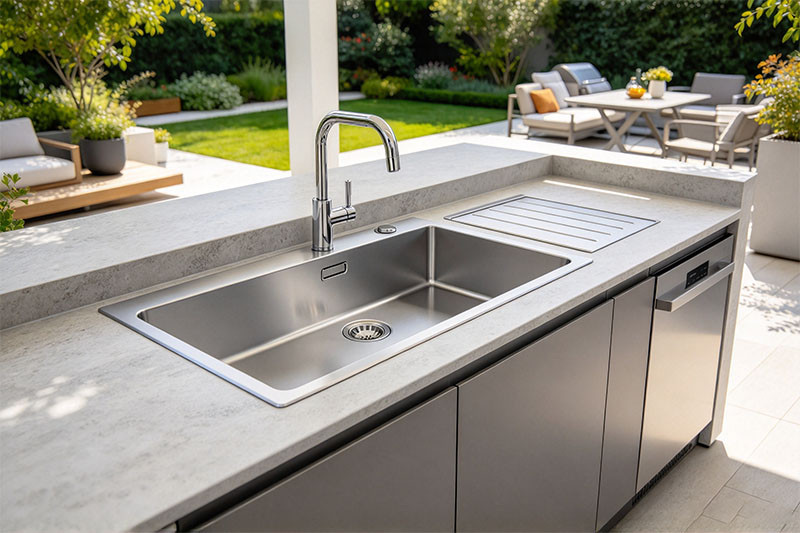
When designing an outdoor kitchen, every component must be chosen for its ability to withstand the elements while maintaining its appearance. Among the options for sinks, stainless steel consistently emerges as the top contender. Its sleek, modern look complements virtually any design, but its true value lies in its remarkable durability and resilience, making it a smart and lasting investment for any outdoor culinary space.
Why We Choose Stainless Steel for Longevity
Stainless steel is the material of choice for outdoor kitchens because it is exceptionally durable and built to resist weather-related wear. Unlike other materials that may crack, warp, or stain, stainless steel is highly resistant to corrosion, rust, impacts, and extreme temperatures. Its ability to endure harsh UV rays, humidity, and temperature fluctuations without degrading is a key reason for its popularity. Furthermore, stainless steel is a non-porous material, which means it doesn't harbor bacteria or absorb odors, making it a hygienic and easy-to-clean choice for food preparation areas. This combination of strength, weather resistance, and low maintenance makes it a prime material for a functional and long-lasting outdoor sink.
The Hidden Science: How Chromium Protects Your Outdoor Stainless Steel Sink from Corrosion
The "stainless" property of stainless steel is not magic; it's a feat of chemistry. The secret lies in its alloy composition, specifically its chromium content, which must be at least 10.5%. When stainless steel is exposed to oxygen in the air or water, the chromium on the surface instantly reacts to form a thin, invisible, and incredibly stable layer of chromium oxide. This process is known as passivation.
This passive film acts as a formidable shield, creating a barrier that prevents oxygen and moisture from reaching the iron within the steel, thus stopping rust before it can start. What makes this protective layer truly remarkable is that it's self-healing. If the surface is scratched or damaged, the exposed chromium will immediately react with oxygen again to a new protective film, maintaining the sink's defense against corrosion.
Common Misconceptions: When Your Outdoor Stainless Steel Sink Might Rust
While highly resistant, stainless steel is not entirely "stain-proof," and it can rust under certain adverse conditions. Understanding these triggers is key to preventing them. Rust on a stainless sink is typically not a failure of the steel itself but a result of environmental factors or improper care breaking down its protective passive layer.
The most common culprits include:
- Chloride Exposure: Chlorides, found in salt water, de-icing salts, and pool chemicals, are the biggest enemy of stainless steel. These ions can aggressively attack the chromium oxide layer, causing localized corrosion known as pitting.
- Contamination with Carbon Steel: If particles from regular steel tools, steel wool, or grinding dust land on the sink's surface, these particles will rust. This can create the appearance that the sink itself is rusting, and the rust can stain the surface.
- Harsh Chemicals: Abrasive cleaners or harsh chemicals, especially those containing chlorides or bleach, can strip away the passive film and leave the underlying steel vulnerable.
- Scratches and Crevices: Deep gouges or tight crevices can trap moisture and limit oxygen exposure, which hinders the passive layer's ability to self-heal and can lead to crevice corrosion.
By avoiding these conditions, you can ensure your sink remains pristine.
Grade Matters: Selecting the Perfect Stainless Steel for Your Outdoor Stainless Steel Sink
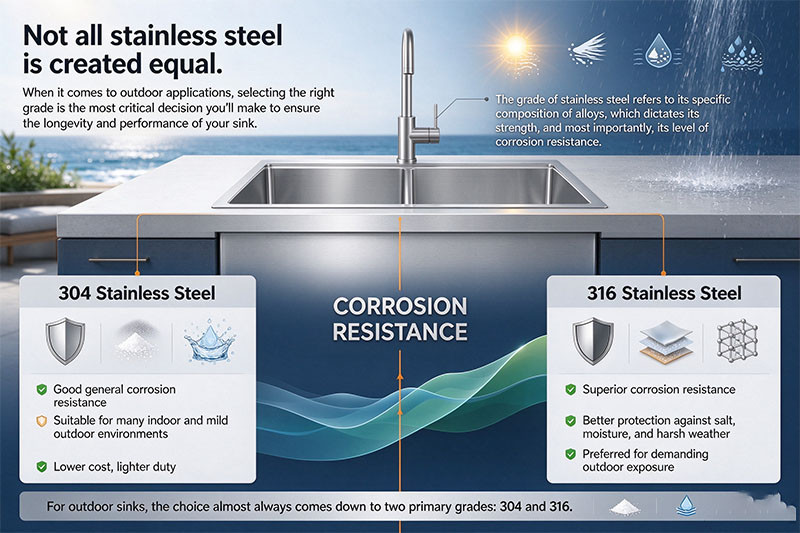
Not all stainless steel is created equal. When it comes to outdoor applications, selecting the right grade is the most critical decision you'll make to ensure the longevity and performance of your sink. The grade of stainless steel refers to its specific composition of alloys, which dictates its strength, and most importantly, its level of corrosion resistance. For outdoor sinks, the choice almost always comes down to two primary grades: 304 and 316.
Understanding 304 Stainless Steel: The Everyday Champion for Your Outdoor Stainless Steel Sink
304 stainless steel is the most widely used grade in the world, and for good reason. It is often referred to as the industry standard for outdoor kitchen equipment due to its excellent balance of durability, performance, and cost. Composed of approximately 18% chromium and 8% nickel, 304 stainless steel offers robust protection against most forms of corrosion and is perfectly suitable for the majority of residential outdoor environments.
It provides more than enough resistance for areas that aren't subjected to extreme coastal salt spray or heavy chemical exposure. If your home is located inland and you're looking for a high-quality, reliable, and budget-friendly option, a sink made from 304 stainless steel is an excellent choice that will serve you well for years.
Embracing 316 Marine-Grade: Superior Protection for Your Outdoor Stainless Steel Sink in Harsh Climates
For those living in more aggressive environments, upgrading to 316 stainless steel is a wise investment. Known as "marine-grade" stainless steel, the 316 grade contains the same chromium and nickel as 304 but with a crucial addition: molybdenum (usually 2-3%). This addition dramatically increases its resistance to corrosion from chlorides.
This makes 316 stainless steel the unequivocal best choice for:
- Coastal Areas: It provides superior protection against the relentless corrosive effects of salt in the air.
- Homes with Saltwater Pools: It withstands splashes and airborne chlorine from nearby swimming pools.
- Regions with High Pollution: It offers better resistance to industrial pollutants and acid rain.
While sinks made from 316 grade come at a higher price point, the enhanced protection they offer is essential for preventing rust and staining in these demanding settings, ensuring your sink remains pristine.
Making the Right Call: 304 vs. 316 for Your Specific Outdoor Stainless Steel Sink Needs
Choosing between 304 and 316 stainless steel comes down to a simple assessment of your environment and budget. To make the decision easier, here's a direct comparison:
| Feature | 304 Stainless Steel | 316 "Marine-Grade" Stainless Steel |
|---|---|---|
| Corrosion Resistance | Excellent for general outdoor use. | Superior, especially against chlorides (salt, chlorine). |
| Key Alloy Content | ~18% Chromium, ~8% Nickel | ~16% Chromium, ~10% Nickel, ~2% Molybdenum |
| Best Suited For | Inland homes, low-pollution areas, mild climates. | Coastal regions, homes near saltwater pools, industrial zones. |
| Cost | More affordable, offers great value. | Higher initial investment. |
| Primary Weakness | Susceptible to pitting corrosion from chlorides over time. | Extremely resistant, but not entirely immune in the harshest conditions. |
Ultimately, if your outdoor kitchen is exposed to salt or chlorine, investing in a 316-grade sink is a necessary precaution. For all other applications, a high-quality 304-grade sink, like those offered by Samsink, will provide outstanding durability and performance.
Beyond Durability: The Aesthetic and Practical Advantages of Powder Coating Your Outdoor Stainless Steel Sink
While the natural silver gleam of stainless steel is timeless, modern design trends are embracing color and texture in every corner of the home—including the outdoor kitchen. Powder coating offers a way to not only customize the look of your outdoor stainless steel sink but also to add an extra layer of robust protection. This innovative finish transforms a purely functional item into a striking design element.
The Protective Shield: How Powder Coating Boosts the Lifespan of Your Outdoor Stainless Steel Sink
Powder coating is a finishing process where a dry polymer powder is electrostatically applied to the metal surface and then cured under heat. This creates a hard finish that is significantly tougher and more durable than conventional paint. When applied to a stainless steel sink, it provides an additional, formidable barrier against the elements.
This protective shield enhances the sink's lifespan by:
- Sealing the Surface: It completely encases the steel, preventing moisture, salt, and chemicals from ever reaching the metal. This virtually eliminates the risk of pitting or crevice corrosion.
- Adding Impact and Abrasion Resistance: The cured finish is highly resistant to scratches, chipping, and fading from UV exposure, keeping the sink looking new for longer.
- Simplifying Maintenance: A powder-coated surface is incredibly easy to clean and often requires less upkeep than a traditional brushed steel finish.
Unleashing Design Potential: Customizing Your Outdoor Stainless Steel Sink with Vibrant Colors and Textures
Perhaps the most exciting benefit of powder coating is the creative freedom it offers. It breaks the design limitation of a single metallic finish and opens up a world of possibilities. Brands like Samsink are at the forefront of this trend, offering sinks in a variety of finishes to match any aesthetic.
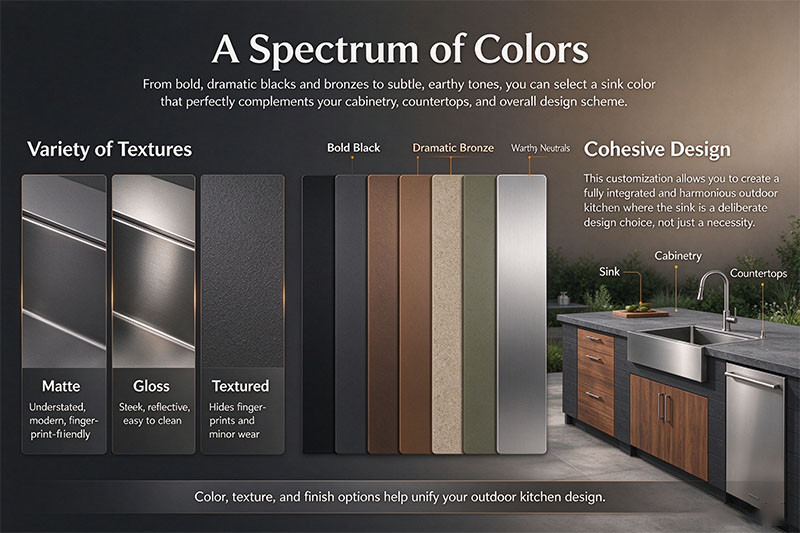
Consider the design potential:
- A Spectrum of Colors: From bold, dramatic blacks and bronzes to subtle, earthy tones, you can select a sink color that perfectly complements your cabinetry, countertops, and overall design scheme.
- Variety of Textures: Powder coating isn't just about color. It can be applied in different textures, including matte, gloss, and even textured finishes that can hide fingerprints and minor wear.
- Cohesive Design: This customization allows you to create a fully integrated and harmonious outdoor kitchen where the sink is a deliberate design choice, not just a necessity.
Eco-Friendly Choices: The Environmental Benefits of a Powder Coated Outdoor Stainless Steel Sink
In an era of increased environmental awareness, choosing sustainable products is more important than ever. Powder coating stands out as a more eco-friendly finishing option compared to traditional solvent-based paints.
The key environmental benefits include:
- No Volatile Organic Compounds (VOCs): Powder coatings contain little to no VOCs, which are harmful solvents released into the atmosphere by liquid paints.
- Less Waste: During application, any oversprayed powder can be collected and reused, leading to a transfer efficiency of up to 98%. This drastically reduces waste compared to liquid paint, where overspray is lost.
- Durability Reduces Replacement: Because a powder-coated finish is so long-lasting, it extends the life of the product, reducing the need for replacements and the associated environmental impact.
By choosing a powder-coated stainless steel sink, you are making a responsible choice for both your home and the planet.
Keeping It Pristine: Essential Maintenance for Your Outdoor Stainless Steel Sink
An outdoor stainless steel sink is an investment in both function and style. While its durability is a major advantage, proper maintenance is crucial to preserving its brilliant finish and ensuring it lasts for decades. The goal of any cleaning routine is to protect the sink's passive chromium oxide layer. Fortunately, keeping your sink in top condition is straightforward and requires minimal effort with the right techniques and products.
Simple Cleaning Routines for a Gleaming Outdoor Stainless Steel Sink
Regular cleaning prevents the buildup of residue and mineral deposits that can mar the surface. A simple, consistent routine is all it takes.
For Daily or Weekly Cleaning:
- Rinse Thoroughly: After each use, rinse the sink with fresh water to remove any food particles or residues. In coastal areas, a daily freshwater rinse is essential to wash away salt deposits.
- Wash with Mild Soap: Use a soft cloth or sponge with a solution of mild dish soap and warm water.
- Wipe with the Grain: Always wipe in the direction of the steel's grain (the faint parallel lines on the surface). This helps prevent micro-scratches and maintains the original look of the finish.
- Rinse Again and Dry: Rinse away all soap residue and then wipe the sink dry with a soft, clean cloth. Drying prevents water spots and mineral deposits from forming.
For Deeper Cleaning or Removing Stains:
- A paste made from baking soda and water is an excellent, non-abrasive option for tackling tougher spots. Apply the paste, let it sit for a few minutes, gently scrub with a soft cloth (again, with the grain), and rinse thoroughly.
Avoiding Common Pitfalls: What Not to Use on Your Outdoor Stainless Steel Sink
Using the wrong cleaning tools or chemicals is the fastest way to damage your sink's surface. To protect your investment, avoid the following at all costs:
- Abrasive Scrubbers: Never use steel wool, steel brushes, or abrasive scrubbing pads. These will not only scratch the surface but can also leave behind tiny particles of regular steel that will rust.
- Harsh Chemicals: Avoid cleaners containing chlorides, bleach, or ammonia. These chemicals can break down the passive layer and cause irreversible damage or corrosion.
- Leaving Wet Sponges or Mats in the Sink: Trapped moisture creates a low-oxygen environment that can lead to discoloration and pitting over time.
- Using it as a Cutting Board: While durable, cutting directly on the stainless steel surface can cause scratches.
A Smart Investment: The Long-Term Value of a Well-Maintained Outdoor Stainless Steel Sink
An outdoor kitchen is a significant addition to a home's value, and a well-maintained sink is a key part of that investment. A high-quality stainless steel sink, when properly cared for, can last for decades, far outperforming other materials. Its ability to withstand the elements means you won't face the recurring costs of replacement or refinishing. By following simple maintenance guidelines, you ensure that your sink not only remains a functional workhorse but also continues to be an attractive centerpiece of your outdoor living area for many years of enjoyment.
Frequently Asked Questions (FAQ)
1. Will my outdoor stainless steel sink really not rust?
While stainless steel is highly resistant to rust, it's not completely immune. It can rust under specific negative conditions. The protective "passive layer" of chromium oxide can be damaged by prolonged exposure to chlorides (like salt and pool chlorine), harsh chemicals (like bleach), or contact with regular carbon steel (like steel wool). If you live in a coastal area, a marine-grade 316 steel sink is highly recommended for its superior resistance. With proper grade selection and simple, regular maintenance—like rinsing with fresh water and avoiding abrasive cleaners—your sink should remain rust-free for its entire lifespan.
2. Is a 316 marine-grade sink worth the extra cost?
It absolutely is, if your environment calls for it. The decision between 304 and 316 grade steel should be based on your location. If your home is near the coast, a saltwater pool, or an industrial area with high pollution, the additional molybdenum in 316 steel provides essential protection against the corrosive effects of salt and other chemicals. For these environments, the higher upfront cost is a long-term investment that prevents the premature rusting and pitting that can occur with a 304-grade sink. For inland locations with no salt exposure, a high-quality 304 sink is perfectly adequate and more cost-effective.
3. How often should I clean my outdoor stainless steel sink?
For best results, a quick rinse and wipe-down after each use is ideal. A more thorough cleaning with mild soap and water should be done at least once a week. However, in harsh environments, more frequent care is needed. In coastal areas, for example, it's crucial to rinse the sink with fresh water daily to remove corrosive salt deposits. Additionally, applying a protective coating or food-grade mineral oil about once a month can provide an extra layer of defense and keep the finish looking its best.
4. Can I use bleach or other strong cleaners to disinfect my stainless steel sink?
No, you should never use bleach or other harsh, chloride-based cleaners on stainless steel. These chemicals are extremely aggressive and can break down the protective chromium oxide layer, leading to corrosion and permanent damage. For effective and safe cleaning, stick to mild dish soap and water. For disinfection, a solution of vinegar and water is a great natural alternative that won't harm the steel's surface.
5. What is powder coating, and do I really need it for my outdoor sink?
Powder coating is a durable finish where a dry powder is applied to the steel and cured with heat to form a hard, protective layer. While you don't need it—as high-quality stainless steel is already very durable—it offers two major benefits: enhanced protection and aesthetic customization. The powder coat adds an extra, impermeable shield against moisture, chemicals, and scratches, further extending the sink's life. Aesthetically, it allows you to choose from a wide variety of colors and textures, moving beyond the standard silver to create a truly integrated and stylish outdoor kitchen design. If you want maximum durability and a custom look, powder coating is an excellent choice.
6. I see a small rust spot on my sink. Is it ruined?
No, a small rust spot does not mean your sink is ruined, especially if you address it quickly. Often, these spots are the result of surface contamination—a piece of metal from a can or tool that rusted on the surface. You can typically remove these spots with a non-abrasive cleaner. Create a paste of baking soda and water, apply it to the spot, and gently rub with a soft cloth in the direction of the grain. For slightly more stubborn spots, specialized stainless steel rust removers are available. The key is to act fast and to avoid abrasive scrubbers that will scratch the finish.
Conclusion
From understanding the unique properties of stainless steel to exploring the benefits of powder coating and mastering maintenance, we hope you now feel well-equipped to choose and care for your outdoor stainless steel sink. Making an informed decision is the first step toward creating an outdoor kitchen that is both beautiful and built to last. For a sink that marries exceptional durability with modern design, explore the diverse collection of outdoor stainless steel sinks from Samsink and find the perfect centerpiece for your culinary adventures.
By making informed decisions about materials and finishes, we can ensure that our outdoor stainless steel sinks not only perform flawlessly but also enhance the beauty and functionality of our outdoor living spaces for years to come. Your outdoor kitchen is an extension of your home, a place for making memories.
Invest wisely in your outdoor kitchen, and let your outdoor stainless steel sink be a testament to both practicality and impeccable style. We encourage you to share this guide with friends and family who are also embarking on their outdoor kitchen journey!