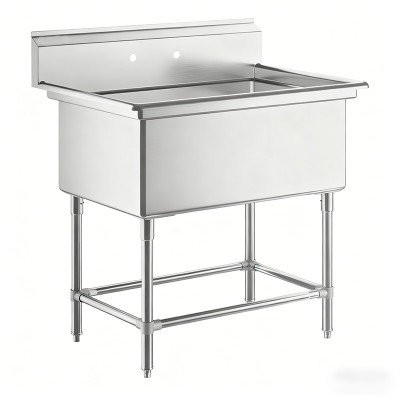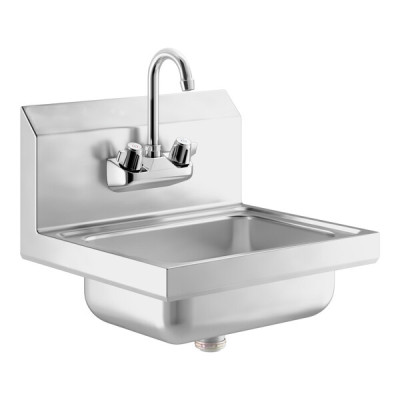
Samsink vs The Big Brands: Why Smart Buyers Choose an ODM Partner
If the farmhouse sink you stock carries a famous logo, there is a good chance it was pressed, welded and finished in one of the same export workshops that quietly build unbranded stainless steel sinks. That is not a secret — it is how the kitchen and bath industry has worked for decades. The real question for any buyer, importer or e-commerce brand is not "which logo should I buy," but "which supply chain should I bet on." This guide compares what big-brand marketing actually buys you against what an experienced ODM partner delivers, and why a growing number of smart buyers are choosing the partner.
The Brand You Buy Is Often Not the Factory That Makes It
Walk through any major kitchen showroom and you will see dozens of brand names on apron-front sinks. What the showroom does not show you is the factory floor. A large share of the stainless steel farmhouse sinks sold under North American and European brand names are produced by third-party manufacturers in the Foshan, Jiangmen and Zhongshan cluster of Guangdong province — the region that has long been the global centre for stainless steel kitchenware production. Brands bring the name, the retail channel and the marketing; manufacturers bring the dies, the presses, the welders and the quality system.
None of this means those brands make a bad product. It means the product itself is usually the result of an ODM or OEM partnership — which is exactly the kind of relationship a buyer can build directly, without the retail mark-up layered on top.
Where the Premium Goes: The Real Cost Breakdown of a Branded Sink
Compare two otherwise identical 16-gauge SUS304 apron-front sinks — one from a heritage brand, one factory-direct — and the price gap can be two to three times. The difference is rarely material. It is made up of brand licensing, advertising spend, retail margins, warehousing and channel costs, and the profit each intermediary takes before the sink reaches the shelf. When you buy from a brand, you are paying for the whole chain that sits between the factory and your customer.
Why it matters to you: If you are a wholesaler, remodeler or online brand, that same chain is your competitor — not your ally. Working with an ODM partner removes the layers and lets your margin, rather than a stranger's advertising budget, decide your price.
The Six Specs That Separate a Premium Sink from a Cheap One
Quality has nothing to do with the logo on the box. It is written in six specifications that any buyer can verify — and every one of them is decided at the factory, not in the marketing department:
- Steel grade — SUS304 (18/8 or 18/10). Roughly 18% chromium and 8–10% nickel give real corrosion resistance. Avoid 200-series steel with lower nickel; it rusts and stains far faster.
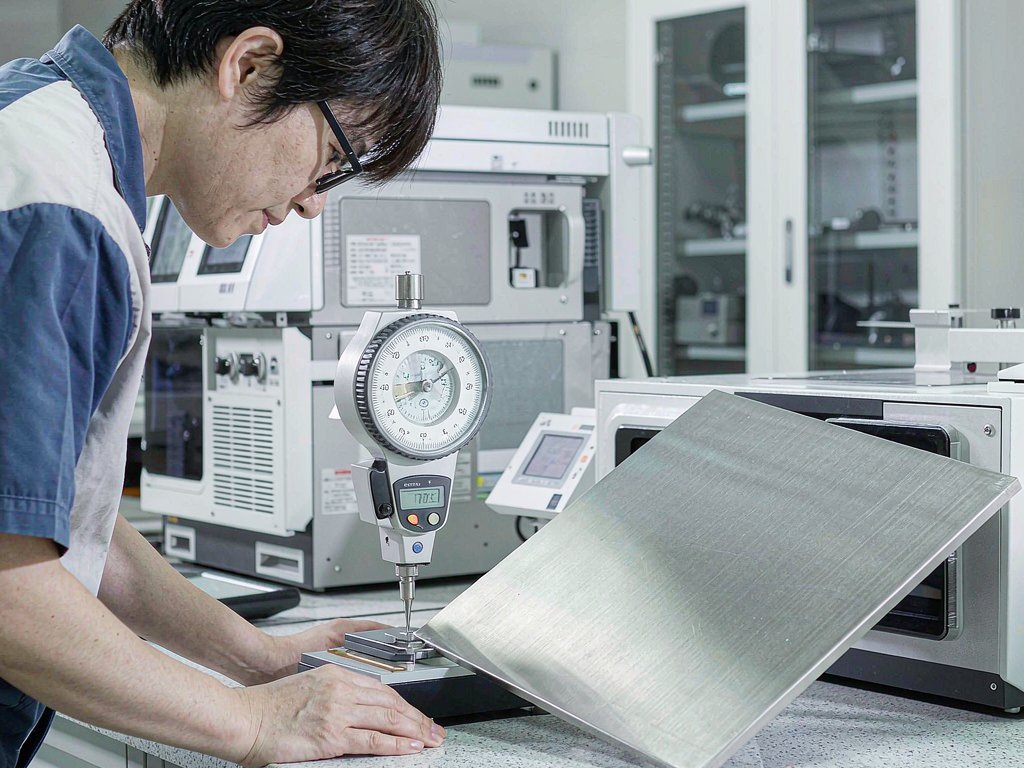
- Gauge — the lower, the thicker. 16-gauge (about 0.0625 in / 1.5 mm) is the premium standard and roughly 25% thicker than 18-gauge. Thicker steel resists dents and sounds solid instead of tinny.
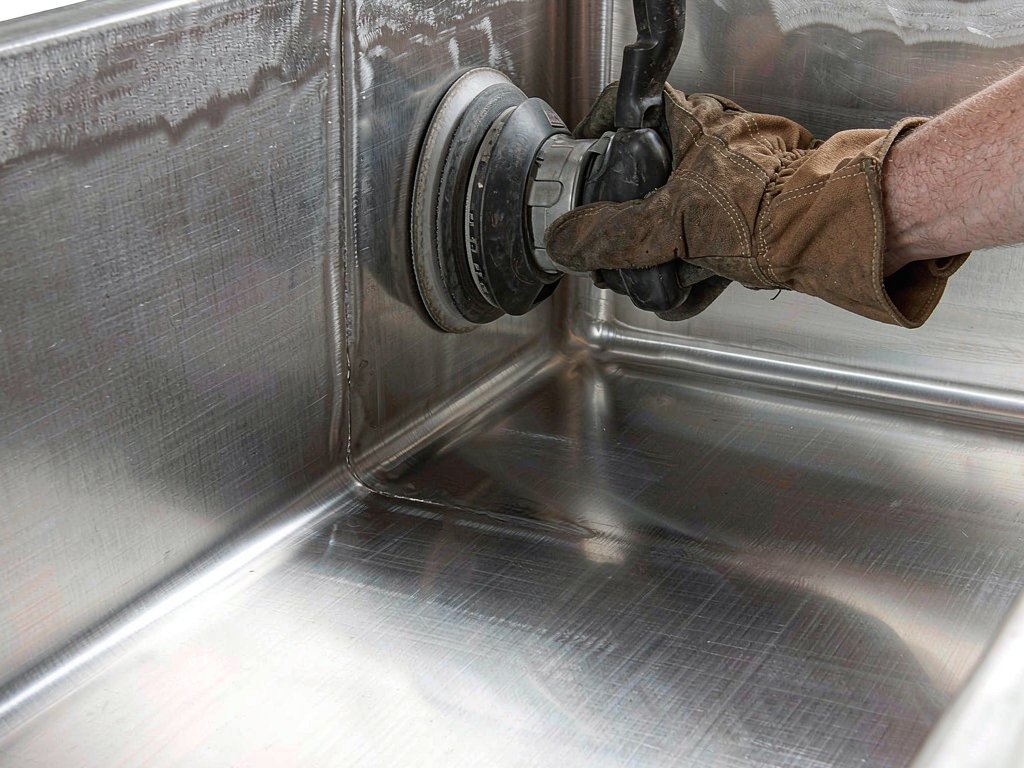
- Weld quality on handmade sinks. Smooth, consistent seams with no waviness or grinding marks. Weak welds are among the most common failure points reported by buyers of fabricated sinks.
- Sound-dampening pads. Premium sinks cover 80% or more of the underside with thick rubber or EVA pads so a dropped pot does not ring through the kitchen.
- Anti-condensation undercoating. A full-body spray coating prevents moisture build-up that can damage cabinets over time.
- Finish and drainage. Uniform brushed grain, no abrupt polishing changes, and a sloped base with channel grooves that drains completely.
Ask any credible manufacturer for the material certificate and a thickness-gauge reading before you commit. A real ODM partner will show you both without hesitation.
Inside the Making of a Premium Stainless Sink
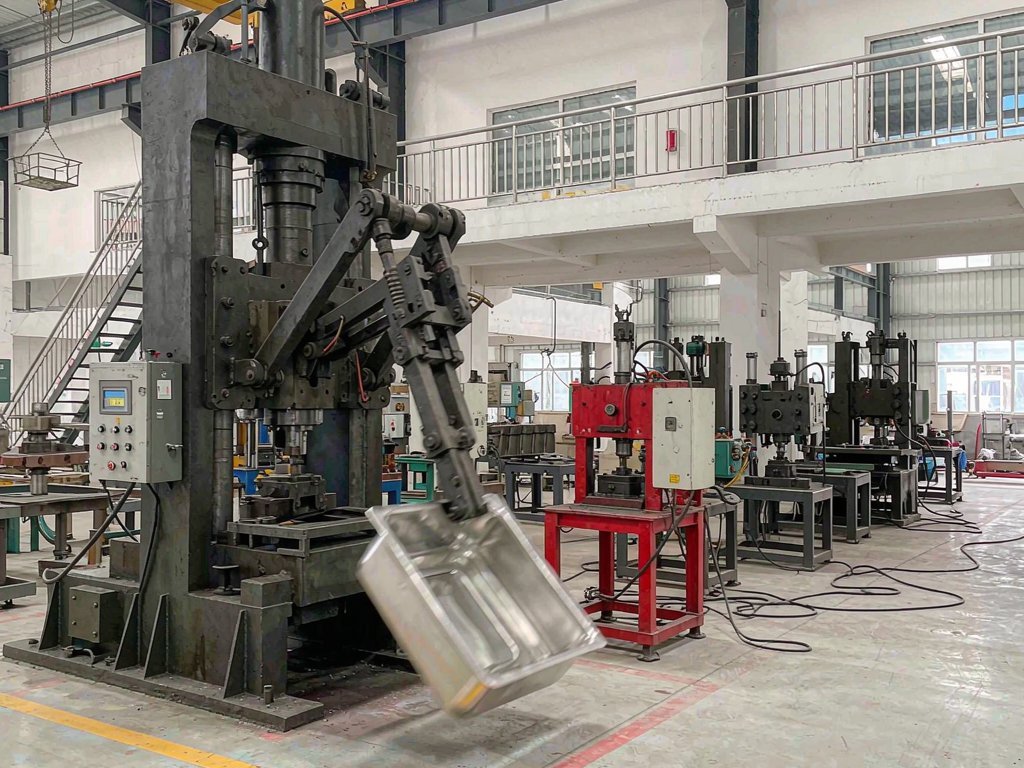
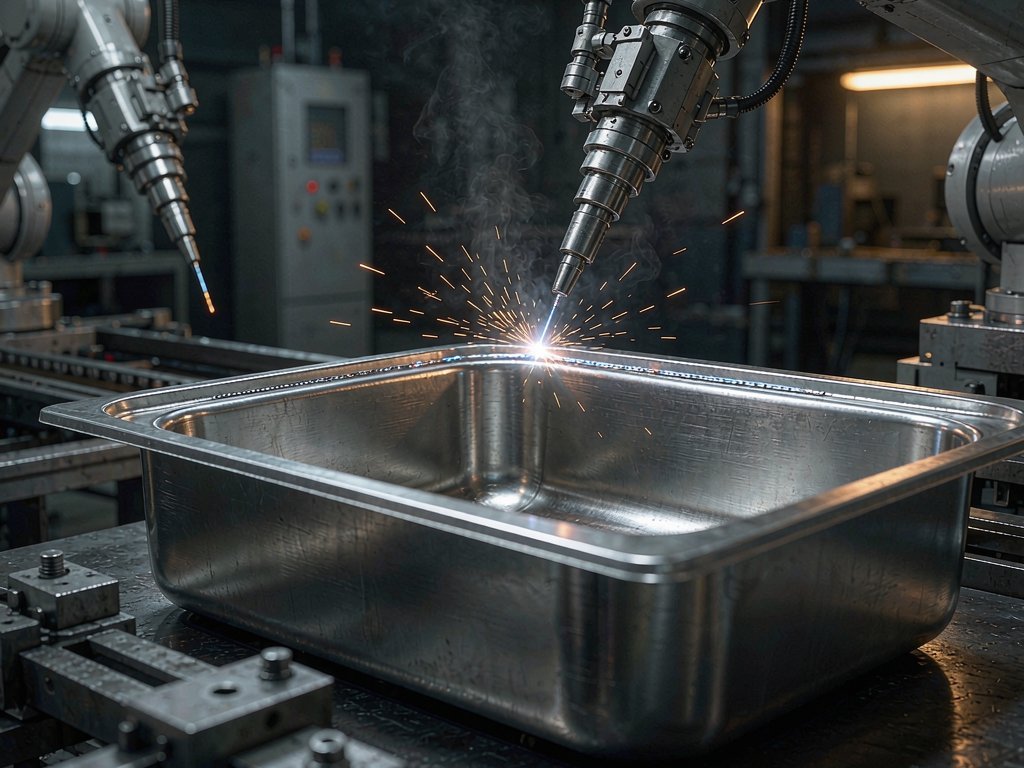
Knowing how a quality sink is built makes you a sharper buyer. A drawn sink starts as a single sheet of SUS304 that is cut by laser, then formed under a hydraulic press into the basin. A handmade farmhouse sink is fabricated from flat sheet, with skilled welders joining the apron, corners and rim before the whole piece moves to automated brushing lines that create a consistent satin finish. Underneath, dampening pads and anti-condensation coatings are applied; on top, every batch is checked for dimensional accuracy before it is nested, protected and packed for export.
OEM vs ODM vs Private Label: What Each Model Really Gives You
The three terms are often used interchangeably, but they are very different relationships. Choosing the right one shapes your cost, your speed and how unique your product can be:
| Model | Who owns the design | Speed to market | Customisation | Best for |
|---|---|---|---|---|
| Private label | Factory catalogue, your logo | Fastest | Branding and packaging | Testing a market quickly |
| ODM | Factory designs, adapted for you | Fast | Design, size, finish, features | Building a differentiated range without full development cost |
| OEM | Your design, factory builds it | Longest | Full, including proprietary tooling | Established brands with in-house design |
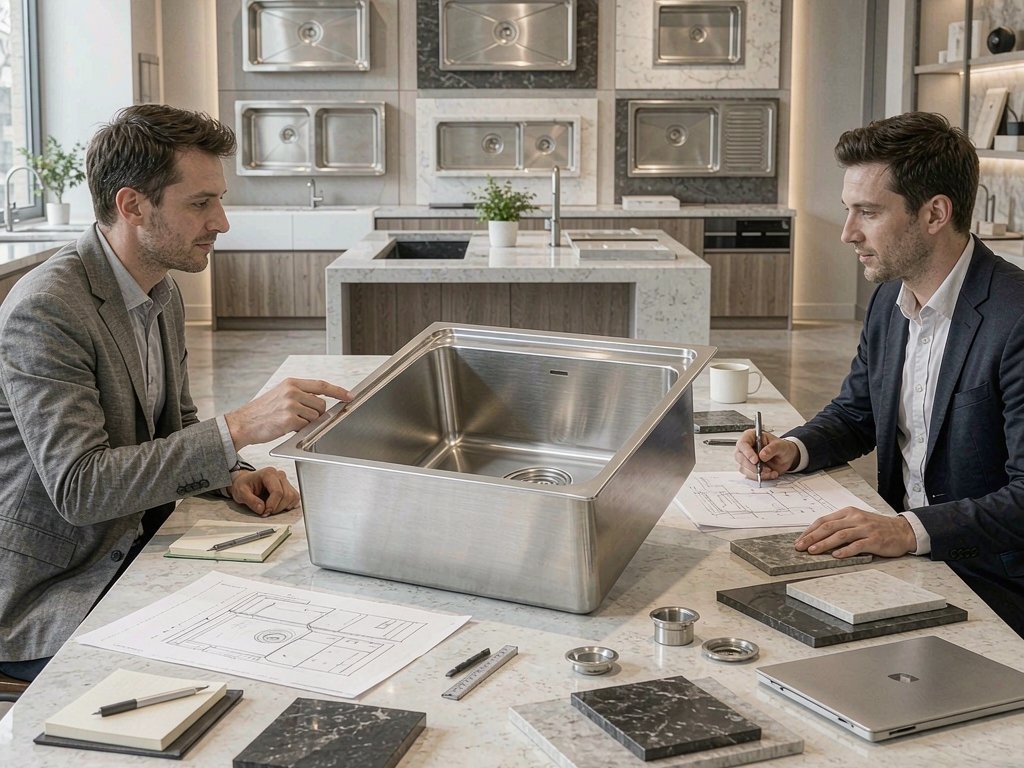
Many successful importers start with ODM: they get proven, certified platforms, then lock in exclusive finishes, sizes and accessory bundles that competitors cannot copy off a shelf.
Why Smart Buyers Choose an ODM Partner
Buying direct from an experienced ODM partner is not about "cheaper" — it is about better economics and more control. The advantages compound over time:
- Transparent cost structure. You pay for steel, labour and engineering — not for a brand's advertising and retail chain.
- Differentiation you control. Exclusive sizes, deeper basins, PVD colours or your own accessory kit become competitive moats.
- Flexible minimums and trial orders. Unlike tooled OEM programmes, ODM platforms let new buyers start with small orders and scale as demand grows.
- Certification support. Established export factories already hold the market-entry documents — ISO 9001, cUPC, NSF/ANSI — that new importers would otherwise spend months obtaining.
- Faster iteration. One engineering team answers your questions directly, instead of a customer-service desk relaying them to a factory you will never talk to.
That last point is the quiet advantage. When a big brand's supplier changes a specification, the brand's buyers rarely notice until a bad batch ships. As an ODM client, you sit on the other side of that table.
How to Vet an ODM Partner in 30 Minutes
Not every "factory" is a factory, and not every factory is a good partner. A quick, structured check separates capable partners from trading companies or inconsistent producers:
- Check the paperwork. Ask for the business licence, export record and the certificates that matter for your market (ISO 9001, cUPC, NSF/ANSI where applicable) — and confirm the certificates match the products you are buying.
- Demand material proof. Request SUS304 material certificates and verify gauge with an independent thickness reading, not a brochure.
- Audit the floor. A video walk-through or on-site audit should show laser cutting, presses, welding stations, brushing lines and a QC area — not just a showroom.
- Test communication. A strong ODM partner answers technical questions in hours and brings engineers — not only sales staff — into the discussion.
- Order samples to your own spec. The real test is whether the sample matches your dimensions, finish and packaging requirements, batch after batch.
The experience rule: sourcing guides consistently point buyers toward manufacturers with a decade or more of export track record. Longevity signals stable quality systems, mature tooling and relationships that survive market cycles — the traits you want in a partner you will scale with.
Samsink in Practice: Three Decades Behind the Export Workshops
Samsink is one of those partners. Founded in Foshan, China in 1995, the company has spent more than thirty years building stainless steel kitchen sinks for customers who sell under their own names — wholesalers, distributors and e-commerce brands across more than a thousand client relationships. When a North American or European retailer sells a farmhouse sink bearing its own brand, factories like Samsink are often the quiet force behind it.
- Two production bases — Foshan, China and Bangkok, Thailand — the second added in 2018 to serve clients who need diversified or regional supply.
- Eight production lines with a monthly capacity above 100,000 sinks and more than 500 moulds on hand.
- Export-grade credentials: ISO 9001 quality systems plus cUPC and NSF/ANSI product compliance for the North American market.
- Material discipline: T304 and T316 stainless steel across the range, from 16-gauge farmhouse basins to undermount and workstation lines.
- OEM/ODM customisation from design and sampling to finish, packaging and private branding — with trial-order-friendly minimums so new buyers can validate before they scale.
Myths Buyers Still Believe About Factory-Direct Sinks
"Factory-direct must mean lower quality."
The same workshops that make big-brand sinks make unbranded and private-brand sinks. Quality is defined by grade, gauge, welding and QC — specifications you can verify directly — not by the name printed on the box.
"Direct buying only works for huge volumes."
ODM platforms exist precisely so that smaller buyers can enter with modest trial orders, prove sell-through, then grow. Tooled OEM programmes carry the high minimums; ODM does not have to.
"Customising my own range is too complicated."
With an experienced partner, customisation is a structured process: select a platform, adjust dimensions and finish, add accessories and packaging, approve a sample, then produce. The factory handles the engineering; you make the commercial decisions.
"Shipping from Asia is risky and slow."
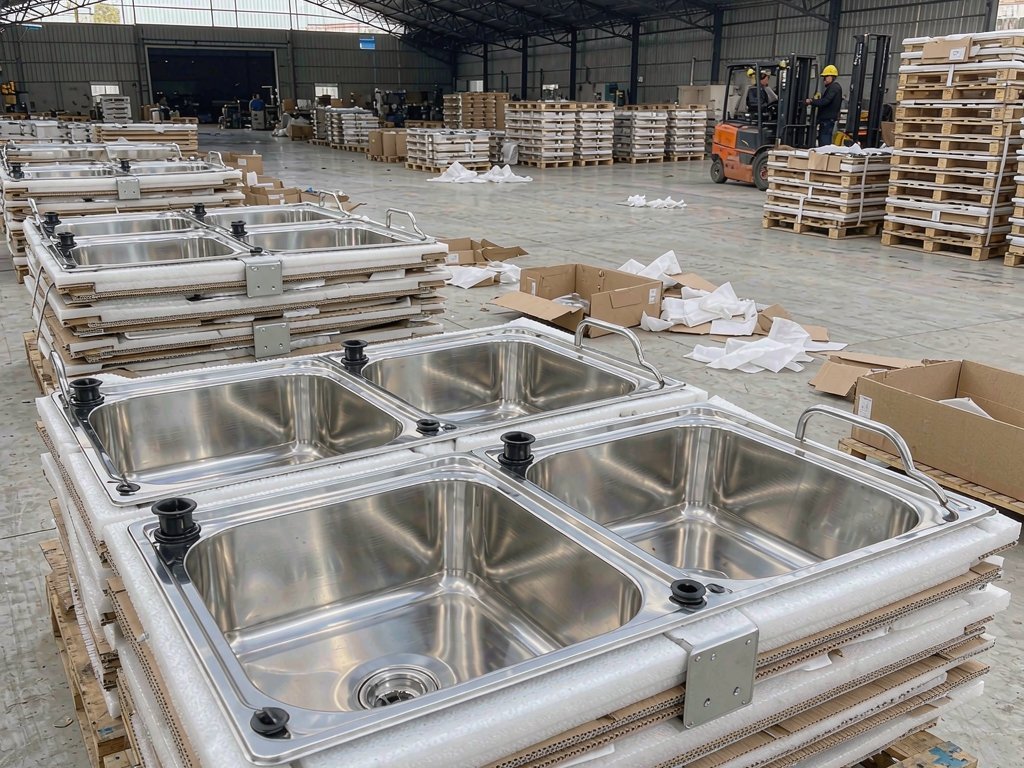
Decades of export experience have standardised packaging, nesting and container loading. Established partners ship to North America, Europe and beyond every week, with third-party inspection options before the goods leave the factory.
Your First ODM Order: A Six-Step Playbook
- Define your target. Choose the styles and sizes your market actually sells — farmhouse, undermount, workstation — and set the price band you need to hit.
- Shortlist partners. Focus on export manufacturers with long track records, verifiable certifications and sink-specific tooling.
- Send a precise RFQ. Include material grade, gauge, finish, mounting type, accessories and target certifications. Precise briefs get precise quotes.
- Review samples. Order samples with your specifications, not the factory's default, and inspect weld, finish and thickness.
- Lock exclusivity and QC. Agree on geographic or channel exclusivity, batch sampling and how defects are remediated before you scale.
- Plan the first container. Confirm packaging, nesting and inspection so your first delivery protects both your margin and your reputation.
The bottom line: big brands sell trust, but the manufacturing capability behind them is available to you directly. Choosing an experienced ODM partner means better margins, a range your competitors cannot copy, and a supply chain where your questions reach the engineers. Whether you are sourcing your first farmhouse sink line or switching a mature one, the three-decade track record that built Samsink's export workshops is ready for your brand — talk to the Samsink team about your next range, or send a project inquiry to start with samples sized to your market.