Stainless Steel Sinks Suppliers: Meeting Retail, Wholesale, and Project Needs Explained
We understand that sourcing the perfect kitchen sink can be a complex task, whether you are outfitting a busy commercial kitchen or designing a modern home. As stainless steel sinks suppliers, we recognize the critical role these fixtures play in both functionality and aesthetics. The right sink is not just a utility; it's a centerpiece of the kitchen, influencing workflow, hygiene, and the overall design language of the space. It must withstand daily use, resist wear and tear, and complement its surroundings, making the selection process a crucial decision for any project.
This guide is designed to simplify your search, explaining how we at Samsink meet the diverse needs of retail customers, wholesale distributors, and large-scale project developers. We aim to provide clear, actionable insights into material choices, manufacturing processes, and the specific demands of different markets. Our goal is to empower you with the knowledge to navigate the options and identify a solution that delivers on performance, style, and long-term value.
Join us as we explore the dynamic landscape of stainless steel sinks from a knowledgeable, first-person perspective. We will delve into the features that matter, the trends shaping the industry, and the strategic considerations for sourcing. From a single sink for a home renovation to thousands of units for a new development, we are here to help you make an informed decision for any application, ensuring your choice is one of confidence and satisfaction.
Navigating the Market Landscape: What Every Stainless Steel Sinks Supplier Should Consider
Understanding the stainless steel sink market requires more than just knowing the product; it demands a deep appreciation of the various customer segments and their unique drivers. The needs of a homeowner embarking on a kitchen remodel are vastly different from those of a wholesale distributor stocking their warehouse or a project manager outfitting a 500-unit condominium. As experienced suppliers, we've learned that success lies in recognizing these differences and tailoring our offerings, logistics, and support to each channel. This multifaceted approach ensures that every client, regardless of scale, receives a product and service that aligns perfectly with their operational and aesthetic goals, fostering partnerships built on trust and a clear understanding of market dynamics.
Understanding Diverse Needs: Retail, Wholesale, and Projects
At the core of a successful supply strategy is the ability to differentiate between the primary market channels: retail, wholesale, and projects. Each segment operates under distinct pressures, timelines, and quality expectations. Retail is driven by consumer trends and individual choice, wholesale by inventory efficiency and reseller margins, and projects by strict specifications, bulk pricing, and delivery schedules. A supplier that treats these channels monolithically will inevitably fail to meet the nuanced requirements of each. By dissecting these needs, we can build a flexible and responsive supply chain that delivers targeted solutions, from a single, feature-rich sink for a home to a cost-effective, durable model for a large-scale installation.
Retail: Tailoring to Individual Homeowners' Visions
The retail market is intensely personal. Homeowners view the kitchen sink as a long-term investment and a key component of their home's design narrative. Their decisions are driven by a blend of functionality, aesthetics, and personal taste. As suppliers, we must cater to these individual visions by offering a diverse and trend-aware product portfolio.
Homeowner preferences are increasingly sophisticated, moving beyond basic utility to embrace the sink as a design statement. A major trend is the demand for "super-sized" single bowl sinks, often 33 inches or wider, which accommodate large pots and baking sheets without the obstruction of a divider. This shift reflects a desire for professional-grade functionality in the home kitchen. Alongside size, the choice between a single or double bowl remains a matter of personal habit. While large single bowls offer uninterrupted space, double bowls provide multitasking capabilities for washing and rinsing simultaneously.
Mounting style is another critical consideration for retailers. Undermount sinks are overwhelmingly popular for their seamless and clean look, especially with solid countertops like granite or quartz. This installation style allows for countertops to be wiped directly into the sink, enhancing cleanliness and creating a sleek, modern aesthetic. Farmhouse or apron-front sinks also continue to be a strong trend, valued for their deep basins and the striking visual focal point they create. Once associated purely with rustic designs, stainless steel and PVD-coated apron-front sinks now fit perfectly into modern and transitional kitchens.
Perhaps the most visible trend is the expansion of finishes beyond traditional brushed steel. Physical Vapor Deposition (PVD) technology has introduced a stunning palette of durable and scratch-resistant colors like matte black, gunmetal, brushed gold, and copper. These finishes allow homeowners to coordinate their sink with appliances, hardware, and fixtures, creating a cohesive and personalized kitchen design.
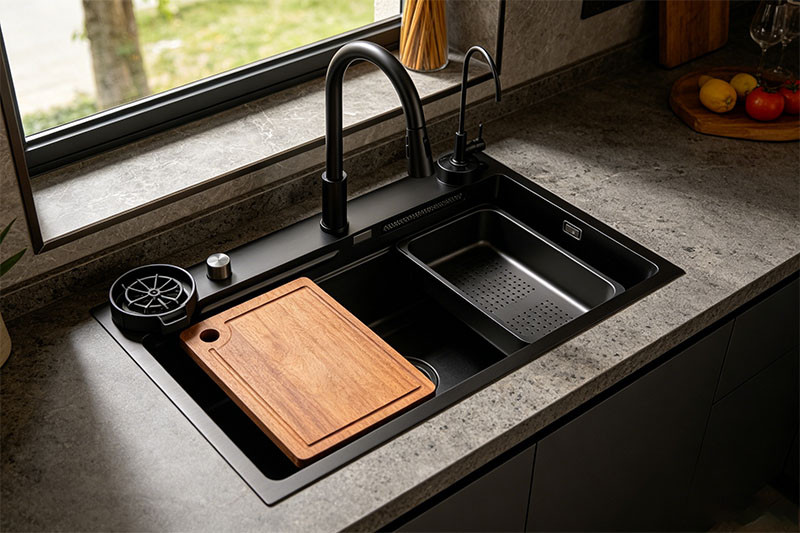
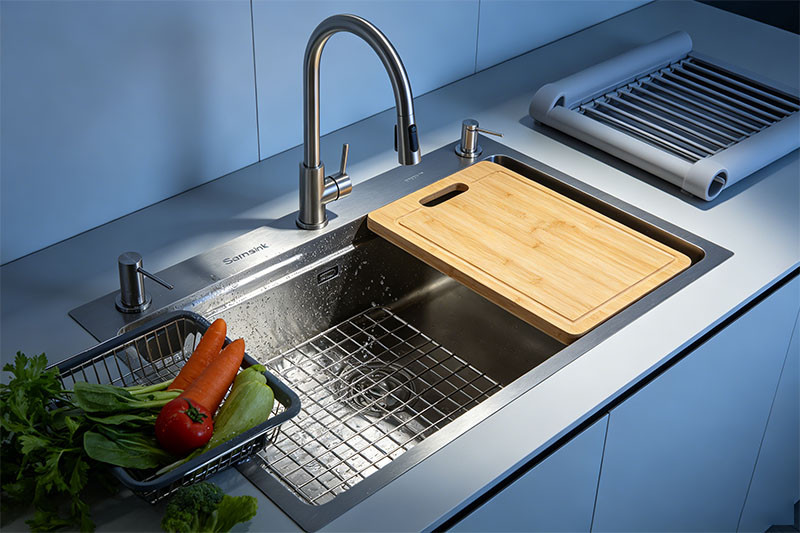
Finally, functionality is being elevated through workstation sinks. These innovative designs feature built-in ledges that support a range of accessories, such as cutting boards, colanders, and drying racks. This transforms the sink into a multifunctional prep zone, saving valuable counter space and streamlining the cooking and cleaning process. To meet retail demands, we as suppliers must stay ahead of these trends, offering a rich variety of sizes, configurations, finishes, and accessories that empower homeowners to bring their unique kitchen vision to life.
Wholesale: Catering to Distributors and Resellers Efficiently
The wholesale channel operates on a different set of principles, where efficiency, reliability, and profitability are paramount. Wholesale distributors and resellers serve as the crucial link between manufacturers and the end-user market, which includes retailers, contractors, and builders. To cater to this segment effectively, suppliers must focus on a strategy that prioritizes operational excellence and strong partner support.
For wholesalers, the primary concerns are inventory turnover, cost management, and supply chain stability. They need a supplier who can provide a focused range of products that are known to sell well, thereby reducing the risk of slow-moving inventory. This means stocking common sizes and popular configurations—such as standard single and double-bowl undermount sinks—that are in constant demand for both new construction and replacement projects. A supplier's ability to maintain consistent production and reliable delivery schedules is critical, as stockouts can lead to lost sales and damaged reputations. Building strong supplier relationships ensures a steady flow of materials, improves communication, and helps coordinate production and delivery schedules.
Key factors for a successful wholesale partnership include:
| Factor | Importance for Wholesalers | How a Supplier Can Deliver |
|---|---|---|
| Product Consistency | Ensures that every sink in a bulk order meets the same quality standards, reducing returns and complaints. | Implementing rigorous quality control at every stage, from material sourcing to final inspection before shipment. |
| Competitive Pricing | Directly impacts the wholesaler's profit margins and ability to compete in their market. | Offering volume discounts, transparent pricing structures, and eliminating middleman markups by sourcing directly from the factory. |
| Inventory & Logistics | A reliable supply chain prevents stockouts and ensures products are available when the wholesaler's customers need them. | Maintaining a safety stock of raw materials, having high-volume production capacity, and offering real-time inventory visibility. |
| Packaging & Labeling | Durable packaging protects products during transit, while clear labeling simplifies warehouse management and order fulfillment. | Designing robust, drop-tested cartons with clear SKU information and barcodes for easy scanning and inventory control. |
| Support & Communication | Responsive customer service and technical support help resolve issues quickly, from order placement to after-sales service. | Providing dedicated B2B support teams that understand the needs of wholesale accounts and can assist with everything from quotations to logistics coordination. |
Furthermore, the ability to offer a degree of customization, such as private labeling or branded packaging, allows wholesalers to differentiate themselves in the market. By focusing on these core operational pillars—quality, cost, and reliability—a stainless steel sink supplier like Samsink can become an invaluable partner to distributors and resellers, helping them grow their business through an efficient and dependable supply chain.
Projects: Meeting Large-Scale Demands for Construction and Development
Supplying sinks for large-scale construction and development projects—such as multi-family apartment buildings, hotels, and student housing—is a discipline that demands precision, reliability, and scale. Unlike retail or even standard wholesale, project-based procurement is driven by strict adherence to specifications, budget constraints, and tight construction schedules. For a supplier, success in this segment means becoming a strategic partner who can deliver consistent, compliant products in high volumes, on time and on budget.
The decision-making process for project buyers like developers, architects, and contractors is fundamentally different. They are not just buying a sink; they are sourcing a repeatable, spec-locked unit that must be identical across hundreds or even thousands of installations. Even minor deviations in dimensions can lead to significant installation errors, causing delays and cost overruns. Therefore, the primary focus is on durability, standardization, and supply chain control.
Key considerations for a project-focused supplier include:
- Standardization and Specification: In most multi-family projects, one or two standard sink sizes are specified to streamline installation across all units. A 30-inch single-bowl undermount sink is a common choice for standard 33 to 36-inch base cabinets. Suppliers must be able to produce these models with tight dimensional tolerances (often within ±1 mm) to ensure a perfect fit with prefabricated countertops and cabinetry every time.
- Material Durability: Stainless steel is the dominant material for large projects due to its affordability, hygiene, and durability. 16-gauge or 18-gauge 304 stainless steel is the industry standard for these applications, offering a balance of strength to resist dents and corrosion from heavy use. Thinner gauges are often a liability, leading to costly replacements and resident complaints.
- ADA Compliance: A certain percentage of units in new developments must be ADA-compliant. This requires sinks with a shallower basin depth (typically around 5.5 inches) to provide adequate knee clearance. An expert supplier will offer ADA-compliant models that share the same external dimensions as their standard counterparts, simplifying the specification and installation process.
- Production Capacity and Logistics: Suppliers must have the proven manufacturing capacity to handle high-volume orders without compromising quality. This includes managing phased deliveries to align with construction schedules, ensuring that sinks arrive on-site exactly when needed to avoid storage issues or installation delays.
- Certifications and Quality Assurance: Products must meet regulatory standards such as UPC (Uniform Plumbing Code). A supplier that provides certified products gives project managers confidence that the fixtures will pass inspection and perform reliably, protecting them from liability.
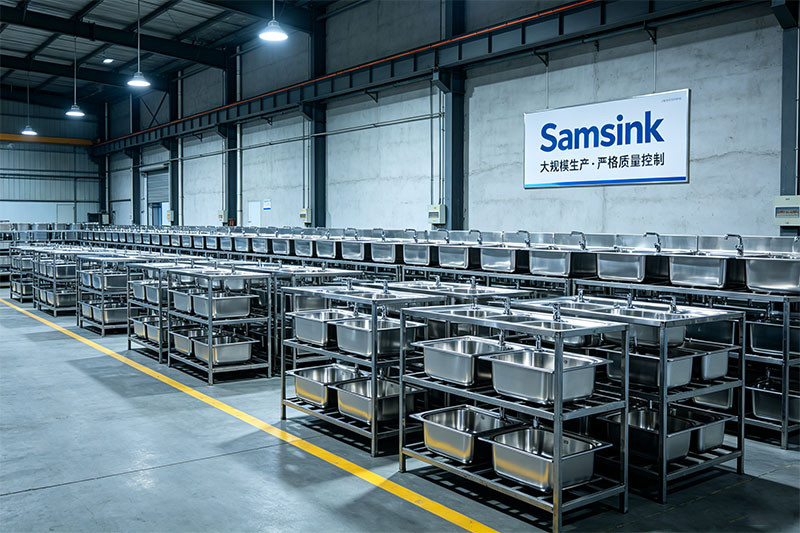
At Samsink, we specialize in meeting these large-scale demands. We work closely with project teams from the initial design and specification phase to ensure the chosen sink solution meets all functional, budgetary, and aesthetic requirements. Our robust manufacturing capabilities and strict quality control processes guarantee that every sink in a 1,000-unit order is as reliable as the first. By offering project-volume pricing, phased delivery coordination, and dedicated support, we help ensure that even the most ambitious construction projects are completed smoothly and successfully.
Essential Sink Features: Beyond Aesthetics for Stainless Steel Sinks Suppliers
While visual appeal is a significant factor in a sink's desirability, for suppliers and their professional clients, the features that lie beneath the surface are what truly define a product's value. Aesthetics might capture initial interest, but it is the material quality, functional design, and potential for customization that ensure long-term satisfaction and performance. As a supplier, our expertise is demonstrated not just by offering trendy finishes, but by engineering sinks that excel in durability, user-friendliness, and adaptability. We focus on the core attributes that make a stainless steel sink a reliable workhorse in any environment—be it a home, a restaurant, or a large-scale residential development. This commitment to foundational excellence is what separates a transient product from a lasting investment.
Material Durability: The Unmatched Strength of Stainless Steel
The single most important attribute of a stainless steel sink is its durability. This is a product that must withstand daily physical stress, exposure to corrosive substances, and extreme temperatures. As suppliers, we emphasize that the long-term value of a sink is directly tied to the quality of its materials and construction.
The Role of Stainless Steel Grade
The foundation of a durable sink is its material composition. The most common and highly recommended material for kitchen sinks is Type 304 stainless steel. This grade, also known as 18/8 stainless steel, contains approximately 18% chromium and 8% nickel. This specific alloy is critical for several reasons:
- Corrosion Resistance: The high chromium content reacts with oxygen in the air to form a passive, invisible protective layer on the steel's surface. This layer is what prevents rust and corrosion. If the surface is scratched, this protective film automatically reforms, effectively "healing" itself and maintaining its resistance. This makes it exceptionally resilient against common food acids, salts, and cleaning agents.
- Durability and Strength: The nickel content enhances the steel's toughness and resistance to heat and impact. A sink made from high-quality 304 stainless steel is less likely to deform and can maintain its structural integrity for decades. With proper care, a well-made 304 stainless steel sink can have a lifespan of 15 to 30 years, or even longer.
- Hygiene: The non-porous nature of 304 stainless steel means it doesn't harbor bacteria, making it an ideal, food-safe surface for any kitchen environment.
While other grades like 201 stainless steel exist and are cheaper, they contain less nickel and are significantly more prone to rust and corrosion, making them unsuitable for the demanding environment of a kitchen.
Understanding Gauge Thickness
Another critical factor in durability is the steel's gauge, which refers to its thickness. It's an important concept to understand, as it works on an inverse scale: the lower the gauge number, the thicker the steel.
- 16-Gauge (approx. 1.59mm thick): This is considered a premium, heavy-duty thickness. 16-gauge sinks offer superior resistance to dents and bowing, especially under the weight of heavy cast iron pots. The thicker material also naturally dampens noise from water and clanging dishes, resulting in a quieter user experience. This gauge is the preferred choice for high-traffic kitchens, commercial settings, and for customers who prioritize maximum durability.
- 18-Gauge (approx. 1.27mm thick): This is the most popular choice for residential kitchens, offering an excellent balance between durability and affordability. While slightly thinner than 16-gauge, a well-constructed 18-gauge sink is still highly durable and suitable for everyday use.
- 20-Gauge or Higher: Sinks with a gauge of 20 or higher are thinner and much more susceptible to denting, flexing, and noise. While less expensive, they often compromise on long-term performance and are generally recommended only for light-use applications.
As a trusted supplier, Samsink prioritizes the use of high-quality, certified 304 stainless steel and offers a range of gauges, with a strong recommendation for 16 or 18-gauge for any serious kitchen application. This commitment ensures that we provide a product that is not only visually appealing but is fundamentally built to last.
Functional Design: Exploring Installation Types and Accessories
A sink's functional design is what transforms it from a simple basin into an efficient and integral part of the kitchen workflow. This encompasses everything from how it's installed to the accessories that expand its capabilities. As suppliers, we focus on providing designs that not only look good but also enhance usability, cleanliness, and efficiency for the end user.
Key Installation Types
The method of installation dramatically affects both the kitchen's aesthetics and its day-to-day use. The three primary types each offer distinct advantages:
- Undermount Sinks: Installed from below the counter, these sinks create a seamless, continuous flow from the countertop into the basin. This is the preferred modern style for its clean look and practicality; debris can be wiped directly from the counter into the sink without being caught on a lip or rim. Undermount installation requires a solid surface countertop like granite, quartz, or stone that can support the sink's weight. While the installation can be more complex and costly, the aesthetic and cleaning benefits are significant.
- Top-Mount (or Drop-In) Sinks: These sinks are lowered into a pre-cut hole in the countertop, with the rim resting on the surface to support its weight. Top-mount sinks are easier and less expensive to install and are compatible with virtually any countertop material, including laminate. The main drawback is the rim, which can trap food particles and grime, making cleaning more difficult compared to an undermount model.
- Farmhouse (or Apron-Front) Sinks: Characterized by their large, forward-facing exposed front, these sinks make a bold design statement. Originally designed for ergonomic comfort—allowing users to stand closer to the basin without leaning over a strip of countertop—they are also prized for their deep, spacious bowls, which easily accommodate large pots and pans. Once associated with traditional or country kitchens, stainless steel and PVD-finished farmhouse sinks are now popular in transitional and contemporary designs.
The Rise of the Workstation Sink
A major innovation in functional design is the workstation sink. These sinks are engineered with integrated ledges on the front and back, which support a variety of custom-fit accessories. This transforms the sink into a versatile, multi-functional hub for all kitchen tasks. Instead of performing tasks on the counter, users can do everything directly over the sink, saving space and streamlining cleanup.
Essential and Innovative Accessories
Accessories are crucial for maximizing a sink's functionality. Beyond standard items, modern sinks are designed to integrate a suite of tools:
- Custom-Fit Cutting Boards: Made from materials like bamboo or durable composites, these slide along the workstation ledges, creating an over-the-sink prep surface.
- Colanders and Bins: These accessories nest within the sink, perfect for rinsing produce or holding food scraps for easy disposal.
- Roll-Up Drying Racks: Often made of silicone-coated stainless steel, these versatile racks can be placed over the sink for drying dishes or hot cookware, and then rolled up for compact storage.
- Bottom Grids: A stainless steel grid placed at the bottom of the sink protects the surface from scratches and dents, elevates dishes to improve drainage, and acts as a buffer to reduce noise.
- Drainage Systems: Advanced drain assemblies, including high-capacity strainers and decorative covers, improve functionality and aesthetics.
By offering a diverse range of installation types and a comprehensive ecosystem of accessories, we provide our partners the tools to create a kitchen workspace that is as functional as it is beautiful. A sink from Samsink is not just a fixture, but a complete system designed for modern life.
OEM Options: Customization Possibilities from Your Supplier
In a competitive market, the ability to offer customized products is a powerful differentiator. As a supplier, providing Original Equipment Manufacturer (OEM) options allows our partners—whether they are distributors, private-label brands, or large-scale developers—to create sinks that are perfectly aligned with their specific market needs, brand identity, and design vision. This goes far beyond simply selling a standard product; it's a collaborative process of co-creating a unique solution.
What Are OEM and Private-Label Services?
OEM and private-label programs empower a client to market and sell a product under their own brand name. While a standard catalog might offer a range of reliable choices, OEM services provide a much deeper level of customization. For brand buyers, this is an opportunity to move beyond reselling and build a distinct product line that can't be easily copied by competitors.
The two main approaches are:
- OEM (Original Equipment Manufacturer): In this model, the client typically provides the design and detailed specifications. The manufacturer's role is to produce the product exactly to those requirements. This is ideal for established brands with in-house design capabilities who want to create a truly unique product.
- ODM (Original Design Manufacturer): In this scenario, the manufacturer provides existing, pre-designed products that the client can choose from. The customization primarily involves branding, such as adding a logo, and selecting finishes or packaging. This model is perfect for businesses that want a faster speed-to-market with a proven design.
The Scope of Customization
A robust OEM program offers a wide array of customization possibilities. Successful branding is more than just etching a logo onto a sink. It involves crafting the entire product experience. At Samsink, our OEM capabilities include:
- Dimensions and Configuration: We can manufacture sinks in custom sizes to fit specific cabinetry or unique layouts. This includes adjusting bowl depth, corner radius, drain placement, and the layout of single, double, or even triple-bowl configurations. This flexibility is especially valuable for handmade sinks, which do not rely on fixed molds.
- Finishes and Colors: Beyond standard brushed stainless steel, we offer advanced PVD coatings in various colors like matte black, gunmetal, and brushed gold. We can work with clients to develop a finish that matches their brand aesthetic.
- Accessory Bundling: We can create a complete, market-ready package by bundling the sink with a curated set of accessories, such as custom-branded cutting boards, roll-up racks, and bottom grids. This adds significant value and convenience for the end user.
- Branding and Logos: We can apply a client's logo using precise methods like laser etching, ensuring a clean and permanent mark of quality.
- Packaging and Documentation: OEM service extends to the packaging itself. We can design custom cartons with the client's branding, product labels, SKU information, and barcodes. This is critical for everything from retail presentation to warehouse logistics. We can also create custom installation manuals and care guides.
By partnering with a capable OEM supplier like Samsink, our clients gain the ability to differentiate their offerings, control their brand presentation, and deliver a product that is truly their own. This strategic partnership transforms the supplier-client relationship from a simple transaction into a collaborative effort to capture market share and build lasting brand value.
The Critical Role of Stainless Steel Sinks Suppliers in Commercial Kitchen Operations
In a commercial kitchen, every component must be a high-performance tool, and the sink is no exception. It is the epicenter of hygiene and workflow, a station that endures relentless use from morning prep to nightly cleanup. Unlike residential sinks, which are chosen for a balance of aesthetics and function, commercial sinks are selected almost exclusively for their unwavering durability, cleanability, and ability to withstand the harsh realities of a professional culinary environment. As suppliers to this demanding sector, we understand that providing a commercial-grade sink is not about offering a product; it's about delivering a foundational piece of equipment that underpins the safety, efficiency, and financial viability of the entire operation. The right sink is an investment in operational resilience, while the wrong choice can become a constant source of cost, contamination risk, and disruption.
Prioritizing Durability and Hygiene for Commercial Environments
In the high-stakes world of commercial food service, there is no room for compromise on durability and hygiene. A commercial sink is not a delicate fixture; it is a workhorse that must endure an environment characterized by constant impact, extreme temperatures, and exposure to corrosive cleaning chemicals. Food safety and operational uptime are paramount, making the material and design of the sink a critical decision for any restaurant, hotel, or institutional kitchen. A supplier's role is to provide sinks that not only meet but exceed the rigorous demands of these environments, ensuring a safe and efficient workflow day after day.
Withstanding High-Volume Use and Corrosive Elements
A commercial kitchen is an environment of relentless activity. Sinks in these settings must endure a far greater level of punishment than their residential counterparts. From heavy pots and pans being dropped, to the constant rush of high-temperature water, to daily sanitization with potent chemicals, the demands are immense. As suppliers, we recognize that durability in this context is not a feature—it is a prerequisite for operational survival.
The resilience of a commercial sink begins with its material composition. Type 304 stainless steel is the industry standard for most food service applications, prized for its excellent balance of strength, corrosion resistance, and cost-effectiveness. The 18% chromium and 8% nickel alloy is robust enough to handle daily impacts and resist damage from common food acids and standard cleaning agents. For environments with exceptionally harsh conditions, such as coastal areas with high salt content in the air or facilities that use aggressive industrial cleaners, Type 316 stainless steel is the superior choice. The addition of molybdenum in 316-grade steel provides significantly enhanced resistance to chlorides and other corrosive chemicals, ensuring a longer service life in demanding applications.
Equally important is the thickness of the steel, or its gauge. Commercial kitchens almost universally require sinks made from heavy-gauge stainless steel to prevent denting, bending, and excessive noise.
- 16-Gauge Steel: This is the preferred thickness for most heavy-duty commercial applications. It offers superior structural rigidity, withstands impacts from heavy equipment, and provides natural sound-dampening qualities.
- 18-Gauge Steel: While slightly thinner, 18-gauge is still a viable option for light- to medium-duty use in smaller cafes or prep areas where the sink is not subjected to constant, heavy impacts.
- 20-Gauge or Higher: Thinner steel is generally unsuitable for any true commercial kitchen, as it will quickly dent, deform, and fail under the strain of high-volume use.
A well-constructed commercial stainless steel sink is impact-resistant and can withstand the daily abuse of a fast-paced kitchen. Unlike materials such as ceramic or porcelain, which can chip or crack under heavy impact, stainless steel is resilient. Its non-porous surface also means it will not absorb moisture or delaminate, even with constant exposure to water and steam. This inherent toughness ensures a long lifespan, preventing the costly downtime and replacement expenses associated with inferior products. At Samsink, our commercial-grade offerings are engineered from certified 304 and 316 stainless steel in heavy gauges, ensuring they meet and exceed the durability requirements of any professional kitchen.
Ensuring Food Safety and Optimal Operational Efficiency
In a professional kitchen, food safety is non-negotiable, and the sink is a critical control point for hygiene. A well-designed sink made from the right materials is the first line of defense against cross-contamination and foodborne illness. Suppliers must therefore provide products that are not only durable but also engineered specifically to facilitate sanitation and support an efficient, safe workflow.
Hygienic Design Features:
The cleanability of a sink is paramount. Stainless steel is the material of choice for commercial kitchens primarily because it is non-porous. This means its surface has no microscopic openings where bacteria, mold, or grime can hide and multiply. This smooth surface makes it easy to clean and sanitize effectively, a crucial requirement to meet health code standards.
Design details that enhance hygiene include:
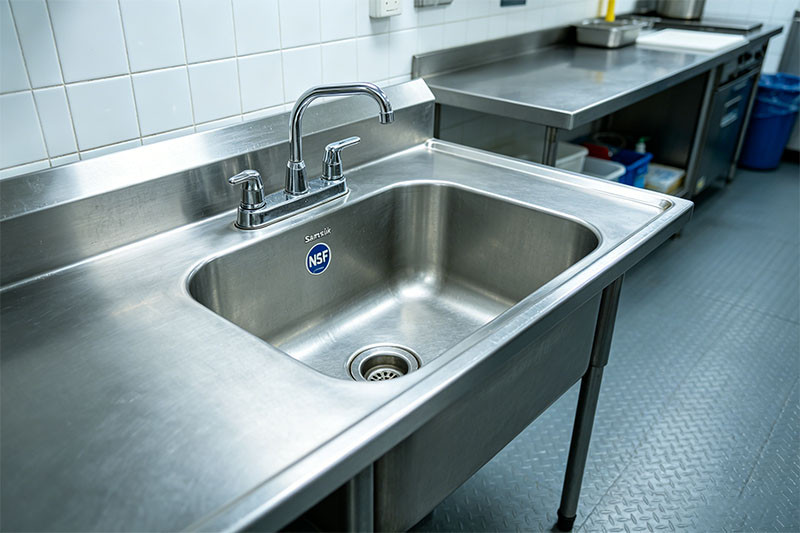
- Coved Corners: Sinks with rounded, or "coved," interior corners are significantly easier to clean than those with sharp, 90-degree angles. Square corners can trap food debris and bacteria, creating a sanitation risk. Coved corners allow for complete and effortless cleaning, leaving no place for pathogens to hide. In some jurisdictions, coved corners are even mandated by health regulations.
- Proper Drainage: Sinks should be designed with a subtle slope towards the drain to ensure complete water removal. This prevents pooling, which can become a breeding ground for bacteria and lead to unpleasant odors.
- Seamless Construction: High-quality commercial sinks feature smooth, polished welds. Poorly finished weld seams can create crevices that are difficult to clean, compromising hygiene.
Optimizing Operational Efficiency:
The layout of sinks in a commercial kitchen directly impacts workflow and the prevention of cross-contamination. Health codes, such as the FDA Food Code, mandate the separation of tasks into different, dedicated sinks. A well-equipped kitchen will have a strategic layout of specialized sinks:
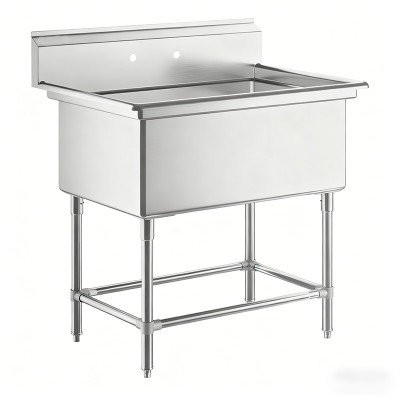
- Three-Compartment Sink: This is the non-negotiable industry standard for manual warewashing. It facilitates the required wash, rinse, and sanitize process, ensuring all utensils and equipment are cleaned hygienically.
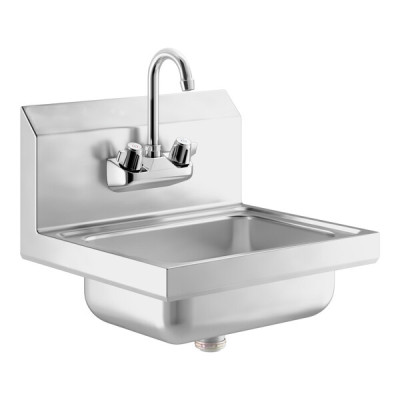
- Handwashing Sinks: Dedicated handwashing stations must be placed in all food prep and dishwashing areas. Using a prep or dish sink for handwashing is a major health code violation.
- Food Preparation Sinks: These are used exclusively for washing produce and other food items, keeping them separate from cleaning chemicals and dirty dishes.
- Utility/Mop Sinks: A separate sink for janitorial tasks is required to prevent contamination of food preparation areas.
The Importance of NSF Certification:
For commercial kitchen equipment, NSF (National Sanitation Foundation) certification is the gold standard. When a stainless steel sink is NSF certified, it signifies that it has been rigorously tested and verified to meet strict public health and safety standards. This includes confirming that the materials used are non-toxic and corrosion-resistant, and that the design (including features like coved corners) is easy to clean and sanitize. Most local health departments require food service establishments to use NSF-certified equipment; failure to do so can result in failed inspections and fines.
As a supplier, offering NSF-certified sinks from Samsink provides kitchen operators with the assurance that they are investing in a product that is compliant, safe, and built for the rigorous demands of their business. This commitment to hygiene and efficiency is crucial for the long-term success of any food service establishment.
Understanding Total Cost of Ownership: Why Quality Matters from Your Stainless Steel Sinks Supplier
When sourcing equipment for a commercial kitchen, focusing solely on the initial purchase price is a common but costly mistake. A more insightful approach is to evaluate the Total Cost of Ownership (TCO), which encompasses not only the upfront investment but also all associated costs over the product's entire lifespan. This includes expenses related to maintenance, repairs, replacement, and even the indirect costs of operational downtime. For a fixture as critical as a stainless steel sink, the TCO can vary dramatically depending on its quality. A cheaper, lower-quality sink often becomes a financial drain, while a premium, well-constructed sink proves to be a far more economical investment in the long run. As suppliers, we guide our clients to look beyond the price tag and recognize that true value lies in long-term reliability and performance.