Stainless Steel Slop Sinks Explained: Commercial Grade and Utility
When we talk about the unseen heroes in a busy commercial kitchen or utility space, one critical item often goes overlooked: the stainless steel slop sink. It’s far more than just a basin; it’s a cornerstone of hygiene and operational efficiency. It's the workhorse used for everything from filling and dumping mop buckets to pre-soaking heavily soiled laundry, washing gardening tools, or even giving a muddy pet a quick rinse.
Today, we’re embarking on a journey to deeply explore what truly makes a superior commercial-grade stainless steel slop sink, examining everything from the thickness of its material to its specific design characteristics. We will unpack the technical specifications and translate them into real-world benefits for your operations.
Our main goal is to empower you with the knowledge needed to understand the key factors to consider, ensuring you confidently choose a durable and hygienic solution that can stand up to the rigorous demands of your business. Whether for a bustling restaurant, a meticulous healthcare facility, a practical home garage, or a high-turnover bakery, selecting the right sink is an investment in safety, cleanliness, and long-term value.
Key Takeaways
For those in a hurry, here are the crucial points to remember when selecting a commercial stainless steel slop sink:
- Gauge is King: The gauge of the stainless steel indicates its thickness. A lower gauge number means thicker, more durable steel. For most commercial applications, 14-gauge or 16-gauge is recommended for optimal resistance to dents and wear.
- Grade Dictates Environment: Type 304 stainless steel is the industry standard, offering excellent corrosion resistance for general use. For environments with harsh chemicals or saltwater exposure, upgrading to Type 316, which includes molybdenum, is a wise investment.
- NSF Certification is Non-Negotiable: In any food service or public health environment, NSF certification is essential. It guarantees the sink is made from safe materials and features a hygienic design, such as coved corners, that is easy to clean and prevents bacteria growth.
- Design Drives Functionality: Key features like a deep basin to prevent splashing, a high backsplash to protect walls, and sturdy, adjustable legs are critical for usability. Consider wall-mount versus floor-mount options based on your space and cleaning protocols.
Unpacking the Gauge: Why Thickness is Paramount for Your Commercial Stainless Steel Slop Sink
When selecting a slop sink, especially for a demanding commercial environment, the term "gauge" will inevitably come up. It's one of the most critical specifications to understand, as it directly relates to the sink's durability, lifespan, and ability to withstand daily abuse. Choosing the wrong gauge can lead to premature dents, warping, and the need for a costly replacement.
What Does "Gauge" Really Mean When We Talk About Stainless Steel Slop Sinks?
In the world of sheet metal, "gauge" is a standard unit of measurement that defines the thickness of the material. This system originated in the British iron and wire industry in the 19th century, before metric or imperial units were universally adopted. It's important to know that the gauge system is independent and doesn't directly correlate to inches or millimeters; you need a conversion chart to find the exact thickness.
The most crucial and often confusing aspect of the gauge system is its inverse relationship: the lower the gauge number, the thicker and stronger the steel. For example, a 16-gauge stainless steel sheet is thicker and more robust than a 22-gauge sheet. This is because the gauge number historically related to the number of drawing or rolling processes the metal went through—more processes resulted in a thinner sheet and thus a higher number.
Here is a simplified chart to illustrate the relationship between common stainless steel gauges and their approximate thickness:
| Gauge Number | Approximate Thickness (Inches) | Approximate Thickness (Millimeters) | Typical Application |
|---|---|---|---|
| 14-Gauge | 0.0781" | 1.984 mm | Heavy-Duty Commercial, Industrial |
| 16-Gauge | 0.0625" | 1.588 mm | Standard Commercial, High-Use Residential |
| 18-Gauge | 0.0500" | 1.270 mm | Standard Residential, Light Commercial |
| 20-Gauge | 0.0375" | 0.953 mm | Light-Duty Residential, Budget Sinks |
| 22-Gauge | 0.0313" | 0.794 mm | Very Light-Duty, Inexpensive Sinks |
Note: Thicknesses can vary slightly between manufacturers and different metal types. Always refer to the specific manufacturer's gauge chart.

The Critical Difference: Why Lower Gauge is Essential for a Heavy-Duty Stainless Steel Slop Sink in Commercial Settings
In a light-duty residential kitchen, an 18 or 20-gauge sink might perform adequately. However, a commercial slop sink operates in a completely different league of intensity. Commercial sinks generally range from 14 to 16 gauge, as they are expected to endure long and intensive wear and tear. Here’s why a lower gauge (thicker steel) is not just a preference, but a necessity:
Superior Dent and Impact Resistance: A commercial environment is unpredictable. Heavy mop buckets, large pots, tools, or equipment can be dropped or knocked against the sink. Thicker steel, such as 14 or 16-gauge, has significantly more mass and structural integrity, making it far more resistant to denting and deforming from such impacts. A thinner, higher-gauge sink would quickly show dings and dents, compromising both its appearance and potentially its structural integrity.
Longevity and Durability: Commercial equipment is a long-term investment. A lower-gauge sink is inherently more durable and built to last. It withstands the daily grind of a busy operation, from constant water flow and temperature changes to contact with various cleaning chemicals, without failing. Thicker steel is simply better equipped to resist wear and tear over many years of service.
Reduced Noise and Vibration: Thinner steel acts like a drumhead, amplifying the noise of running water, clanking dishes, or the vibrations from a garbage disposal. Thicker steel has more mass to absorb these vibrations, resulting in a significantly quieter operation. In a busy and already noisy commercial space, this reduction in noise pollution can contribute to a more pleasant working environment.
Structural Stability: A thicker gauge provides greater overall rigidity. This is crucial for larger sinks or those fitted with heavy commercial faucets or garbage disposals. The added stiffness prevents the sink from flexing or bowing under heavy loads, ensuring the plumbing connections remain secure and the entire unit stays stable. For heavy-duty industrial or mechanical settings, even 10 or 12-gauge plate might be used for its exceptional wear and impact resistance.
In essence, while a thinner gauge sink might save money upfront, it often leads to higher long-term costs due to the need for earlier replacement and the potential for operational disruptions. For any serious commercial application, investing in a 14 or 16-gauge slop sink is the smart choice for ensuring reliability and performance.
Balancing Durability and Budget: Making the Smart Choice for Your Stainless Steel Slop Sink's Gauge
While the rule "thicker is better" generally holds true, the optimal gauge for your stainless steel slop sink involves a practical balance between ultimate durability, application, and budget. Not every setting requires the most expensive, thickest steel available. Making an informed choice means matching the sink's gauge to its intended use.
The primary trade-off is between cost and long-term performance. As the gauge number decreases, the thickness of the steel increases, and so does the material cost and overall price of the sink. The key is to view the purchase as a long-term investment. Spending more upfront on a lower-gauge sink can prevent the higher costs associated with repairs, replacements, and operational downtime in the future.
Here is a practical guide to help you select the right gauge for your needs:
14-Gauge (Heavy-Duty Commercial/Industrial):
- Application: This is the premium choice for the most demanding environments. Think of restaurant kitchens operating 24/7, busy hospital utility rooms, auto repair garages where tools are washed, and food processing plants. It is built for maximum durability and can withstand significant abuse.
- Consideration: While it offers the best performance, a 14-gauge sink is also the most expensive and may be overkill for less intense settings.
16-Gauge (Standard Commercial/High-Use Residential):
- Application: This is often considered the "sweet spot" for most commercial applications and high-traffic residential areas. It provides an excellent balance of durability, dent resistance, and cost. A 16-gauge sink is ideal for restaurant kitchens, bakeries, laundromats, busy home laundry rooms for pre-soaking clothes, or a garage workshop sink. It offers superior durability, noise reduction, and a solid feel compared to higher gauges.
- Consideration: For most commercial needs, 16-gauge is the recommended minimum, as anything thinner may not hold up to professional wear and tear.
18-Gauge (Light Commercial/Standard Residential):
- Application: An 18-gauge sink is a popular choice for residential kitchens because it offers a good balance of affordability and performance for daily household use. It's also suitable for light commercial use, such as in an office breakroom, a small cafe's utility closet, or a home gardening station for rinsing tools.
- Consideration: While durable enough for many tasks, it is more susceptible to denting and noise than a 16-gauge sink and is not recommended for high-volume, heavy-duty commercial settings.
20-Gauge and Higher (Light-Duty/Budget-Constrained):
- Application: Sinks with a gauge of 20 or higher are the most affordable but also the least durable. They are best reserved for very light, infrequent use where the risk of impact from heavy objects is minimal.
- Consideration: These thinner sinks are prone to denting, can be noisy, and may not have a long service life under regular use. They are generally not advised for any commercial or serious utility application.
By carefully considering how the sink will be used, you can select a gauge that provides the necessary durability to perform reliably for years without overspending on unnecessary thickness.
The Science Behind the Shine: Superior Materials for Your Stainless Steel Slop Sink
The material your slop sink is made from is just as important as its thickness. While various materials like cast iron, porcelain, and composites exist, stainless steel overwhelmingly dominates the commercial and utility sink market for a compelling set of reasons. Its reputation is built on a scientific foundation of hygiene, durability, and performance that is difficult to match.
The Unmatched Benefits of Stainless Steel for Your Slop Sink
Stainless steel isn't just one material; it's an alloy of iron with a minimum of 10.5% chromium. This chromium content is the secret to its "stainless" property. When exposed to oxygen, the chromium forms a thin, invisible, and incredibly durable "passive layer" of chromium oxide on the surface. This layer protects the underlying steel from corrosion and has the remarkable ability to self-heal when scratched. Here are the core benefits that make it the industry standard:
Exceptional Hygiene: The surface of stainless steel is non-porous, meaning it has no microscopic holes or cracks where dirt, grime, or bacteria can hide. This smooth, continuous surface makes it exceptionally easy to clean and sanitize, a non-negotiable trait in commercial kitchens, hospitals, and food processing facilities. Its cleanability is comparable to glass and far superior to materials like plastic or wood. This is critical for preventing cross-contamination and maintaining a safe operational environment.
Superior Durability and Longevity: Commercial-grade stainless steel is incredibly tough. It is resistant to chipping, cracking, and impacts, especially in lower gauges. A well-maintained stainless steel sink can withstand the daily abuse of a demanding commercial setting for decades, making it a sound long-term investment. Unlike porcelain or enamel, it won't shatter or chip if a heavy object is dropped on it.
Corrosion and Stain Resistance: The passive chromium-oxide layer provides outstanding protection against rust and stains from food acids, cleaning chemicals, and moisture. This ensures the sink maintains its integrity and appearance even with constant exposure to harsh substances.
Heat and Chemical Resistance: Stainless steel can withstand extremely high temperatures without warping, melting, or degrading. This allows for direct contact with hot pots and pans and makes it resilient to thermal shock from draining boiling water. It is also resistant to a wide range of chemicals, which is crucial in environments where strong detergents and sanitizers are used.
Sustainable and Eco-Friendly: Stainless steel is one of the most recycled materials on the planet. It is 100% recyclable and can be repurposed without losing any of its inherent properties. Its long lifespan also reduces waste by minimizing the need for frequent replacements.
Aesthetic and Professional Appearance: A clean stainless steel sink provides a modern, professional look that is associated with cleanliness and efficiency. Its neutral, sleek finish can complement virtually any design aesthetic, from industrial to contemporary.
These combined properties make stainless steel not just a practical choice, but the superior choice for any slop sink that needs to deliver on performance, hygiene, and long-term value.
Delving into Grades: Why 304 and 316 Stainless Steel are Preferred for Commercial Slop Sinks
Not all stainless steel is created equal. The "grade" of stainless steel refers to its specific chemical composition—the blend of metals like chromium, nickel, and other elements in the alloy. This composition directly determines its strength, corrosion resistance, and suitability for different environments. In the world of commercial sinks, two grades stand out as the top choices: Type 304 and Type 316.
Type 304 Stainless Steel: The Industry Standard
Type 304 is the most widely used grade of stainless steel in the world and the standard for most commercial kitchen equipment, including slop sinks. It is sometimes referred to as 18/8 stainless steel, which describes its typical composition of 18% chromium and 8% nickel.
- Key Characteristics: The high chromium and nickel content gives Type 304 excellent corrosion and rust resistance in a wide variety of environments. It is durable, easy to form, and weldable, making it a versatile and cost-effective choice.
- Best Use Cases: Type 304 is the perfect material for general-purpose slop sinks in most commercial kitchens, utility rooms, garages, laundries, and institutions. It comfortably handles exposure to water, food acids, and standard cleaning chemicals, making it a reliable workhorse for everyday use.
Type 316 Stainless Steel: The Premium Choice for Harsh Environments
Type 316 stainless steel is a premium grade that takes the capabilities of Type 304 a step further. The key difference in its composition is the addition of 2-3% molybdenum.
- Key Characteristics: The inclusion of molybdenum dramatically enhances its resistance to corrosion, particularly against chlorides and other harsh chemicals. This makes Type 316 significantly more durable in aggressive environments. It is often referred to as "marine-grade" stainless steel.
- Best Use Cases: A Type 316 stainless steel sink is the superior choice when the sink will be exposed to highly corrosive substances. This includes:
- Coastal and Marine Environments: The high salt content in the air can accelerate corrosion in lesser materials.
- Scientific Laboratories: Where harsh chemicals and acids are frequently used.
- Industrial Facilities: With exposure to industrial cleaning agents or chemical byproducts.
- Areas Using De-Icing Salts: The chloride in de-icing salts can be aggressive.
The following table provides a clear comparison between these two leading grades:
| Feature | Type 304 Stainless Steel | Type 316 Stainless Steel |
|---|---|---|
| Key Composition | ~18% Chromium, ~8% Nickel | ~16-18% Chromium, ~10-12% Nickel, 2-3% Molybdenum |
| Corrosion Resistance | Excellent for general use | Superior, especially against chlorides and acids |
| Common Name | 18/8 Stainless Steel | Marine-Grade Stainless Steel |
| Best For | Standard commercial kitchens, indoor utility areas, general use | Coastal areas, labs, industrial facilities, outdoor kitchens, harsh chemical exposure |
| Cost | More affordable | More expensive due to molybdenum and higher nickel content |
| Durability | Very durable for everyday needs | Exceptionally durable for challenging conditions |
While Type 316 comes at a higher price point, the investment is justified by its extended lifespan and reduced maintenance needs in environments that would cause Type 304 to fail prematurely. For most businesses, however, a well-made Type 304 sink offers the perfect blend of performance and value.
Mitigating Common Challenges: Noise and Scratches in Your Stainless Steel Slop Sink
Despite its many advantages, stainless steel is not without its challenges. The two most common concerns for any stainless steel sink owner are noise and scratches. However, quality manufacturers have developed effective strategies to address both issues, and proper care can keep your sink looking and performing its best for years.
Tackling the "Drum Effect": How Quality Sinks Are Sound-Proofed
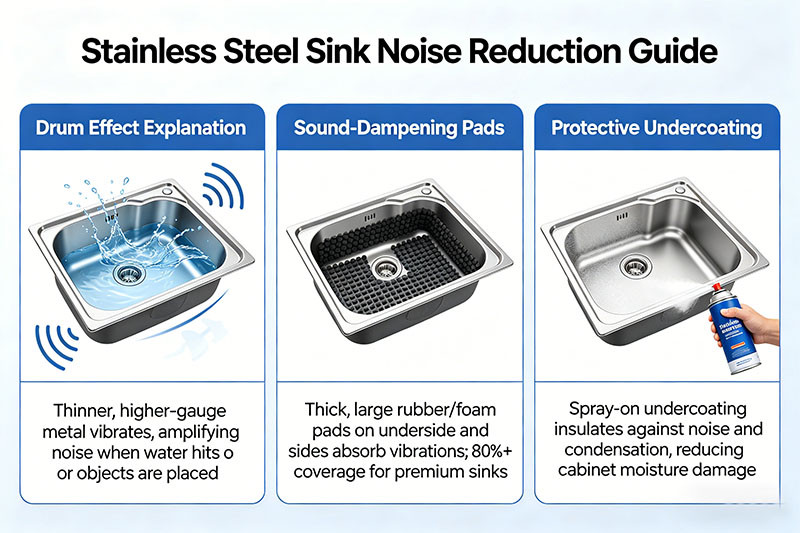
A common issue with stainless steel sinks, especially those made from thinner, higher-gauge metal, is the loud, echoing noise they can produce. This "drum effect" occurs when water hits the metal surface or when pots and tools are placed inside, causing the steel to vibrate and amplify the sound.
Quality manufacturers combat this in two primary ways:
Sound-Dampening Pads: The most effective method is the application of thick, large rubber or foam pads to the underside and sides of the sink bowl. These pads are designed to absorb vibrations, effectively deadening the sound before it can echo. When evaluating a sink, check the underside for these pads. More coverage and thicker pads translate to a quieter sink. Some premium sinks have pads covering over 80% of their exterior surface.
Protective Undercoating: In addition to pads, many sinks feature a spray-on undercoating. This coating provides another layer of insulation against both noise and condensation. Condensation can form on the bottom of a sink when it's filled with cold water in a warm, humid environment, potentially leading to moisture damage in the cabinet below. The undercoating helps insulate the sink, reducing this risk while also contributing to sound absorption.
Managing Scratches: Finishes and Maintenance
Scratches are an inevitable part of a stainless steel sink's life, especially in a high-traffic utility setting. While you can't prevent every scratch, the choice of finish and proper maintenance can significantly minimize their appearance.
The Advantage of a Brushed or Satin Finish: Most commercial and high-quality residential sinks feature a brushed or satin finish. This finish consists of very fine, uniform lines scored into the steel, creating a soft, matte look. A major benefit of this texture is its ability to hide minor scratches and water spots. Scratches tend to blend in with the existing grain of the finish, making them much less noticeable than they would be on a highly reflective, polished (or mirror) surface. While a polished finish can look striking when new, it highlights every fingerprint, smudge, and scratch, making it impractical for a utility sink.
Developing a Patina: Over time, a used stainless steel sink will develop a "patina" from an accumulation of tiny scratches. This patina creates a unique, uniform look that is a natural characteristic of the material. Rather than viewing each new scratch as a flaw, it's helpful to see it as part of the sink's evolving finish.
Tips to Minimize and Manage Scratches:
- Clean with the Grain: When cleaning your sink, always scrub in the direction of the brushed finish lines. Scrubbing against the grain can create noticeable marks.
- Use Non-Abrasive Cleaners: Avoid using steel wool, abrasive scouring pads, or harsh, gritty cleaners, as these can damage the finish. A soft sponge or cloth with mild soap and water is usually sufficient.
- Rinse Thoroughly: After use, rinse the sink to remove any leftover detergents or minerals that could leave spots. Drying the sink with a soft cloth can further prevent water spots.
- Use a Sink Grid: For added protection, consider placing a stainless steel or PVC-coated grid at the bottom of the sink. This elevates items off the surface, preventing direct contact and reducing the likelihood of scratches from heavy tools or pots.
By choosing a sink with robust sound-dampening features and a practical brushed finish, you can effectively manage the most common challenges associated with stainless steel and ensure a better user experience.
Prioritizing Health and Safety: NSF Certification for Your Stainless Steel Slop Sink
In any commercial or institutional setting—from restaurants and hospitals to schools and laboratories—hygiene is not just a goal, it's a requirement. This is where NSF certification becomes a critical factor in your purchasing decision. More than just a sticker, the NSF mark is a guarantee of public health protection and safety.
What NSF International Certification Means for Your Commercial Stainless Steel Slop Sink
NSF International, originally the National Sanitation Foundation, is an independent, accredited organization that develops standards and provides testing and certification for products to protect and improve public health. When a stainless steel sink is "NSF Certified," it means it has been rigorously tested and verified to meet specific standards for safety and sanitation. For food equipment, the most relevant standard is NSF/ANSI 2, which sets minimum requirements for the materials, design, construction, and performance of items like sinks, tables, and counters.
An NSF-certified sink is your assurance that you are investing in a product built with health and safety as a top priority. The certification is not a one-time event; it involves regular on-site inspections of manufacturing facilities and periodic re-testing to ensure ongoing compliance. This process guarantees that the product consistently meets the highest standards.
To earn NSF certification, a sink must meet several key criteria:
- Safe Materials: The sink must be made from non-toxic, corrosion-resistant materials that will not leach harmful chemicals into water or food. This ensures the material itself is safe for use in hygienic environments.
- Hygienic Design: The design must be free of sharp corners, cracks, or crevices where food particles and bacteria can become trapped. This makes the sink easy to clean thoroughly.
- Durable Construction: The product must be well-made and able to withstand the rigors of a commercial environment, ensuring it remains sanitary and functional over time.
In many jurisdictions, local health codes mandate the use of NSF-certified equipment in commercial kitchens, making this certification a requirement for compliance. Choosing an NSF-certified slop sink is a fundamental step in building a safe, compliant, and efficient workspace.
Preventing Cross-Contamination: How Your NSF-Certified Stainless Steel Slop Sink Protects Your Operations
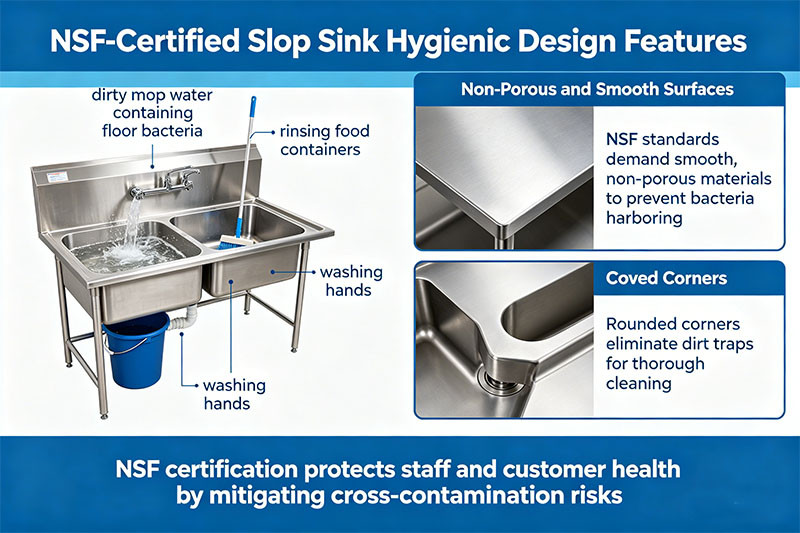
A slop sink in a commercial facility is a high-risk area for cross-contamination. It may be used to dispose of dirty mop water containing floor bacteria, then used to rinse food containers or wash hands. Choosing a sink with a design certified by NSF is one of the most effective ways to mitigate this risk and protect the health of both staff and customers.
NSF certification directly impacts a sink's hygienic design in several critical ways:
Non-Porous and Smooth Surfaces: NSF standards demand that materials like stainless steel have a smooth, non-porous surface. This is vital because porous materials can absorb moisture and harbor bacteria in microscopic crevices, even after cleaning. A non-porous surface provides no refuge for bacteria, ensuring that a proper cleaning and sanitation process can effectively remove contaminants from the surface.
Coved Corners: One of the most important design features of an NSF-certified sink is the use of coved corners. Instead of sharp, 90-degree angles where the sink walls meet the bottom, NSF-compliant sinks have rounded, curved corners. This seemingly small detail is hugely significant for hygiene. Sharp corners are notoriously difficult to clean, allowing food particles, grease, and bacteria to accumulate. The rounded design of coved corners allows a sponge or brush to glide smoothly across the entire surface, eliminating these dirt traps and ensuring a truly thorough cleaning.
Seamless Welds: Any joints or welds in an NSF-certified sink must be ground smooth and polished. This eliminates the tiny gaps and rough textures found in lower-quality welds, which can also become breeding grounds for bacteria. The result is a seamless interior that is easy to wipe down and keep sanitary.
Proper Drainage: The design of an NSF-certified sink often includes a bottom that is tapered toward the drain. This ensures that water evacuates efficiently, preventing pooling. Standing water can become a reservoir for bacterial growth, so effective drainage is a key element of hygienic design.
By mandating these specific design characteristics, NSF certification ensures that a sink isn't just made of a safe material, but that its entire construction is engineered to fight bacterial growth and prevent cross-contamination. This makes an NSF-certified slop sink an indispensable tool for maintaining health and safety standards in any professional environment.
Optimizing Functionality: Key Features for a High-Performance Stainless Steel Slop Sink
Beyond gauge and grade, the physical design and features of a slop sink determine its usability and efficiency in a real-world setting. A well-designed sink goes beyond just holding water; it actively helps contain messes, protect its surroundings, and streamline workflow. When selecting a sink, paying close attention to these functional elements is crucial for long-term satisfaction.
Essential Design Elements That Define a Superior Stainless Steel Slop Sink
A high-performance slop sink is characterized by a few key design elements that work together to enhance functionality and hygiene.
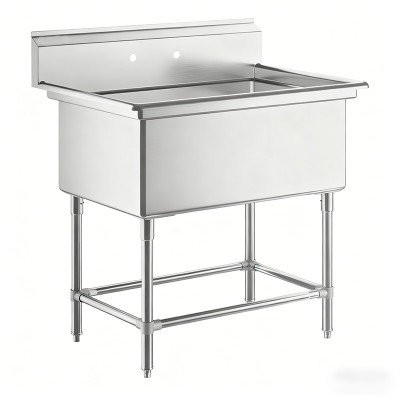
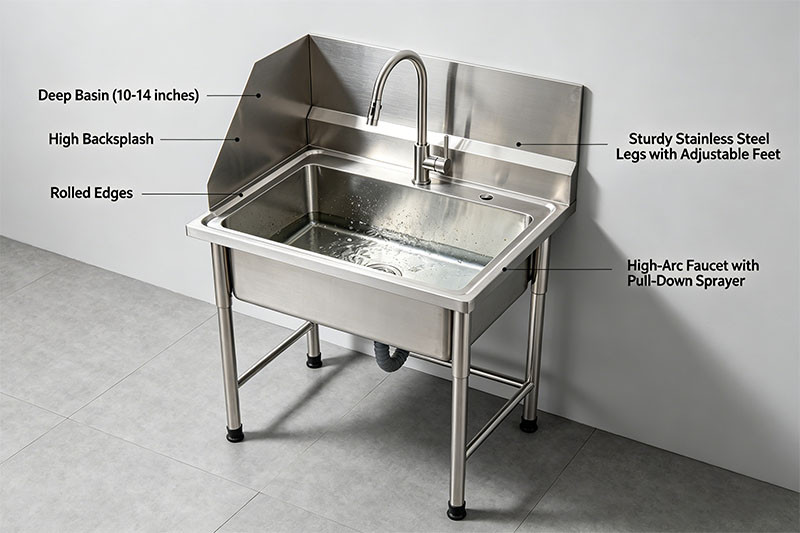
Deep Basin: A deep basin is arguably the most important feature of a utility sink. Basins ranging from 10 to 14 inches or deeper are ideal for commercial use. This depth is essential for containing splashes when filling mop buckets, washing large items, or disposing of liquids. A deeper basin keeps water and grime inside the sink, preventing messes on the floor and reducing slip hazards. It also provides ample space to fully submerge large tools or pre-soak heavily soiled items, like greasy pans from a Chinese kitchen or messy bakery equipment.
High Backsplash: A high, integrated backsplash is another critical feature. This raised panel at the back of the sink protects the wall from water damage, stains, and the growth of mold or mildew. In a busy environment where water is constantly splashing, a backsplash saves on maintenance and preserves the integrity of the wall behind the sink.
Rolled Edges: Quality commercial sinks feature rolled or raised edges around the perimeter. This simple design element acts as a barrier, preventing water that splashes onto the top rim from spilling over onto the floor. It helps contain messes within the sink unit, contributing to a cleaner and safer work area.
Sturdy Legs and Feet: For floor-mounted models, the leg assembly is paramount for stability. Look for sinks with robust, heavy-gauge stainless steel legs that are securely welded or bolted to the basin. Adjustable feet are also essential. They allow you to level the sink on uneven floors, ensuring proper drainage and preventing the unit from wobbling. Bullet-style or non-marking plastic feet are preferred to protect floor surfaces.
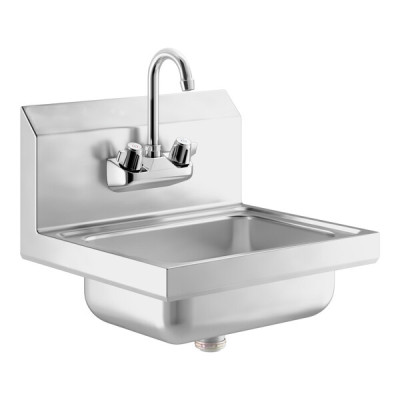
Appropriate Faucet: The faucet is a critical companion to the sink. A high-arc spout provides the necessary clearance to fit large buckets and equipment underneath. For added versatility, a faucet with a pull-down sprayer is invaluable for rinsing the entire basin, washing tools, or directing water precisely where it's needed.
Customization and Space-Saving Innovations in Stainless Steel Slop Sink Design
While the basic features are essential, modern slop sinks also offer a variety of configurations and customizations to fit specific needs and spaces.
Floor-Mount vs. Wall-Mount Sinks:
- Floor-Mount: This is the most common and traditional style. These freestanding units are supported by their own legs, making them extremely sturdy and capable of handling heavy use. They can be placed anywhere with plumbing access and are the best choice for heavy-duty applications.
- Wall-Mount: A wall-mounted or "floating" sink is a great space-saving option, particularly in smaller utility closets or tight areas. By lifting the sink off the floor, it creates an open space underneath that is very easy to clean. However, installation is more complex, as the wall must be properly reinforced to support the weight of the sink and its contents.
Integrated Drainboards: Some models come with one or two integrated drainboards on the sides of the basin. These corrugated surfaces are incredibly useful for placing wet items to dry, such as mop heads, buckets, or washed tools. They ensure that excess water drains directly back into the sink, keeping the surrounding area dry and organized.
Corner Models: For maximizing efficiency in tight spaces, corner-mounted slop sinks are an innovative solution. They fit neatly into an unused corner, freeing up valuable wall and floor space for other equipment or traffic.
Creative Applications: The versatility of these designs lends itself to a wide range of uses beyond janitorial work. A deep basin sink can serve as an excellent pet bathing station in a grooming salon or at home. In a garage, it's perfect for washing greasy tools and parts. For avid gardeners, it provides an ideal spot for rinsing muddy boots and garden tools. In a home with a dedicated bakery or a commercial bakery, it can handle the large, messy bowls and utensils. The robust nature of a commercial-grade sink also makes it suitable for a basement, where it can be used for various DIY projects or as a disposal point for wastewater.
Selecting the Right Model: What to Consider When Choosing Your Stainless Steel Slop Sink
Choosing the right model comes down to a careful assessment of your specific needs. Ask yourself the following questions to guide your decision:
- What is the primary use? Will you be dumping heavy mop buckets, pre-soaking laundry, washing pets, or cleaning delicate equipment? The answer will influence the required gauge and depth.
- How much space is available? Your available footprint will determine whether a standard, corner, or wall-mount model is most appropriate. Measure your space carefully before purchasing.
- What is the workload? A sink in a 24/7 restaurant requires a more durable, lower-gauge model than one in a small office breakroom. Be realistic about the level of use it will endure.
- Are there specific hygiene requirements? For any food service, healthcare, or laboratory setting, an NSF-certified sink is not just recommended—it's often mandatory.
- What are your plumbing and installation constraints? Consider the location of existing water lines and drains. This will affect whether a floor-mount or wall-mount model is more practical and will help determine the right faucet configuration.
By considering these factors, you can move beyond a one-size-fits-all approach and select a stainless steel slop sink with the specific features and design that will best serve your operational needs for years to come.
Frequently Asked Questions (FAQ)
Q1: What is the main difference between a slop sink and a mop sink? While the terms are often used interchangeably, there can be a subtle distinction. A "slop sink" or "utility sink" is typically a deep-basin sink raised on legs or mounted to a wall, designed for a wide range of cleaning tasks. A "mop sink" can sometimes refer to a floor-level basin, often made of terrazzo or cast concrete, designed specifically for filling and emptying mop buckets. However, in the context of stainless steel commercial equipment, both terms generally refer to a heavy-duty, deep-basin utility sink.
Q2: Can I use a residential utility sink in a commercial kitchen? It is strongly discouraged. Residential utility sinks are typically made from higher-gauge (thinner) steel or plastic, which is not designed to withstand the heavy use, impacts, and harsh cleaning chemicals of a commercial environment. Most importantly, they often lack NSF certification, which is a common requirement by health departments to ensure materials are food-safe and the design is hygienic and easily cleanable. Using a non-compliant sink can result in health code violations.
Q3: How do I properly clean and maintain my stainless steel slop sink? Proper maintenance is key to longevity. For daily cleaning, use a soft sponge or cloth with mild soap and water, always scrubbing in the direction of the steel's grain to avoid noticeable cross-scratches. Rinse thoroughly after cleaning to remove any soap residue. For tougher stains, a paste of baking soda and water can be used as a gentle abrasive. Never use steel wool, abrasive scouring pads, or harsh cleaners containing chlorides (bleach), as they can damage the protective passive layer and lead to corrosion.
Q4: Is an 18-gauge stainless steel sink durable enough for any use? Durability depends on the application. An 18-gauge sink is a good, balanced choice for most residential uses, such as in a laundry room or basement, and can even suffice for very light commercial use. However, for a high-traffic restaurant, busy workshop, or any environment where the sink will face frequent, heavy impacts, 18-gauge steel is more prone to denting and is generally not recommended. For true commercial durability, 16-gauge or 14-gauge is the superior choice.
Q5: What’s more important: the gauge or the grade of the stainless steel? Both are critically important, but they address different aspects of performance.
- Gauge (thickness) determines the sink's physical durability—its resistance to dents, impacts, and vibration.
- Grade (composition, e.g., 304 vs. 316) determines its chemical durability—its resistance to corrosion and rust from exposure to water, salt, and chemicals. For a standard indoor commercial kitchen, a 16-gauge, Type 304 sink offers an excellent balance. For a harsh environment (like a coastal area or chemical lab), a 16-gauge, Type 316 sink would be the optimal choice. You must consider both to make the right investment.
Conclusion
Ultimately, we believe that choosing the right stainless steel slop sink is a vital investment in your commercial facility's cleanliness, efficiency, and long-term operational success. It is a workhorse that, when chosen correctly, will reliably serve your business for years with minimal issue.
By closely prioritizing factors such as the appropriate gauge for your level of use, the high-quality material grade (Type 304 or 316) suited to your environment, the essential assurance of NSF certification for hygiene, and thoughtful design features like a deep basin and high backsplash, we can collectively ensure your operations remain both hygienic and incredibly streamlined.
We sincerely hope this comprehensive guide empowers you to make an informed decision, enabling you to secure a robust and reliable stainless steel slop sink that will authentically serve your business needs exceptionally well for many years into the future. By investing wisely in this cornerstone of sanitation, you are building a stronger, safer, and more efficient foundation for your entire operation.