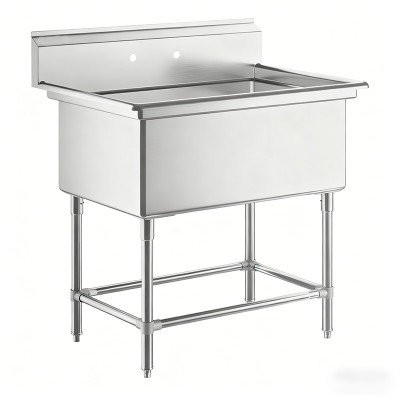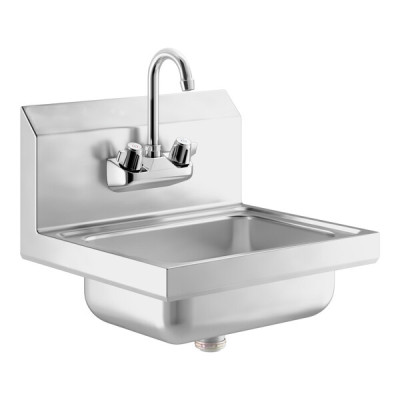
The Complete Guide to Stainless Steel Scrub Sinks: Material Science for Healthcare Facilities.
The Complete Guide to Stainless Steel Scrub Sinks: Material Science for Healthcare Facilities
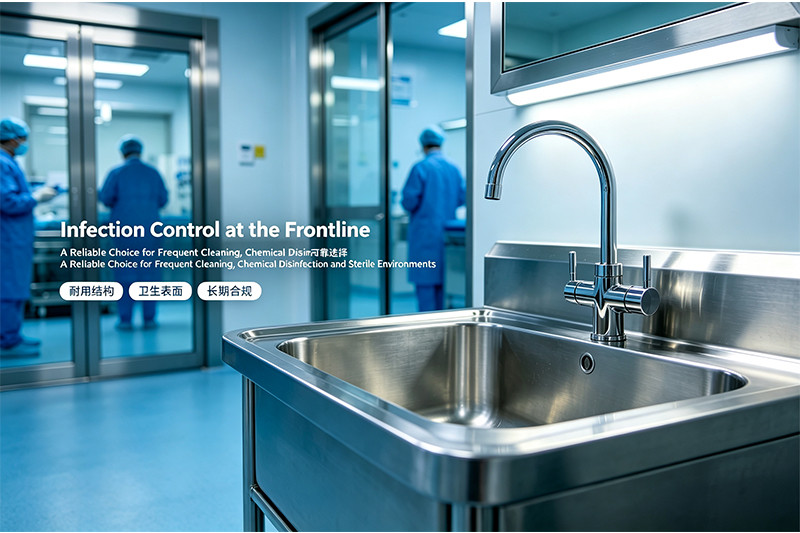
In healthcare facilities, hygiene and durability are paramount, especially for critical equipment like scrub sinks. We understand the importance of making informed decisions when selecting materials that constantly face rigorous cleaning, harsh chemicals, and the imperative of infection control. A surgical scrub sink is not merely a fixture; it is a frontline defense in maintaining a sterile environment and ensuring patient safety. This guide will delve into the material science behind stainless steel, helping you understand how different grades and finishes impact the performance, longevity, and compliance of your stainless steel scrub sink.
Our goal is to provide a comprehensive look at stainless steel's properties and how they apply to the unique demands of medical environments. From the bustling corridors of a hospital to the controlled atmosphere of a pharmaceutical cleanroom, the right choice of material is an investment in operational efficiency and the highest standards of care. Brands like Samsink have dedicated decades to perfecting stainless steel medical sinks, ensuring they meet these stringent requirements. Whether you are a facility manager, a procurement specialist, or a healthcare professional, this guide will equip you with the knowledge to select the optimal scrub sink for your needs.
Key Takeaways
- Hygiene and Durability are Paramount: Stainless steel is the gold standard for medical equipment due to its non-porous surface, which prevents bacterial growth and makes it easy to sterilize. Its inherent corrosion resistance ensures it can withstand frequent exposure to harsh disinfectants and cleaning cycles without degrading.
- Not All Stainless Steel is Equal: The grade of stainless steel is critical. The two most common grades for medical applications are Type 304 and Type 316. The choice between them depends on the specific environmental conditions of the healthcare facility.
- Type 304 is the Workhorse: As the standard "18/8" stainless steel, Type 304 (18% chromium, 8% nickel) offers excellent corrosion resistance and durability for general-purpose applications like hospital furniture, sinks, and instrument trays. It is a cost-effective and reliable choice for many areas within a healthcare setting.
- Type 316 Offers Superior Protection: For environments with high exposure to chlorides, aggressive chemicals, or saline solutions, Type 316 is the superior choice. The addition of 2-3% molybdenum significantly enhances its resistance to pitting and crevice corrosion, making it ideal for surgical suites, pharmacies, and laboratories where harsh disinfectants are used.
- Grade Classification Matters: The American Iron and Steel Institute (AISI) uses a numbering system to classify steel. For austenitic stainless steels like the 300 series, the numbers denote specific alloy compositions that determine the material's mechanical properties and corrosion resistance. Understanding this system is key to making an informed purchasing decision.
- Surface Finish and Treatment are Crucial: Beyond the grade, the surface finish significantly impacts hygiene and safety. Processes like passivation, which removes free iron from the surface and enhances the natural chromium oxide layer, are essential for maximizing corrosion resistance. Electropolishing takes this a step further, creating an ultra-smooth, microscopic surface that leaves no place for microbes to hide, making sterilization more effective.
- Biocompatibility is Essential for Safety: Medical-grade stainless steel must be biocompatible, meaning it does not cause adverse reactions when in contact with human tissue or fluids. This property is critical not just for implants but for any surface that comes into contact with medical instruments or personnel, ensuring patient and staff safety.
Understanding Stainless Steel Grades for Your Healthcare Scrub Sink
Stainless steel has long been recognized as the industry standard for equipment in surgical services and other critical healthcare environments. Its reputation is built on a unique combination of properties that make it exceptionally suited for settings where hygiene is non-negotiable. However, the term "stainless steel" encompasses a wide family of alloys, each with different characteristics. For a fixture as vital as a scrub sink, understanding these differences is crucial to ensuring long-term performance and infection control.
What Makes Stainless Steel Ideal for Scrub Sinks?
The suitability of stainless steel for medical applications stems from its fundamental chemical and physical properties. It stands apart from other materials like natural wood or plastics, which can be porous and difficult to sterilize effectively.
Key properties include:
- Superior Corrosion Resistance: The defining feature of stainless steel is the presence of at least 10.5% chromium. Chromium reacts with oxygen in the air to form a thin, invisible, and tightly adhered layer of chromium oxide on the surface. This passive film is self-healing; if it's scratched or damaged, it instantly reforms as long as oxygen is present, protecting the underlying iron from rust and corrosion. This is vital for scrub sinks that are constantly exposed to water, soap, and powerful disinfectants.
- Hygienic and Easy to Clean: The surface of stainless steel is non-porous, meaning it lacks the microscopic pits and crevices where bacteria, viruses, and molds can hide. This smooth finish makes it exceptionally easy to clean and disinfect, a critical factor in preventing hospital-acquired infections (HAIs). Studies have confirmed the effectiveness of disinfecting stainless steel against common bacteria found in clinical environments.
- Durability and Strength: Stainless steel offers excellent mechanical strength and can withstand the rigors of a busy healthcare facility, including impacts, heavy use, and frequent, intensive cleaning cycles. It maintains its structural integrity even when subjected to high-temperature sterilization methods like autoclaving.
- Biocompatibility: Medical-grade stainless steel is biocompatible, meaning it is non-reactive with human tissues and bodily fluids. This ensures that it will not cause allergic reactions, leach harmful substances, or compromise patient safety, a standard that industrial steel often cannot meet.
Decoding the Numbers: How Grades Are Classified for Scrub Sinks
With over 3,500 different grades of steel, a standardized system is necessary to differentiate them. The most common classification system used in the United States is from the American Iron and Steel Institute (AISI) and the Society of Automotive Engineers (SAE). This system generally uses a numerical code to denote a steel's composition and properties.
For stainless steels, a three-digit number is typically used, with the most relevant for medical applications being the 300 series.
- The First Digit: Indicates the primary class of steel. The "3" in grades like 304 and 316 signifies that they belong to the austenitic class of stainless steels. Austenitic steels are known for their excellent corrosion resistance and formability and are non-magnetic.
- The Last Two Digits: Differentiate the specific alloys within the class.
- Alloying Elements: The specific properties of each grade are determined by its chemical makeup. Key elements include:
- Chromium (Cr): The essential ingredient that makes steel "stainless."
- Nickel (Ni): Added to stabilize the austenitic structure, improve durability, and enhance resistance to acids.
- Molybdenum (Mo): A crucial addition in certain grades that dramatically increases resistance to localized corrosion from chlorides.
- Carbon (C): A lower carbon content (indicated by an "L" suffix, as in 316L) improves weldability by reducing the risk of corrosion at the weld seams.
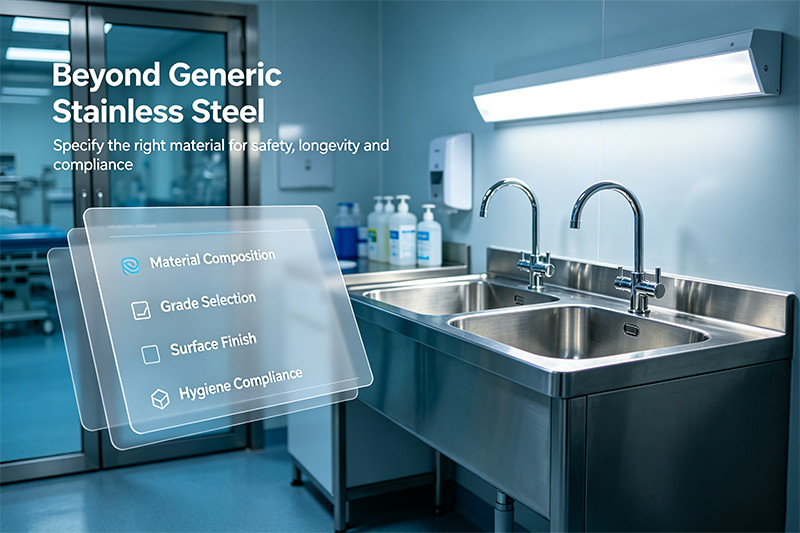
Understanding this basic system allows facility managers to move beyond generic requests for "stainless steel" and specify the exact material composition needed to ensure the safety, longevity, and compliance of their scrub sinks.
Choosing Between 300 Series Stainless Steel Scrub Sinks
Within the family of austenitic steels, the 300 series is the most widely specified for healthcare environments. Among these, Grade 304 and Grade 316 are the two primary contenders for medical scrub sinks. While they may look identical, their subtle chemical differences lead to significant variations in performance, particularly when exposed to the aggressive chemicals common in healthcare.
Grade 304: The Standard for Many Stainless Steel Scrub Sinks
Type 304 stainless steel is often called the "workhorse" of the industry and is considered the standard "18/8" stainless steel because it is typically composed of 18% chromium and 8% nickel. This composition provides an excellent balance of corrosion resistance, durability, and cost-effectiveness, making it the most widely used stainless steel grade in the world.
Key Characteristics and Applications:
- Excellent General Corrosion Resistance: The high chromium content gives 304 stainless steel a robust defense against rust and oxidation from water, organic chemicals, and many inorganic chemicals.
- Hygienic and Versatile: Its proven track record for hygiene and cleanability makes it an ideal choice for a wide range of medical applications. You will find it used extensively for hospital furniture, general-use sinks, storage cabinets, and some medical instruments.
- Cost-Effective Solution: Compared to higher grades, 304 stainless steel offers reliable performance at a more economical price point, making it a budget-friendly option for less critical applications.
Limitations in a Healthcare Context: Despite its widespread use, Type 304 has a significant vulnerability: it is susceptible to pitting and crevice corrosion when exposed to chlorides. Chlorides are found in many of the most potent disinfectants, saline solutions, and even bodily fluids. Continuous exposure to these agents can break down the passive oxide layer on 304 stainless steel, leading to localized corrosion that can compromise both the structural integrity and the hygienic properties of the sink. For this reason, while suitable for many general patient care areas, it may not be the best choice for surgical suites or laboratories where aggressive chemical use is standard protocol.
Grade 316: Superior Performance for Critical Stainless Steel Scrub Sinks
When a higher level of corrosion resistance is non-negotiable, Grade 316 stainless steel is the definitive choice. Its composition is similar to 304, but with one critical distinction: the addition of 2-3% molybdenum. This single alloying element dramatically enhances the material's ability to withstand harsh chemical environments.
The Power of Molybdenum: Molybdenum strengthens the passive chromium-oxide layer, making it significantly more resistant to attack from chlorides, acids, and other corrosive agents. It specifically defends against pitting and crevice corrosion, the types of localized decay that 304 stainless steel is vulnerable to. This makes Type 316 particularly effective in resisting damage from sulfuric, hydrochloric, and acetic acids, as well as the strong disinfectants used for sterilization.
Why 316 is the Premium Choice for Healthcare:
- Enhanced Chemical Resistance: Ideal for surgical scrub sinks, pharmacy compounding areas, and laboratory settings where exposure to harsh chemicals, sterilizing agents, and saline solutions is constant.
- Longevity in Aggressive Environments: While initially more expensive, the long-term durability of a Type 316 sink in a demanding environment often makes it a more cost-effective investment by preventing premature replacement.
- Pharmaceutical and Biotech Standard: Because it prevents metallic contamination, molybdenum-bearing stainless steel is a requirement in many pharmaceutical and biotech manufacturing processes. This same principle of purity makes it the superior choice for any medical application where contamination control is paramount.
For facilities looking for the highest standard of hygiene and durability, a scrub sink from a trusted manufacturer like Samsink, specified in Type 316 stainless steel, provides the ultimate peace of mind.
Comparison: 304 vs. 316 Stainless Steel for Scrub Sinks
| Feature | Grade 304 Stainless Steel | Grade 316 Stainless Steel |
|---|---|---|
| Composition | ~18% Chromium, 8% Nickel | ~16-18% Chromium, 10-12% Nickel, 2-3% Molybdenum |
| Corrosion Resistance | Good general resistance but vulnerable to chlorides. | Excellent resistance, especially to chlorides, acids, and salts. |
| Primary Advantage | Cost-effective and durable for general use. | Superior protection in harsh chemical environments. |
| Ideal Applications | General patient rooms, staff break areas, less critical clinical settings. | Surgical suites, operating rooms, pharmacies, laboratories, chemical processing. |
| Cost | More economical. | Higher initial investment. |
| Long-Term Value | Reliable for standard conditions. | Better ROI in demanding environments due to extended lifespan. |
Beyond the Common: Considering Other Grades and Overall Safety for Your Scrub Sink
While the 300 series, particularly grades 304 and 316, dominates the conversation for medical scrub sinks, other stainless steel grades exist and have niche applications. Furthermore, the safety and performance of a scrub sink are not determined by the grade alone. Factors like biocompatibility and surface treatments are critical components that ensure the fixture meets the stringent demands of a healthcare facility.
400 Series and Specialized Stainless Steel: Niche Uses for Scrub Sinks
The 400 series of stainless steel represents a different class known as martensitic or ferritic steels. Unlike the austenitic 300 series, these grades can be hardened by heat treatment and are magnetic.
Grade 430 Stainless Steel:
- Composition: This grade contains chromium but has negligible nickel content, making it less expensive than 304.
- Properties: It offers decent corrosion resistance in mild environments but does not perform well against more aggressive chemicals or in wet, chloride-rich conditions. Its resistance is generally inferior to the 300 series.
- Applications: Due to its lower corrosion resistance, Grade 430 is rarely, if ever, suitable for scrub sinks or other equipment in constant contact with water and disinfectants. It might be found in situations where appearance and strength are priorities but chemical exposure is minimal, such as on decorative panels or fixtures in non-clinical areas.
Surgical Steel & Specialized Alloys: The term "surgical steel" is often used in marketing, but it's not a formal, standardized definition. It generally refers to steel with high corrosion resistance, with austenitic Type 316 and various martensitic grades (like 420 and 440) being the most common. Martensitic grades are prized for their extreme hardness, which allows them to be honed to a very sharp edge, making them ideal for cutting instruments like scalpels and osteotomes. However, their corrosion resistance is lower than that of Type 316, making them unsuitable for a permanently wet fixture like a scrub sink.
Biocompatibility and the Safe Stainless Steel Scrub Sink
A material's safety in a medical environment goes beyond simple corrosion resistance. Biocompatibility—how a material interacts with the human body—is a crucial consideration. Medical-grade stainless steel must be inert, ensuring it doesn't cause immune responses, allergic reactions (such as to nickel), or other cellular damage when it comes into contact with tissue or fluids. This is why implant-grade steels like 316LVM undergo special processes like vacuum melting to reduce impurities.
While a scrub sink is not an implant, the instruments cleaned in it are used in surgery, and the hands washing in it belong to medical professionals. Therefore, ensuring the sink's surface is completely safe and non-reactive is paramount. This is achieved through critical surface finishing processes.
Passivation: Passivation is a chemical finishing process that maximizes the natural corrosion resistance of stainless steel. After fabrication (cutting, welding, bending), free iron particles from tools can be left on the surface. These particles can become rust spots, compromising the hygienic integrity of the sink. The passivation process involves immersing the stainless steel part in a mild oxidant bath, typically nitric or citric acid. This treatment dissolves the free iron and other contaminants from the surface, allowing a thicker, more uniform, and highly protective chromium-oxide layer to form. This step is not optional; it is a required treatment to restore the steel’s full corrosion-resistant potential.
Electropolishing: For the most demanding applications, electropolishing offers an even higher level of surface perfection. This electrochemical process is the opposite of plating; instead of adding a layer of metal, it removes a microscopic layer from the surface.
- How it Works: The stainless steel part is submerged in an electrolyte solution and subjected to a DC electrical current. The process preferentially dissolves the microscopic high points on the surface, resulting in an incredibly smooth, mirror-like finish.
- Benefits for Hygiene: This ultra-smooth surface is not just for aesthetics. By leveling microscopic peaks and valleys, electropolishing eliminates potential hiding spots for bacteria and other contaminants. This makes electropolished surfaces easier to clean and sterilize completely.
- Enhanced Performance: Electropolishing also removes surface impurities and improves the chromium-to-iron ratio, further enhancing corrosion resistance beyond standard passivation. The result is a burr-free, contaminant-free, and highly passive surface, which is why it's specified for critical medical devices, implants, and pharmaceutical equipment.
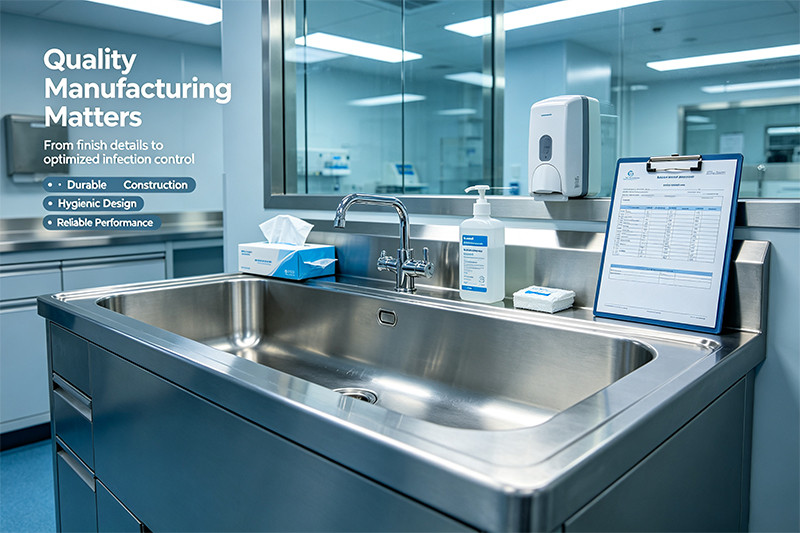
Choosing a scrub sink from a quality manufacturer like Samsink, which understands the importance of these finishing steps, ensures you receive a product that is not only durable but also optimized for the highest level of infection control.
Frequently Asked Questions (FAQs)
1. What is the main difference between Type 304 and Type 316 stainless steel for a scrub sink? The primary difference is the addition of molybdenum (2-3%) in Type 316 stainless steel. This element gives Type 316 significantly enhanced resistance to corrosion from chlorides, acids, and other harsh chemicals commonly found in healthcare disinfectants and saline solutions. While Type 304 is suitable for general use, Type 316 is the superior and recommended choice for critical areas like operating rooms, laboratories, and pharmacies.
2. Is "surgical steel" a specific grade I should look for? "Surgical steel" is a marketing term rather than a formal technical specification. It generally refers to any corrosion-resistant steel used in biomedical applications. Most commonly, this includes austenitic Grade 316 (or 316L) for its excellent corrosion resistance and biocompatibility, and martensitic grades like 420 or 440 for their hardness in cutting instruments. For a scrub sink, specifying Type 316 stainless steel is more precise and ensures you get the necessary protection against corrosion.
3. Why does some stainless steel rust? Stainless steel can "rust" or show signs of corrosion for several reasons. One common cause is contamination with free iron particles during manufacturing or from contact with regular steel tools. If not removed through passivation, these particles will rust. Another reason is using the wrong grade for the environment; for example, using a Type 304 sink in a setting with high chloride exposure can lead to pitting corrosion. Finally, using abrasive cleaners like steel wool can damage the protective passive layer and invite corrosion.
4. What is passivation and is it important for a medical sink? Passivation is a critical chemical treatment that removes surface contaminants (like free iron) and enhances the natural protective oxide layer of the stainless steel. It is absolutely essential for a medical sink. The process restores the material's inherent corrosion resistance after it has been fabricated, ensuring a hygienic surface that lasts. A sink that has not been properly passivated is more susceptible to rust and contamination.
5. Is an electropolished finish worth the extra cost? For environments requiring the absolute highest level of cleanliness, such as pharmaceutical cleanrooms or high-risk surgical areas, an electropolished finish is often worth the investment. The process creates a microscopically smooth surface that eliminates hiding places for bacteria, making sterilization more effective and reliable. It also provides the maximum possible corrosion resistance. For general healthcare use, a standard passivated finish on high-quality Type 316 steel is typically sufficient, but electropolishing offers an unparalleled level of hygiene and performance.
6. How should I clean and maintain a stainless steel scrub sink? The best way to clean a stainless steel sink is with warm water, mild soap, and a soft cloth or sponge. Rinse thoroughly with clean water and wipe dry to prevent water spots. For disinfection, use chemicals approved for stainless steel and follow the manufacturer's dilution instructions. Crucially, never use abrasive cleaners, steel wool, or wire brushes, as these can scratch the surface and destroy its protective passive layer, leading to corrosion. Regular, gentle cleaning is the key to maintaining the sink's integrity and hygienic properties for years to come.
7. Can I customize a scrub sink for my facility's needs? Yes, leading manufacturers like Samsink offer a wide range of customization options for their medical sinks. This can include the number of bays (one, two, or three stations), the type of faucet activation (sensor-activated, knee-operated, or foot-operated), and the addition of accessories like integrated soap dispensers or eyewash stations. Working with a specialized supplier ensures you can get a scrub sink tailored to your workflow and infection control protocols.
Conclusion
Ultimately, selecting the right material for your stainless steel scrub sink is a critical decision that impacts hygiene, durability, and operational efficiency within your healthcare facility. It is a choice that directly contributes to the foundation of infection prevention and patient safety.
By understanding the unique properties and applications of different stainless steel grades, particularly the workhorse reliability of Type 304 and the superior chemical resistance of Type 316, facility managers can make an informed decision tailored to specific environmental demands and budgetary considerations. We've seen how the addition of molybdenum in Grade 316 provides a crucial defense against the corrosive chlorides found in so many hospital-grade disinfectants, making it the premier choice for critical care areas. Furthermore, the importance of finishing processes like passivation and electropolishing cannot be overstated, as they transform a manufactured product into a truly hygienic and safe medical fixture.
We believe that a well-chosen stainless steel scrub sink, such as a customized unit from a trusted partner like Samsink, provides a steadfast foundation for maintaining the highest standards of cleanliness and patient care. A quality sink is not an expense but an investment in the long-term health and safety of your patients and staff. We encourage you to use this guide as a resource, share it with your colleagues, and continue the conversation about material excellence in healthcare. For a personalized consultation on the best scrub sink solution for your facility, feel free to contact our experts today.