The Definitive Guide to Choosing Commercial Stainless Steel Sinks
As a business owner or manager, you understand the critical role that proper equipment plays in maintaining hygiene and efficiency within your commercial space. When it comes to essential infrastructure like sinks, especially in demanding environments such as food service or healthcare, durable and compliant commercial stainless steel sinks are non-negotiable. Sinks are more than a utility; they are a frontline defense in health and safety. In this comprehensive guide, we'll walk you through everything you need to know about selecting the ideal commercial stainless steel sinks to meet your operational demands and regulatory standards.
Key Takeaways
This guide provides a comprehensive framework for understanding and selecting the perfect commercial stainless steel sink. Here are the most crucial points for any business owner or manager to consider:
- Hygiene and Compliance are Paramount: The primary function of a commercial sink is to ensure hygiene and prevent the spread of foodborne illnesses. Most health codes, heavily influenced by the FDA Food Code, mandate very specific sink configurations. This often includes physically separate sinks for handwashing, food preparation, and a three-compartment system (wash, rinse, sanitize) for dishware. Failing to comply can lead to severe consequences, including fines, operational shutdowns, and damage to your brand's reputation.
- Material and Gauge Dictate Longevity: The quality and lifespan of your sink are determined by its material and construction. For most commercial applications, 304 stainless steel is the industry standard due to its excellent resistance to corrosion from food acids and cleaning chemicals. The gauge, or thickness, of the steel is equally critical. A lower gauge number (e.g., 14 or 16-gauge) indicates thicker, more durable steel that can better withstand heavy use, impacts from pots and pans, and temperature fluctuations.
- The Right Type for the Right Task: There is no one-size-fits-all solution. The type of sink you need depends entirely on its intended function and your available space.
- Handwashing Sinks: Must be dedicated solely to handwashing and conveniently located in food prep areas, dishwashing stations, and restrooms to encourage frequent use.
- Compartment Sinks: The classic three-compartment sink is a requirement for manual warewashing in most jurisdictions.
- Specialty Sinks: Options like wall-mounted, freestanding, and portable sinks solve specific spatial and logistical challenges. Understanding each type's benefits—from the space-saving nature of wall-mounted units to the flexibility of mobile sinks—is key to optimizing your workflow.
- Features That Enhance Function and Safety: Beyond the basic basin, consider features that improve usability and hygiene. Hands-free faucets (foot/knee pedal or electronic) significantly reduce cross-contamination risk. Gooseneck faucets provide ample clearance for large pots. Backsplashes protect walls from water damage, and rounded, coved corners inside the sink bowls eliminate tight seams where bacteria can accumulate, making cleaning easier and more effective.
- Partner with a Trusted Supplier: Navigating health codes and choosing between standard and custom-fabricated sinks can be complex. Working with an experienced supplier like Samsink provides access to expert guidance. A knowledgeable partner can help you interpret local regulations, design a layout that maximizes efficiency, and select a sink built to last, ensuring your investment is both compliant and durable.
Understanding the Crucial Role of Commercial Stainless Steel Sinks
A commercial sink is far more than a simple basin for washing up; it is a critical control point for hygiene and a cornerstone of an efficient kitchen workflow. In high-stakes environments like foodservice and healthcare, where cleanliness directly impacts public health, the role of a properly specified sink system cannot be overstated. It is a fundamental component for preventing cross-contamination, adhering to strict health codes, and ensuring the safety of both staff and patrons.
Why Cleanliness is Paramount: Hygiene & Health Standards
In any commercial kitchen, cleanliness isn't just a goal—it's a mandatory, non-negotiable requirement. The entire system of food safety hinges on consistent, reliable hygiene protocols, and the sink is at the very heart of this system. It serves as a vital station for handwashing and plays a significant role in preventing the spread of germs and maintaining food safety.
Preventing Contamination with Optimal Sink Systems
Cross-contamination, the accidental transfer of harmful bacteria from one surface or food to another, is a primary cause of foodborne illness. A well-designed sink layout is the first line of defense against this threat. Health codes are explicit: sinks must be separated by function to create clear zones for different tasks. Using a sink for multiple purposes without proper sanitization in between is a major health code violation.
This means:
- Handwashing sinks are exclusively for washing hands and must never be used for rinsing produce or dumping liquids.
- Food preparation sinks are used to wash vegetables and other ingredients, keeping them separate from raw meats and dirty dishes.
- Warewashing sinks, typically three-compartment setups, are dedicated solely to the wash, rinse, and sanitize process for dishes and utensils.
Adhering to this separation is critical. Studies have shown a direct link between understocked or improperly used handwashing stations and an increased risk of foodborne illness outbreaks. By physically separating these tasks, you create a logical workflow that drastically reduces the chances of pathogens from raw chicken, for example, contaminating fresh produce or clean plates.
Ensuring Regulatory Compliance
Compliance with health and safety standards is not optional; it's a legal requirement enforced by local and state health departments. These regulations are largely based on the FDA Food Code, a scientific model for food safety that provides detailed guidance on everything from sink placement to water temperature. The FDA Food Code requires that foodservice operations install at least one dedicated handwashing sink in every food preparation area and adjacent to restrooms. The 2022 FDA Food Code specifies that water at handwashing sinks should reach at least 85°F.
A key certification to look for when purchasing any commercial kitchen equipment, including sinks, is from NSF International (the National Sanitation Foundation). NSF is an independent organization that develops public health standards and certifies products that meet them. An NSF-certified sink has been rigorously tested to ensure it is:
- Made from food-safe, non-toxic, and corrosion-resistant materials.
- Designed for easy cleaning, with smooth surfaces and no tight crevices where bacteria can hide.
- Durable enough to withstand the demands of a commercial environment.
Health inspectors across the country expect to see the NSF seal on equipment, and using certified products is often a prerequisite for passing inspection. Failure to use compliant equipment can lead to citations, fines, or even operational shutdowns.
The Unmatched Advantage of Stainless Steel
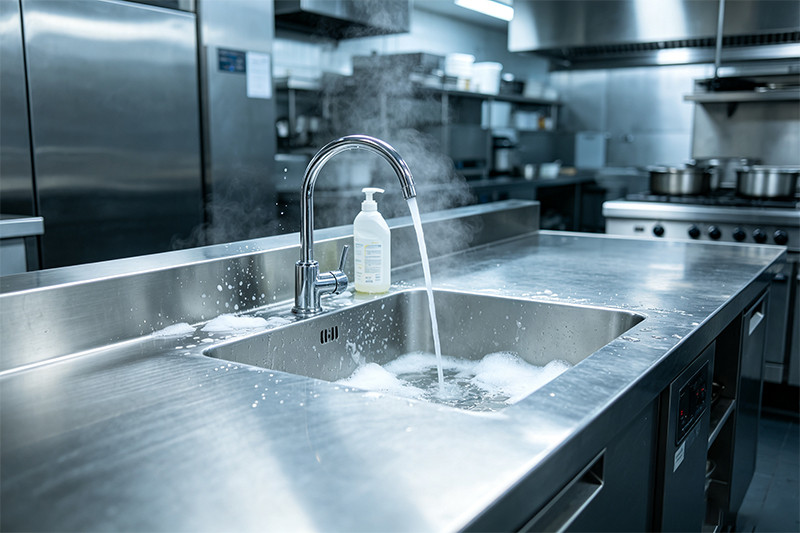
When it comes to materials for commercial sinks, stainless steel is the undisputed industry standard for a reason. Its unique combination of properties makes it exceptionally well-suited for the rigorous demands of a commercial kitchen. It is durable, hygienic, resistant to corrosion, and can withstand frequent cleaning, heavy use, and exposure to moisture and heat.
Superior Corrosion Resistance: 304 Grade vs. Others
Not all stainless steel is created equal. The "grade" of the steel refers to its chemical composition, which determines its strength and resistance to corrosion. The two most common grades you will encounter for sinks are Type 304 and Type 430.
- Type 304 Stainless Steel: This is the most widely used grade for commercial kitchen equipment, including sinks and prep tables. Often referred to as 18/8 stainless steel, it contains approximately 18% chromium and 8% nickel. The nickel content is the key differentiator, giving 304 superior resistance to rust and corrosion from a wide variety of substances, including food acids (like tomato sauce and vinegar) and aggressive cleaning chemicals. Its non-porous surface is easy to sanitize, making it the ideal choice for any area with high moisture or direct food contact.
- Type 430 Stainless Steel: This grade is a more budget-friendly option because it contains little to no nickel. While it still offers decent corrosion resistance due to its chromium content, it is more susceptible to rust and pitting, especially in wet environments or when exposed to acids. Because of this, 430 stainless steel is typically reserved for equipment exteriors, panels, and structural components that aren't in constant contact with water or food.
- Type 316 Stainless Steel: Known as "marine grade," this is a premium option that contains molybdenum. This addition gives it even greater corrosion resistance, particularly against chlorides and salts. It is often specified for establishments in coastal areas or for equipment that will be exposed to particularly harsh chemicals.
For the vast majority of commercial kitchens, Type 304 stainless steel offers the perfect balance of performance, longevity, and cost, which is why it's the standard for high-quality sinks from trusted brands like Samsink.
Durability in Demanding Environments
Beyond its grade, the durability of a stainless steel sink is also determined by its gauge, which refers to the thickness of the steel sheet. It's important to remember that the gauge scale works in reverse: the lower the number, the thicker and more durable the steel.
- 14 or 16-Gauge: This is considered heavy-duty and is an excellent choice for high-volume commercial kitchens. A thicker gauge provides superior resistance to dents and dings from heavy pots and pans. It also vibrates less and is quieter when in use, for example, when a garbage disposal is running or water is hitting the basin.
- 18-Gauge: This is a slightly thinner and more affordable option that still offers good durability for many commercial applications. It is a common and reliable choice for a variety of sink types.
- 20-Gauge or Higher: Sinks with a higher gauge number are thinner and less durable. They are more prone to denting and may feel flimsy in a demanding setting. These are generally not recommended for primary commercial use.
Investing in a lower-gauge (thicker) sink made from Type 304 stainless steel ensures you have a fixture that can withstand the daily abuse of a busy kitchen for years to come, making it a sound long-term investment.
Exploring Diverse Types of Commercial Stainless Steel Sinks
Commercial stainless steel sinks aren't a one-size-fits-all product. They come in a wide array of types and configurations, each engineered to solve specific challenges related to space, hygiene, and workflow. Choosing the right type for each area of your operation is fundamental to creating an efficient and compliant workspace. From space-saving wall-mounted units to high-capacity trough sinks, understanding the strengths and ideal applications of each is key.
Space-Saving: Wall-Mounted Commercial Stainless Steel Sinks
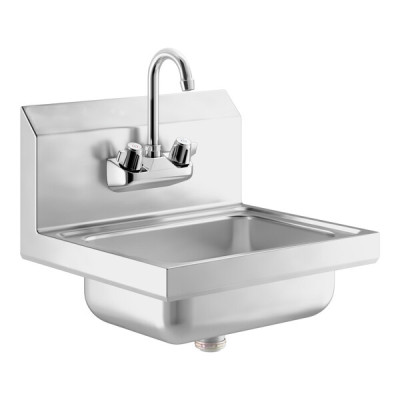
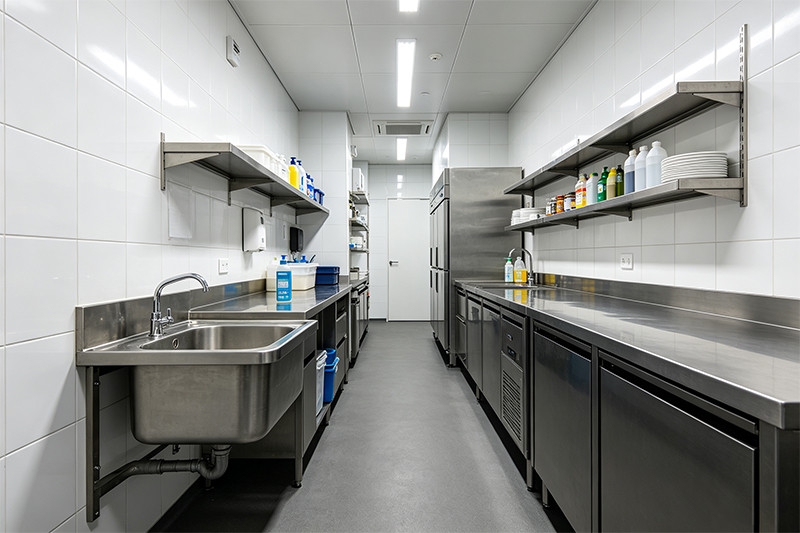
For establishments where every square foot counts—such as compact urban kitchens, food trucks, or narrow service areas—a wall-mounted sink is an excellent solution. As the name implies, these sinks are fixed directly to the wall, lifting the entire basin off the ground.
Ideal for High-Volume Handwashing Areas
Wall-mounted sinks are most commonly used as dedicated handwashing stations. Food safety regulations require handwashing facilities to be conveniently located in all food preparation and service areas. A compact, wall-mounted unit can be easily installed near prep tables or cook lines without disrupting the kitchen's flow. This accessibility encourages the frequent handwashing that is essential for preventing cross-contamination.
Design for Contamination Prevention
The "floating" design of a wall-mounted sink offers significant hygienic advantages. With no legs or pedestal base touching the floor, cleaning underneath the sink is incredibly easy and efficient. This eliminates the nooks and crannies around sink feet where dirt, moisture, and pests can accumulate, helping to maintain a higher standard of overall kitchen sanitation. Many models also feature an integrated backsplash to protect the wall from splashes, further contributing to a clean and well-maintained environment.
Hands-Free: Base-Mounted (Pedestal) Commercial Stainless Steel Sinks
Base-mounted, or pedestal, sinks are a type of freestanding unit where the basin is supported by a narrow base that rests on the floor. While they share some space-saving qualities with freestanding sinks, their primary advantage lies in promoting superior hygiene through hands-free operation.
Foot or Knee-Pedal Activation for Hygiene
The most significant benefit of many pedestal and wall-mounted sinks is the option for foot or knee-pedal activation. Instead of traditional handles that must be touched, these systems allow staff to control the flow of water with a press of their knee or a tap of their foot. This hands-free operation is a game-changer for hygiene. It completely eliminates a major cross-contamination point: staff do not have to touch a potentially soiled faucet handle after washing their hands. In environments where hygiene is critical, such as hospitals and food processing plants, this feature is invaluable for interrupting the spread of germs.
Concealing Plumbing
The pedestal base of these sinks serves a dual purpose. Not only does it provide sturdy, floor-mounted support, but it also neatly conceals the plumbing, such as the water supply lines and the P-trap. This creates a cleaner, more streamlined and professional aesthetic compared to an exposed-plumbing wall-mount or freestanding sink. Many modern pedestal sinks are designed with an architectural elegance suitable for both industrial and upscale establishments.
The Versatile Freestanding Commercial Stainless Steel Sinks
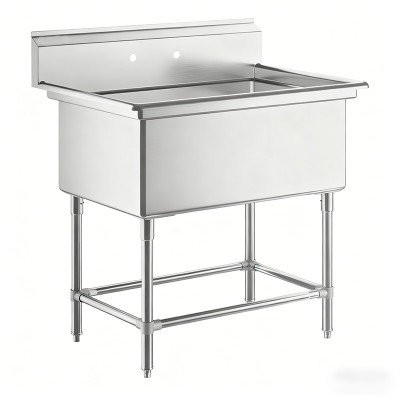
Freestanding sinks are self-supporting units that stand on their own legs. They are the workhorses of the commercial kitchen, known for their flexibility, durability, and wide range of configurations. Because they don't need to be mounted to a wall or installed in a countertop, they can be placed virtually anywhere that has plumbing access.
Common Configurations and Popularity
The most popular and ubiquitous configuration for a freestanding sink is the three-compartment sink. This setup is a cornerstone of commercial kitchen sanitation and is mandated by most health departments. It facilitates the essential wash-rinse-sanitize method to ensure that all food-contact surfaces are properly cleaned of both debris and harmful microorganisms. Freestanding sinks are also available in one, two, or even four-compartment configurations to suit different needs, such as a single basin for a prep area or a four-bay sink that includes a pre-soak station.
Backsplashes and Multi-Compartment Rules
Freestanding sinks are almost always equipped with a backsplash, which is a raised panel along the back of the unit. This is a critical feature that protects walls from water damage and prevents food debris and other contaminants from falling into the gap between the sink and the wall. Health codes often have specific requirements for backsplash height, sometimes mandating that they extend up to 18 inches or more, especially behind cooking lines.
When installing a multi-compartment sink, it is crucial to remember the rules of separation. A three-compartment sink is for warewashing ONLY. It should never be used for handwashing, food prep, or as a mop sink. Doing so is a serious health code violation that can lead to cross-contamination.
Corner Sinks for Maximized Efficiency
For kitchens with challenging layouts or those trying to make the most of every inch, a corner sink is an ingenious solution. These are typically L-shaped, three-compartment freestanding sinks designed to fit snugly into a corner, transforming what is often dead space into a fully functional and compliant warewashing station. This design can free up valuable linear wall space for other equipment while still providing the required number of basins and attached drainboards for staging and air-drying dishes.
Flexible & Mobile: Commercial Portable Stainless Steel Sinks
In an age of food trucks, pop-up restaurants, outdoor catering, and temporary medical sites, the need for flexible, code-compliant sanitation has never been greater. Commercial portable sinks are self-contained handwashing stations that operate without needing permanent plumbing.
Adapting to Temporary Setups
The primary benefit of a portable sink is its ability to provide handwashing facilities in locations where traditional plumbing is impractical or unavailable. These units are invaluable for:
- Outdoor festivals and farmers' markets.
- Catering operations at remote venues.
- Food trucks and concession trailers.
- Temporary medical screening or vaccination sites.
- Construction sites.
They are designed to be easily moved, set up, and operated, providing a quick solution to meet health code requirements.
Self-Contained Units
Modern portable sinks are fully self-contained systems. They typically include:
- An onboard freshwater tank for clean, potable water.
- A separate wastewater tank to safely collect greywater.
- An electric pump to provide pressurized water flow.
- An integrated water heater to supply hot and cold running water, which is a requirement in most jurisdictions.
Many units are designed as complete stations, with built-in soap and paper towel dispensers. For food service operations, portable sinks are available in multi-compartment configurations, such as a 3-compartment portable sink for warewashing, to help businesses stay compliant no matter where they operate.
High-Capacity: Commercial Trough Sinks
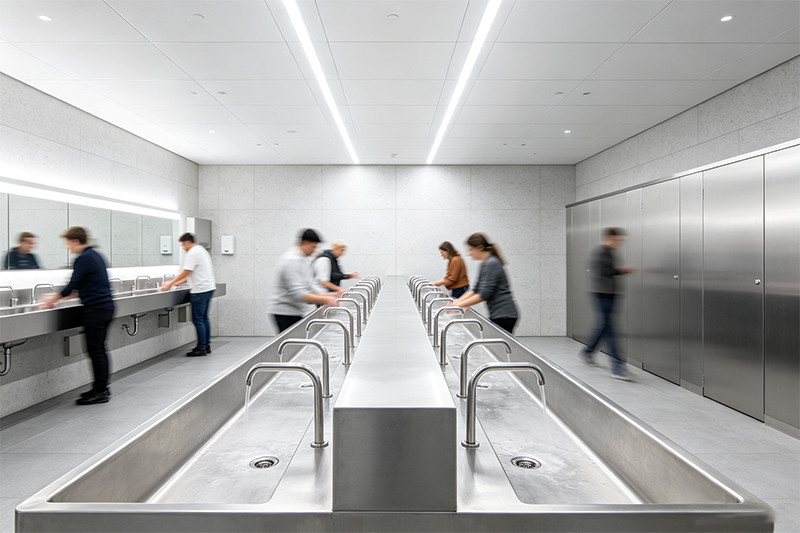
Trough sinks are long, rectangular basins designed to accommodate multiple users at once. While they have utilitarian roots in industrial settings, modern designs have made them a popular and stylish choice for high-traffic commercial environments like stadiums, schools, airports, and large restaurant restrooms.
Multiple Faucets for Simultaneous Users
The main advantage of a trough sink is efficiency. By providing multiple faucet stations along a single basin, they drastically reduce wait times and improve user flow in busy washrooms. This ability to serve several people simultaneously makes them an ideal choice for facilities that experience high-volume traffic. Installation can also be more economical, as a single large sink and drain replaces the need for multiple individual basins and plumbing setups.
Best Use Cases vs. Cross-Contamination Risk
Trough sinks are best suited for handwashing only in public or employee restrooms. Their design maximizes space and throughput, making them highly effective in these settings. However, they are not suitable for a kitchen environment where different tasks need to be separated. The shared basin of a trough sink presents a significant cross-contamination risk if used for both handwashing and food preparation. In a kitchen setting, the principle of dedicated, separate sinks for each task must always be followed to ensure food safety.
Key Features and Considerations for Your Commercial Stainless Steel Sinks
Selecting the right type of sink is only the first step. To truly optimize hygiene, workflow, and safety, you must also consider the specific features that make a sink not just a basin, but a high-performance workstation. From the faucet that delivers water to the very shape of the sink bowl, every detail matters in a demanding commercial environment.
Faucet Choices: Usability and Hygiene
The faucet is the most interactive part of any sink, and its design has a direct impact on both sanitation and efficiency. Choosing the right activation method and spout style is critical for creating a functional and hygienic handwashing or warewashing station.
Manual, Pedal, and Electronic Options
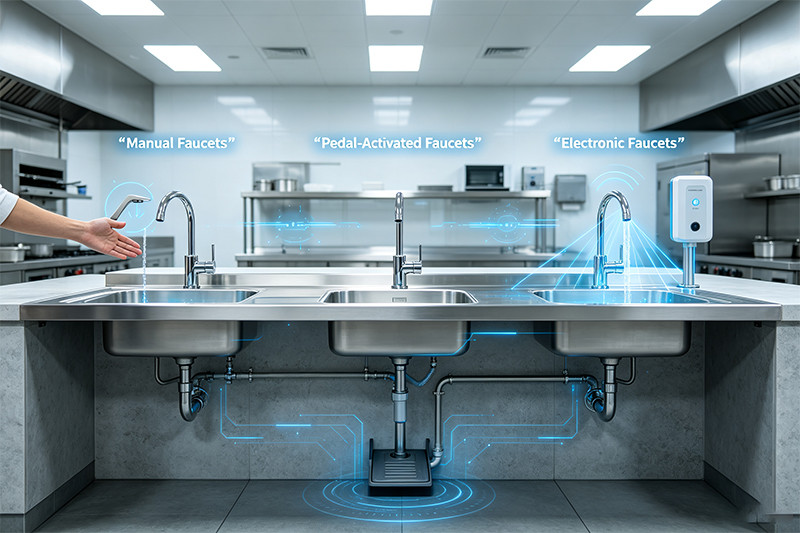
Commercial faucets can be activated in several ways, each with distinct advantages for hygiene and user control:
- Manual Faucets: These are the traditional faucets with handles or levers that must be physically turned or lifted. While they are cost-effective and familiar to all users, they represent a significant cross-contamination risk. An employee touches the handle with dirty hands to turn the water on, and then may re-contaminate their clean hands by touching the same handle to turn it off. The FDA Food Code recommends using a paper towel to turn off manual faucets to avoid this issue.
- Pedal-Activated Faucets: Operated by foot or knee pedals, these faucets offer a completely hands-free experience. This design is a major step up in hygiene, as it eliminates the need to touch faucet handles altogether, drastically reducing the spread of germs. They are mechanically simple, reliable, and ideal for prep areas and handwash stations where staff have messy hands.
- Electronic (Sensor) Faucets: These are the ultimate in touchless technology, using an infrared sensor to detect hand motion and activate the water flow automatically. They offer superior hygiene by completely eliminating physical contact. A 2017 FDA study found that touchless faucets were highly effective in reducing contamination in restaurants. They also excel at water conservation by automatically shutting off when hands are moved away.
Reliability and Cost Trade-offs
When choosing an activation method, it's essential to balance upfront cost with long-term benefits and reliability:
| Faucet Type | Initial Cost | Hygiene Level | Reliability & Maintenance |
|---|---|---|---|
| Manual | Low | Low | Simple mechanical parts are easy to fix, but washers and handles wear out with high use. |
| Pedal-Activated | Medium | High | Very reliable due to their simple mechanical valves. They require no batteries or electricity. |
| Electronic (Sensor) | High | Highest | Generally reliable, but more complex. They depend on power (batteries or AC adapter) and sensors can sometimes require cleaning or recalibration. Some users find them frustrating if activation is inconsistent. |
For many commercial applications, foot or knee pedal faucets offer the ideal balance of high hygiene, excellent reliability, and reasonable cost. However, for public-facing restrooms or high-end facilities, the modern appeal and water-saving benefits of electronic sensor faucets are compelling.
Spout Style: The shape of the faucet spout also affects functionality. Gooseneck spouts, with their high, curved arc, are a popular choice for commercial kitchens. They provide ample vertical clearance, making it easy to fill tall stockpots or wash bulky equipment in the sink.
Customization, Sizing & Accident Prevention
A well-designed sink goes beyond its basic form; it incorporates thoughtful features that enhance safety, simplify cleaning, and can be tailored to the specific needs of your kitchen.
Customizable Compartments and Dimensions
Standard off-the-shelf sinks may not always fit the unique layout or workflow of every kitchen. This is where customization becomes a powerful tool. Trusted suppliers like Samsink often offer custom fabrication services, allowing you to specify:
- Number of Compartments: While three compartments are standard for warewashing, you may need a one, two, or four-compartment configuration for specific tasks.
- Bowl Dimensions: You can choose the length, width, and depth of each sink bowl to accommodate your largest pots, pans, and sheet trays. A deeper bowl, for example, helps contain splashing.
- Drainboard Size and Location: Drainboards are essential for staging dirty dishes and allowing clean ones to air dry (a health code requirement). You can specify the size and whether they are located on the left, right, or both sides of the sink compartments.
This ability to create a custom sink ensures that the final product is a perfect fit for your space and operational needs.
Design Features to Reduce Breakage
In a fast-paced bar or restaurant, glassware breakage is a common and costly problem. Modern sink design has evolved to address this issue. Some sinks are engineered with vertical side walls and small internal radii, which help hold glassware more securely and prevent it from tipping over.
Another important safety and durability feature is the design of the sink's edges.
- Rolled Edges: The front and side edges of a freestanding sink should be rolled or hemmed. This creates a smooth, rounded edge that is safer for staff to lean against and handle, eliminating the risk of cuts from sharp, unfinished metal.
- Coved Corners: This is one of the most important hygienic design features. Instead of sharp 90-degree angles where the sink walls and bottom meet, high-quality sinks feature coved corners—a continuous, curved radius. This seamless transition eliminates tight corners where food particles, grease, and bacteria can become trapped, making the sink significantly easier to clean and sanitize. NSF certification often requires coved corners for this reason.
By paying attention to these seemingly small design details, you can invest in a sink that is not only more durable and hygienic but also safer for your staff and your inventory.
Making an Informed Decision: Sourcing Your Ideal Commercial Stainless Steel Sinks
Choosing the right commercial stainless steel sink is a significant investment that impacts hygiene, workflow, and legal compliance. To make a truly informed decision, you need to look beyond the price tag and evaluate your needs based on regulations, kitchen volume, and workflow. Arming yourself with knowledge and partnering with the right supplier will ensure you select a sink that not only meets today's demands but also serves your business for years to come.
Navigating Regulations: Health Codes & Building Needs
The single most important factor in choosing a commercial sink is compliance. Health and building codes are not suggestions; they are legally enforced standards designed to protect public health. Failing to meet these requirements can result in failed inspections, costly retrofits, and operational shutdowns.
Understanding Use Type and Volume
Before you can choose a sink, you must have a clear understanding of what it will be used for and how heavily it will be used. Regulations are directly tied to these factors.
- Handwashing: Local health codes, largely based on the FDA Food Code, are incredibly strict about handwashing. You must have dedicated handwashing sinks in every food preparation, food dispensing, and warewashing area, as well as in or adjacent to restrooms. These sinks must be easily accessible and cannot be used for any other purpose.
- Warewashing: If you manually wash, rinse, and sanitize dishes, a three-compartment sink is almost always required. The compartments must be large enough to fully submerge your largest pots and pans. Health codes also specify water temperatures, with wash and rinse compartments often needing to be at least 110°F and hot water sanitizing requiring water at 171°F.
- Food Preparation: Separate prep sinks are necessary for washing produce and thawing frozen proteins. A single-compartment sink may suffice for this purpose, but it must be located away from areas where raw meat is handled to prevent cross-contamination.
- Bar Service: Bars typically require their own multi-compartment sinks for washing glassware and a dedicated hand sink.
Your kitchen's volume also plays a role. A high-volume restaurant will need larger, more durable sinks (e.g., 16-gauge steel) and potentially more of them than a small café. Always consult your local health department's regulations before finalizing your kitchen layout and purchasing equipment.
Partnering with Trusted Suppliers
The world of commercial sinks is vast and navigating it alone can be daunting. A trusted supplier is more than just a vendor; they are an expert partner who can provide invaluable guidance, ensuring you get the right product for your needs and budget.
Standard vs. Custom Fabrication
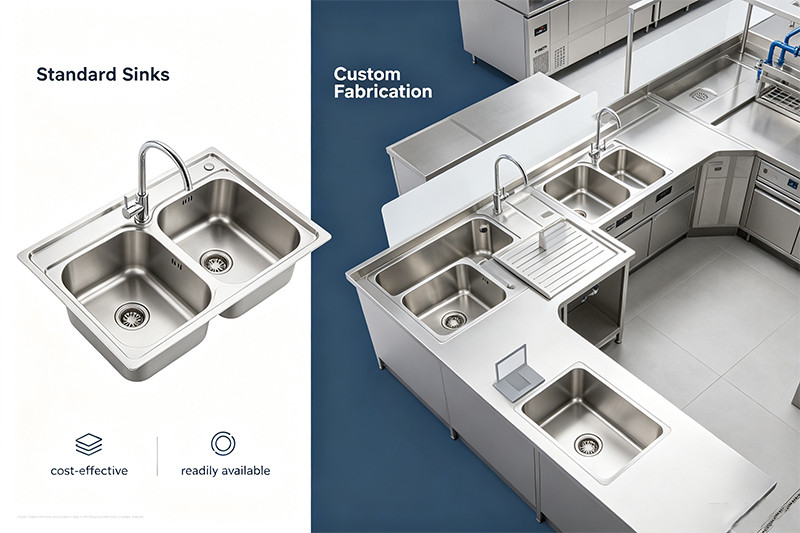
You will generally have two options when sourcing a sink: standard or custom.
- Standard Sinks: These are pre-manufactured sinks with set dimensions and configurations. They are often more affordable and readily available. For many businesses with straightforward layouts, a standard NSF-certified sink from a reputable manufacturer like Regency or Aero Manufacturing is a perfectly suitable choice.
- Custom Fabrication: This involves creating a sink built to your exact specifications. Custom fabrication is the ideal solution when you have unique space constraints (like an oddly shaped corner) or specific workflow requirements. The primary advantage is getting a product that perfectly fits your space and needs, maximizing efficiency. While the upfront cost may be higher, the long-term benefits of a perfectly optimized workstation can be significant. Manufacturers like Samsink specialize in custom fabrication, allowing you to choose everything from the gauge of the steel to the dimensions of each bowl and drainboard.
Expert Guidance
An experienced supplier provides more than just a product catalog. They bring a wealth of knowledge that can help you:
- Interpret Local Codes: An expert can help you understand the specific nuances of your local health and plumbing codes to ensure your selections are fully compliant.
- Optimize Workflow: They can analyze your kitchen layout and suggest sink configurations that improve efficiency and reduce bottlenecks.
- Balance Cost and Quality: A good supplier will help you understand the trade-offs between different materials and construction types, guiding you toward a sink that offers the best long-term value for your budget.
By partnering with a knowledgeable supplier, you eliminate guesswork and make a confident, informed investment in your business's future. For a consultation on your specific needs, whether standard or custom, consider reaching out to the experts at Samsink.
Frequently Asked Questions (FAQs)
1. How many sinks am I legally required to have in my commercial kitchen?
Most jurisdictions in the US require a minimum of three to four distinct sink types to comply with health codes based on the FDA Food Code. These are:
- A dedicated handwashing sink for each food prep, dishwashing, and service area, plus in or near restrooms.
- A three-compartment sink for the manual wash-rinse-sanitize process of dishware. This is mandatory even if you have a commercial dishwasher, as it serves as a required backup.
- At least one food preparation sink for washing produce and other ingredients.
- A mop or utility sink for janitorial tasks, which must be physically separate from any food-related areas. The exact number depends on your kitchen's size and layout, so always verify with your local health department during the planning phase.
2. What's the difference between stainless steel grade and gauge?
- Grade refers to the chemical composition of the steel. Type 304 is the industry standard for kitchens because its 18% chromium and 8% nickel content offers excellent resistance to rust and corrosion from food acids and cleaning agents. Type 430 is a cheaper alternative with no nickel, making it less corrosion-resistant and better suited for dry areas.
- Gauge refers to the thickness of the steel. The scale is inverse, so a lower number means thicker, more durable steel. 16-gauge is a robust choice for heavy-use environments, while 18-gauge is a common, reliable standard. Higher gauges (20 or above) are thinner and not recommended for most commercial applications.
3. Does my sink really need to be NSF-certified?
While NSF certification is not a federal law, it is required or strongly preferred by the vast majority of local and state health departments across the US. An NSF mark signifies that the sink has been independently tested and verified to meet strict public health and safety standards for material safety, cleanability, and durable construction. Purchasing an NSF-certified sink from a brand like Samsink is the surest way to ensure compliance and pass health inspections.
4. Can I use one compartment of my three-compartment sink for handwashing?
Absolutely not. This is one of the most common and critical health code violations. Health codes are explicit that the three-compartment sink is to be used exclusively for washing, rinsing, and sanitizing utensils and cookware. Handwashing must be done in a separate, dedicated handwashing sink to prevent cross-contamination.
5. What are the benefits of hands-free faucets?
Hands-free faucets, operated by electronic sensors or foot/knee pedals, are highly recommended for commercial kitchens to improve hygiene. Their primary benefit is eliminating a major touchpoint for cross-contamination. Staff do not have to touch a dirty faucet handle to wash up, nor re-contaminate clean hands by turning the water off. This significantly reduces the spread of germs. While electronic sensors offer a modern feel and water savings, many commercial environments prefer the mechanical reliability and user control of foot-pedal systems.
6. What are coved corners and why do they matter?
Coved corners are rounded, seamless transitions where the vertical walls of a sink basin meet the bottom. Instead of a sharp 90-degree angle that traps food debris and bacteria, the curve allows for easy and thorough cleaning. This hygienic design is a key feature of high-quality, NSF-certified commercial sinks and is crucial for preventing bacterial growth and ensuring your sink can be properly sanitized.
Conclusion
Ultimately, selecting the right commercial stainless steel sink is a crucial decision that directly impacts your daily operations, staff safety, and adherence to non-negotiable health standards. The material, gauge, type, and specific features of your sink system must be chosen based on a careful assessment of your business's unique needs and regulatory landscape.
We encourage you to use this guide as a starting point to thoroughly evaluate your facility's requirements. By investing in durable, compliant, and efficiently designed commercial stainless steel sinks, you are doing more than just buying equipment; you are investing in the long-term success, safety, and integrity of your commercial enterprise.
Ready to find the perfect sink solution for your business? Explore the wide range of standard and custom options at Samsink or contact our team for expert guidance tailored to your needs. Share this guide with fellow business owners to help them make an informed choice