The Essential Guide to Top Mount Stainless Kitchen Sinks
We're diving deep into the world of kitchen sinks, focusing on a true workhorse: the top mount stainless kitchen sink. If you're wondering which sink is right for your kitchen, especially if you value practicality, ease of installation, and a classic look, you've come to the right place. Top mount sinks, with their straightforward design and proven performance, have been a staple in American kitchens for nearly a century for good reason.
Join us as we explore why top mount stainless kitchen sinks remain a popular and smart choice for many homeowners and property managers, offering insights into their benefits, considerations, and ideal applications. Whether you're undertaking a full-scale remodel or simply swapping out an old fixture, understanding the nuances of this kitchen essential is key.
This essential guide will help you understand everything you need to know to make an informed decision about integrating a top mount stainless kitchen sink into your home. From material quality to an honest look at the pros and cons, we'll cover it all.
Key Takeaways
For those in a hurry, here’s a detailed summary of the crucial points covered in this guide:
Definition and Installation: A top mount sink, also known as a drop-in or self-rimming sink, is installed from above into a pre-cut hole in the countertop. Its defining feature is a visible rim that rests on the countertop, supporting the sink's weight. This design makes installation significantly easier and more accessible, often as a DIY project, compared to undermount sinks which require complex mounting from below. The installation process generally involves applying a sealant like silicone caulk under the rim, dropping the sink in, and securing it with clips from underneath. This simplicity is a major advantage for quick renovations and budget-conscious projects.
Core Advantages: The primary benefits of top mount stainless sinks are their affordability, ease of installation, and versatility. They are typically less expensive to purchase and install than their undermount counterparts, often saving homeowners hundreds of dollars in labor costs. Their compatibility is a huge plus; they work with virtually any countertop material, including laminate, wood, and tile, which cannot always support the weight or moisture exposure of an undermount sink. This makes them a default choice for many remodels, especially when keeping existing countertops. The visible rim also provides structural support, which is beneficial for heavier sink materials.
Potential Downsides: The most cited disadvantage of a top mount sink is its visible rim. This lip can interrupt the clean, seamless look of the countertop, which some view as a less modern aesthetic. More practically, the seam where the rim meets the counter can trap food debris, water, and grime, requiring more diligent cleaning to prevent buildup. You cannot simply wipe crumbs and spills directly from the counter into the sink basin, which is a key convenience of undermount designs. This exposed caulk line may also discolor or degrade over time, needing occasional maintenance.
Material Excellence (Stainless Steel): Stainless steel is the most popular material for kitchen sinks for a reason. High-quality stainless steel, particularly 304-grade with an 18/8 chromium-nickel composition, is exceptionally durable, long-lasting, and resistant to rust, corrosion, stains, and heat. It is a non-porous and hygienic material, preventing bacteria buildup. The thickness of the steel, known as its gauge, is a critical factor in quality. Lower gauge numbers indicate thicker steel; 16 to 18 gauge is considered the sweet spot for residential kitchens, offering excellent resistance to dents and noise. Thicker gauge sinks are better at handling the weight of a garbage disposal and reduce the "drumming" sound of running water.
Cost and Value Proposition: Top mount stainless sinks offer a strong financial advantage. The sinks themselves are generally more affordable, and the simple installation process can often be handled as a DIY job, saving on professional labor costs. This makes them an excellent choice for budget-driven renovations, rental properties, and first-time homeowners. While an undermount sink might offer a higher perceived resale value due to its modern aesthetic, the practicality and lower initial investment of a top mount sink provide significant immediate value.
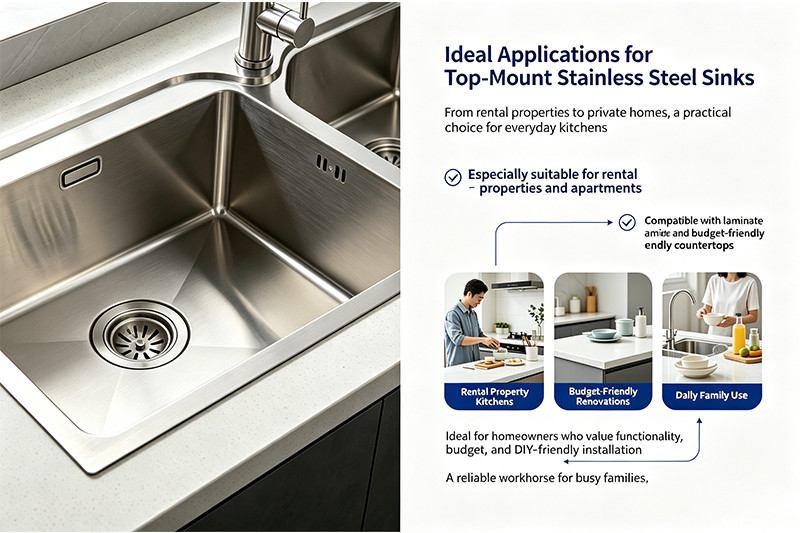
Ideal Applications: Top mount stainless sinks are particularly well-suited for specific scenarios. They are the go-to choice for rental properties and apartments due to their durability, low replacement cost, and simple maintenance. Their compatibility with laminate and other budget-friendly countertops makes them a practical solution for these environments. For private homes, they are perfect for homeowners prioritizing practicality, budget, and a DIY-friendly approach. They are the workhorse sink for busy families and those who value function and longevity over a purely minimalist aesthetic.
Unpacking the Appeal of Top Mount Stainless Kitchen Sinks: A Foundation for Your Kitchen
The kitchen sink is more than just a place to wash dishes; it's the central hub of kitchen activity. The choice you make impacts your daily workflow, your kitchen's overall aesthetic, and your budget. Among the myriad options, the top mount stainless steel sink stands out for its practicality and timeless appeal. Let's break down what defines this kitchen staple and why it remains a favorite.
What We Call Them: The Definition and Installation Ease of Top Mount Stainless Kitchen Sinks
A top mount sink, also known by the descriptive names "drop-in" or "self-rimming" sink, is defined by its installation method. It is designed to be lowered into a hole cut into the countertop, with its visible rim or lip resting on the counter's surface. This rim is what supports the entire weight of the sink, distributing it evenly and reducing stress on the cabinetry below.
This design contrasts sharply with undermount sinks, which are installed from beneath the countertop and held in place by clips and adhesives, creating a seamless transition from counter to sink. The key difference lies in this visible edge.
The installation process for a top mount sink is renowned for its simplicity, making it a favorite for DIY enthusiasts and professionals alike. The steps generally involve:
- Cutting a hole in the countertop using the template provided by the manufacturer.
- Applying a bead of silicone caulk to the underside of the sink's rim to create a watertight seal.
- "Dropping" the sink into the cutout.
- Securing the sink from below with mounting clips that clamp the sink to the countertop.
- Connecting the faucet and plumbing.
This straightforward process is significantly less complex and labor-intensive than mounting an undermount sink, which requires precise cutouts, polished edges, and robust support systems.
The Enduring Advantages: Why Many Homeowners Choose Top Mount Stainless Kitchen Sinks
The continued popularity of top mount stainless sinks isn't accidental. It's built on a foundation of tangible benefits that appeal to a wide range of homeowners.
Installation Simplicity and Cost-Effectiveness: As mentioned, the ease of installation is a primary advantage. This translates directly into lower installation costs, as a professional can complete the job quickly, or a handy homeowner can tackle it themselves. The sinks themselves are also generally more affordable than comparable undermount models.
Unmatched Countertop Compatibility: This is perhaps the most significant advantage. Top mount sinks work with virtually every countertop material on the market. They are the ideal—and often only—choice for laminate and wood countertops, as the sink's rim protects the vulnerable core of these materials from water damage. While undermount sinks require solid, waterproof surfaces like granite or quartz, drop-in sinks offer universal compatibility.
Structural Support: The self-rimming design provides excellent support, making it suitable for even heavy sink materials like cast iron or fireclay, not just stainless steel. The weight is born by the countertop itself, rather than by clips and adhesive alone.
Ease of Replacement: Should you ever need to replace the sink, the process is much simpler than with an undermount model. An old top mount sink can be removed and a new one dropped in without needing to disturb the countertop, provided the cutout size is similar.
Here is a quick comparison table:
| Feature | Top Mount (Drop-In) Sink | Undermount Sink |
|---|---|---|
| Installation | Simple, DIY-friendly, dropped in from above. | Complex, requires professional installation from below. |
| Cost | Generally lower for both the sink and installation. | Higher upfront cost for the sink and labor. |
| Countertop Compatibility | Works with all materials, including laminate and tile. | Requires solid surface materials like stone or quartz. |
| Aesthetics | Traditional look with a visible rim. | Sleek, modern, and seamless appearance. |
| Cleaning | Rim can trap debris; cleaning the counter is a two-step process. | Easy to wipe counter debris directly into the sink. |
| Resale Value | Considered more standard; may not add significant value. | Often perceived as a high-end feature, potentially increasing value. |
Navigating the Considerations: What to Keep in Mind About Top Mount Stainless Kitchen Sinks
Despite their many strengths, there are a few considerations to be aware of before committing to a top mount sink.
The most frequently cited drawback is the raised lip. This rim creates a seam between the sink and the countertop, which can accumulate crumbs, grime, and soap residue. This means you can't simply sweep messes from the counter directly into the sink; you have to wipe up to the edge, and then clean the edge itself. For those prioritizing a perfectly seamless and easy-to-clean counter surface, this can be a deal-breaker.
Aesthetically, the visible rim is sometimes viewed as less modern or high-end compared to the sleek, integrated look of an undermount sink. It breaks the clean line of the countertop, which can be a negative for minimalist kitchen designs. However, many modern top mount sinks feature low-profile or "micro-edge" rims that minimize this visual interruption, offering a compromise between the two styles.
Smart Budgeting and Lasting Value: Investing in Top Mount Stainless Kitchen Sinks
When planning a kitchen remodel, the budget is often a primary driver of decisions. Top mount stainless kitchen sinks shine in this area, offering an exceptional balance of affordability, long-term durability, and low maintenance, making them a savvy investment for any home.
The Financial Edge: Understanding the Lower Installation Costs of Top Mount Stainless Kitchen Sinks
The financial benefits of choosing a top mount sink are twofold: the cost of the unit itself and the cost of installation.
Drop-in sinks are typically more budget-friendly to purchase than undermount sinks of similar size and quality. This upfront saving can be significant, sometimes 50 to 100 percent less, allowing you to allocate funds to other parts of your kitchen renovation, like the faucet or backsplash.
The real savings, however, often come from the installation. Because they are designed for a straightforward "drop-in" placement, installation is simpler and faster. Many resourceful homeowners find they can install a top mount sink themselves in an afternoon, completely eliminating labor costs. Even when hiring a professional, the time required is less than for an undermount installation, resulting in a lower bill. In contrast, undermount sinks demand precise cutting of the countertop, polishing of the interior edge, and a more complex clamping and sealing process, almost always requiring a professional fabricator and adding hundreds of dollars to the total cost.
Built to Last: The Long-Term Durability and Simplified Maintenance of Top Mount Stainless Kitchen Sinks
An affordable sink is only a good value if it lasts. Fortunately, stainless steel is renowned for its durability and longevity, making it a workhorse material for the busiest kitchens.
The Strength of Stainless Steel: A high-quality stainless steel sink is resistant to just about anything a kitchen can throw at it. It resists chipping, cracking, corrosion, and rust. It's also heat-resistant, so you don't have to worry about placing a hot pan in it. With proper care, a good stainless steel sink can easily last 15 to 30 years or more.
Understanding Gauge and Grade: Not all stainless steel is created equal, and two factors are critical for durability: gauge and grade.
- Gauge: This refers to the thickness of the steel. Counterintuitively, a lower gauge number means thicker steel. Sinks range from a thin 22 or 23 gauge to a robust 16 gauge. For a kitchen sink, 16 to 18 gauge is the gold standard, offering excellent resistance to dents and a quieter user experience. A thicker gauge sink is less likely to vibrate from the garbage disposal or sound like a drum when water is running.
- Grade: This refers to the composition of the steel. The most common and recommended grade for kitchen sinks is 304 series, which contains 18% chromium and 8% nickel (often noted as 18/8). The chromium provides rust and corrosion resistance, while the nickel enhances its durability and luster.
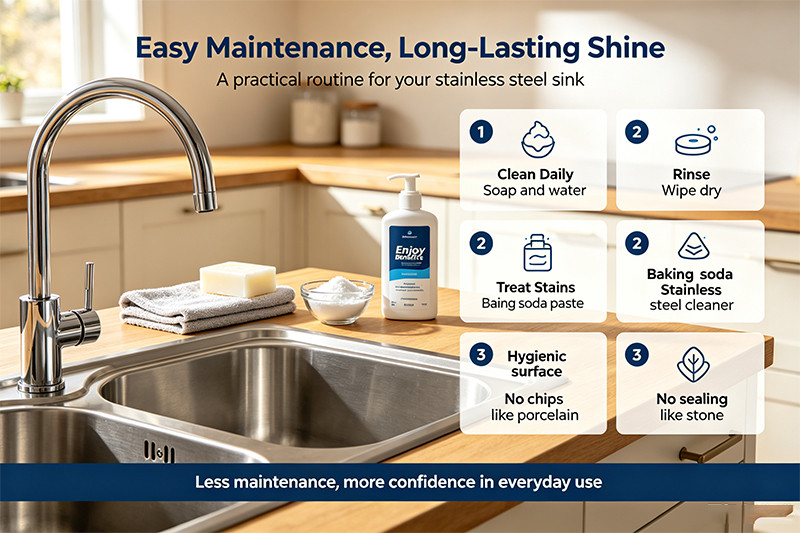
Simplified Maintenance: Maintaining a stainless steel sink is straightforward. Its non-porous surface is hygienic and resists bacteria buildup. For daily cleaning, a simple wash with soap and water followed by a rinse and wipe-dry is all that's needed to prevent water spots and mineral buildup. For tougher stains, a paste of baking soda and water or a specialized stainless steel cleaner can restore its shine. Unlike materials like porcelain, you don't have to worry about chips, and unlike natural stone, it doesn't require periodic sealing.
By choosing a top mount sink from a reputable brand like Samsink, which prioritizes high-quality 16-gauge, 304-grade stainless steel, you are investing in a product designed for decades of reliable performance.
Seamless Integration: Matching Top Mount Stainless Kitchen Sinks with Countertops and Lifestyle
A kitchen sink must not only be functional and durable but also integrate harmoniously with its surroundings. Top mount stainless steel sinks excel in this regard, offering remarkable versatility that suits a vast array of countertop materials and accommodates the rhythms of daily life.
Countertop Compatibility: The Versatile Nature of Top Mount Stainless Kitchen Sinks for Various Materials
One of the defining strengths of a top mount sink is its ability to pair with nearly any countertop material you can imagine. This universal compatibility makes it a safe and reliable choice, especially in renovations where you might be keeping your existing countertops.
Here’s how top mount sinks work with different surfaces:
- Laminate Countertops: This is where top mount sinks are the undisputed champion. Laminate countertops have a particleboard core that is highly susceptible to water damage. An undermount sink is not recommended because the exposed edge of the cutout would absorb moisture, leading to swelling, delamination, and eventual ruin. The rim of a top mount sink covers and seals this vulnerable edge, providing essential protection and making it the standard choice for laminate surfaces.
- Wood (Butcher Block) Countertops: Similar to laminate, wood countertops need protection from constant water exposure around the sink area. While wood is a solid material, the end grain exposed in a cutout for an undermount sink is porous. A top mount sink's rim provides a crucial barrier that helps keep the wood dry and reduces maintenance.
- Tile Countertops: Installing an undermount sink with tile can be tricky due to the uneven surface created by grout lines. A top mount sink easily rests on top of the tile, simplifying the installation and providing a more consistent seal.
- Stone and Quartz Countertops (Granite, Marble, Quartz): While these solid surface materials are famous for their pairing with sleek undermount sinks, they are also perfectly compatible with top mount models. Choosing a top mount sink with a stone countertop might be driven by budget, a preference for a more traditional look, or the desire for an easier installation process.
This flexibility removes a significant variable from the kitchen design puzzle, giving you the freedom to choose your countertop based on aesthetics and budget without being constrained by your sink choice.
Designed for Daily Life: How Top Mount Stainless Kitchen Sinks Fit Your Kitchen Usage Patterns
Beyond material compatibility, a sink must fit your lifestyle. Top mount stainless steel sinks are designed with practical, everyday use in mind. They are the workhorses of the kitchen, ready to handle everything from meal prep for a large family to a quick rinse of a coffee cup.
When selecting a sink, consider these practical aspects:
Single Bowl vs. Double Bowl: This is a classic debate, and the best choice depends entirely on how you use your sink.
- Single Bowl: A large, open single bowl is perfect for washing large items like roasting pans, cookie sheets, and stockpots that wouldn't fit in a divided sink. It offers maximum uninterrupted space, making it a favorite for those who cook with large cookware.
- Double Bowl: A double bowl sink allows for multitasking—soaking dishes on one side while rinsing vegetables or using the garbage disposal on the other, for example. Configurations vary, with 50/50, 60/40, or even 70/30 splits, allowing you to prioritize one side for larger items.
Depth and Shape: A deeper basin, typically 9 to 10 inches, is highly practical as it can conceal dirty dishes and reduce splashing. However, an excessively deep sink, especially an undermount one, could cause back strain for some users. The shape also matters; sinks with slightly rounded corners are easier to clean than those with sharp, zero-radius corners, where food can get trapped.
Workstation Sinks: A growing trend in kitchen design is the "workstation" sink, and many top mount models are available in this style. These sinks feature a built-in ledge that supports custom-fit accessories like cutting boards, colanders, and drying racks. This effectively turns your sink into a versatile food prep zone, maximizing utility in smaller kitchens.
For a sink that truly adapts to your needs, explore the diverse configurations offered by Samsink. Whether you need a spacious single bowl for your large pots or a multifunctional workstation sink to streamline your cooking process, there is a top mount stainless steel solution designed for your life.
Who Benefits Most? Scenario-Based Recommendations for Top Mount Stainless Kitchen Sinks
While top mount stainless steel sinks are a versatile choice for almost any kitchen, they are particularly advantageous in certain specific scenarios. Understanding these ideal use cases can help you decide with confidence if a top mount sink is the right fit for your property and lifestyle.
Ideal for Investment: Why We Suggest Top Mount Stainless Kitchen Sinks for Rental Properties
For landlords and property managers, the primary goals are durability, low maintenance, and cost-effectiveness. Top mount stainless steel sinks check all these boxes, making them the superior choice for rental units.
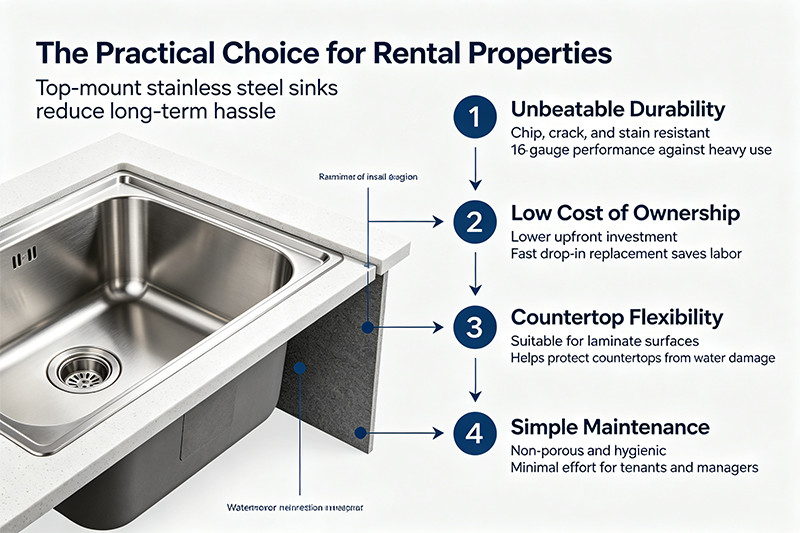
- Unbeatable Durability: Rental kitchens endure heavy and often careless use. Stainless steel is incredibly resilient; it won't chip, crack, or stain easily, which means fewer calls for repairs or replacements between tenants. Choosing a thick 16-gauge model ensures it can withstand dropped pots and heavy use without denting.
- Low Cost of Ownership: The lower upfront cost of both the sink and the installation is a major financial benefit for property owners. Furthermore, if a sink or faucet ever needs to be replaced, the drop-in design makes the swap quick and affordable, minimizing downtime and labor expenses.
- Countertop Flexibility: Rental properties frequently use budget-friendly laminate countertops. As established, top mount sinks are the only suitable option for these surfaces, protecting them from water damage and ensuring the longevity of the entire kitchen setup.
- Simple Maintenance: There are no special cleaning instructions for tenants to follow. Stainless steel is a non-porous, easy-to-clean material that stays hygienic with minimal effort, which is a significant plus in a rental environment.
A Practical Choice: Considering Top Mount Stainless Kitchen Sinks for Apartment Living
Apartment kitchens, whether in a rental or a condominium, are often characterized by smaller footprints and practical design considerations. Top mount sinks are a natural fit for this environment.
- Space Efficiency: While the rim does take up a small amount of counter space, the wide variety of available sizes means you can easily find a single-bowl or offset-bowl model that maximizes basin volume without overwhelming a compact countertop.
- Affordability for Renovations: For apartment owners looking to update their kitchen on a budget, a new top mount stainless steel sink and faucet can provide a significant visual upgrade for a minimal investment. It’s a cost-effective way to modernize the look and feel of the space.
- DIY-Friendly Upgrade: Replacing an old, worn-out sink is one of the more manageable DIY projects for a confident apartment owner. The simple installation of a drop-in sink makes it an accessible weekend project that doesn't necessarily require hiring expensive professionals.
Making It Personal: When Top Mount Stainless Kitchen Sinks are the Right Fit for Private Homes
While undermount sinks are often associated with high-end, custom homes, top mount sinks still hold a strong and valid place in private residences. The decision often comes down to prioritizing practicality and budget over a specific aesthetic.
A top mount sink is the perfect choice for homeowners who:
- Are Budget-Conscious: If you're managing a tight renovation budget, choosing a top mount sink can free up thousands of dollars to be spent on other features, like higher-end appliances or custom cabinetry.
- Prefer a Hands-On, DIY Approach: For the homeowner who loves to tackle projects themselves, the easy installation of a drop-in sink is a major draw. It provides a sense of accomplishment and significant cost savings.
- Have Laminate or Butcher Block Countertops: If your dream kitchen includes warm butcher block or a stylish, modern laminate, a top mount sink isn't just an option—it's a necessity to ensure the longevity of your countertops.
- Value Proven Reliability over Trends: Trends come and go, but the top mount sink is a timeless classic that has proven its reliability for decades. For those who value a kitchen that is built to last and function flawlessly day in and day out, a high-quality stainless steel drop-in sink is an investment in practicality. It is a workhorse that quietly and effectively serves its purpose without demanding attention.
Frequently Asked Questions (FAQ)
Here are answers to some of the most common questions homeowners have about top mount stainless steel kitchen sinks.
1. What is the best gauge for a residential stainless steel kitchen sink? For residential kitchens, the best gauge is typically between 16 and 18. Gauge refers to the thickness of the steel, and lower numbers indicate thicker, more durable steel.
- 16-gauge is considered premium and is the thickest option commonly used in homes. It offers superior resistance to dents, flexes less under the weight of a heavy garbage disposal, and provides better sound insulation, resulting in a quieter sink. It's an excellent choice for busy kitchens with heavy cookware.
- 18-gauge is slightly thinner but still offers excellent durability and performance for most household uses. It is often more affordable than 16-gauge and represents a great balance between quality and cost. Sinks with a gauge of 20 or higher are generally thinner, more prone to denting, and noisier, and are typically found in lower-end or utility applications.
2. How do I prevent my stainless steel sink from scratching? While high-quality stainless steel is very durable, it can develop minor scratches with use, which often blend into a soft patina over time. To minimize noticeable scratches:
- Use a Sink Grid: The single most effective tool is a stainless steel grid that sits at the bottom of the sink. It elevates dishes and utensils, preventing them from directly scraping the sink's surface.
- Rinse After Use: Always rinse the sink thoroughly after use, especially after contact with acidic foods or harsh cleaners.
- Avoid Abrasive Cleaners and Pads: Never use steel wool, scouring powders, or highly abrasive sponges, as these will scratch the finish. Use a soft cloth or sponge for cleaning.
- Clean in the Direction of the Grain: Most stainless steel sinks have a fine, brushed finish with a visible grain. Wiping and cleaning in the direction of these lines can help mask minor scratches.
3. Will a stainless steel sink rust? High-quality, 304-grade stainless steel is highly resistant to rust and corrosion due to its chromium and nickel content. If you see "rust" spots appear, it is almost always the result of external iron particles (from cans, steel wool, or certain utensils) that have been left on the sink's surface and have started to rust. These spots are on the surface, not part of the sink itself, and can be cleaned off with a non-abrasive cleaner like Bar Keepers Friend or a baking soda paste.
4. How do you clean the gunk from around the rim of a top mount sink? Cleaning the seam where the sink's rim meets the countertop is the main maintenance task unique to top mount sinks. To do this effectively:
- Regular Wiping: The best defense is to wipe the rim and surrounding counter dry after each use to prevent buildup.
- Detailed Cleaning: For a deeper clean, use an old toothbrush or a small scrubbing brush with a mixture of warm water and dish soap to gently scrub along the caulk line.
- Address Mold or Mildew: If the caulk develops mold or mildew, you can use a solution of vinegar and water or a commercial mold remover. If the caulk is badly stained, cracked, or peeling, it may be time to remove the old caulk and apply a fresh bead of kitchen and bath silicone sealant.
5. Can I replace a top mount sink with an undermount sink using the same countertop? This can be a complex and sometimes impossible task. It depends entirely on two factors:
- Countertop Material: This is only possible with solid surface countertops like granite, quartz, or marble. It cannot be done with laminate, wood, or tile countertops because their core material cannot support an undermount sink and is not water-resistant.
- Cutout Size and Shape: The existing hole for your top mount sink is likely larger than what is needed for an undermount sink. An undermount sink requires the cutout to be precisely shaped and polished, as the edge is visible. It is often not possible to re-cut the hole to the exact specifications needed without replacing the countertop slab entirely. It is best to consult a professional countertop fabricator to see if a conversion is feasible.
6. Are top mount sinks considered outdated? While undermount sinks are often featured in modern, high-end kitchen designs, top mount sinks are not outdated—they are a timeless, practical classic. Many manufacturers, including Samsink, now offer top mount sinks with sleek, low-profile rims and contemporary designs that bridge the gap between traditional and modern aesthetics. Their unmatched practicality, affordability, and ease of installation ensure they will always be a relevant and intelligent choice for a wide range of kitchen projects.
Conclusion
As we've explored, selecting the right kitchen sink is a crucial decision, and top mount stainless kitchen sinks offer a compelling package of benefits for a wide range of needs. They stand as a testament to practical design and enduring quality in the heart of the home.
From their advantageous installation and broad countertop compatibility to their cost-effectiveness and the inherent durability of stainless steel, top mount sinks are a versatile, practical, and smart investment. They prove that a high-functioning kitchen does not always require the highest-cost components. Their ability to pair with any countertop material, combined with their rock-solid performance in busy households and rental properties, makes them an incredibly reliable choice.
We encourage you to consider all these factors—your budget, your lifestyle, your countertop material, and your long-term goals—to find the perfect sink. A top mount stainless steel sink from a quality brand like Samsink is a decision you can trust, one that will serve your home beautifully and functionally for many years to come.