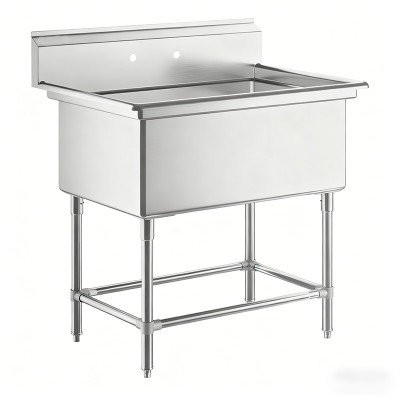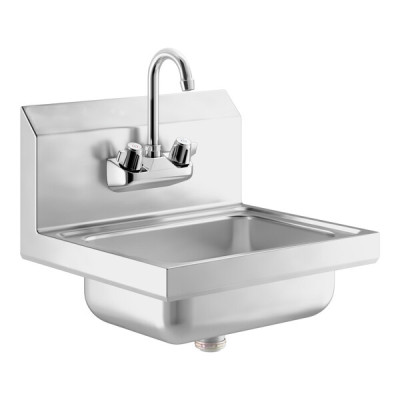
The Ultimate B2B Buying Guide to Commercial Stainless Steel Hand Wash Sinks and Basins
Selecting the right commercial stainless steel sinks for your business is a critical decision that impacts hygiene, durability, and operational efficiency. This guide is your ultimate resource, designed to walk you through everything you need to know about the essential considerations for purchasing commercial stainless steel sinks and basins. My aim is to empower you with the knowledge to make an informed B2B buying decision, ensuring you invest in sinks that perfectly meet your specific needs and regulatory requirements. With the right information, you can choose a solution from a trusted brand like Samsink that serves as a long-term asset for your operations.
Key Takeaways
Choosing the best commercial sink involves more than just price. This guide emphasizes a comprehensive approach. First, you must evaluate your specific business environment, considering industry standards for foodservice or healthcare, daily usage volume, and physical space limitations. Next, understand the different sink types, from single to multi-compartment units, and the crucial differences in stainless steel grades like 304 and 430 for durability. Prioritizing hygiene is non-negotiable; look for NSF certification and designs with coved corners that simplify cleaning. Finally, assess the total cost of ownership, including installation and long-term value, and vet suppliers like Samsink for quality, customization, and reliable after-sales support.
Understanding Your Business Needs Before Investing in Commercial Stainless Steel Sinks
Before you start browsing for models, a thorough assessment of your operational requirements is the essential first step. This foundational analysis ensures that your investment not only meets but exceeds your daily demands, providing value for years to come. Think of it as creating a blueprint for your ideal sink solution, one that is tailored to your unique environment, traffic flow, and spatial constraints.
Identifying Your Industry and Specific Requirements
The needs of a bustling restaurant kitchen are vastly different from those of a sterile healthcare facility or a heavy-duty industrial workshop. Your industry dictates the primary function of the sink, the materials it must be made from, and the specific regulations it must meet. Acknowledging these nuances from the outset is crucial for compliance, safety, and operational efficiency.
Food Service and Healthcare Standards
In environments where preventing cross-contamination and foodborne illness is paramount, sink requirements are stringent and non-negotiable. For commercial kitchens, health codes often mandate a specific setup that includes dedicated sinks for different tasks. This typically involves:
- Handwashing Sinks: These must be conveniently located in all food preparation, service, and dishwashing areas. Regulations require these sinks to be used exclusively for handwashing and to be equipped with soap, single-use paper towels, and water reaching a minimum temperature, which the FDA Food Code specifies as at least 85°F.
- Three-Compartment Sinks: These are the standard for manual warewashing (wash, rinse, sanitize) and are often required even if a commercial dishwasher is present.
- Food Prep Sinks: Used for washing produce or thawing frozen items, these sinks must be separate from handwashing and warewashing areas to prevent cross-contamination.
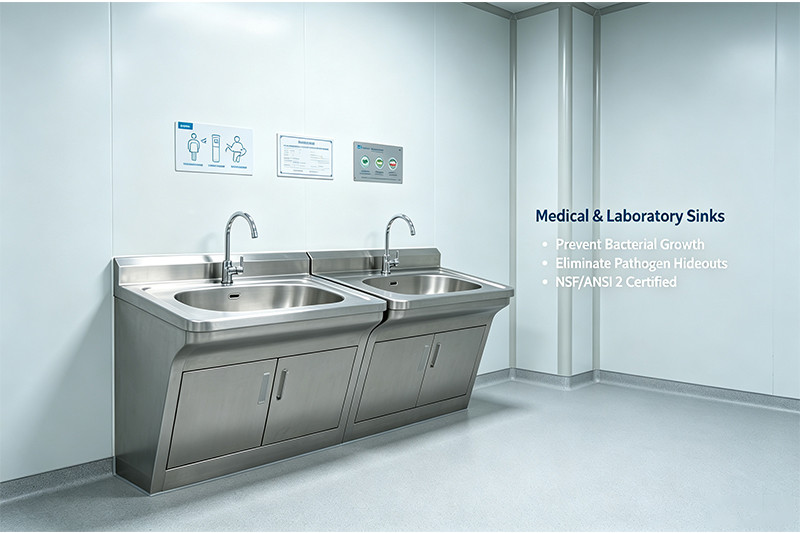
For healthcare and laboratory settings, the focus shifts to sterile processing and infection control. Sinks in these areas must be made of non-porous materials like 304-grade stainless steel to prevent bacterial growth. They often feature seamless welding and coved corners to eliminate crevices where pathogens could harbor. In surgical environments, scrub sinks are strategically placed outside operating rooms and are designed for deep cleaning, often with hands-free controls.
Certification is a key indicator of compliance. The "NSF" mark from the National Sanitation Foundation indicates that a sink meets rigorous standards for material safety, cleanability, and hygienic design. Looking for NSF/ANSI 2 certification is a reliable way to ensure a sink is suitable for food handling environments.
Industrial and Laboratory Demands
Industrial and laboratory environments present a different set of challenges, often involving harsh chemicals, heavy use, and specialized processes. In these settings, durability and chemical resistance are the top priorities.
- Material Durability: While Type 304 stainless steel is a common and robust choice for its corrosion resistance and strength, some labs dealing with highly corrosive substances may opt for Type 316 stainless steel or even epoxy resin sinks. Stainless steel is valued for its ability to withstand extreme temperatures and heavy use while being easy to sanitize.
- Sanitary Design: Even in non-food settings, a hygienic design is crucial. The non-porous surface of stainless steel inhibits bacterial growth, making it suitable for sterile or cleanroom environments. Good Manufacturing Practice (GMP) guidelines for pharmaceutical or biotech facilities emphasize features like hands-free operation to prevent re-contamination.
- Specialized Applications: Sinks in these environments are often part of a larger workflow. For example, instrument washing sinks in a Central Sterile Services Department (CSSD) are specifically designed for the pre-sterilization cleaning of medical tools. These can be wall-mounted to save space or integrated with cabinets for storage.
For general industrial workplaces, organizations like OSHA mandate that employers provide adequate and readily accessible handwashing facilities for employees, ensuring safety and basic hygiene.
Assessing Usage Volume and Traffic
The anticipated frequency of use is a major factor in determining the right sink configuration and durability. A sink in a high-traffic hospital corridor or a busy restaurant kitchen will endure significantly more wear and tear than one in a small office breakroom.
Consider the following:
- Peak Hours: Will there be times when multiple people need to use the sink simultaneously? In high-volume surgical suites, having two or three scrub stations per operating room can prevent bottlenecks.
- Number of Employees: OSHA has guidelines for industries like construction, often requiring one handwash station per 20 employees. While not a universal rule, it provides a useful benchmark for assessing needs based on workforce size.
- Workflow Efficiency: The placement and number of sinks should support a smooth workflow, not hinder it. In restaurants, health departments may use a rule of thumb of one hand sink for every twenty feet of workspace to ensure accessibility. Inconveniently placed sinks can lead to non-compliance with handwashing protocols.
A high-volume environment necessitates a sink built for longevity—this means thicker gauge stainless steel, reinforced mounting, and durable faucet mechanisms. For establishments like these, investing in a premium brand like Samsink ensures the product can withstand the rigors of constant use.
Considering Space and Installation Constraints
Finally, the physical reality of your space will guide your selection. An ideal sink is useless if it doesn't fit or if it cannot be installed in compliance with local codes.
Key spatial and installation considerations include:
- Available Footprint: Measure the intended area carefully. Sinks come in a vast range of sizes, from compact, wall-mounted hand sinks to large, free-standing, multi-bowl units with drainboards.
- Mounting Options:
- Wall-Mounted: Excellent for saving floor space and making floor cleaning easier. Common for hand sinks and in sterile environments.
- Freestanding: Often larger units, like scullery or multi-compartment sinks, that stand on their own legs. They offer high capacity but require more floor space.
- Drop-In/Top-Mount: Installed into a countertop from above, with the rim resting on the counter surface.
- Undermount: Installed from below the counter, creating a seamless edge that is easy to clean.
- Plumbing and Utilities: Ensure your existing plumbing can support the new sink. This includes water supply lines (with both hot and cold water), proper drainage, and adequate water pressure. Mop sinks, for example, often require a specific type of faucet with a vacuum breaker to prevent backflow.
- Accessibility: Is the sink easily accessible to all employees, including those with disabilities? Americans with Disabilities Act (ADA) compliance may be required, which dictates specific dimensions for height, knee clearance, and faucet control accessibility.
Mapping out these constraints in advance will narrow your options and prevent costly purchasing mistakes, ensuring a seamless integration of your new sink into the workspace.
Exploring Types and Essential Features of Commercial Stainless Steel Sinks
With a clear understanding of your business needs, the next step is to explore the variety of sink designs and features available. The market offers a wide array of configurations, materials, and accessories, each designed to solve specific operational challenges. Making the right choice here is key to maximizing durability, hygiene, and user efficiency. From the number of bowls to the grade of the steel, every detail matters.
Reviewing Sink Configurations (e.g., Single, Double, or Triple Bowls)
Commercial sinks are categorized primarily by the number of compartments they have, with each configuration serving a distinct workflow.
- Single-Bowl Sinks: Ideal for compact spaces or dedicated tasks. You'll often find single-bowl designs used for handwashing stations, small bar areas, or basic utility work. Their simplicity makes them a great fit for small cafes or areas with limited needs.
- Double-Bowl Sinks: This setup offers enhanced flexibility, allowing for multitasking. For instance, one bowl can be used for soaking and washing while the other is used for rinsing. This is a common configuration in medium-sized kitchens where space is a consideration but greater functionality than a single bowl is required.
- Triple-Bowl Sinks: The triple-bowl configuration is the cornerstone of many commercial kitchens, specifically for the three-step manual warewashing process: wash, rinse, and sanitize. Health codes frequently mandate a three-compartment sink for this purpose, making it a staple in restaurants and food service operations.
- Quad-Bowl Sinks: Found in very large or high-volume food processing facilities, these sinks allow for even more complex, simultaneous tasks.
The choice depends entirely on your operational flow. A bar might only need a small single or double-bowl sink, whereas a full-service restaurant kitchen will almost certainly require a three-compartment model to remain compliant and efficient.
Understanding Material Grades and Durability for Commercial Stainless Steel Sinks (e.g., 304 vs. 430)
The material of your sink determines its lifespan, appearance, and resistance to damage. In the world of commercial sinks, stainless steel is king, but not all stainless steel is created equal. The two most common types you'll encounter are 304 and 430.
| Feature | Type 304 Stainless Steel | Type 430 Stainless Steel |
|---|---|---|
| Composition | Contains ~18% chromium and ~8% nickel. | Contains ~16-18% chromium and no significant amount of nickel. |
| Corrosion Resistance | Superior. The nickel content provides excellent resistance to a wide range of kitchen acids and cleaning solutions. | Good, but less resistant than 304. Not ideal for acidic or salty environments. |
| Durability & Formability | Excellent. The nickel content also makes it more ductile, so it's less likely to crack during fabrication (pressing and drawing). | Moderate. It is more brittle and can be prone to cracking under stress. |
| Cost | Higher, due to the inclusion of nickel. | More cost-effective. |
| Magnetism | Non-magnetic (though it can become slightly magnetic after cold working). | Magnetic. |
Verdict: For most demanding commercial kitchen applications, Type 304 stainless steel is the recommended choice due to its superior corrosion resistance and durability. At Samsink, we build our heavy-duty sinks primarily with Type 304 to ensure they meet the highest standards of performance. Type 430 can be a suitable option for lighter-duty applications or in environments with no exposure to corrosive materials.
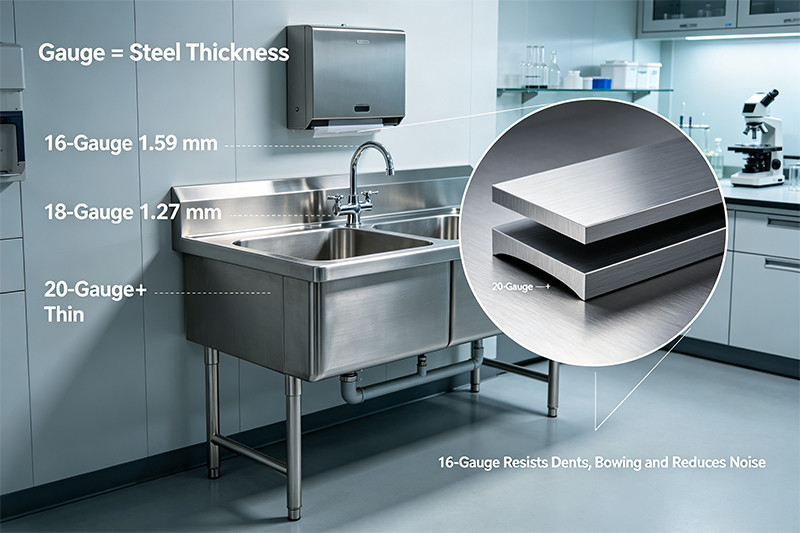
Another critical factor is the gauge, or thickness, of the steel. In this case, a lower gauge number means thicker, more durable steel.
- 16-Gauge: Approximately 1.59 mm thick, this is widely considered the standard for high-quality, high-volume commercial sinks. It offers excellent resistance to dents and bowing and provides better sound deadening.
- 18-Gauge: Thinner at about 1.27 mm, this is a reliable and cost-effective choice for many light to medium-duty applications.
- 20-Gauge or Higher: Generally too thin for most commercial applications, this may be found in very light-duty hand sinks.
For a true workhorse sink, investing in 16-gauge steel is a wise decision that will pay off in longevity.
Faucet Compatibility and Practical Accessories
Your sink is only as good as the faucet and accessories that accompany it. Compatibility is crucial; an incompatible faucet can lead to installation headaches and improper function.
Faucets:
- Mounting Type: Faucets can be deck-mounted (installed on the sink's rim or countertop) or wall-mounted (installed on the wall or backsplash). Wall-mounted options can make cleaning the sink deck easier, while deck-mounted is often simpler to install.
- Hole Configuration: Sinks come with pre-drilled holes. You must match your faucet to the sink's configuration, which is typically described by the number of holes and the "center" measurement (the distance between the holes).
- Spout Style: Gooseneck or high-arc spouts provide ample clearance for washing large pots and pans. Swing spouts can move from side to side, which is useful for multi-bowl sinks.
Essential Accessories:
- Drainboards: These are integrated, slanted surfaces that allow washed items to air dry, with water draining back into the sink bowl. They are invaluable for improving workflow in warewashing areas.
- Sink Strainers: A high-quality basket strainer is essential to prevent food scraps and debris from clogging your plumbing. For high-volume kitchens, a locking drain strainer can prevent employees from removing it, ensuring drains are always protected.
- Pre-Rinse Sprayers: Common in foodservice, these high-pressure sprayers are used to blast food residue off dishes before they go into a dishwasher or a three-compartment sink.
- Splash Guards: These are vertical panels installed on the sides of a sink to prevent water from splashing onto adjacent surfaces, which is important for hygiene and safety.
Hands-Free and Sensor Technologies for Enhanced Hygiene
In today's hygiene-conscious world, hands-free technology is moving from a luxury to a standard feature, especially in foodservice and healthcare. Touchless fixtures are a critical tool in preventing cross-contamination.
- Sensor-Activated Faucets: Using infrared sensors, these faucets dispense water automatically when hands are detected, then shut off when hands are moved away. This single feature achieves several key goals:
- Improved Hygiene: It eliminates a common touchpoint where germs can be transferred.
- Water Conservation: By running only when needed, sensor faucets can significantly reduce water consumption and utility costs.
- Accessibility: They are easier to operate for all users.
- Knee or Foot Pedals: A mechanical alternative to sensors, these allow users to control water flow with a pedal or knee-operated panel. They are extremely durable and reliable, making them a popular choice for surgical scrub sinks.
When considering a hands-free system from a provider like Samsink, you are investing directly in a safer environment for both your employees and customers. The reduction in germ spread and resource waste provides a clear and immediate return on investment.
Prioritizing Hygiene and Regulatory Compliance for Commercial Stainless Steel Sinks
In any commercial setting, particularly food service and healthcare, a sink is more than a utility—it's a critical control point for sanitation. Choosing a sink that meets rigorous health standards is not an option; it's a legal and ethical requirement. Prioritizing hygiene-focused design and understanding compliance certifications will protect your business, staff, and customers.
Meeting Health Code Regulations and Certifications (e.g., NSF, ADA)
Compliance with health and safety regulations is non-negotiable. Various agencies set the standards for commercial equipment to ensure public safety.
NSF International: The NSF mark is one of the most important certifications to look for. NSF/ANSI 2 is the standard for food equipment, which includes sinks. It establishes minimum requirements for materials, design, and construction to ensure equipment is cleanable and safe for food contact. An NSF-certified sink has been rigorously tested to be non-toxic, corrosion-resistant, and designed to prevent bacterial growth. For health inspectors, the NSF logo is a clear sign of compliance.
ADA (Americans with Disabilities Act): If your sink is for public or employee use, it may need to be ADA compliant. ADA guidelines specify requirements for accessibility, including:
- Sink Height: The rim of the sink can be no more than 34 inches from the finished floor.
- Knee Clearance: There must be adequate space underneath the sink for a wheelchair user, typically at least 27 inches high and 30 inches wide.
- Faucet Controls: Faucets should be operable with one hand and not require tight grasping or twisting. Hands-free sensor faucets are an excellent solution.
FDA Food Code: This model, published by the U.S. Food and Drug Administration, provides a scientific basis for food safety regulations across the country. It is the foundation for many local health department rules, including the requirement for three-compartment sinks for warewashing and dedicated, properly-stocked handwashing stations.
Investing in a certified sink from a reputable manufacturer like Samsink ensures that you meet these critical benchmarks from day one, avoiding fines and operational disruptions.
Design Features that Actively Promote Sanitation
Beyond certifications, the physical design of a sink plays a crucial role in how easy it is to keep clean. Hygienic design isn't just an aesthetic—it's a functional necessity.
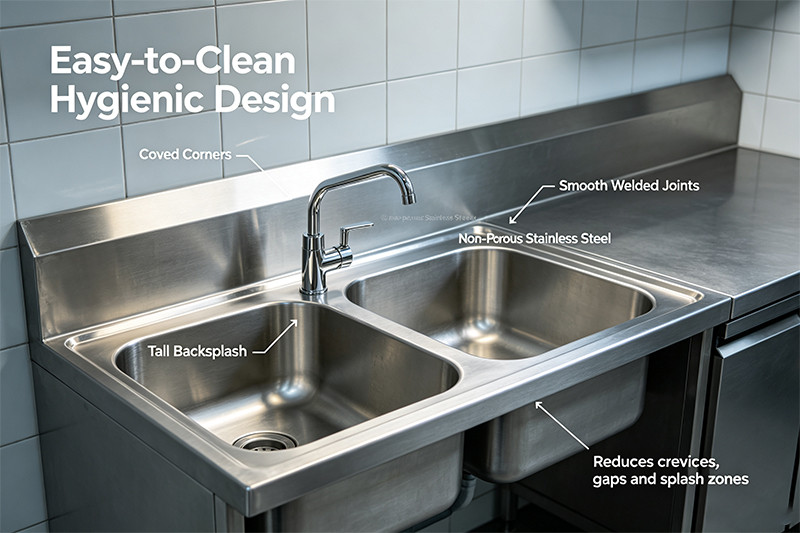
- Coved Corners: This is one of the most important features for sanitation. Instead of a sharp 90-degree angle where the sink walls meet the bottom, a coved corner is curved. This rounded transition eliminates crevices where dirt, grease, and bacteria can accumulate, making the sink significantly easier and more effective to clean.
- Seamless Construction: High-quality sinks feature welded joints that are polished smooth. This eliminates gaps and seams that can trap food particles and harbor microorganisms, which is a key requirement under standards like NSF/ANSI 2.
- Non-Porous Surfaces: Stainless steel is the preferred material for commercial sinks largely because it is non-porous. This means it won't absorb moisture or harbor bacteria, unlike porous materials such as wood or some plastics.
- Integrated Backsplash: A high backsplash helps protect the wall behind the sink from splashes, preventing water damage and mold growth.
These design elements work together to create a surface that can be easily and thoroughly sanitized, which is a cornerstone of any effective hygiene program.
Maintenance and Cleaning Best Practices
A well-designed sink still requires a consistent cleaning and sanitation routine to remain safe. Following a proper procedure is essential for removing both visible dirt and invisible pathogens.
The correct process for a food-contact surface always follows a specific order: Clean, Rinse, Sanitize, and Air Dry.
- Clean: First, physically remove any loose debris. Then, scrub the surface with a soft cloth or brush and a mild detergent solution to lift grease and soil. It's best to scrub in the direction of the stainless steel's grain to avoid micro-scratches. For general cleaning, a simple mix of dish soap and warm water is effective. For stuck-on grime, a paste of baking soda can be used as a gentle abrasive.
- Rinse: Thoroughly rinse the sink with clean, potable water to remove all soap and cleaning chemical residues. Any leftover detergent can neutralize the sanitizer in the next step.
- Sanitize: Apply a food-grade sanitizer according to the manufacturer's instructions for concentration and contact time. Common sanitizers include chlorine (bleach) solutions (50-100 ppm), quaternary ammonium compounds ("quats"), or iodine-based solutions. Heat can also be used, with hot water at 171°F (77°C) for at least 30 seconds being an effective method.
- Air Dry: Allow the surfaces to air dry completely. Wiping a sanitized surface with a cloth can reintroduce contamination.
What to Avoid:
- Abrasive Materials: Never use steel wool, wire brushes, or harsh scouring pads, as they can scratch the protective layer of stainless steel, leading to rust and corrosion.
- Harsh Chemicals: Avoid cleaners containing chlorides, as they can damage the stainless steel over time. If you use a cleaner with bleach, be sure to rinse it away immediately and thoroughly.
- Leaving Items to Sit: Don't let wet sponges, cloths, or acidic foods sit in the sink for long periods, as this can lead to staining and pitting.
By making this cleaning process a daily habit, you ensure your stainless steel sink remains a hygienic, safe, and durable asset for your business.
The Financial Perspective: Budgeting and Return on Investment for Commercial Stainless Steel Sinks
Making a B2B purchase of a commercial sink requires a sharp financial focus that extends beyond the initial price tag. Viewing the acquisition as a long-term investment is crucial. A sink is not just a piece of equipment but a central component of your daily operations that impacts efficiency, safety, and compliance. Therefore, calculating the total cost of ownership (TCO) and understanding the return on investment (ROI) will lead to a much smarter decision than simply choosing the cheapest option available.
Evaluating Initial Costs vs. Long-Term Value
It can be tempting to select a sink based on the lowest upfront price, but this is often a shortsighted strategy. The true cost of a commercial sink is revealed over its entire service life.
- Initial Purchase Price: This is the sticker price of the sink itself. Basic, entry-level stainless steel sinks might cost between $200 and $700, while mid-range models with more features can range from $700 to $1,500. High-end or custom-fabricated sinks can exceed $2,500.
- Total Cost of Ownership (TCO): This is a more comprehensive financial metric that includes the initial purchase price plus all associated costs over the sink's lifespan. According to some analyses, the purchase price may only account for 35-50% of the TCO over five years. The remaining costs consist of:
- Maintenance and Repairs: Cheaper sinks made from thinner gauge steel or lower-quality materials are more susceptible to dents, cracks, and corrosion, leading to higher repair costs and potentially earlier replacement.
- Energy and Water Costs: Water-saving fixtures like sensor faucets can reduce utility bills over time, contributing to a lower TCO.
- Downtime Costs: A failed sink can bring operations to a halt. A crucial oven failure, for example, can result in thousands of dollars in lost revenue in just a few hours. While a sink failure might be less dramatic, the disruption to sanitation and workflow can be significant and costly.
- Lifespan: A high-quality sink made from 16-gauge, 304-grade stainless steel can last for 15 to 30 years with proper care. A cheaper alternative might need to be replaced multiple times in that same period, making it far more expensive in the long run.
Investing in a premium sink from a trusted brand like Samsink might have a higher initial cost, but it provides significantly better long-term value by minimizing repairs, downtime, and replacement frequency.
Considering Installation Costs and Potential Hidden Expenses
The budget for a new sink must account for more than just the unit itself. Installation is a significant cost factor that can vary widely.
- Labor Costs: Professional installation for a commercial sink can cost anywhere from a few hundred to several thousand dollars, depending on complexity. A basic drop-in sink installation might average around $416, while a complex commercial installation can cost between $1,500 and $5,000. An ADA-compliant retrofit could run from $1,000 to over $3,000.
- Plumbing Modifications: If the new sink requires changes to the existing water supply or drainage lines, costs will increase. This can involve relocating pipes or upgrading them to meet code.
- Countertop or Facility Modifications: Installing an undermount sink may require a professional countertop fabricator. A large, freestanding unit might necessitate changes to the floor plan or reinforcement.
- Additional Parts: The final cost will include faucets, drains, p-traps, and potentially a garbage disposal or pre-rinse sprayer, all of which add to the total.
- Permits and Inspections: Commercial installations often require permits and inspections from local building or health departments to ensure compliance, which come with their own fees.
It is essential to get a detailed quote that includes all labor, parts, and potential modifications to avoid unexpected expenses that can strain your budget.
Understanding Warranty and After-Sales Support
A strong warranty is a powerful indicator of a manufacturer's confidence in its product. It provides a safety net against defects and can save you significant money on repairs or replacements.
- Warranty Coverage: Warranties for commercial sinks can vary. Some manufacturers offer limited lifetime warranties on certain product lines, while others provide coverage for a specific period, such as five, seven, or ten years. It's crucial to read the details carefully.
- What's Covered (and What's Not): Typically, a warranty covers defects in materials and workmanship. It usually does not cover damage from improper installation, abuse, misuse, normal wear and tear, or scratches. Additionally, costs for labor, transportation, and installation are often excluded.
- The Claim Process: Understand the procedure for making a claim. You will likely need to provide proof of purchase, a description of the defect, and photos.
- After-Sales Support: Beyond the warranty, consider the manufacturer's reputation for customer service. A responsive and helpful support team can make a huge difference if you encounter issues. Can you easily reach them for technical advice or to source replacement parts? A reliable partner like Samsink prioritizes strong after-sales support, ensuring you have assistance long after the initial purchase.
A comprehensive warranty and reliable support are vital components of a sink's overall value, providing peace of mind and protecting your investment.
Navigating the B2B Buying Process for Commercial Stainless Steel Sinks
The B2B purchasing journey for essential equipment like commercial sinks involves more than just selecting a product. It requires a strategic approach to vetting suppliers, negotiating terms, and managing logistics. A well-managed process ensures you not only get the right product but also establish a valuable partnership that can benefit your business for years to come.
How to Effectively Evaluate Suppliers and Manufacturers
Choosing the right partner to purchase from is as important as choosing the right sink. A reliable supplier offers more than just a product; they provide expertise, support, and a commitment to quality.
When evaluating potential suppliers, consider the following criteria:
- Reputation and Experience: How long has the company been in business? Do they have a track record of serving your industry? Look for suppliers with experience in environments similar to yours, whether it's high-volume food service, healthcare, or industrial settings.
- Product Quality and Certifications: A reputable manufacturer like Samsink will be transparent about their materials (e.g., 16-gauge, 304-grade stainless steel) and will have their products certified by bodies like NSF. Ask for spec sheets and documentation to verify that their products meet industry standards.
- Customer Service and Support: Before you buy, test their responsiveness. A good supplier is available to answer questions and provide guidance. This is a strong indicator of the support you can expect after the sale.
- Logistics and Delivery: Can the supplier deliver what you need, when you need it? Inquire about their inventory management, typical lead times, and on-time delivery record.
- Manufacturing Capabilities: If you have specific or non-standard needs, you need a partner with strong manufacturing capabilities. A true manufacturer, as opposed to just a distributor, will have deeper knowledge of fabrication processes and will be better equipped to handle customization.
Requesting Quotes and Exploring Customization Options
Once you have a shortlist of potential suppliers, the next step is to get detailed pricing and explore whether they can meet your unique requirements.
Submitting a Request for Quotation (RFQ): An effective RFQ is clear and specific. To receive accurate and comparable quotes, your document should include:
- Detailed Specifications: List the exact product requirements, including dimensions, material grade, gauge, number of compartments, and any required accessories.
- Quantities: Specify the number of units you need.
- Delivery Requirements: State your desired delivery date and location.
- Terms and Conditions: Include your company's payment terms and any relevant legal conditions.
- Submission Deadline: Set a clear deadline for suppliers to submit their bids.
Using a standardized template can help ensure all suppliers provide information in a consistent format, making comparisons easier.
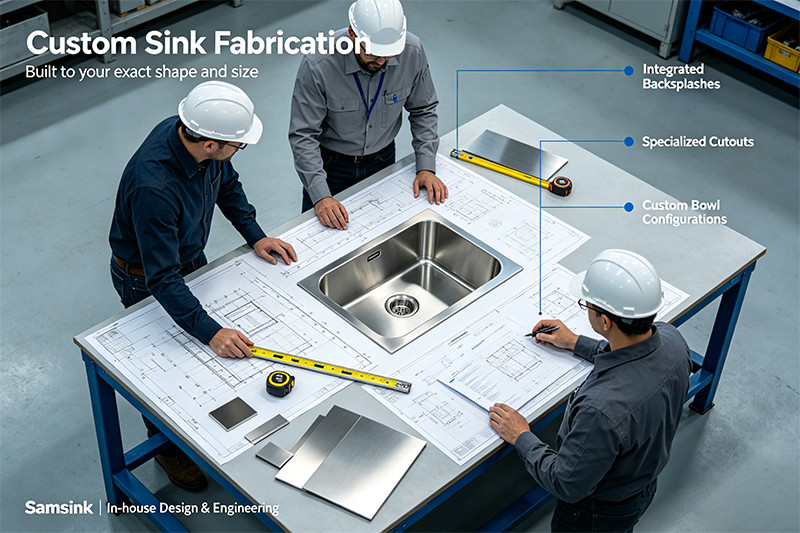
Exploring Customization: Not all commercial spaces can be accommodated by off-the-shelf products. You might need a sink of a specific dimension, with an integrated drainboard on a particular side, or with unique faucet placements.
- Ask suppliers directly about their custom fabrication capabilities. Can they build a sink to your exact shape and size?
- Inquire about custom features like integrated backsplashes, specialized cutouts, or unique bowl configurations.
- Companies with in-house design and engineering teams, such as Samsink, are well-equipped to handle these requests and can work with you to create a sink that perfectly fits your space and workflow.
Coordinating Delivery, Installation, and Post-Purchase Checks
The final phase of the buying process is managing the logistics to get your new sink operational. Careful coordination is key to a smooth and successful installation.
Delivery Logistics:
- Schedule in Advance: Coordinate a delivery time that minimizes disruption to your operations.
- Inspect Upon Arrival: Before signing for the delivery, thoroughly inspect the sink for any shipping damage. Check for dents, scratches, or bent frames. If you find any issues, document them immediately and contact the supplier.
- Prepare the Site: Ensure the path to the installation site is clear and that someone is available to receive the shipment. Some large sinks may require a liftgate or forklift, so confirm these requirements beforehand.
Installation:
- Hire a Professional: While some aspects may seem straightforward, commercial sink installation is best left to a qualified plumber. They will ensure that the sink is installed securely, leveled properly, and connected in compliance with all local plumbing and health codes.
- Confirm Utility Requirements: Before the installer arrives, double-check that your electrical, gas (if applicable), and water lines match the sink's requirements.
Post-Purchase Checks:
- Once installed, conduct a thorough check of the sink and its components. This is a critical step to ensure everything is working correctly before you begin regular use.
- Leak Test: Fill each basin and check all plumbing connections—drains, faucets, and supply lines—for any drips or leaks.
- Functionality Test: Test all faucets, sprayers, and hands-free sensors to ensure they operate as expected. Check that water temperatures are correct.
- Final Inspection: Verify that the sink is stable, level, and that all accessories are securely attached. Make sure all protective plastic films have been removed from the stainless steel surfaces.
By managing these final steps diligently, you complete the purchasing cycle and set the stage for years of reliable service from your new commercial sink.
Frequently Asked Questions (FAQs)
1. What is the most important certification for a commercial kitchen sink? For food service environments, NSF/ANSI 2 certification is the most critical. It ensures the sink meets strict public health standards for material safety, hygienic design, and cleanability, which is a key requirement for most health departments.
2. How do I decide between a 16-gauge and an 18-gauge stainless steel sink? Choose a 16-gauge sink for high-volume, heavy-duty environments. It is thicker, more durable, and more resistant to dents and noise. An 18-gauge sink is a good, cost-effective option for lighter-duty applications where the sink will not be subjected to constant heavy impacts.
3. Why are coved corners important in a commercial sink? Coved corners are rounded instead of sharp 90-degree angles. This design eliminates tight crevices where food particles, grease, and bacteria can accumulate, making the sink significantly easier to clean and sanitize.
4. Can I use bleach to clean my stainless steel sink? While a diluted bleach solution can be used for sanitizing, it should not be left on the surface for extended periods, as chlorides can damage stainless steel. Always rinse the sink thoroughly with clean water immediately after using any cleaner containing bleach.
5. How much should I budget for installation? Installation costs vary widely based on complexity, but as a rough guide, a straightforward commercial sink installation can range from $400 to over $2,000. It is essential to get a detailed quote from a professional plumber that includes all potential modifications and parts.
Conclusion
By considering your specific operational needs, understanding the available features, and prioritizing compliance, you are now well-equipped to select the ideal commercial stainless steel sinks. This investment is about more than just a piece of equipment; it's about creating a foundation for a safe, efficient, and compliant workspace. Whether you're outfitting a new restaurant, upgrading a healthcare facility, or enhancing an industrial workshop, making an informed choice will pay dividends in the long run.
Remember, the right choice in commercial stainless steel sinks is an investment in hygiene, efficiency, and the long-term success of your business operations. A high-quality, durable sink from a trusted provider like Samsink will serve as a reliable workhorse, supporting your team and protecting your customers for years to come.
I am confident that this guide has provided you with the comprehensive insights needed to make your next B2B purchase with complete assurance. If you have further questions or are ready to explore customized solutions, our team at Samsink is here to help.