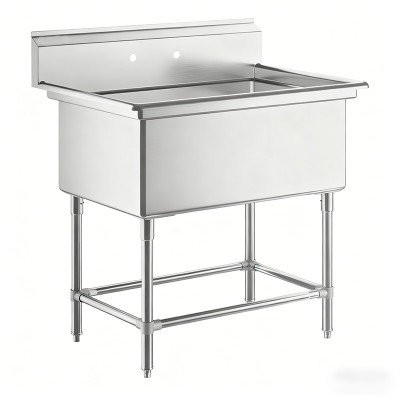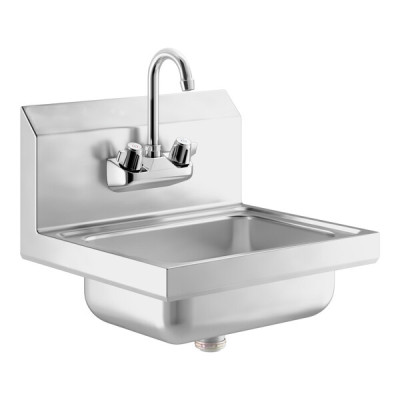
The Ultimate Buyer's Guide to Stainless Steel Sink Benches
As someone navigating the fast-paced world of commercial kitchens, I know that choosing the right equipment is key to efficiency, hygiene, and long-term success. A stainless steel sink bench isn't just another piece of metal; it's the operational backbone of your daily workflow, a hub for cleaning, prep, and sanitation that can either streamline your process or create constant bottlenecks. In this environment, every decision impacts your bottom line, and the sink bench is one of the most fundamental choices you'll make.
This guide is designed to walk you through everything I've learned about selecting the perfect stainless steel sink bench, drawing from years of experience in high-demand culinary settings. We'll move beyond the surface to explore the critical details—from understanding different materials and grades to optimizing a design for your unique workspace and ensuring it meets all vital health and safety standards. My goal is to equip you with the knowledge to see this not as a mere purchase, but as a long-term investment in your kitchen's future.
Let's dive into how you can make an informed decision that will empower your team, elevate your hygiene protocols, and serve your business reliably for years to come.
Key Takeaways
| Aspect | Key Insight | Why It Matters |
|---|---|---|
| Material Choice | Prioritize 304-grade stainless steel for most applications. For coastal or high-chemical environments, upgrade to 316-grade for its superior corrosion resistance due to the addition of molybdenum. | The right grade prevents rust, pitting, and degradation, ensuring a long lifespan and safe, hygienic surfaces for food contact. It's the foundation of a durable investment. |
| Durability Factors | Look for a lower gauge (16-gauge is ideal, 18-gauge is acceptable). A lower gauge number means thicker, more durable steel that resists dents, warping, and vibrations from heavy use and disposal units. | Thicker steel provides stability for heavy pots, reduces noise, and withstands the physical abuse of a busy commercial kitchen, preventing costly replacements and repairs. |
| Design & Workflow | Customize the configuration to your specific needs. This includes the number of bowls, the size and placement of drainboards, the height of splashbacks, and the inclusion of under-shelving or cabinets for storage. | A well-designed sink bench reduces staff movement, minimizes clutter, and creates an ergonomic workspace. It directly translates to increased efficiency and a safer kitchen environment. |
| Hygiene & Cleaning | Insist on coved corners and a seamless, welded construction. Rounded, or coved, corners inside the sink bowl and where the splashback meets the bench are critical for preventing bacteria buildup. | Easy-to-clean design is non-negotiable for health code compliance and food safety. Seamless surfaces eliminate crevices where food particles and germs can hide, simplifying sanitation. |
| Essential Features | A splashback is non-negotiable; integrated drainboards are highly recommended. Splashbacks protect walls from water damage and contamination, while drainboards provide essential space for air-drying dishes and prepping food. | These features are not luxuries but necessities for maintaining a clean, organized, and compliant kitchen. They protect your infrastructure and support efficient operational flow. |
| Compliance | Ensure the sink bench is NSF certified. The NSF (National Sanitation Foundation) certification is the gold standard, confirming the unit is designed and constructed for safe use in commercial food service. | NSF certification provides peace of mind that your equipment meets stringent public health standards. It is often a requirement for passing health inspections. |
| Smart Investment | Avoid the cheapest option. Extremely low-priced sink benches often cut corners by using thinner steel (higher gauge), inferior grades (like 430), or tack-welded seams, leading to premature failure. | Investing in a quality unit from a reputable brand like Samsink may have a higher upfront cost but delivers a significantly lower total cost of ownership through durability, longevity, and reduced maintenance. |
Understanding Your Stainless Steel Sink Bench: Materials, Grades, and Core Benefits
Why Stainless Steel Is the Gold Standard for Commercial Sink Benches
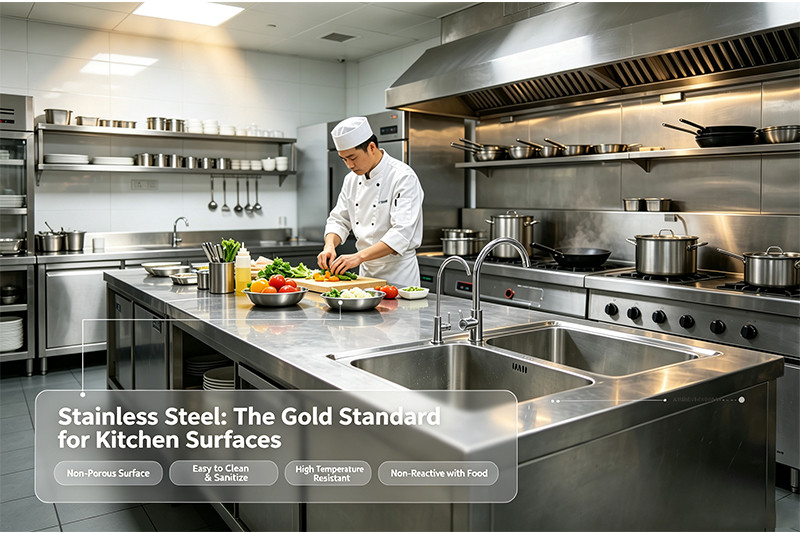
Step into any professional kitchen, and you'll be greeted by the unmistakable gleam of stainless steel. This material isn't just a design choice; it's the undisputed champion for commercial food environments, and for a multitude of scientific and practical reasons. From prep tables to the very sink benches that are the focus of this guide, stainless steel rules the culinary world. Its dominance comes down to a unique combination of hygiene, durability, and performance that no other material can consistently match.
The primary reason for its widespread use lies in its hygienic properties. Stainless steel features a non-porous surface, which means it resists the absorption of bacteria, liquids, and food particles. Unlike porous materials like wood or certain plastics, there are no microscopic crevices for germs and mold to hide and multiply. This smooth surface makes it incredibly easy to clean and sanitize, a critical factor in any environment where health codes are strict and food safety is paramount. In fact, stainless steel can withstand aggressive cleaning agents and high-temperature steam or water disinfection without degrading, ensuring you can maintain the highest level of cleanliness day after day.
Beyond hygiene, its durability is legendary. Commercial kitchens are demanding, high-impact environments. Equipment must endure constant use, heavy pots and pans, exposure to moisture, and fluctuations in temperature. Stainless steel is exceptionally resistant to corrosion, rust, and staining, making it ideal for the wet and humid conditions of a sink area. This resistance is thanks to its alloy composition, primarily the inclusion of chromium, which forms a passive, self-repairing oxide layer on the surface that protects the iron from rust. This means your investment won't just look good on day one, but will maintain its structural integrity and appearance for years of heavy service.
Finally, stainless steel boasts excellent resistance to both extreme temperatures and chemical reactions. It is non-combustible, adding a layer of fire safety to the kitchen. It also won't react with acidic foods like tomatoes or citrus, ensuring that it doesn't leach any unwanted flavors or harmful substances into the food being prepped. This combination of an inert surface, robust strength, and unparalleled cleanability firmly establishes stainless steel as the gold standard for sink benches and all critical food contact surfaces.
Deciphering Stainless Steel Grades: 304 vs. 316
While "stainless steel" is the correct category of material, not all stainless steel is created equal. When you look at specifications for a sink bench, you'll encounter different "grades," with 304 and 316 being the most common in commercial kitchen equipment. Understanding the difference is crucial to selecting a bench that will stand up to your specific operational environment.
Grade 304: The Industry Standard Grade 304 stainless steel is the workhorse of the food service industry and the most widely used grade for kitchen sinks, tables, and equipment. It is often referred to as "18/8" stainless steel because its chemical composition typically includes 18% chromium and 8% nickel.
- Chromium is the key to corrosion resistance, forming that protective passive layer.
- Nickel enhances the steel's formability, weldability, and provides additional toughness.
For the vast majority of commercial kitchens, 304-grade offers the perfect balance of durability, corrosion resistance, and cost-effectiveness. It easily handles daily exposure to water, food acids (like citrus and vinegar), and standard cleaning agents without rusting or degrading.
Grade 316: The Enhanced Option for Harsh Environments Grade 316 is a premium grade of stainless steel that takes the benefits of 304 and enhances them for more extreme conditions. The key difference in its composition is the addition of 2-3% molybdenum. This element significantly increases its resistance to corrosion, particularly from chlorides (like salt) and harsh industrial chemicals.
This makes 316-grade steel, often called "marine-grade," the ideal choice in specific scenarios:
- Coastal Locations: Kitchens near the ocean where salt is present in the air.
- High-Saline Operations: Facilities that frequently work with brines, cured meats, or de-icing salts.
- Heavy Chemical Use: Environments that rely on aggressive sanitizers or chloride-based cleaning agents.
While 316-grade offers superior protection, this enhanced performance comes at a higher cost, typically 20-40% more than its 304 counterpart due to the added molybdenum and higher nickel content.
| Feature | Grade 304 Stainless Steel | Grade 316 Stainless Steel |
|---|---|---|
| Primary Composition | ~18% Chromium, ~8% Nickel | ~16% Chromium, ~10% Nickel, ~2% Molybdenum |
| Corrosion Resistance | Excellent for general use, food acids, and most chemicals. | Superior, especially against chlorides, salts, and harsh industrial solvents. |
| Best For | Standard commercial kitchens, restaurants, cafes, and food processing. | Coastal/marine environments, labs, pharmaceutical applications, and high-salinity food prep. |
| Cost | More affordable; the industry standard. | Higher initial investment due to added molybdenum. |
For most businesses, a well-constructed sink bench made from high-quality 304-grade stainless steel, like those offered by Samsink, is a robust and reliable choice. However, if your operation falls into one of the specialized categories above, investing in 316-grade is a wise decision that will prevent pitting and premature degradation, ensuring a longer service life.
Beyond Grade: Thickness, Finish, and Overall Durability
While stainless steel grade is a fundamental indicator of quality, it's not the only factor that determines a sink bench's longevity and performance. Two other critical aspects to consider are the steel's thickness (gauge) and its surface finish. These elements directly impact the bench's resistance to damage, ease of maintenance, and overall durability in a demanding commercial setting.
Understanding Stainless Steel Gauge The thickness of the stainless steel sheet used to construct a sink is measured by its gauge. It's important to remember this simple rule: the lower the gauge number, the thicker and more durable the steel. For commercial kitchens, choosing the right gauge is essential for withstanding the daily abuse of heavy pots, pans, and constant activity.
- 16-Gauge (approx. 1.59mm thick): This is widely considered the gold standard for heavy-duty commercial use. A 16-gauge sink bench is highly resistant to dents, bowing, and vibration from garbage disposals. Its thickness provides superior strength and noise-dampening qualities, making it a wise investment for high-volume kitchens.
- 18-Gauge (approx. 1.27mm thick): This is a viable and more budget-friendly option suitable for light to medium-duty applications. While still durable, it is slightly more susceptible to denting and noise than its 16-gauge counterpart. An 18-gauge sink can be a good choice for smaller cafes or kitchens with less intensive use.
- 20-Gauge and Higher (thinner): Sinks with gauges of 20 or 22 are generally too thin for commercial use. They are prone to denting, excessive noise, and may not withstand the rigors of a professional environment. These are typically reserved for residential applications.
Choosing the Right Surface Finish The finish of the stainless steel affects not only its appearance but also its practicality in terms of cleaning and hiding wear and tear. The most common finishes you will encounter are:
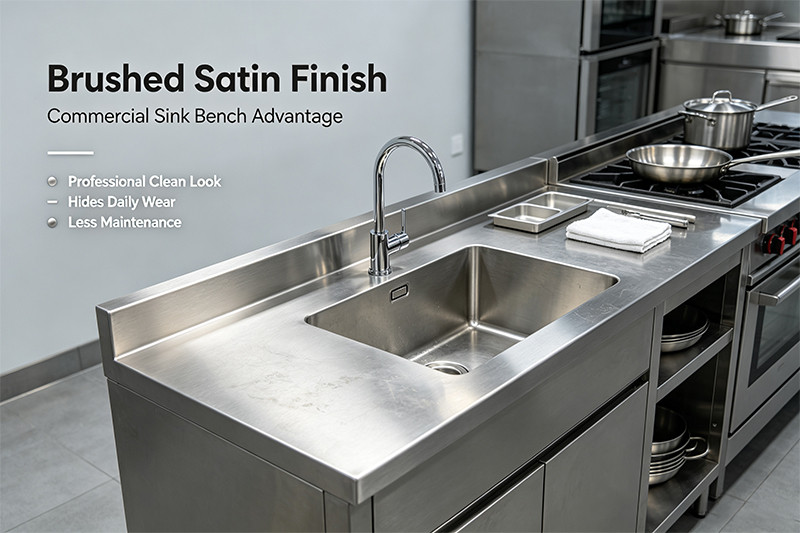
- Brushed Finish (or Satin Finish): This is the most popular choice for commercial kitchens, and for good reason. A brushed finish is created by abrading the surface with a fine-bristle brush, which creates a pattern of very fine, uniform lines. Its key advantage is that its textured, non-reflective surface is excellent at hiding minor scratches, fingerprints, and water spots. This makes it easier to maintain a clean and professional appearance in a busy setting.
- Polished or Mirror Finish: This finish is buffed to a highly reflective, smooth surface. While it offers a striking, bright appearance, it is far less practical for a working sink bench. A mirror finish shows every fingerprint, smudge, and scratch, requiring constant wiping to look presentable. This makes it unsuitable for high-traffic work areas.
For a commercial sink bench, a brushed satin finish is the clear winner. It combines a professional, clean aesthetic with the practical benefit of camouflaging the inevitable signs of daily use, ensuring your investment looks better for longer with less maintenance.
Contrasting with Other Materials: Why Stainless Steel Wins
While stainless steel is the industry benchmark for commercial sink benches, other materials are available for sinks and countertops. However, for a high-volume, professional kitchen environment, these alternatives almost always fall short in critical areas like hygiene, durability, and long-term value. Let's compare stainless steel to other common materials to understand why it remains the superior choice.
Stainless Steel vs. Porcelain / Ceramic Porcelain and ceramic sinks offer a classic, glossy look and are popular in residential settings. In a commercial kitchen, however, their weaknesses become apparent.
- Durability: These materials are brittle. A dropped heavy pot or pan can easily cause chipping, cracking, or shattering—damage that is difficult and costly to repair. Stainless steel, on the other hand, is resilient and will dent rather than crack or chip under heavy impact.
- Hygiene: Once the glazed surface of a porcelain or ceramic sink is chipped or scratched, the porous underlying material is exposed. This creates a breeding ground for bacteria and makes proper sanitation nearly impossible. Stainless steel's surface is non-porous and remains so even with surface scratches.
- Staining: White porcelain is particularly prone to staining from food items and can become dull and dingy over time.
Stainless Steel vs. Composite (Granite / Quartz) Composite sinks, made from a mixture of crushed stone and resin, are known for being scratch-resistant and are available in various colors. While they perform well in many homes, they pose challenges in a commercial context.
- Heat Resistance: While many composites are heat resistant to a degree, sudden extreme temperature changes (a scorching hot pan followed by cold water) can cause thermal shock, leading to cracks. Stainless steel handles extreme temperatures without issue.
- Impact Resistance: Although hard, composite sinks can crack or chip under a sufficiently forceful impact, especially at the corners and edges. Stainless steel is far less likely to suffer from this type of structural failure.
- Cost and Maintenance: Composite sinks are generally more expensive than their stainless steel counterparts. While resistant to scratches, any deep scratches that do occur are much harder to repair than those on a stainless steel surface, which can often be buffed out.
Stainless Steel vs. Enameled Cast Iron Cast iron sinks are incredibly heavy and durable, with a thick enamel coating providing a smooth surface. This classic material has significant drawbacks in a fast-paced kitchen.
- Maintenance & Corrosion: Cast iron itself is highly susceptible to rust. The enamel coating is the only line of defense. If this coating chips or wears away, the iron beneath will quickly begin to corrode when exposed to moisture. Stainless steel requires no such protective coating.
- Weight: Cast iron sinks are extremely heavy, requiring specialized installation and robust cabinetry for support, which adds to the overall cost and complexity.
- Enamel Durability: Like porcelain, the enamel coating can be chipped by heavy impacts, exposing the iron and creating a hygiene and rust issue.
| Material | Durability | Hygiene | Heat Resistance | Maintenance | Best For |
|---|---|---|---|---|---|
| Stainless Steel | Excellent (dents, no chips) | Excellent (non-porous) | Excellent | Low | Commercial Kitchens |
| Porcelain/Ceramic | Poor (prone to chipping/cracking) | Poor (if chipped) | Good | High (stains/scratches) | Residential Bathrooms |
| Composite | Good (can crack from impact) | Good (non-porous) | Good (risk of thermal shock) | Medium | Style-focused Kitchens |
| Cast Iron | Good (enamel can chip) | Poor (if chipped) | Excellent | High (rust potential) | Traditional Kitchens |
Ultimately, stainless steel's unique combination of strength, superior hygiene, heat resilience, and low maintenance makes it the only material truly built to withstand the rigorous demands of a commercial kitchen. It provides the most reliable, safe, and cost-effective long-term solution.
Designing Your Stainless Steel Sink Bench for Optimal Workflow and Space
Crucial Considerations for Sink Size and Depth
Choosing the dimensions of your sink bowl isn't just about what fits in the space; it's a critical decision that directly impacts workflow efficiency, staff ergonomics, and your ability to handle the daily demands of a commercial kitchen. An incorrectly sized sink can create constant frustration and bottlenecks, while a well-proportioned one can streamline your entire cleaning and prep process.
Bowl Depth: Finding the Sweet Spot The depth of the sink bowl is arguably one of its most important features. It needs to be deep enough to accommodate your largest pots, pans, and cooking sheets, but not so deep that it causes discomfort for your staff.
- Standard Commercial Depth (12 to 14 inches): This is the most common and versatile depth range for commercial sinks. A 12- to 14-inch deep bowl is generally sufficient to fully submerge large stockpots and sheet pans, which is essential for effective soaking and washing. This depth also helps significantly in containing splashes, keeping the surrounding floor and workspaces drier and safer.
- Shallower Bowls (10 inches): These are less common for main warewashing stations but can be suitable for specific tasks like handwashing or light food prep where large items are not involved.
- Deeper Bowls (16 inches or more): While the ability to contain massive amounts of water and dishes might seem appealing, extremely deep bowls can lead to ergonomic problems. Staff may have to lean over excessively to reach the bottom of the sink, leading to back strain and discomfort over a long shift.
Before deciding, take inventory of your largest and most frequently used cookware. Ensure your chosen sink depth can comfortably accommodate them without forcing your team into awkward, strenuous positions.
Bowl Width and Length: Sizing for Volume and Use The horizontal dimensions (width and length) of the sink bowl determine how many items you can wash at once and how easily you can maneuver them.
- Width (Front to Back): A standard front-to-back width for a commercial sink is often around 20 to 24 inches. This provides ample room to handle large-diameter pots and pans without them hitting the front or back of the bowl.
- Length (Side to Side): The length will vary greatly depending on the number of compartments. A common and useful size for a single bowl in a three-compartment setup is around 16 to 24 inches. This size provides a good balance, allowing plenty of space to scrub and handle items efficiently.
When planning your sink bench layout, remember that bigger isn't always better. A sink that is excessively large for your needs can waste valuable kitchen space and increase water consumption. The goal is to match the sink's dimensions to your operational volume and the specific items you'll be washing every day.
Exploring Different Sink Bench Types and Configurations
Stainless steel sink benches are not one-size-fits-all. They come in a variety of configurations designed to suit different tasks, kitchen layouts, and compliance requirements. Choosing the right type is essential for creating a logical and efficient workflow.
Single Bowl Sink Benches A sink bench with a single bowl is the simplest configuration. It's typically used for specific, dedicated tasks to avoid cross-contamination.
- Best Use Cases:
- Handwashing Stations: A small, dedicated single-bowl sink is often required by health codes to be exclusively for handwashing.
- Food Preparation: A separate prep sink is used for washing vegetables, thawing meats, or other direct food-related tasks.
- Utility/Disposal: Can be used alongside a garbage disposal unit for waste management.
- Limitation: A single bowl sink does not meet the requirements for manual warewashing in most commercial kitchens.
Double Bowl Sink Benches With two sink compartments, this configuration offers more versatility. It allows for a separation of tasks, such as washing and rinsing.
- Best Use Cases:
- Prep Stations: One bowl for washing produce and another for rinsing or holding.
- Small Cafes or Bars: In some jurisdictions, a two-bowl sink may be permissible for warewashing in low-volume establishments, but this should always be verified with the local health department.
- Pot Soaking and Rinsing: One bowl can be used for soaking tough-to-clean items while the other remains free for other tasks.
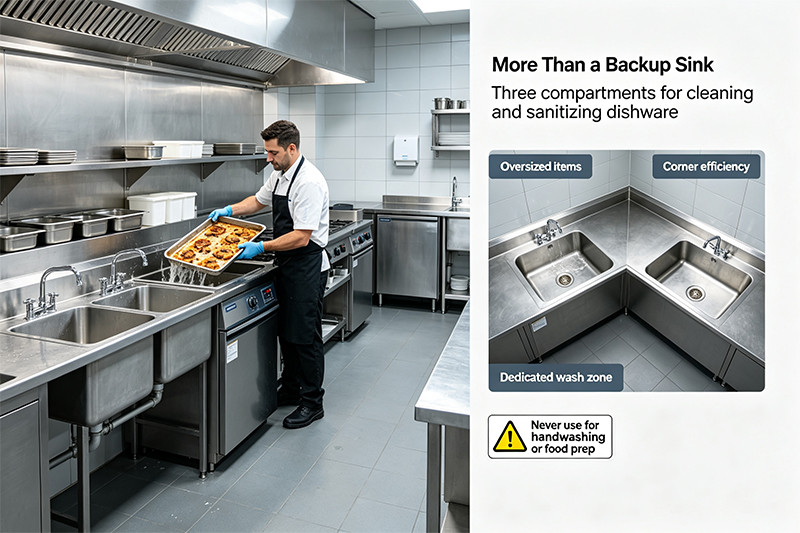
Three-Compartment Sink Benches: The Industry Standard The three-compartment sink is the cornerstone of manual dishwashing in virtually every commercial kitchen. Its design is mandated by the FDA Food Code and local health departments for the essential three-step cleaning process:
- Wash: The first compartment is filled with hot, soapy water (at least 110°F) for scrubbing and removing food debris.
- Rinse: The second compartment is filled with clean water to rinse off all soap residue.
- Sanitize: The third compartment holds either a chemical sanitizing solution or hot water (at least 171°F) to kill remaining bacteria. Items must be submerged for a specified time (e.g., 30 seconds).
Even kitchens with a commercial dishwasher are often required to have a three-compartment sink as a backup and for washing oversized items that don't fit in the machine. It is strictly designated for cleaning and sanitizing dishware and should never be used for handwashing or food prep.
Corner Sink Benches For kitchens with challenging layouts or limited linear wall space, a corner sink bench can be an ingenious solution. These are typically L-shaped units that fit neatly into a corner, transforming an often-underutilized area into a fully functional washing station. They are available in various configurations, including three-compartment models, effectively maximizing every square foot of your kitchen.
Essential Features for a Functional Stainless Steel Sink Bench (Drainboards, Splashbacks, Storage)
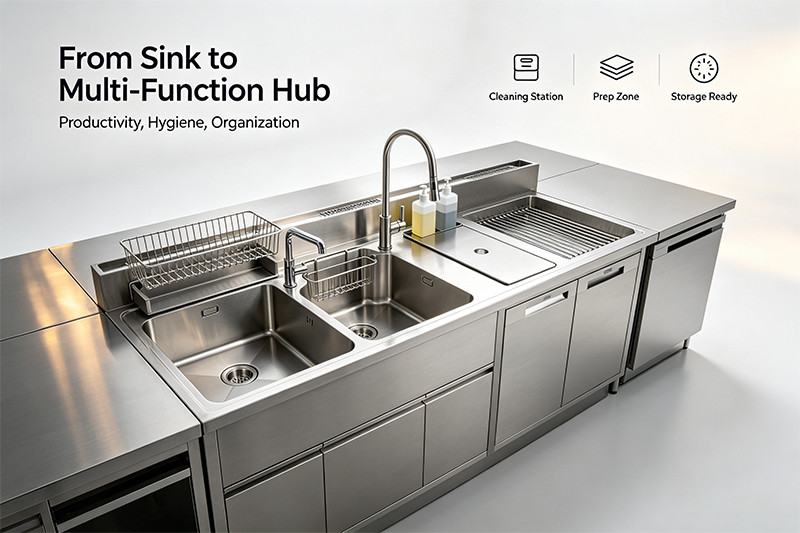
A great stainless steel sink bench is more than just a basin to hold water; it's a fully integrated workstation. The most effective designs incorporate key features that enhance workflow, improve hygiene, and maximize the utility of your kitchen space. When selecting your sink bench, these are the non-negotiable features to look for.
Drainboards: The Unsung Hero of Warewashing Integrated drainboards are essential for an efficient cleaning process. They are the grooved, sloped surfaces attached to one or both sides of the sink bowls. Their function is twofold:
- Staging Area for Dirty Items: A "dirty" drainboard serves as the landing zone for soiled dishes arriving at the wash station. This keeps contaminated items off other prep surfaces and organizes them for entry into the wash-rinse-sanitize sequence.
- Drying Area for Clean Items: A "clean" drainboard on the other side of the sink is where sanitized items are placed to air dry, as required by health codes. The grooved design allows water to drain back into the sink, preventing pooling and promoting faster, more hygienic drying.
A well-designed workflow moves in one direction: from the dirty drainboard, through the three sink compartments, and onto the clean drainboard. This linear process is crucial for preventing re-contamination and maintaining an efficient pace.
Splashbacks: Protecting Your Walls and Maintaining Hygiene A splashback (or backsplash) is the raised vertical panel at the back of the sink bench. This is not an optional aesthetic feature; it's a critical component for any commercial kitchen.
- Wall Protection: It acts as a barrier, preventing water, food debris, grease, and cleaning chemicals from splashing onto the wall. This protects the wall from moisture damage, mold growth, and staining, saving you from costly long-term maintenance.
- Hygiene: By creating a continuous, easy-to-clean surface, a splashback eliminates the hard-to-reach gap between the bench and the wall where bacteria and grime can accumulate. A seamless transition from the bench to the splashback is vital for sanitation.
- Compliance: Health inspectors look for splashbacks as an indicator of a properly designed, hygienic workspace. A standard height of 100-150mm is common and effective for most applications.
Undershelves and Storage: Maximizing Vertical Space The space beneath your sink bench is valuable real estate. A functional design will incorporate storage to keep the kitchen organized and essential items within reach.
- Solid Undershelves: A solid stainless steel shelf installed below the sink bench provides a sturdy, easy-to-clean surface for storing heavy items like pots, pans, or bulk containers of cleaning supplies.
- Slatted or Pipe Undershelves: These offer improved air circulation, which can be beneficial for drying or storing items that need ventilation. They are also lighter and can make cleaning the floor beneath easier.
- Cabinet Bases: For a more enclosed solution, some sink benches come with a cabinet base featuring hinged or sliding doors. This is ideal for neatly storing cleaning chemicals or other items you want to keep out of sight, protecting them from dust and splashes.
By prioritizing these essential features, you transform a simple sink into a comprehensive, multi-functional hub that enhances productivity, hygiene, and organization throughout your kitchen. A quality brand like Samsink will offer these features as standard or as easily configurable options.
Mobility versus Stability: Fixed or Mobile Sink Benches
When selecting a stainless steel sink bench, one of the fundamental design choices is whether to opt for a fixed, stationary unit or a mobile one on castors. This decision pits the immovable reliability of a permanent installation against the flexible convenience of a portable station. The right choice depends entirely on your kitchen's layout, workflow, and specific operational needs.
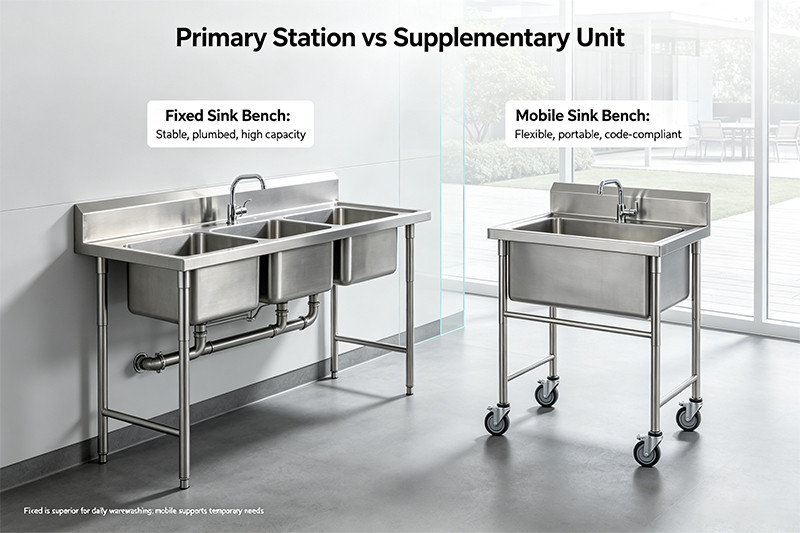
Fixed Sink Benches: The Anchor of Your Kitchen Fixed, or stationary, sink benches are the traditional and most common choice for commercial kitchens. These units are typically freestanding on adjustable bullet feet or, in some cases, wall-mounted.
Pros:
- Maximum Stability: Once installed and leveled, a fixed sink bench is incredibly stable. It won't shift or wobble, providing a rock-solid foundation for heavy-duty tasks like washing large, heavy pots or operating a powerful garbage disposal. This stability is crucial for both safety and the longevity of the equipment.
- Permanent Plumbing: Fixed benches are directly connected to the building's water supply and drainage systems. This ensures a consistent, high-pressure water flow and reliable drainage without the need to manage water tanks.
- Higher Load Capacity: Because they are designed to be stationary, fixed benches often have a higher weight capacity, easily supporting heavy equipment and large volumes of dishes without strain.
Cons:
- Inflexibility: The primary drawback is a complete lack of mobility. Once installed, the sink bench cannot be moved without significant plumbing work. This can be a disadvantage if you anticipate reconfiguring your kitchen layout in the future.
Mobile Sink Benches: Flexibility on Wheels Mobile sink benches, also known as portable sinks, are self-contained units mounted on heavy-duty, lockable castors. They often include their own fresh and wastewater tanks and an electric pump and heater to provide running hot and cold water.
Pros:
- Unmatched Flexibility: The ability to move the sink wherever it's needed is a game-changer for certain operations. They are perfect for outdoor events, food trucks, pop-up restaurants, and catering services.
- Adaptable Layouts: In a kitchen, a mobile sink can be wheeled into position to create a temporary prep or handwashing station during peak hours and then moved out of the way to free up space.
- No Plumbing Required: Self-contained units eliminate the high cost and downtime associated with traditional plumbing installations, allowing for instant setup.
Cons:
- Limited Capacity: Mobile sinks rely on tanks, limiting the amount of water available before a refill of the freshwater tank and emptying of the wastewater tank is required. This makes them unsuitable for high-volume, continuous warewashing.
- Reduced Stability: While locking castors provide stability, a mobile unit will never be as completely steadfast as a fixed bench. They may not be suitable for extremely heavy-duty tasks or powerful, vibration-prone equipment.
- Power Requirement: Units with heaters and pumps require an electrical outlet, which can limit placement.
The Verdict: For the primary warewashing station in most commercial kitchens, a fixed sink bench is the superior choice. Its stability and direct plumbing connection are essential for handling the high volume and heavy demands of daily service.
A mobile sink bench is an excellent supplementary piece of equipment, ideal for businesses that require flexibility, operate in multiple locations, or need to augment their existing setup to meet health code requirements for temporary service areas (e.g., an outdoor patio).
Ensuring Hygiene, Durability, and Compliance for Your Stainless Steel Sink Bench
Key Elements for Impeccable Hygiene and Easy Cleaning
In a commercial kitchen, hygiene isn't just a goal; it's a legal and ethical requirement. The design of your stainless steel sink bench plays a direct and crucial role in your ability to maintain a sanitary environment. Certain construction elements are specifically engineered to eliminate bacteria-harboring zones and make daily cleaning faster and more effective.
The Importance of Coved Corners One of the most critical design features for hygiene is the use of coved corners. This refers to the rounded, curved transition where the flat surfaces of the sink meet. Instead of a sharp, 90-degree angle, a coved corner provides a smooth radius.
- Inside the Sink Bowls: Sharp corners inside a sink are notoriously difficult to clean. Food particles, grease, and other debris inevitably get trapped, creating a perfect breeding ground for bacteria. A coved corner eliminates this trap, allowing a sponge or brush to glide smoothly over the entire surface, ensuring no residue is left behind.
- Where the Bench Meets the Splashback: Similarly, the transition from the horizontal benchtop to the vertical splashback should also be coved. This prevents a grime-collecting seam at the back of the unit.
Insisting on a sink bench with coved corners is a non-negotiable for food safety. It is a key detail that health inspectors look for, as it demonstrates a commitment to hygienic design.
Seamless Construction for a Flawless Surface The overall construction of the sink bench should be as seamless as possible. High-quality sink benches, like those from Samsink, feature fully welded construction.
- Welded Seams vs. Mechanical Fasteners: Welded seams create a single, continuous piece of metal. This is far superior to units held together by screws or caulk, as those methods create crevices and gaps that trap moisture and food matter. Over time, caulk can degrade and pull away, creating more hygiene risks. Welded and polished seams leave no place for bacteria to hide.
- Integrated vs. Drop-In Sinks: While less common in freestanding benches, the principle of seamless design is why undermount sinks are favored in countertop installations. They eliminate the raised lip of a top-mount or drop-in sink, which is another notorious grime-trapper. For a freestanding sink bench, look for models where the bowls are seamlessly integrated into the benchtop.
Daily and Weekly Cleaning Best Practices Even the best-designed sink requires proper care. Follow a strict cleaning protocol:
- Daily Cleaning: At the end of each day, rinse the sink thoroughly to remove all food debris. Wash with warm water and a mild, chloride-free detergent using a soft cloth or sponge, always wiping in the direction of the steel's grain. Rinse again and dry completely with a microfiber cloth to prevent water spots and mineral deposits.
- Weekly deep cleaning: Use a designated stainless steel cleaner or a paste of baking soda and water to gently scrub the surface. For sanitizing, an alcohol-based or hydrogen peroxide solution is safe and effective. Never use chlorine bleach or abrasive scrubbers like steel wool, as they can damage the protective layer of the stainless steel and lead to corrosion.
Seamless Integration with Dishwashers and Plumbing
A stainless steel sink bench does not operate in isolation; it is a central hub that must integrate flawlessly with your kitchen's plumbing and other warewashing equipment, most notably your commercial dishwasher. Proper installation is not a DIY task—it requires a licensed plumber to ensure everything is up to code, functions efficiently, and prevents serious issues like cross-contamination and drainage failures.
Connecting to a Commercial Dishwasher In many kitchens, the sink area and dishwasher work in tandem. The typical workflow involves scraping and pre-rinsing dishes at the sink before loading them into the dishwasher for the final wash and high-temperature sanitization.
- Drainage Coordination: The plumbing for the sink and dishwasher must be coordinated. A common setup involves the dishwasher's drain hose connecting to the sink's plumbing or a dedicated floor sink. A crucial element here is a high loop in the dishwasher's drain line or an air gap device. This prevents dirty water from the sink from backflowing into the clean dishwasher, a critical measure for preventing contamination.
- Water Supply: Commercial dishwashers often require a dedicated hot water connection to operate efficiently. This needs to be planned alongside the sink's faucet connections to ensure adequate water pressure and temperature for both systems, especially during peak use.
Essential Plumbing for the Sink Bench Itself The plumbing for a commercial sink is far more robust than a residential setup and is governed by strict local health and plumbing codes.
- Individual Traps and Venting: Each sink compartment in a multi-bowl setup must have its own P-trap. The P-trap holds water to create a seal that blocks sewer gases from entering the kitchen. The entire system must also be properly vented to equalize air pressure, allowing water to drain quickly and smoothly. Without proper venting, drains will be slow and noisy.
- Grease Traps (Interceptors): Nearly all commercial kitchens are required by law to have a grease trap or a larger, external grease interceptor. This device is installed in the drain line to capture fats, oils, and grease (FOG) before they enter the public sewer system. FOG can solidify in pipes, causing severe blockages. The sink bench, dishwasher, and any other fixtures producing greasy waste must be plumbed to flow through the grease trap.
- Indirect Drains and Air Gaps: To prevent any possibility of contaminated water from the drain system backing up into a clean sink bowl, health codes often require an indirect drain connection. This means there is a physical air gap between the sink's drain outlet and the floor drain or funnel it empties into. An inspector will always look for this air gap as a key food safety measure.
Given the complexity and the legal requirements, always rely on a professional plumber for installation. Incorrect plumbing can lead to failed health inspections, operational shutdowns, and costly repairs.
Navigating Industry Standards and Certifications (NSF, Local Codes)
Purchasing a stainless steel sink bench for a commercial kitchen isn't just about finding the right size and material; it's about ensuring the equipment is compliant with public health and safety regulations. Navigating these standards is essential for passing health inspections, avoiding fines, and, most importantly, running a safe and hygienic operation. Two key areas of compliance are NSF certification and local health and plumbing codes.
NSF Certification: The Gold Standard for Food Equipment The NSF (National Sanitation Foundation) mark is the most recognized and trusted third-party certification for commercial foodservice equipment. When you see the NSF seal on a sink bench, it signifies that the product has been rigorously tested and verified to meet strict standards for public health and safety.
What does NSF certification guarantee for a sink bench?
- Material Safety: The stainless steel and all other components are non-toxic and won't leach harmful chemicals into food or water.
- Hygienic Design: The sink is designed to be easily and thoroughly cleaned. This includes key features like coved corners with a smooth radius to prevent bacteria from getting trapped and a tapered bottom that ensures proper drainage.
- Durable Construction: The product is built to withstand the demands of a commercial environment, including resistance to corrosion and impact.
Health inspectors across the country recognize and often require NSF-certified equipment. Choosing a sink from a reputable manufacturer like Samsink, which provides NSF-certified products, is a clear signal that you are committed to food safety. It simplifies the inspection process and provides peace of mind that your equipment is designed with hygiene as a top priority.
Adhering to Local Health and Plumbing Codes While NSF sets a national standard, your local and state health departments have the final say on what is required in your specific jurisdiction. These codes govern everything from the number and placement of sinks to the specifics of plumbing installation.
Common requirements dictated by local codes include:
- Mandatory Sink Types: Health codes will specify the need for separate, dedicated sinks for different tasks. This almost always includes a three-compartment sink for warewashing, a dedicated handwashing sink in all prep areas, and often a separate food prep sink to prevent cross-contamination.
- Water Temperature: Regulations will mandate the minimum water temperature for both handwashing (typically 100-110°F) and the sanitizing rinse in a dishwasher (often 180°F) or the sanitize basin of a sink (171°F).
- Plumbing Specifics: As discussed previously, codes dictate the need for grease traps, air gaps for indirect drainage, and proper venting. Failure to comply with plumbing codes can lead to immediate operational shutdowns.
- Sink Placement: The location of sinks is also regulated. Handwashing sinks, for instance, must be conveniently located and easily accessible to staff in food prep and warewashing areas.
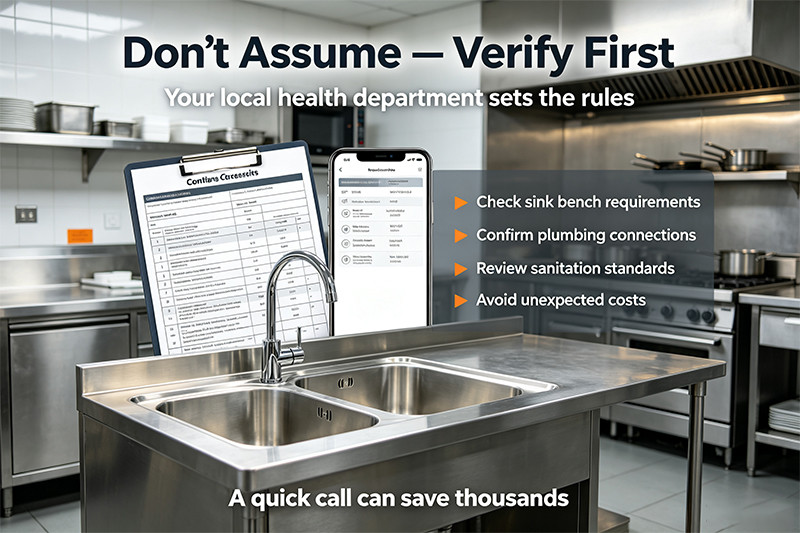
Actionable Advice: Before purchasing any sink bench, always consult your local health department. Do not make assumptions based on what is used in other jurisdictions. A quick call or a review of their website can save you from purchasing non-compliant equipment, a mistake that could cost thousands of dollars to rectify.
Making a Smart Investment: Value, Lifespan, and Common Pitfalls of Your Stainless Steel Sink Bench
The Long-Term Value Proposition of Quality Stainless Steel
When outfitting a commercial kitchen, it's easy to focus on the upfront price of equipment. However, a truly smart investment is one that delivers value over its entire lifespan. A high-quality stainless steel sink bench is a prime example of an asset where prioritizing quality over initial cost pays significant dividends in the long run. The true financial picture is revealed not by the purchase price, but by the Total Cost of Ownership (TCO).
The TCO encompasses every cost associated with the sink bench over its life, including:
- Initial Purchase Price
- Installation Costs
- Maintenance and Repair Expenses
- Replacement Costs
- Downtime Costs (lost revenue due to equipment failure)
A cheap, low-quality sink bench might save you money on day one, but it will almost certainly cost you more over time. These units often use thinner gauge steel (like 20 or 22-gauge) and inferior grades (like 430 or 201), which are prone to denting, warping, and corrosion. This leads to a cascade of expensive problems:
- Frequent Repairs and Replacements: A flimsy sink that rusts or cracks after a few years will need to be replaced, forcing you to pay for a new unit and new installation all over again. A quality 304-grade, 16-gauge sink can last for 15 to 30 years with proper care.
- Increased Maintenance: Low-quality materials are harder to clean and more susceptible to staining and rust, requiring more staff time and specialized chemicals to maintain.
- Hygiene Risks: A sink with pitting, rust, or broken seams becomes impossible to sanitize properly, putting you at risk of health code violations, which can result in fines or even business closure.
In contrast, investing in a durable, well-constructed sink bench from a reputable manufacturer like Samsink offers a much lower TCO. The higher initial investment is offset by a significantly longer service life, minimal repair needs, and easier maintenance. It's a purchase you make once, which allows you to focus your budget on other areas of your business instead of repeatedly fixing or replacing a foundational piece of your kitchen. Ultimately, a quality sink bench is not an expense; it's a capital investment in your kitchen's efficiency, safety, and long-term financial health.
Critical Mistakes to Avoid When Purchasing Your Sink Bench
Investing in a new stainless steel sink bench is a significant decision, and avoiding common pitfalls can save you from costly headaches, operational disruptions, and compliance issues down the road. Being an informed buyer is your best defense against a poor investment. Here are the most critical mistakes to sidestep:
1. Choosing Price Over Quality This is the single most common and costly error. Opting for the cheapest available sink bench is a false economy. These units are almost always made from inferior materials, such as high-gauge (thin) steel like 22-gauge, or a lower-grade alloy like 430- or 201-grade stainless steel.
- The Consequence: The bench will be highly susceptible to denting, warping, and, most critically, rust and corrosion. You will end up spending more in the long run on repairs and premature replacement, not to mention the hygiene risks posed by a deteriorating surface.
2. Ignoring Grade and Gauge Failing to check the technical specifications is a close second. Many buyers assume all stainless steel is the same, but as we've covered, the grade (304 vs. 316) and gauge (thickness) are paramount.
- The Consequence: You might purchase a 304-grade sink for a coastal restaurant where salt in the air will cause it to corrode, or an 18-gauge sink for a high-volume kitchen where it will quickly become dented and bowed from heavy pots. Always match the grade and gauge to your specific operational environment and intensity.
3. Failing to Measure Your Space and Workflow Buying a sink bench without meticulously measuring your kitchen space, including doorways and hallways, is a recipe for disaster. It is equally important to consider how the unit will fit into your kitchen's workflow.
- The Consequence: You could end up with a sink that physically doesn't fit into your kitchen or, if it does, creates bottlenecks that slow down your entire operation. Always create a floor plan and map out the movement of staff and dishes before you buy. Remember to account for clearance space for cleaning and movement.
4. Overlooking Local Health and Plumbing Codes Assuming that a sink that looks compliant actually is compliant can lead to failed inspections. Every jurisdiction has specific rules about sink configurations, plumbing installations, and required certifications.
- The Consequence: You may be forced to replace a brand-new sink, or pay for expensive plumbing modifications, because it doesn't meet a local requirement (such as the need for an air gap or a specific type of grease trap connection). Always consult your local health department before purchasing.
5. Forgetting Essential Features A sink is more than just the bowls. Forgetting to specify crucial add-ons will hinder your kitchen's efficiency and hygiene.
- The Consequence: A sink bench without adequate drainboards creates clutter and disorganization. A unit without a splashback will quickly lead to a damaged and unsanitary wall. A bench without an undershelf wastes valuable storage space. Ensure the configuration you choose includes all the features you need for a functional workstation.
By avoiding these critical mistakes, you can move forward with confidence, knowing you are selecting a sink bench that is not only a durable piece of equipment but a strategic asset for your business.
Frequently Asked Questions (FAQs)
Q1: What is the best grade of stainless steel for a commercial kitchen sink?
For the vast majority of commercial kitchens, 304-grade stainless steel is the best choice. It offers an excellent balance of corrosion resistance, durability, and cost. It is the industry standard for a reason and holds up well against daily exposure to water, food acids, and most cleaning chemicals. You should only upgrade to the more expensive 316-grade stainless steel if your kitchen is in a harsh environment with high exposure to salts (like coastal areas) or corrosive industrial chemicals.
Q2: How important is the gauge (thickness) of the stainless steel?
The gauge is extremely important as it directly relates to the sink's durability and longevity. Remember, a lower gauge number means thicker steel. For a busy commercial kitchen, 16-gauge is the recommended standard. It is highly resistant to dents, warping, and vibrations from heavy use and garbage disposals. an 18-gauge sink can be a suitable, more budget-friendly option for lighter-duty applications, but anything with a gauge of 20 or higher is too thin for a professional environment and should be avoided.
Q3: Why are coved corners necessary in a commercial sink?
Coved, or rounded, corners are a critical feature for hygiene and sanitation. Sharp, 90-degree corners are difficult to clean thoroughly and inevitably trap food debris, grease, and moisture, creating a breeding ground for bacteria. The smooth, curved surface of a coved corner eliminates this "trap," allowing for easy and effective cleaning. Health inspectors specifically look for coved corners as a sign of proper sanitary design, making them a non-negotiable feature for any food-safe operation.
Q4: Can I use bleach to clean my stainless steel sink bench?
No, you should never use bleach or any cleaners containing chlorine on your stainless steel sink. Chlorine is the enemy of stainless steel's protective layer. It can cause pitting, staining, and irreversible corrosion, essentially "un-staining" the steel. Stick to mild, chloride-free detergents for daily cleaning. For sanitizing, use safer alternatives like a 70% isopropyl alcohol solution or hydrogen peroxide, which are effective without damaging the steel's surface.
Q5: What is NSF certification, and do I need it?
NSF (National Sanitation Foundation) certification is a third-party verification that a piece of equipment meets strict standards for public health and safety. For a sink, this means it's made from food-safe materials, is designed to be easily cleaned (e.g., has coved corners), and is built to withstand commercial use. While not always a federal law, most local health departments require foodservice equipment to be NSF certified. Buying an NSF-certified sink bench is the best way to ensure you are compliant and investing in a product designed for a safe, hygienic kitchen.
Q6: Should I get a sink bench with an undershelf?
Yes, in almost all cases, a sink bench with an undershelf is highly recommended. The area beneath a sink is valuable storage space that would otherwise be wasted. An undershelf provides a convenient, off-the-floor location to store cleaning supplies, sanitizing chemicals, buckets, or even large pots and pans. This helps keep your kitchen organized, reduces clutter on work surfaces, and improves overall efficiency. Whether you choose a solid or slatted shelf, utilizing this space is a smart design choice.
Q7: How do I get rid of rust spots on my stainless steel sink?
If you see small rust spots, it's often due to "free iron" particles from water pipes or steel wool pads that have contaminated the surface. You can usually remove these with a non-abrasive cleaning paste made from baking soda and water or a specialized stainless steel cleaner. Apply the paste, gently rub in the direction of the steel's grain with a soft cloth, rinse thoroughly, and dry completely. To prevent future spots, avoid using steel wool pads and always dry your sink after cleaning to prevent mineral deposits from forming.
In my experience, investing in a high-quality stainless steel sink bench is not just a purchase; it's a strategic decision that impacts the heart of your commercial kitchen. This piece of equipment is central to sanitation, workflow, and efficiency, and choosing the right one sets the foundation for a smooth and safe operation.
By considering the grade, configuration, features, and compliance standards outlined in this guide, you can ensure your stainless steel sink bench will enhance efficiency, maintain impeccable hygiene, and provide lasting value for years to come. From selecting the robust durability of 16-gauge, 304-grade steel to ensuring the design includes essential features like coved corners, splashbacks, and functional drainboards, every detail matters. Remember, a premium choice from a trusted brand like Samsink may have a higher initial cost, but its longevity and reliability deliver a far lower total cost of ownership.
Choosing wisely means less hassle with health inspections, greater productivity from your team, and a cleaner, safer workspace for everyone. Make an informed decision, and this workhorse of your kitchen will pay dividends long after the initial investment is forgotten. Ready to find the perfect sink bench for your kitchen? Explore the expertly crafted range of stainless steel solutions at Samsink to get started.