The Ultimate Guide to Selecting Commercial Hand Wash Sinks
As business owners and operators, we understand that maintaining impeccable hygiene is paramount in any commercial setting. Proper handwashing isn't just a recommendation; it's a critical defense against illness and a cornerstone of your reputation. The simple act of washing hands is one of the most effective ways to prevent the spread of many types of infection and illness in the workplace and to the public. For industries like food service, healthcare, and hospitality, it forms the very foundation of public health and safety protocols. A lapse in hand hygiene can have significant consequences, from outbreaks of foodborne illness to reputational damage that can be difficult to repair.
This guide is designed to help you, our valued reader, navigate the vast world of commercial hand wash sinks, ensuring you make the most informed choice for your establishment. Selecting the right sink is not merely a matter of plumbing; it's about creating a safe, compliant, and efficient environment. The market is filled with a variety of options, each with its own materials, features, and intended uses. Understanding these differences is key to investing in equipment that will serve your business well for years to come.
We'll explore the essential factors, from materials and regulations to innovative solutions, empowering you to select the perfect handwashing infrastructure for your operational needs. Whether you are outfitting a new restaurant kitchen, updating a healthcare facility, or setting up a mobile food truck, this guide will provide the knowledge you need. We'll delve into the specifics of stainless steel grades, the importance of NSF certification, and the nuances of local health codes. By the end, you'll be equipped to choose a solution, such as those offered by trusted brands like Samsink, that not only meets legal requirements but also enhances your operational workflow and commitment to hygiene.
Key Takeaways
- Hygiene as a Business Cornerstone: Effective handwashing is non-negotiable in any commercial environment. It is your primary defense against the spread of pathogens, protecting both your employees and customers. The CDC emphasizes that proper hand hygiene can prevent a significant percentage of foodborne illnesses, directly impacting your business's liability and reputation. Investing in proper handwashing stations is an investment in public health and your brand's trustworthiness.
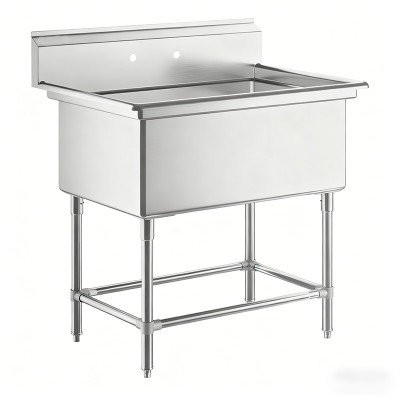
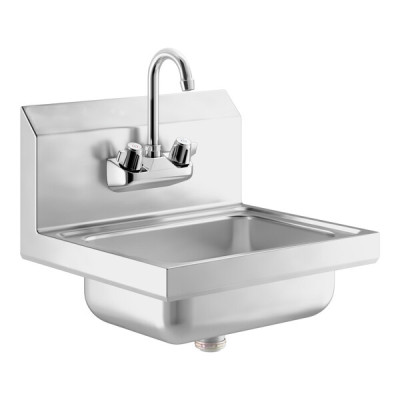
- Commercial vs. Residential Sinks: Do not substitute a residential sink for a commercial one. Commercial hand wash sinks are purpose-built for high-traffic environments. They are typically made from durable, non-porous materials like 304 or 316 stainless steel, which can withstand frequent use and harsh cleaning agents. Their design often includes features mandated by health codes, such as specific basin sizes to discourage dumping, high gooseneck faucets for easy washing, and integrated side splashes to contain water. Brands like Samsink specialize in these robust, compliant designs that residential models simply cannot match in terms of safety and longevity.
- Material and Construction Matter: The choice of material and its thickness (gauge) is critical for durability and hygiene. Stainless steel is the industry standard due to its corrosion resistance and ease of cleaning. Type 304 stainless steel is the most common and suitable for most applications, offering excellent durability. For environments with high exposure to corrosive elements like salt or certain chemicals (e.g., coastal areas or seafood processing), Type 316 stainless steel is a superior choice. The gauge of the steel indicates its thickness; a lower gauge number (like 14 or 16) means thicker, more durable steel that resists dings and dents.
- Compliance is Non-Negotiable: Navigating regulations is a crucial part of selecting a commercial hand sink. Sinks must meet local health department requirements, which often specify the water temperature (e.g., at least 100°F), the need for a hands-free faucet (touchless or foot-pedal operated), and the placement of the sink. Furthermore, NSF (National Sanitation Foundation) certification is the gold standard, signifying that the sink has been tested and certified to meet public health and safety standards. Always verify that any sink you consider, like those from the Samsink lineup, is NSF certified to ensure it will pass health inspections.
- Function Dictates Form: The right sink depends on your specific operational needs. A simple, wall-mounted hand sink might be perfect for a small café's kitchen entrance. A multi-station sink is more suitable for a large production facility or busy school restroom. For outdoor events or locations without plumbing, a portable hand washing station with self-contained water tanks is essential. For cutting-edge hygiene, automated handwashing systems offer a touch-free, highly standardized cleaning process that guarantees every user washes for the correct duration with the proper amount of soap and water.
- Installation and Placement are Strategic: Where you install your hand sink is just as important as the sink itself. Health codes mandate that dedicated handwashing sinks must be conveniently located and easily accessible to employees, typically at the entrance to food preparation areas and within restrooms. They must be used exclusively for handwashing—never for food prep or dumping waste. Proper installation also includes ensuring correct plumbing for hot and cold water and adequate drainage to prevent standing water and contamination.
The Indispensable Role and Unique Design of Commercial Hand Wash Sinks in Maintaining Public Health
Hand hygiene is a foundational pillar of public health, and within a commercial setting, it transforms from a personal habit into a critical business function. The infrastructure you provide for handwashing speaks volumes about your commitment to safety and quality. Unlike their residential counterparts, commercial hand wash sinks are engineered with the specific, demanding challenges of public and professional environments in mind. They are not just fixtures; they are essential tools in the daily battle against contamination and disease, designed for durability, compliance, and efficiency.
Why Spotless Hands are Your Business's First Line of Defense: The Imperative of Handwashing in Commercial Spaces
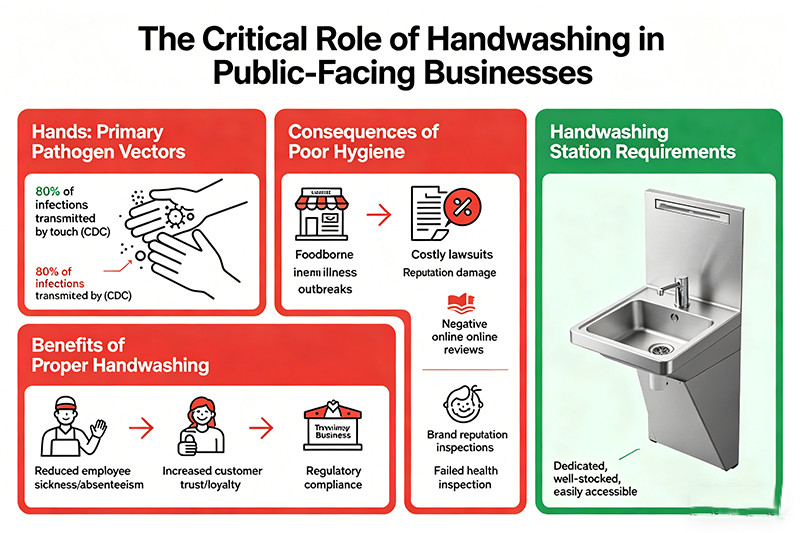
In any business that serves the public, especially in the food and healthcare industries, hands are the primary vehicle for transmitting pathogens. The Centers for Disease Control and Prevention (CDC) estimates that up to 80% of infections are transmitted by touch. A single instance of cross-contamination from unwashed hands can lead to a foodborne illness outbreak, sickening customers, triggering costly lawsuits, and inflicting irreparable damage on a brand's reputation. Beyond the immediate health risks, poor hygiene can lead to negative online reviews, failed health inspections, and even forced closures.
Therefore, providing dedicated, well-stocked, and easily accessible handwashing stations is not just a regulatory requirement—it's a fundamental business strategy. It demonstrates a tangible commitment to the safety of both your customers and your employees. Clean hands reduce employee sickness and absenteeism, leading to a more stable and productive workforce. For customers, visible and effective hygiene practices build trust and confidence, encouraging repeat business. In essence, the investment in a proper commercial hand wash sink is a direct investment in the health, reputation, and long-term viability of your business.
Beyond the Home Kitchen: Differentiating Purpose-Built Commercial Hand Wash Sinks from Residential Ones
It can be tempting for a new business owner to consider a less expensive residential sink, but this is a critical error in judgment and compliance. Commercial and residential sinks are fundamentally different products designed for vastly different purposes. Understanding these differences is key to appreciating why a purpose-built commercial sink is the only acceptable choice for a business.
A residential sink is designed for occasional use by a small number of people. It often prioritizes aesthetics over durability, frequently using materials like porcelain, cast iron, or thinner gauge stainless steel that can easily chip, stain, or dent under the rigor of a commercial environment.
In contrast, a commercial hand wash sink, like the specialized models offered by Samsink, is engineered for performance in a high-volume, demanding setting. The key differences can be broken down:
| Feature | Commercial Hand Wash Sink | Residential Kitchen/Bathroom Sink |
|---|---|---|
| Material | Typically heavy-duty Type 304 or Type 316 stainless steel (16-20 gauge). Non-porous, corrosion-resistant, and easy to sanitize. | Various materials including porcelain, ceramic, fireclay, granite composite, and thinner gauge stainless steel (18-22 gauge). |
| Design Purpose | Exclusively for handwashing. Often features a smaller basin to discourage its use for dumping or washing equipment. | Multipurpose. Used for washing dishes, food preparation, and handwashing. |
| Construction | Built for extreme durability and high traffic. Welded seams are polished smooth to prevent bacteria growth. | Designed for home aesthetics and moderate use. May have crevices or materials that are harder to sanitize. |
| Compliance | Must meet strict health code standards (e.g., ADA, local health department) and is often NSF Certified. | Not subject to commercial health codes or NSF certification. |
| Faucet Style | Often features gooseneck or high-arc faucets to provide clearance for washing hands and arms. Touchless and foot-pedal options are common for hygiene. | Faucet design varies widely, focused more on style than on providing specific clearance for hand hygiene protocols. |
| Integrated Features | Commonly includes built-in side and backsplashes to protect walls and contain water. May have integrated soap and paper towel dispensers. | Backsplashes are uncommon; features are typically aesthetic or for residential convenience (e.g., integrated cutting boards). |
Using a residential sink in a commercial setting will almost certainly result in a failed health inspection. Health codes explicitly require that handwashing stations be separate from other sinks and meet specific design criteria that residential models do not fulfill. Investing in a true commercial hand wash sink is the first and most important step in building a compliant and hygienic operation.
Decoding the Best Elements: Key Selection Factors for Peak-Performing Commercial Hand Wash Sinks
Choosing the right commercial hand wash sink involves more than just picking a model that fits in your available space. It's a calculated decision based on material science, operational workflow, and user needs. A high-performing sink is durable, hygienic, and perfectly suited to its environment. By carefully evaluating factors such as material, size, and configuration, you can select a sink that enhances safety and efficiency, providing a reliable handwashing solution for years to come.
The Unrivaled Strength and Hygiene of Stainless Steel: Selecting the Right Material for Your Commercial Hand Wash Sinks
When it comes to commercial sinks, one material stands above all others: stainless steel. Its dominance in professional kitchens, healthcare facilities, and other hygiene-critical environments is no accident. Stainless steel is a non-porous material, which means it provides no microscopic spaces for bacteria, viruses, or mold to hide and proliferate. This makes it exceptionally easy to clean and sanitize, a primary requirement for any surface in a commercial setting.
Furthermore, stainless steel possesses a unique combination of strength and corrosion resistance. It can withstand the physical impacts common in a busy workplace, and it won't rust or degrade when exposed to water and the wide array of cleaning chemicals used in commercial sanitation protocols. This durability ensures a long service life and a lower total cost of ownership compared to less robust materials. Brands like Samsink construct their sinks from high-quality stainless steel, recognizing it as the gold standard for meeting the rigorous demands of commercial use.
Understanding Stainless Steel Grades (304 vs. 316) and Gauges (14, 16 gauge) for Durable Commercial Hand Wash Sinks
Not all stainless steel is created equal. When selecting a sink, you'll encounter two key specifications: the grade and the gauge. Understanding what these numbers mean is crucial for choosing a sink with the right level of durability and corrosion resistance for your specific needs.
Stainless Steel Grades: 304 vs. 316
The grade of stainless steel refers to its chemical composition, which determines its properties.
- Type 304 Stainless Steel: This is the most widely used grade for commercial kitchen equipment, including hand sinks. It contains a significant amount of chromium (18-20%) and nickel (8-10.5%), which give it excellent resistance to rust and corrosion from most oxidizing acids. It is durable, easy to form and weld, and provides the perfect balance of performance and cost for the vast majority of applications, from restaurants and schools to office buildings. For most businesses, a Type 304 sink is the ideal choice.
- Type 316 Stainless Steel: This is a premium grade of stainless steel that offers enhanced corrosion resistance. In addition to chromium and nickel, Type 316 includes molybdenum (typically 2-3%). This addition makes it significantly more resistant to corrosion from chlorides, such as salt and harsh de-icing chemicals. Therefore, a Type 316 sink is the recommended choice for environments with high exposure to these elements. This includes businesses in coastal areas with salt in the air, seafood processing plants, laboratories using certain corrosive chemicals, and facilities in regions where chloride-based cleaning agents are standard. While more expensive, the investment in Type 316 is justified by its extended lifespan in these harsh conditions.
Stainless Steel Gauge: The Measure of Thickness
The gauge of the steel indicates its thickness. It's important to remember that with steel gauges, the lower the number, the thicker and stronger the steel.
- 14 Gauge: This is a very thick, heavy-duty gauge often found in high-impact environments like butcher shops or industrial food processing facilities. Sinks made from 14 gauge steel are extremely resistant to dents and damage but are also heavier and more expensive.
- 16 Gauge: This is widely considered the sweet spot for high-quality commercial sinks. It is substantially thicker and more durable than the steel used in residential sinks, offering excellent resistance to dents, dings, and bowing under heavy use. A 16 gauge sink from a reputable manufacturer like Samsink provides a fantastic balance of durability, performance, and value for most commercial kitchens and high-traffic restrooms.
- 18 Gauge: While still used in some lighter-duty commercial applications, 18 gauge is noticeably thinner than 16 gauge. It may be a budget-friendly option but is more susceptible to denting.
- 20 Gauge or Higher: This is generally considered too thin for any demanding commercial application and should be avoided for a primary hand wash sink.
For a long-lasting, reliable hand wash sink, choosing a model made from 16 gauge or, for extreme environments, 14 gauge stainless steel is a wise investment.
Perfect Fit and Function: Optimal Sizing and Depth Considerations for Your Commercial Hand Wash Sinks
The dimensions of your hand wash sink are not just a matter of fitting into a pre-determined space; they are governed by health code regulations and operational ergonomics. An improperly sized sink can lead to failed inspections, inefficient workflow, and unsanitary conditions.
Basin Size: Health departments typically have minimum requirements for the size of a hand sink basin to ensure users can comfortably wash their hands without touching the sides of the sink. A common minimum requirement is around 10 inches by 14 inches with a depth of at least 5 inches. This size is large enough for its intended purpose but intentionally small enough to discourage employees from using it to dispose of liquids or wash small wares, which is a common source of cross-contamination. Always check your local health code for the specific minimum dimensions required in your jurisdiction before making a purchase.
Overall Dimensions and Placement: Beyond the basin itself, consider the overall footprint of the unit, including any integrated backsplashes or side splashes. A backsplash is essential for protecting the wall behind the sink from water damage and bacteria growth. Side splashes perform the same function for adjacent walls or equipment and are often required when a sink is placed next to a food preparation area. When planning your layout, ensure there is enough clearance around the sink for comfortable use and for the required soap and paper towel dispensers, which must be located at the handwashing station.
Depth: While a depth of 5-6 inches is standard for the basin, the "depth" of the entire unit from front to back is also a critical consideration. ADA (Americans with Disabilities Act) compliant sinks have specific requirements to ensure they are accessible to individuals in wheelchairs. This often involves a shallower front-to-back dimension and requires specific clearance underneath the sink. Even if not legally required for your specific setup, choosing an ADA-compliant model can be a smart move for creating a more inclusive and user-friendly environment.
More Than Just Scrubbing: Exploring Specialized Types and Configurations of Commercial Hand Wash Sinks for Diverse Needs
While the classic wall-mounted hand sink is a staple in many businesses, the needs of a modern commercial environment are diverse. Manufacturers like Samsink have developed a range of specialized sinks to meet these unique challenges.
- Wall-Mounted Sinks: The most common type. They are mounted directly to the wall, which saves floor space and makes cleaning the floor underneath easy. They are ideal for most kitchen, restroom, and service area applications.
- Drop-In Sinks: These sinks are designed to be "dropped into" a cutout in a countertop. This provides a sleek, integrated look and can be a good option for service counters or custom-built stations.
- Undermount Sinks: Mounted underneath the countertop, these sinks create a seamless transition from the counter to the sink basin. This not only looks professional but also makes wiping water and debris from the counter directly into the sink incredibly easy, enhancing cleanliness.
- Pedestal Sinks: These are floor-mounted, freestanding units that can be an elegant solution for public restrooms in hotels, restaurants, and corporate offices. They conceal plumbing within the pedestal for a clean, upscale appearance.
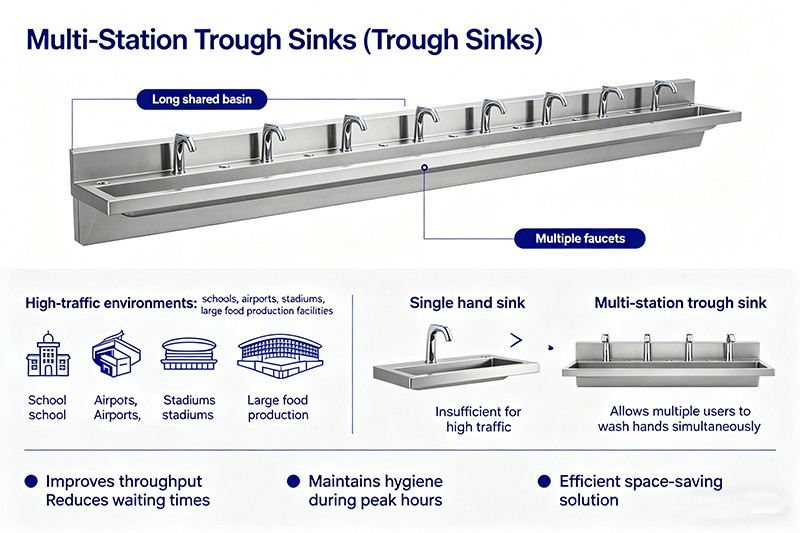
- Multi-Station Sinks (Trough Sinks): In high-traffic environments like schools, airports, stadiums, and large food production facilities, a single hand sink is insufficient. Multi-station trough sinks provide multiple faucets and a long, shared basin, allowing several users to wash their hands simultaneously. This dramatically improves throughput and reduces waiting times, ensuring that hygiene protocols can be maintained even during peak hours. They are an efficient, space-saving solution for managing high volumes of users.
By understanding the different types and configurations available, you can select a sink that is not just a compliant fixture, but a fully integrated part of your operational workflow.
Navigating Compliance: Essential Regulations and Certifications for Commercial Hand Wash Sinks
Installing a commercial hand wash sink is not a simple DIY project; it is governed by a strict set of rules designed to protect public health. Ignorance of these regulations is not an acceptable defense during a health inspection. Failure to comply can result in fines, forced remodels, or even the suspension of your business license. Understanding the key requirements from health departments and the importance of certifications like NSF is fundamental to ensuring your establishment is set up for success from day one.
Staying Within the Lines: Key Health Department Requirements for Your Commercial Hand Wash Sinks (Including Hot Water & Touchless Features)
Local and state health departments are the primary enforcers of food safety and public health regulations. While specific rules can vary slightly by jurisdiction, they generally align on a core set of principles for handwashing stations based on the FDA Food Code.
Key Requirements Typically Include:
- A Dedicated, Separate Sink: The sink used for handwashing must be used for that purpose only. It cannot be used for food preparation, washing dishes, or as a dump sink. This is a zero-tolerance rule to prevent cross-contamination.
- Strategic Location: A hand wash sink must be conveniently located and easily accessible to employees. This means having a sink at the entrance to any food preparation area, in dishwashing areas, and inside or immediately outside all restrooms. The goal is to make it easier for staff to wash their hands frequently without having to walk across the kitchen.
- Hot and Cold Running Water: The sink must be supplied with both hot and cold running water, delivered through a mixing valve or a combination faucet. The water must be able to reach a minimum temperature, typically at least 100°F (38°C), to effectively aid in the removal of soil and grease from hands.
- Hands-Free Operation: To prevent re-contamination of clean hands, many health codes now mandate or strongly recommend hands-free faucet operation. This can be achieved through:
- Electronic/Touchless Sensors: An infrared sensor activates the water flow when hands are placed beneath the faucet.
- Foot Pedals: Floor-mounted pedals control the flow of hot and cold water.
- Knee-Operated Levers: Large panels mounted under the sink can be pushed with a knee to activate the water. If a hands-free faucet is not used, the tap must remain on for at least 15 seconds.
- Required Supplies: A compliant handwashing station is more than just a sink. It must be fully stocked at all times with soap (in a dispenser), and a method for sanitary hand drying. This typically means single-use paper towels from a dispenser or an air dryer. A waste receptacle for used towels is also required.
- Signage: A clearly visible sign or poster must be posted at each handwashing sink instructing staff to wash their hands.
Before purchasing or installing any sink, your first step should be to consult the most recent regulations from your local health department to ensure every aspect of your station will be compliant.
The Gold Standard of Safety: Why NSF Certification is Non-Negotiable for All Commercial Hand Wash Sinks
When you see the NSF certification mark on a piece of commercial equipment, it's a sign of assurance for both you and the health inspector. NSF International (formerly the National Sanitation Foundation) is an independent, accredited organization that develops standards and tests products for public health and safety.
What does NSF certification mean for a commercial hand wash sink?
- Hygienic Design and Materials: An NSF-certified sink has been evaluated to ensure it is made from materials that are safe, non-toxic, and resistant to corrosion. Most importantly, the design and construction have been vetted to be free of hard-to-clean crevices, sharp internal corners, or other features where bacteria could harbor and grow. All welds must be polished smooth and seamless.
- Durability and Performance: The certification process also tests for durability to ensure the sink can stand up to the rigors of a commercial environment without breaking down or becoming a safety hazard.
- Guaranteed Compliance: Health inspectors across the country recognize and trust the NSF mark. When they see it, they know the sink has been built to meet stringent public health standards. Purchasing an NSF-certified sink, such as those in the Samsink product line, is the single easiest way to guarantee that the fixture itself will pass that portion of your health inspection.
In many jurisdictions, the use of NSF-certified equipment is not just recommended; it is required by law for commercial food service operations. Choosing a non-certified sink to save a small amount of money upfront is a risky gamble that can lead to significant costs and complications down the line when you are forced to replace it with a compliant model. For peace of mind and guaranteed compliance, NSF certification is non-negotiable.
Advancing Hand Hygiene: Exploring Modern and Mobile Alternatives to Traditional Commercial Hand Wash Sinks
While traditional stainless steel sinks are the bedrock of commercial hand hygiene, innovation continues to push the boundaries of efficiency, effectiveness, and accessibility. For businesses looking to achieve the highest level of sanitation or those operating in non-traditional environments, modern alternatives offer powerful solutions. From fully automated systems that standardize the handwashing process to mobile units that bring hygiene anywhere, these advanced options address the evolving challenges of public health.
Stepping Up Sanitation: The Efficiency and Efficacy of Automated Handwashing Systems (e.g., CleanTech®) as Commercial Hand Wash Sinks Alternatives
For environments where the risk of contamination is exceptionally high—such as food processing plants, pharmaceutical labs, or healthcare facilities—a standard sink may not be enough. Automated handwashing systems represent the next frontier in hygiene technology. These sophisticated machines are designed to remove the variability and human error from the handwashing process.
Here's how they work: a user inserts their hands into two cylinders, and the machine takes over. It automatically cycles through a precisely timed sequence, dispensing the perfect amount of soap and water, and massaging the hands with rotating scrubbers. The entire process is touch-free and guarantees that every user performs a perfect, clinically effective hand wash every single time.
The key advantages of automated systems include:
- Standardization and Efficacy: They deliver a consistent, highly effective hand wash in just 12 seconds, removing more than 99.9% of harmful pathogens. This eliminates the risk of employees rushing the process or using improper technique.
- Water and Soap Savings: These systems are incredibly efficient, often using significantly less water and soap compared to traditional handwashing, leading to long-term operational savings.
- Improved Compliance Tracking: Many advanced systems can be linked to a facility's access control, ensuring that employees cannot enter a sensitive area without first completing a handwash cycle. This provides a verifiable record of hygiene compliance.
While the initial investment is higher than a traditional sink, for businesses where hygiene is mission-critical, the reduction in contamination risk and the guarantee of compliance can provide an unparalleled return on investment.
Hygiene on the Go: Essential Insights into Portable and Mobile Commercial Hand Wash Sinks for Temporary and Outdoor Operations
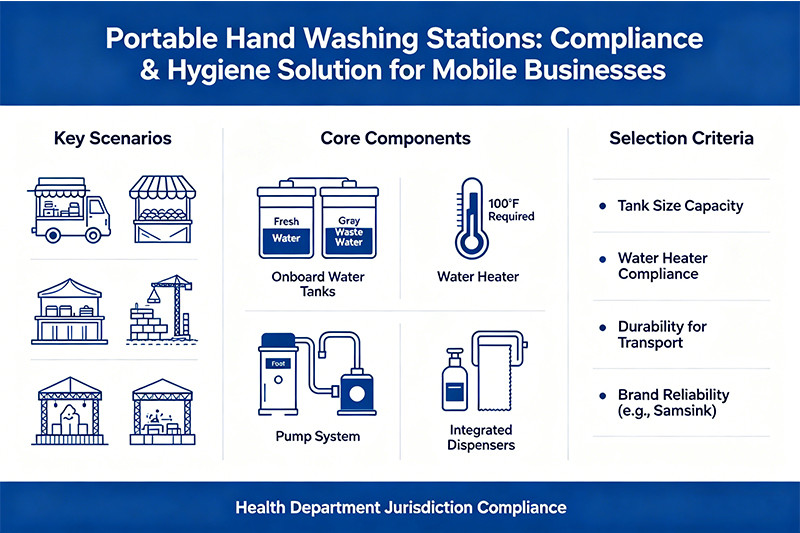
Not all businesses operate within the confines of four walls with access to conventional plumbing. For food trucks, farmers' market vendors, caterers, construction sites, and outdoor festivals, providing compliant handwashing facilities presents a unique challenge. Portable hand washing stations are the definitive solution for these scenarios.
These self-contained units are ingeniously designed to meet health code requirements in a mobile format. A typical portable sink includes:
- Onboard Water Tanks: One tank for fresh, clean water and a separate, larger tank to hold the gray (waste) water. The capacity of these tanks is a key consideration, as it determines how many hand washes can be completed before a refill and draining are necessary.
- Water Heater: To comply with health codes, most quality portable sinks include an integrated on-demand water heater to provide the required 100°F water.
- Pump System: A foot pump or an electric pump is used to dispense water, providing the necessary hands-free operation.
- Integrated Dispensers: Many models come complete with built-in dispensers for soap and paper towels, making them a complete, all-in-one station.
When selecting a portable sink, it is crucial to verify that it meets the specific requirements of the health departments in all the jurisdictions where you plan to operate. Factors like tank size, the presence of a water heater, and overall durability are key. Brands like Samsink offer robust portable solutions that are designed to be both compliant and durable enough to withstand the rigors of transport and outdoor use, ensuring that you can maintain the highest standards of hygiene, no matter where your business takes you.
Frequently Asked Questions (FAQ)
Q1: Do I really need a separate sink just for washing hands? Can't my employees use the 3-compartment sink?
A1: Absolutely, yes, you need a separate, dedicated handwashing sink. This is one of the most critical and non-negotiable rules in any health code based on the FDA Food Code. A 3-compartment sink is designated for warewashing (wash, rinse, sanitize), and using it for handwashing introduces a massive risk of cross-contamination. Bacteria from hands could contaminate the sink compartments and, subsequently, the dishes being washed. Conversely, food soils and chemicals from the warewashing process could contaminate hands. Your handwashing sink must be used exclusively for washing hands and must be kept clear and accessible at all times. Using any other sink for this purpose is a guaranteed health code violation.
Q2: My new business is on a tight budget. Is it okay to buy a used commercial hand sink?
A2: Buying used equipment can be a viable way to save money, but you must be extremely cautious when purchasing a used hand sink. Before buying, you must thoroughly inspect it for any signs of damage that could compromise hygiene. Look for deep scratches, dents, or pitting in the stainless steel, as these imperfections can harbor bacteria and make the sink difficult to sanitize. Check all welded seams to ensure they are still smooth and fully sealed. If the sink has cracks, severe rust, or un-repairable damage, it is not safe to use. Most importantly, you must verify that the used sink is NSF certified. If it lacks the NSF mark, it will not pass a health inspection, regardless of its condition. If you find a used sink from a reputable brand like Samsink that is in excellent condition and NSF certified, it could be a good value. Otherwise, the risk often outweighs the savings.
Q3: What is the difference between a backsplash and a side splash, and do I need them?
A3: A backsplash is a raised panel on the back of the sink that protects the wall behind it from water splashes. A side splash is a similar panel on the side of the sink to protect an adjacent wall or piece of equipment. Whether you need them depends on your sink's location. If the sink is installed against a wall, a backsplash is essential to prevent water from seeping behind the sink, which can lead to mold, mildew, and structural damage. Most health codes require a backsplash that is high enough to be effective. You will need a side splash (or two) if your hand sink is located directly next to a food preparation surface, a food storage area, or another piece of equipment. The splash guard acts as a physical barrier to prevent water and soap from splashing onto food or clean surfaces, thereby preventing cross-contamination.
Q4: How often should I clean and sanitize my commercial hand wash sink?
A4: Your hand wash sink and the surrounding area should be cleaned and sanitized frequently throughout the day. Because it's a high-touch area, it can easily become contaminated. A good rule of thumb is to have a cleaning schedule (e.g., every hour during peak times, and at the end of each shift) that is part of your standard operating procedures. The cleaning process should involve scrubbing the basin, faucet, and handles with a detergent to remove physical soils, rinsing thoroughly, and then applying a food-safe sanitizer according to the manufacturer's instructions. Keeping the sink clean not only ensures hygiene but also encourages employees to use it, as no one wants to wash their hands in a dirty sink.
Q5: Are touchless, sensor-activated faucets worth the extra cost?
A5: For most commercial establishments, the answer is a resounding yes. Touchless faucets offer a a significant return on investment through improved hygiene and resource conservation. Their primary benefit is that they eliminate a key cross-contamination point. After washing, a user doesn't have to touch a potentially contaminated faucet handle to turn the water off, keeping their hands clean. Many health departments are moving toward mandating hands-free operation for this very reason. Secondly, sensor faucets are "on" only when hands are directly under them, which can dramatically reduce water waste from taps being left running, lowering your utility bills. While the upfront cost is higher, the long-term benefits in hygiene, compliance, and operational savings make them a highly recommended and worthwhile upgrade for any commercial hand wash station.
Conclusion
Ultimately, selecting the right commercial hand wash sinks is a strategic decision that impacts the health of your staff and customers, your operational efficiency, and your compliance with regulations. It transcends simple plumbing and becomes an integral part of your business's commitment to safety and quality. The journey through understanding materials, dimensions, and legal requirements underscores the importance of this foundational piece of equipment.
By carefully considering materials like durable Type 304 stainless steel, ensuring proper sizing to meet health codes, respecting all regulatory requirements, and even exploring advanced solutions, we can ensure that our establishments uphold the highest standards of hygiene and safety. Whether it is a classic wall-mounted unit from a trusted brand like Samsink, a high-capacity trough sink for a busy venue, or a versatile mobile station for an outdoor event, the right choice is available when you are armed with the right information.
Investing in the proper handwashing infrastructure is an investment in our business's success and reputation, safeguarding both our team and the public we serve. We encourage you to use this guide as a resource, share it with fellow business owners, and continue the conversation on how we can collectively raise the bar for public health and safety in all our commercial spaces.