The Ultimate Guide to Selecting Commercial Work Stations
In any bustling professional kitchen, commercial work stations are the unsung heroes, facilitating everything from ingredient prep to final plating. Choosing the right work station is more than just selecting a surface; it's about boosting efficiency, maintaining impeccable hygiene standards, and ensuring a smooth workflow. Join me as we explore the essential factors to consider, helping you make the best decision for your culinary space.
Key Takeaways
- Material is Paramount: Stainless steel, particularly 304-grade, is the industry standard for commercial work stations due to its durability, non-porous nature, and resistance to corrosion and heat. For environments with high moisture or corrosive agents, 316-grade stainless steel offers superior protection. While other materials like wood or plastic exist, they often don't meet the stringent hygiene and longevity requirements of a professional kitchen.
- Design for Efficiency: The design of your work station directly impacts workflow. Consider base configurations like open bases for easy cleaning and storage of large items, or undershelves for organized storage of smaller tools and ingredients. Backsplashes are crucial for protecting walls from splashes and making cleanup easier.
- Ergonomics Boosts Productivity: A comfortable kitchen staff is an efficient one. Adjustable height tables or stations built to the standard 34-36 inch height can prevent strain. Edge profiles, such as a rounded bullnose, are safer and more comfortable to lean against than sharp, squared edges. Pairing these stations with anti-fatigue mats can significantly reduce staff discomfort during long shifts.
- Mobility and Modularity Offer Flexibility: Evaluate whether your kitchen needs stationary or mobile work stations. Stationary tables provide a sturdy, permanent foundation for heavy-duty tasks, while mobile units on casters offer the flexibility to reconfigure your space as needed. A hybrid approach, using both types, can create a highly adaptable and efficient kitchen layout.
- Organization is Key: Integrated storage solutions like drawers and shelves are essential for keeping a work station clutter-free and organized. A well-organized station means less time spent searching for tools and ingredients, leading to faster prep times and a smoother service. Brands like Samsink often offer modular solutions that can be customized with various storage options.
- Prioritize Hygiene and Certification: Always look for work stations with NSF (National Sanitation Foundation) certification. This guarantees the table is designed and constructed for safe food handling, with features that make it easy to clean and sanitize. Proper, consistent cleaning and maintenance are vital for extending the life of your equipment and ensuring food safety.
- Invest in Quality for Long-Term Value: While lower-cost options may be tempting, investing in a high-quality, durable work station from a reputable brand is more cost-effective in the long run. A well-built station will withstand the rigors of a commercial kitchen for years, requiring fewer repairs or replacements and providing a reliable, safe workspace.
Understanding the Foundation: Materials for Your Commercial Work Stations
The material you choose for your commercial work stations is the very bedrock of your kitchen's functionality, hygiene, and longevity. This decision goes beyond mere aesthetics; it's a choice that will impact your daily operations, cleaning protocols, and long-term budget. In a high-stress, fast-paced environment, surfaces must endure constant use, high heat, and rigorous sanitation.
The Gold Standard: Stainless Steel Commercial Work Stations
When you picture a professional kitchen, you inevitably imagine gleaming, silver surfaces. That material is stainless steel, and for good reason. It is universally recognized as the premier choice for commercial kitchen environments due to an unmatched combination of durability, hygiene, and resistance to heat and corrosion. Brands like Samsink have built their reputation on fabricating high-quality stainless steel equipment that meets the rigorous demands of the culinary world.
Stainless steel's dominance comes from its inherent properties. It's a non-porous material, which is critical for food safety. Unlike porous materials such as wood, stainless steel does not harbor bacteria, viruses, or moisture, making it incredibly easy to clean and sanitize. This smooth, hard surface ensures that food particles and germs have nowhere to hide, which is paramount for passing health inspections and protecting your customers. Furthermore, its ability to withstand high temperatures without warping or degrading makes it perfect for placement near cooking appliances.
304 Stainless Steel: The Versatile Choice for Most Commercial Work Stations
Within the world of stainless steel, different grades offer varying properties. For most commercial kitchen applications, 304 stainless steel is the industry standard and the most common choice. Comprised of 18% chromium and 8% nickel (often referred to as 18/8 stainless steel), this alloy boasts excellent resistance to corrosion and rust. This makes it ideal for handling a wide range of food substances, including acidic ingredients like tomatoes and vinegar, without reacting or leaching flavors. Its durability ensures it can withstand the daily abuse of a bustling kitchen, from heavy pots and pans to sharp knives, providing a cost-effective and long-lasting investment. Because of this balance of performance and affordability, 304 stainless steel is the workhorse for countertops, prep tables, and sinks in most restaurant kitchens.
316 Stainless Steel: Enhanced Durability for Specialized Commercial Work Stations
While 304 stainless steel is sufficient for most scenarios, certain situations demand a higher level of protection. This is where 316 stainless steel comes in. The key difference is the addition of molybdenum to its chemical composition. This element significantly boosts its resistance to corrosion, particularly from chlorides and other harsh chemicals.
So, when would you need to specify 316 stainless steel?
- Marine or Coastal Environments: If your establishment is near the ocean, the salt in the air can accelerate corrosion. 316, often called "marine-grade" stainless steel, is specifically designed to withstand these conditions.
- High Salt & Acid Usage: For kitchens that do a lot of brining, pickling, or work with highly acidic foods, 316 offers superior protection against pitting and degradation over time.
- Heavy Use of Sanitizers: Environments that require frequent and aggressive cleaning with chloride-based sanitizers, such as in medical facilities or some food processing plants, will benefit from the enhanced durability of 316 steel.
While 316 stainless steel comes at a higher price point, investing in it for these specific applications can prevent costly replacements and extend the life of your equipment significantly.
Why Stainless Steel is Superior for Commercial Work Stations
The superiority of stainless steel in commercial kitchens is not just a matter of tradition; it's a conclusion based on proven performance in hygiene, durability, and long-term value. While other materials are available, each comes with significant drawbacks that make them less suitable for the high demands of a professional food service environment.
A Quick Look at Other Options (Aluminum, Galvanized Steel, Wood, Plastic)
To fully appreciate why stainless steel is the undisputed champion, it's helpful to compare it against the alternatives:
Aluminum: While lightweight and an excellent conductor of heat, aluminum falls short as a primary work surface. It is much softer than stainless steel, making it highly susceptible to scratches and dents. These scratches can harbor bacteria, and the material itself can react with acidic or alkaline foods, potentially discoloring the food and altering its taste. While often cheaper upfront, its lack of durability means it's a poor long-term investment for a heavy-use work station.
Galvanized Steel: This material is essentially steel coated with a layer of zinc to prevent rust. While useful for structural components or storage racks for non-acidic foods, galvanized steel is not safe for direct food prep surfaces. The zinc coating can react with acidic foods (like tomatoes, citrus, and vinegar), causing the zinc to leach into the food. Ingesting these zinc salts can lead to zinc toxicity or "galvanized poisoning". Furthermore, when heated, galvanized steel can release toxic zinc fumes. For these reasons, health codes strictly limit its use on food-contact surfaces.
| Material | Pros | Cons | Best Use Case |
|---|---|---|---|
| Stainless Steel | Highly durable, non-porous, heat/corrosion resistant, easy to sanitize, non-reactive | Higher initial cost | All-purpose food prep, cooking lines, dishwashing areas |
| Aluminum | Lightweight, good heat conductor, lower cost | Soft, scratches easily, reacts with acidic foods, less durable | Cookware (often coated), backsplashes, interior appliance panels |
| Galvanized Steel | Corrosion-resistant, strong | Not food-safe for acidic foods, leaches zinc, toxic fumes when heated | Structural supports, non-food contact shelving, dry storage |
| Wood (Butcher Block) | Knife-friendly surface | Porous, absorbs moisture/bacteria, requires heavy maintanance (oiling/sealing) | Specialized prep (bakeries, butcher shops), not for general use |
| Plastic/Polyethylene | Lightweight, inexpensive, knife-friendly | Scratches easily (harbors bacteria), not heat resistant, can stain | Cutting boards, light-duty prep (where surfaces are replaced often) |
Wood: Wooden butcher blocks have a classic appeal and are kind to knife edges. However, their porous nature is a major hygienic concern in a commercial setting. Wood can absorb moisture, food juices, and bacteria, making it extremely difficult to sanitize properly. It requires constant maintenance, including regular oiling and sealing, to prevent it from cracking and creating more havens for germs. For this reason, its use is typically restricted to specific, controlled tasks like bakeries or dedicated butcher stations, and it's generally not approved for all-purpose prep surfaces.
Plastic (Polyethylene): Often seen in the form of cutting boards, plastic is lightweight and inexpensive. However, as a primary work surface, it has serious flaws. It scratches very easily, and these grooves become breeding grounds for bacteria that are difficult to clean. It is also not heat resistant and can be damaged by hot pots and pans. While useful for specific, replaceable cutting surfaces, it lacks the durability and cleanability of stainless steel for a permanent work station.
Ultimately, the choice is clear. Stainless steel's combination of strength, sanitation, and resistance makes it the only material that can reliably meet all the needs of a modern commercial kitchen, providing a safe, efficient, and long-lasting foundation for your culinary operations.
Designing Optimal Efficiency with Commercial Work Stations
A well-designed commercial work station is more than just a table; it is the command center of a kitchen line. The layout, features, and configuration of your work stations have a direct and profound impact on the speed, safety, and overall efficiency of your kitchen's workflow. By strategically designing these spaces, you can minimize unnecessary movement, reduce the risk of cross-contamination, and empower your staff to perform at their best.
Key Design Elements for Functional Commercial Work Stations
When selecting a work station, several key design elements determine its utility and how well it will integrate into your kitchen's ecosystem. These are not just minor details but foundational features that influence stability, storage, and access.
Base Configurations for Stability and Access in Commercial Work Stations
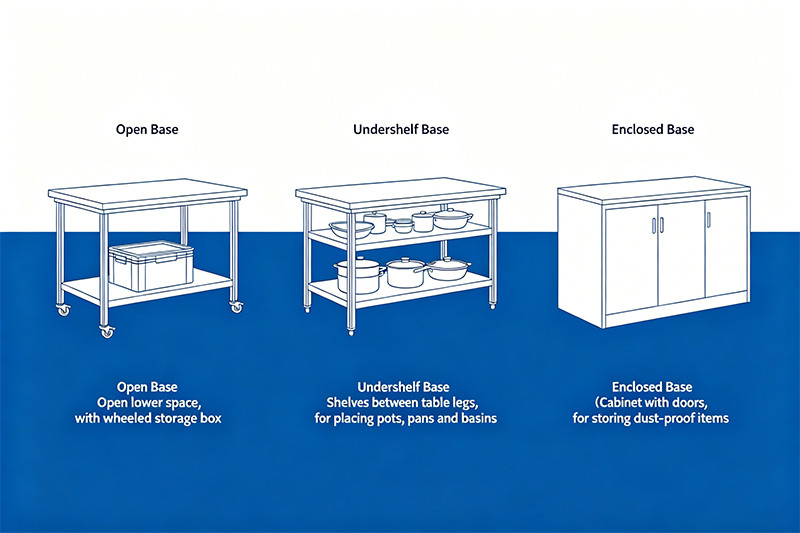
The base of a work station is critical for both stability and storage. The most common configurations each offer distinct advantages:
- Open Base: These tables feature legs without any lower shelving. The primary benefit is unobstructed access underneath, making it easy to store large, mobile items like ingredient bins or to roll carts underneath. This design also simplifies floor cleaning, as there are no shelves to work around.
- Undershelf Base: This is the most popular configuration, featuring a solid or slatted shelf between the legs. This undershelf is invaluable for storing frequently used pots, pans, small appliances, and ingredient containers, keeping them off the floor but still within easy reach. They can be fixed or adjustable to accommodate items of different heights.
- Enclosed Base (Cabinet Style): For a more organized and protected storage solution, an enclosed base with hinged or sliding doors functions like a cabinet. This is ideal for storing items that need to be kept free of dust and debris, such as clean smallwares, specialized tools, or dry goods. Sliding doors are particularly useful in tight aisles where hinged doors would obstruct traffic.
Standard vs. All-Stainless Steel Commercial Work Stations
While the worktop of any quality station is stainless steel, the material used for the legs and undershelf can vary. This choice impacts both cost and performance in different environments.
- Standard (Galvanized Legs/Shelves): Many work stations come with a stainless steel top and galvanized steel legs and undershelves. Galvanized steel is carbon steel coated in zinc to resist rust. This is a cost-effective option that is perfectly suitable for most dry kitchen environments.
- All-Stainless Steel: In this configuration, the top, legs, and undershelf are all made of stainless steel. While more expensive, this is the superior choice for wet or high-humidity environments, such as dishwashing areas or kitchens with frequent floor washing. The complete stainless construction ensures maximum corrosion resistance from top to bottom, offering greater longevity where moisture is a constant factor.
Mobile vs. Stationary Commercial Work Stations: Which is Right for You?
The decision between a mobile and a stationary work station depends entirely on the need for flexibility in your kitchen layout.
- Stationary Work Stations: These are the sturdy anchors of the kitchen. Set on adjustable feet, they are designed to stay in one place and provide a robust, stable surface for heavy-duty tasks like operating large equipment or intensive butchery. Their permanence is a key part of an established, efficient kitchen workflow.
- Mobile Work Stations: Outfitted with heavy-duty locking casters (wheels), mobile tables offer unparalleled versatility. They can be moved easily to reconfigure a kitchen for different service types, rolled out of the way for deep cleaning, or used as temporary stations for catering and special events. This flexibility is invaluable in compact kitchens or dynamic environments where the layout may need to adapt quickly. For safety, it's crucial that at least two of the casters have reliable locking mechanisms to hold the table securely in place during use.
The Role of Backsplashes in Protecting Your Commercial Work Stations Area
A backsplash is a raised edge, typically along the back of the work table, and it is a small feature with a big impact. If your work station is placed against a wall, a backsplash is essential.
Its primary function is to prevent food particles, liquids, and utensils from falling into the hard-to-clean gap between the table and the wall. This greatly enhances sanitation, makes cleanup faster, and protects your walls from moisture, grease, and stains. Health inspectors often view backsplashes as a sign of a well-maintained, hygienic kitchen. Common backsplash heights range from 1.5 inches to 10 inches, with taller options offering more protection for messier tasks.
Maximizing Vertical Space with Smart Solutions for Commercial Work Stations
In any commercial kitchen, floor space is a precious commodity. The most efficient layouts make smart use of vertical space, and your work stations are the perfect place to start. Adding vertical tiers of storage above the work surface keeps essential tools and ingredients within arm's reach without cluttering the prep area.
- Double and Single Overshelves: These are shelves mounted on posts above the work table. A single overshelf provides one level of elevated storage, while a double overshelf provides two. They are perfect for holding spice containers, small tools, day-dot labels, or plates ready for service.
- Wall Shelving: If your work station is against a wall, installing shelves directly on the wall above the table is another excellent way to maximize storage. This keeps the work surface clear while ensuring everything your staff needs is easily accessible, minimizing unnecessary steps and improving overall workflow efficiency.
Ergonomics and Productivity: Tailoring Your Commercial Work Stations
A commercial kitchen is a demanding environment that can take a significant physical toll on staff who spend long hours on their feet performing repetitive tasks. Prioritizing ergonomics in your work station design is not a luxury—it is a critical investment in your team's health, safety, and productivity. An ergonomic workspace reduces physical strain, minimizes the risk of costly injuries, and boosts morale, which translates directly to a more efficient and successful operation.
Customizing Height and Comfort for Your Commercial Work Stations
One of the most important ergonomic factors is the height of the work surface. A table that is too high or too low forces staff into awkward postures, leading to back, neck, and shoulder strain.
- Standard Height: Most commercial work tables have a standard height of around 34 to 36 inches, which is designed to be a comfortable working level for the average person.
- Adjustable Height Tables: For maximum flexibility and comfort, adjustable height work tables are an excellent investment. These tables can be raised or lowered, either manually with a crank or electro-hydraulically, to perfectly match the height of the employee using it or the specific task being performed. This adaptability is invaluable for preventing musculoskeletal issues and ensuring every team member can work comfortably and efficiently. While they represent a higher initial cost, the return on investment through reduced injuries and increased productivity is significant.
Edge Profiles and Anti-Fatigue Measures for Commercial Work Stations
The small details of a work station can make a big difference in daily comfort and safety. The profile of the table's edge and the flooring underfoot are key considerations.
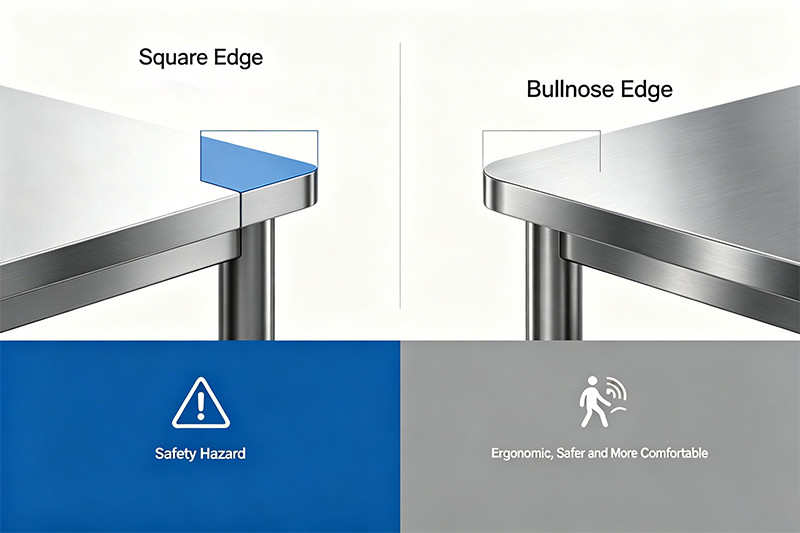
Edge Profiles:
- Square Edge: This is a sharp, 90-degree edge that gives a clean, modern look. While it allows tables to be placed flush against each other to create a seamless surface, its sharp corners can be a safety hazard and uncomfortable to lean against for long periods.
- Bullnose Edge (Rounded): This profile features a smoothly rounded edge. A "full bullnose" is completely rounded, while a "half bullnose" is rounded on top and flat on the bottom. The bullnose edge is far more ergonomic and safer, as it eliminates sharp corners that can cause bumps and bruises. This rounded design is also more comfortable for staff who need to lean against the table during prep work.
Anti-Fatigue Measures: Standing for hours on a hard floor can lead to significant pain in the feet, legs, and lower back. Providing anti-fatigue mats is a simple but highly effective solution. These cushioned mats are placed on the floor in front of work stations and encourage subtle movements in the leg muscles, which promotes blood flow and reduces fatigue. Many commercial-grade mats are also slip-resistant and designed with drainage holes for wet environments, enhancing both comfort and safety. By combining an ergonomic work table with an anti-fatigue mat, you create a workstation that actively supports the well-being and productivity of your staff.
Mastering Organization and Space with Commercial Work Stations
In a commercial kitchen, chaos is the enemy of efficiency. A cluttered, disorganized workspace not only slows down production but also creates safety hazards and increases stress levels for your staff. Mastering organization is about creating a system where everything has a place and is easily accessible. Well-designed commercial work stations are at the heart of this strategy, providing the framework for a tidy, functional, and highly productive kitchen.
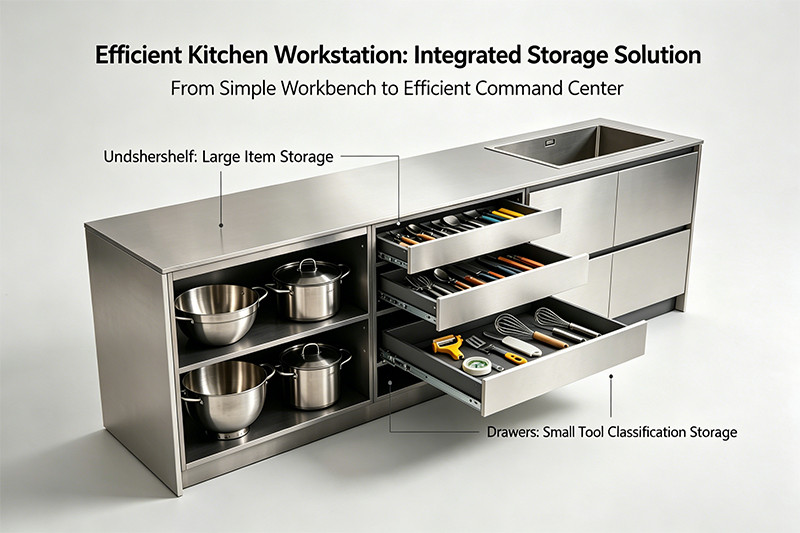
Integrated Storage for Clutter-Free Commercial Work Stations (Shelves, Drawers)
A work station's primary role is to provide a surface for prep, but its secondary role as a storage hub is just as important for maintaining a clutter-free environment. Integrated storage solutions turn a simple table into a highly efficient command center.
- Undershelves: As a standard feature on most work tables, undershelves are the first line of defense against clutter. They provide the perfect spot to store bulkier items like mixing bowls, stock pots, and small appliances, or ingredient bins. This keeps items off the floor and frees up valuable work surface area, ensuring that prep space remains dedicated to the task at hand.
- Drawers: Adding one or more drawers to a work station is an excellent way to organize smaller, essential tools. Knives, peelers, whisks, thermometers, and other hand tools can be neatly stored out of sight but remain instantly accessible. This prevents the work surface from becoming a jumble of loose utensils and reduces the time staff spend searching for the right tool, leading to a smoother, faster workflow.
By ensuring that every tool and container has a designated home, either on a shelf or in a drawer, you establish a system of organization that is easy to maintain and essential for peak kitchen performance.
Flexible Layouts with Modular and Mobile Commercial Work Stations
Modern kitchens often need to adapt to changing menus, special events, or fluctuating demand. A rigid, fixed layout can hinder this flexibility. This is where modular and mobile work stations shine, allowing you to reconfigure your space to meet the day's specific needs.
- Modular Work Stations: These are designed as interchangeable components that can be combined in various configurations. You can connect different tables, add-on storage units like drawers or cabinets, and create custom layouts that perfectly fit your space and workflow. This approach allows you to build a cohesive system that can evolve with your business. High-quality manufacturers like Samsink specialize in these systems, offering the ability to create highly efficient, custom-feeling layouts with standard components.
- Mobile Work Stations: The ultimate tool for flexibility, work stations on casters can be moved anywhere they are needed. A mobile station can serve as an extra prep area during a busy service, a plating station for a large catering order, or simply be rolled aside to create more space for cleaning. In a dynamic kitchen environment, having a few mobile work stations provides the agility to handle any situation efficiently, turning underutilized areas into productive zones as needed.
By combining stationary work stations for core tasks with modular and mobile units, you can create a highly adaptable kitchen layout that maximizes both space and productivity.
Ensuring Longevity and Hygiene for Your Commercial Work Stations
Purchasing commercial work stations is a significant investment that directly impacts the safety, efficiency, and reputation of your business. To protect this investment, it's crucial to prioritize practices and certifications that guarantee longevity and uncompromising hygiene. From legal compliance to daily maintenance, a proactive approach ensures your work stations remain a valuable asset for years to come.
The Importance of NSF Certification for Commercial Work Stations
When selecting any equipment for a commercial kitchen, one of the most important things to look for is the NSF mark. NSF stands for the National Sanitation Foundation, an independent organization that develops strict public health standards and certifies products that meet them.
What NSF certification means for your work station:
- Food-Safe Materials: The product is made from materials that are non-toxic and will not leach harmful chemicals into food.
- Hygienic Design: It is designed and constructed to be easily cleanable, with no cracks, crevices, or tight corners where bacteria can hide and multiply.
- Regulatory Compliance: Using NSF-certified equipment is often required by local health departments. It provides peace of mind that your equipment meets established sanitation codes, which simplifies health inspections and helps you avoid fines or violations.
In short, the NSF mark is an assurance of safety, quality, and reliability. Choosing an NSF-certified work station from a trusted brand like Samsink demonstrates a commitment to food safety and protects both your customers and your business.
Keeping Your Commercial Work Stations Spotless: Cleaning and Maintenance
Even the highest quality stainless steel requires regular cleaning and proper maintenance to preserve its protective layer and hygienic properties. A consistent cleaning protocol is essential for preventing corrosion and extending the life of your equipment.
Best Practices for Cleaning Stainless Steel:
- Daily Wiping: At the end of each shift, clear all debris from the surface and wipe it down with a soft cloth or sponge and a solution of warm water and mild dish soap.
- Clean with the Grain: Stainless steel has a faint "grain" or pattern of fine lines. Always wipe and scrub in the direction of the grain to avoid creating microscopic scratches on the surface.
- Rinse Thoroughly: After cleaning, rinse the surface completely with clean water to remove any soap residue, which can cause discoloration if left to dry.
- Dry Completely: Always dry the surface with a clean, soft cloth. This is a critical step, as it prevents water spots and stops mineral deposits from damaging the steel's passive layer.
- Tackle Tough Stains Gently: For stubborn grease or stains, use a non-abrasive commercial degreaser or a paste of baking soda and water. A solution of equal parts white vinegar and water can also be effective.
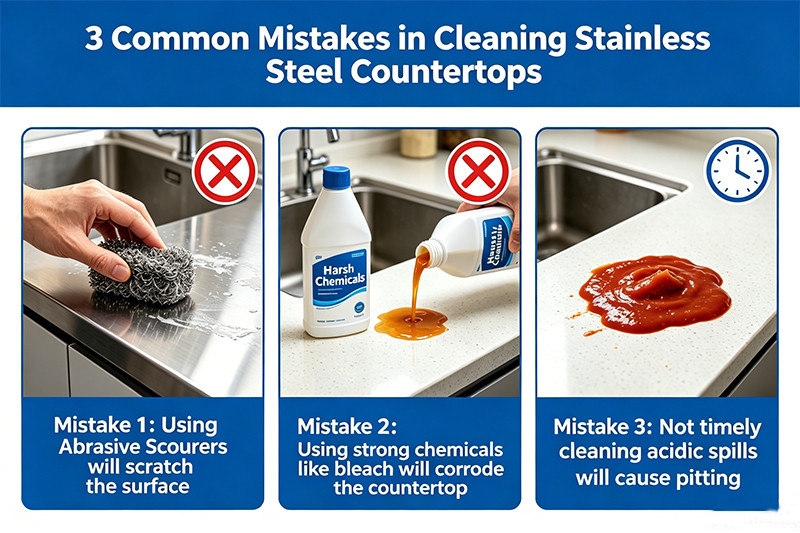
What to Avoid:
- Abrasive Scourers: Never use steel wool, wire brushes, or abrasive scouring pads. These will scratch the surface and destroy the protective chromium oxide layer, leading to rust.
- Harsh Chemicals: Avoid cleaners containing chlorides (bleach), abrasives, or harsh acids. If you must use a stronger chemical, ensure it's formulated for stainless steel, test it on a hidden spot first, and rinse it off immediately.
- Leaving Spills: Clean up acidic foods (tomato sauce, citrus) and salt spills promptly, as they can cause pitting and corrosion if left to sit.
Investing in Quality: The Long-Term Value of Your Commercial Work Stations
It can be tempting to choose lower-cost equipment to save money upfront, but this is often a false economy. Investing in high-quality, durable commercial work stations from a reputable manufacturer offers substantial long-term value that far outweighs the initial price difference.
- Durability and Longevity: Quality equipment is built with superior materials and construction techniques designed to withstand the daily rigors of a commercial kitchen. It will resist dents, warping, and corrosion for many years, significantly reducing the need for costly repairs or frequent replacements. A premium work station may last 15-20 years with proper care, compared to just 5-7 years for a budget alternative.
- Reduced Maintenance Costs: Cheaper equipment is more prone to breakdowns and requires more frequent maintenance, leading to higher operational costs and disruptive downtime.
- Enhanced Safety and Performance: High-end equipment is designed with safety and efficiency in mind, offering better performance and ergonomic features that support a safer, more productive workflow.
- Higher Resale Value: Should you need to upgrade or change your layout, quality commercial equipment retains its value far better than cheaper alternatives, providing a greater return on your initial investment.
An investment in quality is an investment in the future of your business. It ensures you have a reliable, safe, and efficient foundation for your culinary operations for many years to come.
Frequently Asked Questions (FAQ)
1. What is the most important factor to consider when choosing a commercial work station?
While many factors are important, the material is arguably the most critical. 304-grade stainless steel is the industry standard for its combination of durability, hygiene, and corrosion resistance. It is non-porous, easy to sanitize, and resilient to the demands of a busy kitchen, making it the safest and most reliable choice for food preparation surfaces.
2. How do I know what size work station I need?
Measure your available kitchen space carefully, ensuring you leave adequate clearance for walkways (typically 36-48 inches). Consider the station's primary function. A main prep table might need to be large (e.g., 72 or 96 inches long), while a smaller station for a specific task might only need to be 36 or 48 inches. Also, think about the number of staff who will use it simultaneously. The goal is to maximize workspace without impeding kitchen flow.
3. Is a backsplash really necessary?
If the work station will be placed against a wall, a backsplash is highly recommended and often required by health codes. It prevents food, water, and debris from falling into the gap between the table and wall, which is difficult to clean and can become a breeding ground for bacteria. It also protects your wall from splashes and makes daily cleanup much more efficient.
4. When should I choose a mobile work station over a stationary one?
Choose a mobile work station (with locking casters) if you need flexibility in your kitchen layout. They are perfect for multi-purpose spaces, catering operations, or kitchens that need to be reconfigured for different tasks or for deep cleaning. Choose a stationary work station for core, heavy-duty tasks that require maximum stability, such as operating a large mixer or heavy butchery. Many kitchens use a combination of both to achieve the perfect balance of stability and flexibility.
5. What does the "gauge" of stainless steel mean?
The gauge refers to the thickness of the stainless steel. Counterintuitively, a lower gauge number means thicker, more durable steel. For work station tops, 16-gauge is a common and durable choice suitable for most applications. For very heavy-duty use, 14-gauge offers superior strength and resistance to denting. 18-gauge is a more economical option, often used for lighter-duty tables or undershelves, but may be more susceptible to denting over time.
6. Can I put hot pans directly on a stainless steel table?
Yes, one of the key benefits of stainless steel is its high heat resistance. You can place hot pots and pans directly on the surface without worrying about burning, melting, or damaging the material. This makes it ideal for use in cooking lines and busy prep areas where hot items are constantly being moved.
7. Why is NSF certification important and how do I know if a table is certified?
NSF (National Sanitation Foundation) certification ensures a product is designed and built to strict standards for public health and safety. It verifies that the work station uses food-safe materials, is easy to clean, and resists harboring bacteria. This is crucial for passing health inspections. Certified products will have an official NSF logo (three letters in a circle) on the product itself, its packaging, or in the product specifications. Always verify NSF certification when purchasing equipment for food contact.
Selecting the ideal commercial work stations is a pivotal decision that impacts a kitchen's long-term success, efficiency, and cleanliness. By carefully considering material, design, ergonomics, and maintenance, you can ensure your investment supports a thriving culinary environment. I'm confident that armed with this guide, you will be well-equipped to choose commercial work stations that perfectly fit your kitchen's unique demands.