The Ultimate Guide to Selecting Refrigerated Commercial Work Stations
The Ultimate Guide to Selecting Refrigerated Commercial Work Stations
In the pursuit of creating exceptional culinary experiences, we recognize that efficiency and food safety are non-negotiable pillars of a successful kitchen. Every day, we navigate the delicate balance between keeping our ingredients at the peak of freshness and the high-pressure demands of rapid, seamless meal preparation. This is a challenge that requires more than just skill and dedication; it requires the right tools to empower our culinary teams.
This is precisely where refrigerated commercial work stations emerge as a game-changing solution, designed to significantly enhance our kitchen operations. These innovative units are more than just appliances; they are the heart of an efficient workflow, a fortress for food safety, and a key investment in productivity. This comprehensive guide will equip you with all the essential knowledge to select the ideal unit that not only meets but exceeds the unique needs of your professional kitchen.
Key Takeaways
- Centralized Efficiency: Refrigerated work stations merge cold storage with a dedicated prep surface, creating a powerful, all-in-one hub for food preparation. This design dramatically reduces the need for chefs to move between separate refrigerators and prep areas, slashing wasted steps and saving invaluable time during busy services. By keeping all necessary ingredients within arm's reach, these units streamline the entire workflow from initial prep to final plating.
- Unyielding Food Safety: The cornerstone of a refrigerated work station is its ability to maintain consistent and safe temperatures, typically between 33°F and 41°F (0.5°C to 5°C). This is crucial for keeping perishable ingredients out of the "temperature danger zone" where harmful bacteria can multiply. Proper temperature control not only preserves the quality and freshness of food but also ensures compliance with stringent health department regulations like NSF-7 standards, significantly reducing the risk of foodborne illnesses.
- Space Optimization and Customization: Commercial kitchens often face space constraints, and these work stations are designed to maximize every square foot. Available in various configurations—from undercounter models and worktop refrigerators to specialized pizza and sandwich prep tables—they can be tailored to any layout. Features like adjustable shelving, interchangeable drawers and doors, and various pan capacities allow for deep customization, ensuring the unit perfectly matches your menu and operational needs.
- Long-Term Investment in Durability and Efficiency: A high-quality refrigerated work station is a smart financial investment. Modern units are increasingly built with energy-saving technologies and sustainable refrigerants like R290, which lower operating costs and reduce environmental impact. Constructed from durable materials like food-grade stainless steel (often 304-grade), they are built to withstand the intense demands of a commercial kitchen, resisting corrosion, heat, and constant use, ensuring longevity and a reliable return on investment.
Understanding the Essential Role of Refrigerated Commercial Work Stations in Our Kitchens
What Exactly Are These Game-Changing Commercial Work Stations?
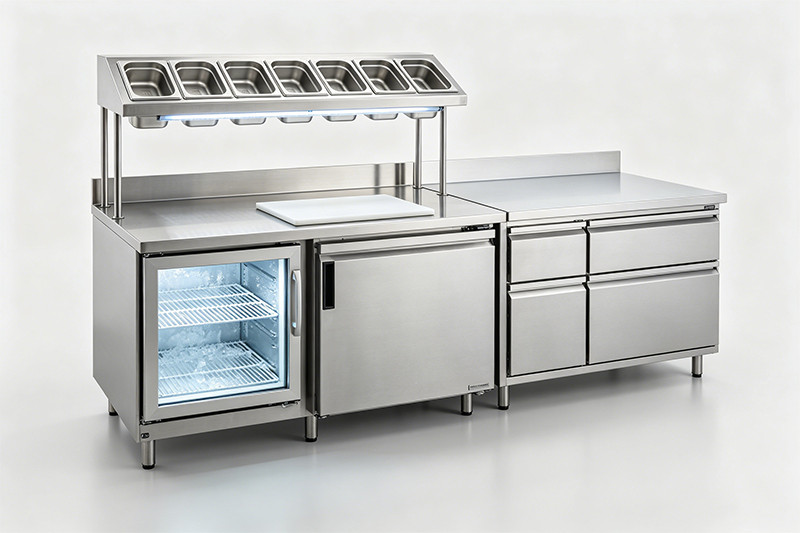
At its core, a refrigerated commercial work station is a multifunctional piece of equipment that masterfully combines a durable, sanitary work surface with an integrated refrigeration unit. Imagine a stainless steel prep table merged with an undercounter refrigerator; that is the fundamental concept. This single, cohesive unit provides a chilled storage base directly beneath the area where all the chopping, mixing, and assembling happens. The result is a self-contained productivity hub that keeps essential, perishable ingredients perfectly chilled and always within the chef's immediate reach.
These work stations come in several primary forms, each designed for slightly different applications:
- Refrigerated Prep Tables: Often used for salads and sandwiches, these feature a refrigerated "well" or "rail" at the top to hold an array of food pans with ingredients, a cutting board surface, and refrigerated cabinet space below.
- Worktop Refrigerators: These provide a flat, solid, refrigerated countertop for general prep work, with drawers or doors for storage underneath. They are incredibly versatile for all-purpose kitchen tasks.
- Chef Bases: These are low-profile, heavy-duty work stations with refrigerated drawers designed to have cooking equipment, like griddles or fryers, placed directly on top of them.
This intelligent design transforms a standard and often disjointed prep process into a fluid, ergonomic, and highly efficient operation.
How Our Kitchens Reap the Benefits: Increased Productivity and Ingredient Freshness
The impact of integrating a refrigerated work station into a commercial kitchen is immediate and profound. The most significant benefit is a dramatic boost in productivity. By creating a centralized station where ingredients can be stored, prepared, and assembled, these units eliminate the time-consuming journey chefs often take between a walk-in cooler, a refrigerator, and their cutting board. This reduction in movement minimizes kitchen fatigue and allows staff to complete tasks faster, directly improving ticket times and service speed.
Furthermore, the constant proximity to refrigeration ensures ingredients remain at their peak of freshness. Instead of ingredients sitting on a counter and warming to unsafe temperatures during a busy rush, they are kept perfectly chilled right up until the moment they are used. This not only preserves the taste, texture, and quality of the food but also drastically reduces spoilage and food waste, which in turn protects your bottom line.
The Core Concept: Combining Efficient Refrigeration with a Practical Workspace
The genius of the refrigerated work station lies in its seamless fusion of two of the kitchen’s most critical elements: cold storage and a functional workspace. The workspace, typically made of durable and easy-to-clean stainless steel, provides a hygienic surface that can withstand the rigors of a commercial kitchen. This is often paired with removable polyethylene cutting boards for added versatility.
Underneath this practical surface lies a powerful and reliable refrigeration system. Modern units deploy advanced compressors and forced-air technology to ensure consistent and uniform cooling throughout the storage compartments, even with frequent door openings during service. This combination is not merely a matter of convenience; it's a strategic design choice that enhances both food safety and operational efficiency. By bringing the fridge to the prep line, these work stations empower chefs to work faster, smarter, and safer.
Elevating Food Safety and Streamlining Workflow with Advanced Commercial Work Stations
The Critical Importance of Consistent Temperature Control for Our Sensitive Ingredients
In any food service operation, temperature control is the most critical factor in ensuring food safety. Refrigerated commercial work stations are engineered to be the first line of defense against foodborne illnesses. They are designed to maintain a consistent internal temperature, typically within the food-safe range of 33°F to 41°F (0.5°C to 5°C). This is vital for keeping perishable ingredients out of the "temperature danger zone"—the range between 41°F and 135°F where bacteria multiply rapidly. By holding ingredients at a proper, chilled temperature, these units significantly slow bacterial growth, preserving the safety and integrity of everything from fresh produce and dairy to meats and sauces. Advanced models feature digital thermostats and external displays, allowing for precise management and easy monitoring of these critical temperatures.
Ensuring Compliance: Meeting Strict Health Department Standards with Ease
Health departments and regulatory bodies have strict guidelines for food storage and handling, and failure to comply can lead to fines, reputational damage, or even closure. Investing in a certified refrigerated work station is a proactive step toward ensuring compliance. High-quality units are typically certified by organizations like NSF International (NSF-7 standard for food equipment), which guarantees they are designed and constructed for safe food storage, easy cleaning, and durability. A properly functioning work station that maintains accurate temperatures helps your kitchen pass health inspections with confidence. It provides inspectors with tangible proof that you are committed to the highest standards of food safety, from temperature logs to the very equipment you use.
Revolutionizing Our Operational Workflow: From Ingredient Prep to Final Plate Assembly
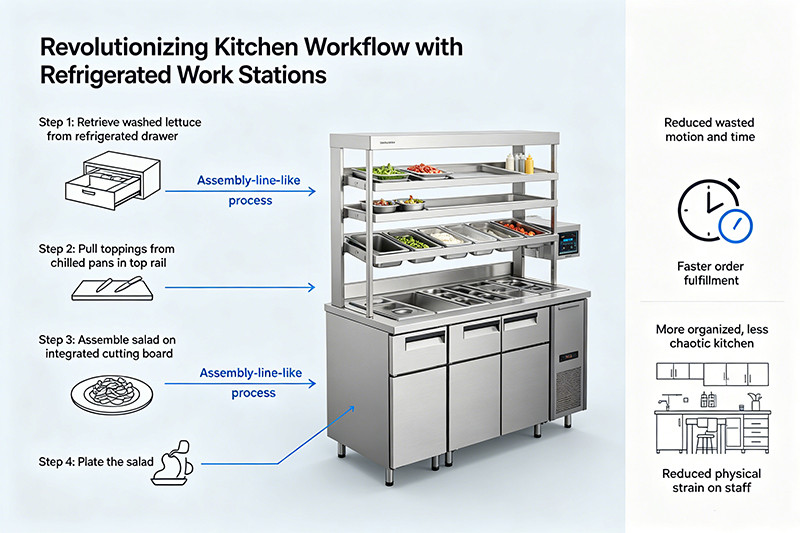
The strategic placement and use of refrigerated work stations can completely revolutionize a kitchen's workflow. By creating a self-contained prep zone, these units create a logical, assembly-line-like process. Consider the journey of a salad: a chef can retrieve washed lettuce from a refrigerated drawer, pull various toppings from the chilled pans in the top rail, assemble the salad on the integrated cutting board, and plate it—all without taking more than a few steps. This streamlined process drastically reduces wasted motion and time, allowing for faster order fulfillment and a more organized, less chaotic kitchen environment. The ergonomic benefits also reduce physical strain on kitchen staff, leading to a more comfortable and productive workforce.
Implementing Best Practices for Preventing Cross-Contamination and Reducing Costly Spoilage
Cross-contamination—the transfer of harmful bacteria from one surface or food to another—is a major food safety risk. Refrigerated work stations, when used correctly, are powerful tools for its prevention. Best practices are crucial:
- Separation: Use dedicated work stations or clearly defined zones on a single station for different food types (e.g., raw meat vs. ready-to-eat vegetables). Within the unit, always store raw meats on the lowest shelves, in sealed containers, to prevent juices from dripping onto other foods.
- Dedicated Tools: Employ color-coded cutting boards and utensils for different food categories to create an easy-to-follow system for your staff.
- Rigorous Cleaning: The smooth, non-porous surfaces of stainless steel are designed for easy cleaning and sanitization. All food-contact surfaces, including cutting boards, prep tables, and utensils, must be thoroughly cleaned and sanitized after each use, when switching between tasks, and at least every four hours during continuous use.
Following these practices not only prevents foodborne illness but also minimizes food spoilage. Keeping ingredients properly chilled and separated extends their shelf life, leading to significant cost savings.
Maximizing Space and Customizing Your Commercial Work Stations for Our Unique Requirements
Intelligent Space-Saving Designs Optimized for Every Kitchen Layout and Size
In the world of commercial kitchens, space is a premium commodity. Refrigerated work stations are brilliantly designed to be masters of space efficiency, merging two essential functions into a single footprint. Instead of dedicating separate floor space to a refrigerator and a prep table, you get both in one compact unit. This is invaluable for all types of kitchens, from sprawling restaurants to cozy cafes and compact food trucks.
The market offers a wide array of sizes and configurations to fit nearly any layout:
- Undercounter Units: These are designed to slide neatly under existing countertops, providing cold storage without sacrificing valuable work surfaces.
- Worktop Models: These freestanding units offer a durable work surface on top of the refrigeration base, creating an instant, all-in-one station.
- Compact Models: Slimmer units, some as narrow as 27 inches, are perfect for tight corners or smaller kitchens where every inch counts.
By choosing a model that matches your available space, you can dramatically improve your kitchen's functionality and workflow without causing congestion.
Tailoring Features: Exploring Adjustable Shelving and Integrated Components
One of the greatest strengths of modern refrigerated work stations is their high degree of customization. You can tailor a unit's features to perfectly match your menu and operational needs. Key customizable options include:
- Door vs. Drawers: Choose between hinged doors for accessing bulk items or pull-out drawers for organizing smaller, frequently used ingredients. Drawer configurations are often preferred for their ergonomic benefits, allowing staff to see and access contents without bending down.
- Adjustable Shelving: Most units come with adjustable shelves, allowing you to configure the internal storage space to accommodate everything from tall stock pots to shallow pans.
- Cutting Boards and Work Surfaces: Select from different materials, such as removable high-density polyethylene cutting boards for easy cleaning or durable stainless steel tops for general prep.
- Pan Capacity and Configuration: Prep tables come with wells that can hold various sizes of food pans. The dividers are often adjustable, so you can switch from holding several small sixth-size pans to fewer, larger third-size pans based on ingredient usage.
Specialized Setups: From Dedicated Pizza Prep Stations to Efficient Pastry Work Zones
Beyond general use, many work stations are specially designed for specific culinary tasks, further boosting efficiency.
| Workstation Type | Key Features | Best For |
|---|---|---|
| Pizza Prep Table | Extra-deep work surface (around 20 inches) to accommodate large pizza doughs. Raised, angled pan rail for easy access to a wide variety of toppings. Cold-wall refrigeration systems are often used to keep dense ingredients like cheese and sauce consistently cool. | Pizzerias, fast-casual restaurants serving flatbreads. |
| Sandwich/Salad Prep Table | Narrower work surface (10-12 inches) perfect for assembling sandwiches and salads. Top rail holds multiple pans for meats, cheeses, and vegetables. Mega Top versions offer a third row of pans for 50% more ingredient capacity. | Delis, sandwich shops, cafes, salad bars. |
| Pastry/Bakery Work Station | Often feature marble or granite countertops, which stay naturally cool and are ideal for working with dough and chocolate. Refrigerated drawers below keep butter, cream, and other sensitive ingredients at the perfect temperature. | Bakeries, pastry shops, high-end restaurants with a dedicated pastry department. |
By selecting a specialized unit like a pizza prep table from a quality brand such as Samsink, you invest in a tool that is perfectly matched to its purpose, leading to faster production, better consistency, and a smoother-running kitchen.
The Smart Investment: Energy Efficiency, Durability, and Selecting the Right Commercial Work Stations
Cutting Operational Costs with Advanced Energy-Saving Technologies and Sustainable Refrigerants
In today's market, a refrigerated work station is not just a purchase; it's a long-term operational investment. Energy efficiency has become a paramount consideration, directly impacting your utility bills and bottom line. Modern units are engineered with advanced technologies to minimize power consumption. Look for models with the ENERGY STAR certification, which are verified by the U.S. Environmental Protection Agency (EPA) to be significantly more energy-efficient than standard models.
Key energy-saving features include:
- Sustainable Refrigerants: Many new units use environmentally friendly refrigerants like R290 (propane). These have a very low Global Warming Potential (GWP) and are also more efficient, leading to lower energy use.
- High-Quality Insulation: Superior, high-density polyurethane insulation helps maintain internal temperatures without the compressor having to work as hard.
- Efficient Compressors and Fans: Variable-speed compressors and electronically commutated motors (ECMs) for fans adjust their speed to the cooling demand, using less energy than older, single-speed components.
- LED Lighting: Energy-efficient LED lights use a fraction of the power of traditional incandescent bulbs and generate less heat.
The U.S. Department of Energy (DOE) continually updates its energy conservation standards, pushing manufacturers to innovate and produce more efficient equipment. Selecting an energy-efficient unit is a smart, forward-thinking decision that reduces operational costs and supports sustainability.
The Promise of Longevity: Durable Construction Essential for Demanding Kitchen Environments
A commercial kitchen is a demanding, high-stress environment. Your equipment must be built to last. The durability of a refrigerated work station is determined by the quality of its materials and construction.
- Stainless Steel Grade: This is the most crucial factor. Look for units constructed from 304 stainless steel, also known as 18/8. It offers an excellent balance of strength, corrosion resistance, and is easy to sanitize, making it ideal for food-contact surfaces and the overall structure. Less expensive 430-grade stainless steel may be used on exterior sides but is more prone to rust.
- Heavy-Duty Construction: A well-built unit will have a fully welded frame, reinforced corners, and robust door hinges and drawer slides that can withstand thousands of openings and closings.
- Reliable Components: The longevity of the refrigeration system depends on the quality of its compressor, condenser coils, and evaporator. Brands known for their reliability often use components from trusted manufacturers.
Investing in a durable, well-constructed unit from a reputable brand like Samsink ensures that your work station will serve as a reliable cornerstone of your kitchen for years to come, withstanding daily wear and tear and providing an excellent return on investment.
Our Step-by-Step Guide to Choosing the Perfect Commercial Work Stations for Long-Term Success
Selecting the right refrigerated work station can feel overwhelming, but a systematic approach will lead you to the perfect choice. Follow these steps to make an informed decision:
- Assess Your Menu and Workflow: Start by analyzing your menu. What dishes do you prepare most often? What ingredients do you need to keep chilled and accessible? This will determine whether you need a general worktop, a sandwich table, or a specialized pizza prep station. Map out your kitchen's workflow to identify the best placement for the unit to maximize efficiency.
- Measure Your Space: Carefully measure the intended location. Remember to account for clearance space, especially at the back and sides, to ensure proper ventilation for the condenser—typically 3-6 inches. An obstructed airflow can cause the unit to overheat, become inefficient, and fail prematurely.
- Determine Capacity and Configuration: How many pans do you need to hold? Do you need more bulk storage (doors) or organized component storage (drawers)? Choose a size and configuration that meets your peak service demands without being excessively large and inefficient.
- Prioritize Energy Efficiency and Durability: Look for the ENERGY STAR label and check the type of refrigerant and insulation used. Insist on high-quality materials like 304 stainless steel for longevity. While a more durable and efficient unit may have a higher upfront cost, it will save you money in the long run through lower utility bills and fewer repair costs.
- Review Warranty and Service: A strong warranty is a sign of a manufacturer's confidence in its product. Check the warranty details for parts, labor, and the compressor, which often has a separate, longer warranty. Ensure that service and parts are readily available in your area.
By taking these factors into account, you can select a unit that is a true asset to your operation.
Ready to upgrade your kitchen's efficiency and food safety? Explore the full range of durable and energy-efficient Samsink commercial refrigerated work stations. Our experts are here to help you find the perfect solution tailored to your unique needs. Contact us today for a personalized consultation!
Frequently Asked Questions (FAQs)
1. What is the ideal temperature for a refrigerated prep table? For optimal food safety, a refrigerated prep table should maintain a product temperature between 33°F and 41°F (0.5°C to 5°C). This range is cold enough to significantly slow the growth of harmful bacteria but warm enough to prevent ingredients like fresh produce from freezing and being damaged. It's important to note that the digital display on the unit often shows the ambient air temperature inside, which can fluctuate when doors are opened. The most accurate way to ensure safety is to use a calibrated thermometer placed with the food to verify the actual product temperature. Checking this at the beginning of every shift is a critical food safety practice.
2. What is the difference between a sandwich/salad prep table and a pizza prep table? The primary differences lie in the depth of the work surface and the design of the pan rail. A sandwich/salad prep table typically has a narrower cutting board, around 10 to 12 inches deep, which is ergonomically efficient for assembling smaller items. A pizza prep table, on the other hand, features a much deeper work surface, often 20 inches or more, to provide ample space for stretching and topping large pizza doughs. Additionally, pizza prep tables usually have a raised, angled pan rail that makes it easier for a cook to reach over the large workspace to access toppings. Using a pizza table for sandwiches can be awkward due to the excessive depth.
3. How often do I need to clean and sanitize my refrigerated work station? Frequent and thorough cleaning is non-negotiable for food safety. All food-contact surfaces, including the prep table, cutting boards, and utensils, must be cleaned and sanitized:
- After each use.
- When switching from preparing one food item to another (e.g., from raw chicken to fresh vegetables) to prevent cross-contamination.
- At least every four hours during continuous use, as recommended by the FDA Food Code.
- At the end of every shift. This routine involves a three-step process: washing with detergent, rinsing with clean water, and then applying an approved food-grade sanitizer for the required contact time.
4. Can I place heavy cooking equipment on top of any refrigerated work station? No, this is a critical distinction between different types of work stations. Only a chef base (also known as a low-boy or equipment stand) is specifically designed and built with a heavy-duty top and reinforced structure to support the weight and heat of countertop cooking equipment like griddles, charbroilers, or fryers. A standard worktop refrigerator or prep table is not designed for this purpose; their tops are intended for light prep work only. Placing heavy, hot equipment on a standard unit can damage the surface, compromise the refrigeration system, and create a serious safety hazard.
5. How can I ensure my refrigerated work station runs efficiently and lasts longer? Proactive maintenance is key to maximizing the life and efficiency of your unit.
- Keep Condenser Coils Clean: The condenser coils are responsible for releasing heat from the system. In a busy kitchen, they can quickly become clogged with grease and dust, forcing the compressor to work harder. Clean the coils monthly with a stiff brush or vacuum.
- Check Door Gaskets: Inspect the rubber seals (gaskets) around the doors and drawers weekly for any cracks, tears, or brittleness. A poor seal allows cold air to escape, increasing energy consumption. A simple test is to close the door on a dollar bill; if you can pull it out easily, the gasket needs to be replaced.
- Ensure Proper Airflow: Do not overfill the interior compartments, as this can block the circulation of cold air. Also, make sure the unit has adequate clearance from walls and other equipment for proper ventilation.
- Keep the Lid Closed: On prep tables with pan rails, keep the insulated lid closed whenever it's not in active use to help maintain temperature and reduce the workload on the compressor.
Conclusion
Investing wisely in the right refrigerated commercial work station is a strategic decision that benefits any professional kitchen. It's more than just purchasing equipment; it's about fundamentally transforming our daily operations for the better. These units stand at the intersection of efficiency, safety, and quality, providing the foundation for a smoother, faster, and more productive culinary environment.
By thoroughly considering crucial factors like food safety, energy efficiency, customization options, and durability, we empower our culinary teams to work smarter, faster, and with greater confidence. Let's make an informed choice that elevates our kitchen's potential and contributes to our overall success. An investment in the right equipment is an investment in your team, your customers, and your reputation.