Understanding Commercial Hand Washing Station Requirements for Efficient Mobile Food Operations
As entrepreneurs in the mobile food world, we understand that keeping things moving while maintaining top-notch cleanliness can feel like a delicate balancing act. That's exactly why an effective commercial hand washing station isn't just an accessory; it's a fundamental part of our success, ensuring both hygiene and operational efficiency. I'm here to guide you through the essential requirements for these stations, helping us all run smoother, safer, and more trusted mobile food businesses.
Key Takeaways
For mobile food operators aiming for success, understanding and implementing the correct hand washing station is paramount. This goes beyond mere compliance; it's about building a brand that customers trust. Here are the crucial takeaways from this guide:
- Hygiene is Your Brand: The primary function of a commercial hand washing station is to ensure food safety and prevent the spread of pathogens. Proper hand hygiene is the first line of defense against foodborne illnesses. It protects your customers, your staff, and your reputation. In the food industry, cleanliness is not just a regulatory requirement but a core component of your brand identity. A visible, well-maintained hand washing station signals to customers that you are serious about safety, thereby building invaluable trust.
- Health Code Compliance is Non-Negotiable: Health departments across the United States have strict, specific regulations for mobile food units. These almost universally mandate a dedicated hand washing sink separate from warewashing sinks. This sink must have hot and cold running water under pressure, soap, and single-use paper towels or an air dryer. Failure to meet these standards can result in fines, forced closure, and a tarnished reputation. It's crucial to check with your local health department for specific requirements regarding water temperatures, tank sizes, and sink placement. For example, many jurisdictions require the water to reach a minimum of 100°F (38°C).
- Strategic Design and Placement are Key: A compliant station is not just about having the right parts; it's about how they are assembled and where they are placed. The hand washing station must be located in the food preparation area, easily accessible to all employees. This strategic placement ensures that hand washing can be performed conveniently and frequently, especially after handling raw food, using the restroom, or any other activity that could contaminate hands. The station should be designed for hands-free operation where possible (using foot pedals or sensors) to further minimize the risk of re-contamination.
- NSF Certification Matters: When selecting equipment, look for the NSF (National Sanitation Foundation) certification mark. NSF International is an independent organization that tests and certifies products to ensure they meet strict public health and safety standards. An NSF-certified hand washing station guarantees that the materials used are durable, non-absorbent, and easy to clean and sanitize. Using NSF-certified equipment can streamline your health inspection process, as inspectors recognize it as a mark of quality and compliance.
- Portability Offers Significant Advantages: For many mobile food operations, a portable commercial hand washing station is the ideal solution. Brands like Samsink offer self-contained units that provide immense flexibility. These stations are perfect for food trucks with limited space, catering events at various venues, or farmers' market stalls. They are designed for rapid deployment, are cost-effective compared to custom plumbing, and ensure you can maintain compliance no matter where your business takes you. Their space-saving designs are engineered to fit into tight spaces without compromising on functionality.
- Invest in Quality for Long-Term Success: While it may be tempting to cut costs, your hand washing station is not the place to do it. Investing in a high-quality, durable unit from a reputable brand like Samsink pays dividends in the long run. A well-built station will withstand the rigors of a mobile environment, require fewer repairs, and consistently perform its crucial function. Consider factors like water capacity to ensure you can operate through a busy service without refills, the reliability of the hot water system, and the overall durability of the construction. This initial investment in quality is an investment in the safety, efficiency, and longevity of your mobile food business.
The Non-Negotiable Need for a Commercial Hand Washing Station in Mobile Food Service
In the fast-paced environment of a food truck or mobile food cart, the humble hand washing station stands as a cornerstone of the entire operation. It is far more than a regulatory box to check; it is the epicenter of food safety, customer confidence, and operational integrity. Without a dedicated and compliant station, a mobile food business is not just at risk of legal penalties, but of compromising the very trust it seeks to build with every customer it serves.
Securing Customer Trust, Food Safety, and Preventing Cross-Contamination
Proper hand washing is the single most effective way to prevent the spread of foodborne illnesses. In a mobile kitchen, where space is tight and the pace is frenetic, the potential for cross-contamination between raw ingredients, money, and ready-to-eat foods is a constant threat. A dedicated commercial hand washing station provides the essential barrier against this risk.
When employees have immediate and easy access to a designated sink for washing their hands, they are more likely to perform this critical task at key moments:
- Before starting a shift.
- After handling raw meat, poultry, or seafood.
- After using the restroom or handling garbage.
- After touching their face, hair, or any part of their body.
- Between changing tasks, such as moving from handling money to preparing food.
This diligence directly translates into food safety, but it also has a powerful impact on customer perception. A visible, well-stocked, and frequently used hand washing station is a silent testament to your commitment to hygiene. Customers who see a clean and professional operation are more likely to trust the food you serve, become repeat patrons, and recommend your business to others. In the age of social media and online reviews, a reputation for cleanliness is an invaluable marketing asset. Conversely, even a hint of poor hygiene can be devastating to a brand.
How a Compliant Commercial Hand Washing Station Meets Health Department Rules
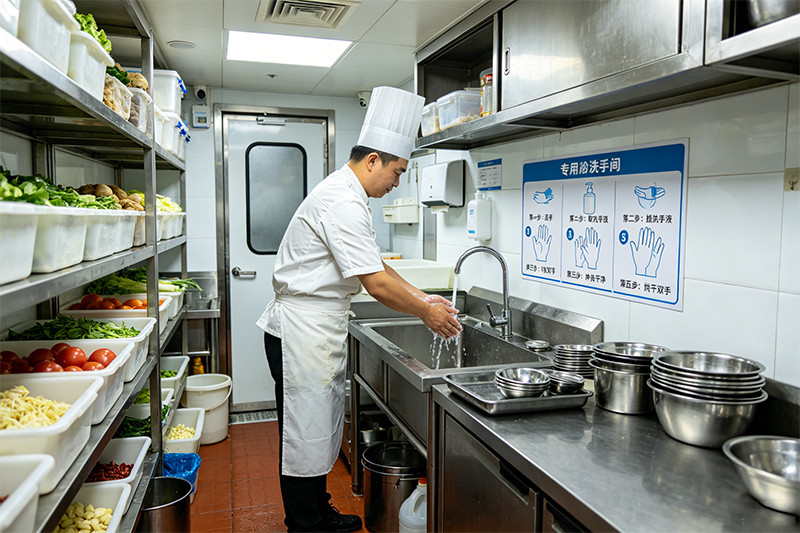
Health departments across the country have established stringent codes for mobile food units to protect public health, and hand washing facilities are always a primary focus. While specific regulations can vary by state and county, the core requirements are largely universal and based on the FDA Food Code. A compliant commercial hand washing station is designed to meet these rules precisely.
Typically, health codes mandate that a mobile food unit must have a dedicated hand washing sink that is separate and distinct from the sinks used for dishwashing and food preparation. Key requirements usually include:
| Feature | Common Health Department Requirement | Why It's Important |
|---|---|---|
| Location | Must be located within the food preparation area, conveniently accessible to employees at all times. | Ensures staff can wash hands frequently without abandoning their post or creating a bottleneck. |
| Water Supply | Must provide running hot and cold water under adequate pressure. Hot water must typically reach a minimum of 100°F (38°C). | Hot water is more effective at removing grease and soils, and the combination ensures a thorough cleaning. |
| Soap & Towels | A dispenser with soap and a supply of single-use paper towels or an approved air dryer must be provided at the sink. | Forbids the use of shared cloth towels, which can harbor and spread bacteria, ensuring a hygienic drying method. |
| Signage | A sign must be posted, reminding employees to wash their hands. | Acts as a constant visual cue to reinforce hygiene protocols and demonstrates compliance to inspectors. |
| Wastewater | Must have a wastewater tank that is at least 15% larger than the clean water tank to prevent overflow and ensure proper disposal. | Prevents contamination of the environment and ensures sanitary containment of greywater. |
By installing a compliant commercial hand washing station, you are creating an environment that not only passes health inspections but also fundamentally integrates safety into your workflow. It demonstrates to regulators that you are a serious, professional operator dedicated to upholding public health standards.
Decoding Health Regulations for Your Commercial Hand Washing Station Setup
Navigating the web of health regulations can be one of the most daunting tasks for a new mobile food entrepreneur. However, when it comes to your hand washing station, the rules are designed with a clear purpose: to ensure a safe and hygienic environment for food preparation. Understanding these standards is the first step toward building a compliant and successful operation.
Key Compliance Standards and NSF Certification for Commercial Hand Washing Stations
Health codes are not arbitrary; they are based on established public health and safety standards. One of the most important acronyms you will encounter is NSF, which stands for the National Sanitation Foundation. NSF International is an independent, accredited organization that tests and certifies products to ensure they comply with strict standards for public health.
When a piece of equipment, such as a hand washing station, is NSF-certified, it means:
- Safe Materials: The materials used are non-toxic, non-absorbent, and do not leach harmful chemicals into the water.
- Hygienic Design: The product is designed to be smooth, easily cleanable, and free of cracks or crevices where bacteria can accumulate.
- Durability and Performance: The unit is built to withstand the demands of a commercial food environment and performs as advertised.
Health inspectors are trained to look for the NSF certification mark. Using NSF-certified sinks and equipment can significantly streamline your inspection process, as it provides an immediate assurance of quality and compliance. While it may be possible to use non-NSF equipment in some jurisdictions, it often requires proving that the equipment meets equivalent standards, which can be a difficult and time-consuming process. Investing in NSF-certified stations from the outset is a wise decision.
Strategic Placement, Functionality, and Specific Features for Optimal Hygiene in a Commercial Hand Washing Station
Beyond the certification of the sink itself, health codes dictate its functionality and placement within the mobile unit. The goal is to make hand washing so convenient that it becomes a natural and frequent part of the work routine.
Strategic Placement: The FDA Food Code, which many local health departments use as a model, mandates that hand washing facilities must be "located in an area where food is prepared to allow for convenient use by employees." This means the sink cannot be in a separate room, around a corner, or obstructed by other equipment. It must be in the direct line of sight and easily accessible from all food handling and preparation stations.
Essential Functionality: A compliant station is a complete system. Here are the key functional components required by most health departments:
- Hot and Cold Running Water: The system must deliver a mix of hot and cold water through a faucet. The hot water must reach a minimum temperature, often 100°F (38°C), to be effective. This requires a water heater appropriately sized for the unit.
- Hands-Free Operation: While not always mandatory, faucets with foot pedals, knee-operated valves, or electronic sensors are highly recommended and are required in some regions. This type of operation is considered best practice as it prevents re-contaminating clean hands by touching faucet handles.
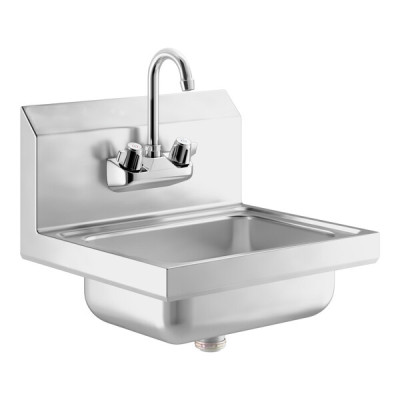
- Dedicated Basin: The sink basin itself must be large enough to allow for a proper hand wash, where a user can comfortably lather and rinse their hands without touching the sides of the basin.
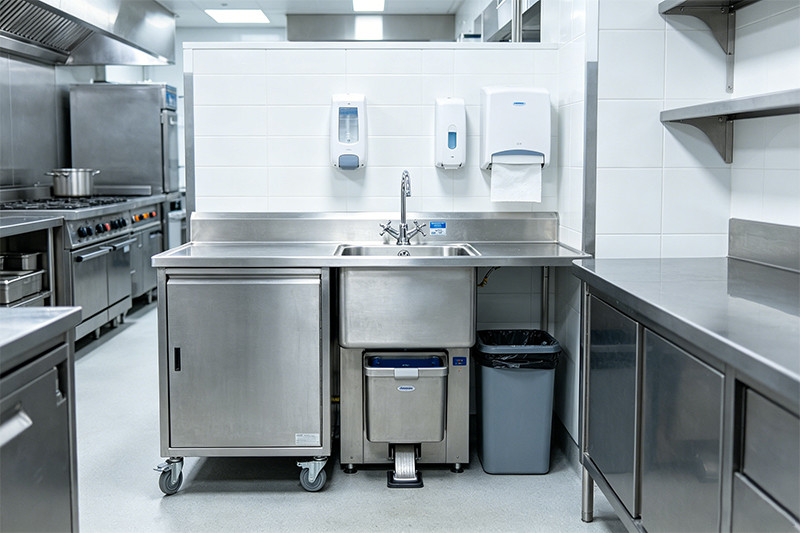
- Essential Supplies: A fully compliant station is always stocked with soap (in a dispenser) and a method for hygienic drying, which is almost always single-use paper towels from a dispenser. An easily accessible trash receptacle for used towels is also required.
Investing in a high-quality system that incorporates these features is crucial. A self-contained, portable unit like those offered by Samsink is an excellent choice, as they are engineered to meet these stringent health code requirements in a compact, easy-to-install package. These units are designed for the rigors of mobile operations, ensuring you are always prepared for a busy service or a surprise inspection.
Beyond Compliance: Real-World Advantages of a Portable Commercial Hand Washing Station
While meeting health codes is a primary driver, the benefits of a well-chosen hand washing station, particularly a portable one, extend far beyond passing inspections. For the modern mobile food vendor, these units offer a level of flexibility, efficiency, and cost-effectiveness that is essential for thriving in a competitive market. They are a strategic asset that can adapt to your business as it grows and evolves.
Space-Saving Designs and Unmatched Flexibility for Any Venue and Tight Spaces
Space is the ultimate luxury in any mobile food unit. Every square inch must be optimized for storage, preparation, or service. This is where portable commercial hand washing stations truly shine. Unlike traditional, plumbed-in sinks that require fixed connections and significant under-counter space, portable stations are self-contained.
Leading manufacturers like Samsink have engineered models that are incredibly compact, often with vertical designs that minimize their footprint. This allows them to be placed in tight corners or narrow spaces that would otherwise go unused, freeing up valuable counter space for food preparation and plating.
This flexibility extends beyond the confines of the truck. A key advantage of a mobile food business is the ability to operate in diverse locations, from a weekly farmers' market to a one-off music festival or a private catering gig. A portable hand washing station allows you to bring your compliance with you, wherever you go.
- Catering Events: Easily set up a compliant hand washing station in a temporary outdoor kitchen or inside a client's venue.
- Farmers' Markets: Meet market regulations by having a self-contained unit at your stall, even if no running water is available.
- Food Festivals: Deploy multiple stations quickly to handle higher-than-usual staff numbers and maintain hygiene during peak service.
This adaptability ensures that you are never limited by the infrastructure of a venue and can confidently say "yes" to more opportunities.
Cost-Effectiveness, Rapid Deployment, and Simplified Setup of Portable Commercial Hand washing Stations
For new and growing businesses, managing startup and operational costs is critical. Installing traditional plumbing in a food truck can be a complex and expensive undertaking, requiring professional labor and custom modifications to the vehicle. Portable hand washing stations offer a significantly more cost-effective alternative.
| Cost Factor | Traditional Plumbed-In Sink | Portable Commercial Hand Washing Station |
|---|---|---|
| Installation | High. Requires professional plumbers and vehicle modification. Can cost thousands. | Low to none. Arrives fully assembled. Simply place, fill, and plug in. |
| Labor | High. Significant labor hours for installation and integration. | Minimal. No professional installation is required for the unit itself. |
| Flexibility | Low. Permanent installation is difficult and expensive to move or modify. | High. Can be easily moved within the truck or to different venues. |
| Resale Value | Low. Custom plumbing is part of the vehicle. | High. Can be sold as a separate asset if the business model changes or you upgrade your vehicle. |
The setup is remarkably simple. Most portable units, including those from Samsink, are designed for plug-and-play operation. You simply fill the freshwater tank with potable water, add some water to the wastewater tank for stability, and plug the unit into a standard electrical outlet to power the water pump and heater. This process takes minutes, not days, allowing for rapid deployment and immediate use. This simplicity not only saves money but also minimizes downtime, getting you up and running—and earning—faster.
Making the Smart Choice: Selecting Your Ideal Commercial Hand Washing Station
Choosing the right commercial hand washing station is a crucial decision that will impact your daily operations, efficiency, and long-term compliance. It's not a one-size-fits-all situation. The ideal station for your mobile food business will depend on your specific menu, service volume, vehicle size, and local health code requirements. Making an informed choice requires a careful evaluation of several key factors.
Essential Considerations: Water Capacity, Hot Water Access, and Overall Size
When comparing different models of hand washing stations, three features are paramount: water capacity, hot water generation, and physical dimensions.
1. Water Capacity: Your hand washing station will have two tanks: a fresh (potable) water tank and a wastewater (greywater) tank. The size of these tanks is a critical operational detail.
- Fresh Water Tank: This determines how many hand washes you can perform before needing a refill. A tank that is too small will cause constant interruptions during a busy service shift. A good rule of thumb is to estimate the number of hand washes per hour and choose a capacity that allows you to operate for a full shift.
- Wastewater Tank: Health codes almost universally require the wastewater tank to be larger than the fresh water tank—typically by at least 15-50%. This is a crucial safety measure to prevent hazardous spills and overflows of contaminated water. For example, if you have a 5-gallon fresh water tank, you will need a wastewater tank of at least 7.5 gallons.
2. Hot Water Access: Consistent and immediate access to hot water is a non-negotiable health code requirement. Most portable stations use a small, on-demand electric water heater. When evaluating this feature, consider:
- Heating Time: How quickly does the water reach the required temperature (usually 100°F or higher)? You need hot water to be available instantly.
- Power Draw: Ensure the heater's electrical requirements are compatible with your food truck's power system (e.g., generator or shoreline power). An inefficient heater can put a significant strain on your power supply.
- Temperature Consistency: A quality unit will maintain a consistent water temperature, providing a comfortable and effective hand wash every time.
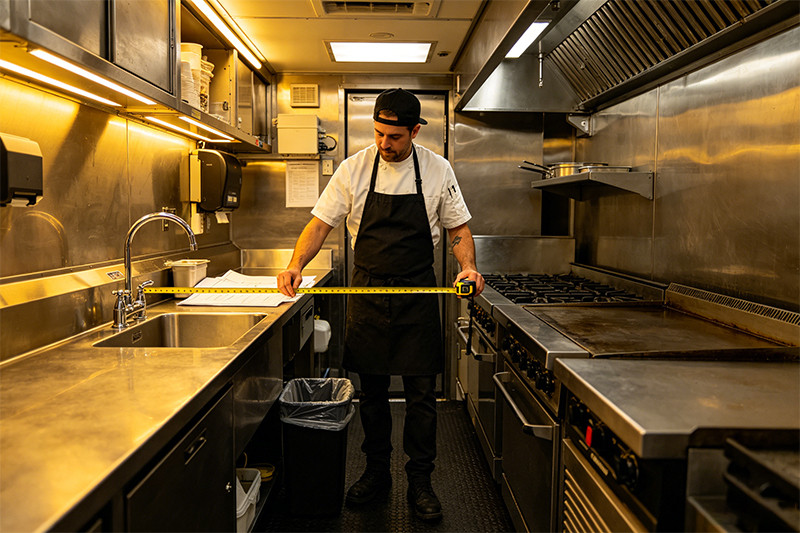
3. Overall Size and Footprint: Before you buy, meticulously measure the space in your food truck or cart where you plan to place the station. Remember to account not only for the unit's footprint but also for the "use space" around it. Employees need to be able to stand comfortably in front of the sink without being obstructed, and you need to leave room for the trash receptacle. Models from brands like Samsink come in various dimensions, offering solutions for even the most compact mobile kitchens.
Understanding Lighting Requirements for Your Commercial Hand Washing Station Environment
An often-overlooked aspect of compliance is the lighting in and around your hand washing station. Proper illumination is not just for convenience; it's a food safety requirement mandated by health authorities like the FDA. The rationale is simple: adequate lighting is necessary for employees to see if their hands are truly clean and for managers or inspectors to visually verify the cleanliness of the sink area itself.
According to FDA guidelines, which are widely adopted by local health departments, specific light intensity levels are required in different areas of a food establishment:
- Food Preparation Areas: These areas, which include your hand washing stations, typically require a minimum of 50 foot-candles (or 540 lux) of light. This level of brightness is necessary to allow for detailed work and to spot any dirt or contamination.
- Walk-in Coolers, Dry Storage, and Dining Areas: These areas generally require less light, often around 10-20 foot-candles.
To ensure compliance, you should:
- Install Dedicated Lighting: Position a bright, direct light source (like an LED fixture) directly above the hand washing station.
- Use a Light Meter: To be certain you are compliant, you can use a light meter app on a smartphone or a dedicated device to measure the light intensity at the sink's surface.
- Protect Light Bulbs: Any light bulbs located over food preparation or hand washing areas must be shatter-resistant or have protective shielding. This prevents broken glass from contaminating the area in case of an accident.
Proper lighting makes the hand washing station more inviting and easier to use, reinforcing its importance in your daily hygiene protocol. It is a detail that signals professionalism and a thorough commitment to food safety.
Ready to ensure your mobile food operation is fully compliant, efficient, and trusted by customers? The first step is investing in the right equipment. The Samsink line of portable commercial hand washing stations is NSF-certified and engineered specifically for the demands of the mobile food industry. With various sizes and features, there is a Samsink solution perfect for your food truck, cart, or catering business. Explore the Samsink collection today to find the durable, reliable, and compliant hand washing station that will become the cornerstone of your success.
Frequently Asked Questions (FAQ)
1. Do I really need a separate sink just for hand washing? Absolutely. This is one of the most fundamental and strictly enforced rules in the FDA Food Code and local health regulations. You must have a sink designated only for hand washing. Using a dishwashing sink (3-compartment sink) or a food prep sink for washing hands is a major violation because it creates a high risk of cross-contamination. The dedicated hand washing sink must be kept clear, accessible, and fully stocked at all times for employee use.
2. What is the minimum water tank size I need for my food truck? This is a common question, and the answer depends heavily on your local health department's specific requirements and your operational volume. Some jurisdictions might mandate a minimum fresh water capacity (e.g., 5 gallons), while others base the requirement on your number of employees or menu complexity. Operationally, you should choose a size that minimizes refills during a busy shift. A 5-gallon fresh tank and a 7.5-gallon wastewater tank might be sufficient for a small coffee cart, but a high-volume food truck might be better served by a 10-gallon fresh and 15-gallon wastewater system or larger. Always check with your local health authority first, then consider your business needs.
3. Do I need a water heater for my hand washing station? Yes, unequivocally. Providing hot water is a mandatory requirement. Regulations typically state that running water must be available, and it must include a hot water supply that can reach a minimum temperature, often set at 100°F (38°C). Cold water alone is not sufficient for proper hand hygiene in a food service context, as hot water is significantly more effective at removing oily and greasy soils from hands. Portable stations from reputable brands like Samsink come with reliable, built-in on-demand water heaters to ensure you are always compliant.
4. Can I build my own hand washing station to save money? While it might seem like a cost-saving measure, building a DIY hand washing station is generally not recommended and often leads to more problems and expenses in the long run. Health departments require that all equipment meet specific public health standards, such as being made from materials that are non-absorbent, durable, and easily cleanable (like stainless steel). It is very difficult for a homemade unit to meet these stringent requirements. Furthermore, you would need to prove its compliance to an inspector. Investing in a pre-built, NSF-certified portable sink is a much safer, more reliable, and ultimately more cost-effective path to guaranteed compliance and peace of mind.
5. Where is the best place to put the hand washing station in my food truck? The best—and required—location is within the food preparation area, where it is clearly visible and easily accessible to all employees without any obstruction. It should be conveniently located near your primary food handling zones. The idea is to make it effortless for a cook to turn, wash their hands, and turn back to their task. Do not place it behind other equipment, in a storage area, or near the service window where it could be blocked by customer lines. Strategic placement encourages frequent and correct use, which is the ultimate goal.
Conclusion
By deeply understanding and investing in a proper commercial hand washing station, we're not just meeting rules; we're actively empowering our mobile food businesses for greater success. This commitment to hygiene is a foundational investment that pays dividends in multiple ways. It directly translates into enhanced food safety, protecting our customers and our community from the risk of foodborne illness.
This dedication to cleanliness fosters smoother, more efficient operations by integrating a critical safety step directly into our workflow. Most importantly, it builds a rock-solid reputation that customers will recognize and trust. In a crowded marketplace, being known as the clean, safe, and professional option is a powerful competitive advantage.
Let's continue to serve up deliciousness safely and efficiently, ensuring our mobile kitchens are always a beacon of cleanliness and quality wherever we go. Let your hand washing station be a proud symbol of your commitment to excellence. Now, go forth and cook with confidence