Understanding Commercial Utility Sink Technology: Certifications and Performance.
Choosing the right equipment for any commercial setting is a big decision, and it's especially true for commercial utility sinks. These aren't just ordinary basins; they are the hardworking core of hygiene, efficiency, and compliance in busy environments like restaurants, hospitals, and workshops. They represent a critical investment in your operational workflow, directly impacting safety, productivity, and your ability to meet stringent health codes. An inadequate sink can lead to costly delays, compliance failures, and even compromise the well-being of your staff and patrons.
In this guide, we'll explore the crucial aspects of commercial utility sink technology, focusing on the materials, certifications, and features that make a real difference in performance and longevity. From understanding stainless steel grades to navigating essential global standards, we're here to help you make informed choices that ensure safety, durability, and accessibility for everyone. Whether you are outfitting a new commercial kitchen, a healthcare facility, or an industrial workshop, understanding these fundamentals is key to selecting a sink that not only meets your immediate needs but also provides lasting value. Leading brands like Samsink build their reputation on mastering these very details, delivering products engineered for the toughest environments.
Key Takeaways
For those in a hurry, here are the essential points to consider when choosing a commercial utility sink:
- Material is Paramount: 304 stainless steel is the industry standard due to its excellent corrosion resistance and hygienic properties. For environments with harsh chemicals or high salinity, 316 stainless steel is a necessary upgrade.
- Gauge Indicates Strength: The lower the gauge number, the thicker and more durable the steel. For most commercial applications, 16-gauge steel offers the best balance of strength, durability, and value, resisting dents and damage from heavy use.
- Certifications are Non-Negotiable:
- NSF/ANSI 2: This certification is essential for any equipment used in food service. It guarantees the sink is made from safe materials, is designed for easy cleaning, and does not harbor bacteria.
- ISO 9001: This indicates the manufacturer follows a globally recognized quality management system, ensuring consistent product quality and reliability.
- ASTM A240/A240M: This standard certifies the chemical composition and mechanical properties of the stainless steel itself, providing a baseline guarantee of material quality.
- Accessibility Matters: ADA (Americans with Disabilities Act) compliance is a legal and ethical requirement in many spaces. ADA-compliant sinks ensure that your facility is accessible to all employees and patrons, featuring specific dimensions for reach, height, and clearance.
- Design Follows Function: From dedicated hand wash sinks that promote hygiene to large, robust mop sinks for janitorial tasks, the type of sink must match its intended purpose. Consider features like drainboards, multi-compartment designs, and splashguards to optimize workflow.
- Manufacturer Reputation is Key: Choose a manufacturer, like Samsink, with a proven track record, transparent sourcing, and a commitment to quality certifications. A reliable manufacturing partner ensures product consistency and long-term support.
The Core of Quality: Material Selection for Commercial Utility Sinks
The foundation of any durable and reliable commercial utility sink is the material from which it is made. Unlike residential sinks, commercial models endure constant, heavy-duty use, exposure to a wide array of chemicals, and extreme temperature fluctuations. Consequently, material selection is not just a matter of aesthetics but a critical decision that impacts hygiene, longevity, and long-term value. The right material resists corrosion, prevents bacterial growth, and withstands the physical demands of a busy commercial environment. In this section, we will delve into the science behind the most common materials, explaining why certain grades of stainless steel have become the undisputed industry standard and what factors might necessitate an even more robust choice.
Why 304 Stainless Steel Remains the Industry Standard for Commercial Utility Sinks
When selecting a commercial utility sink, one material stands out above all others for its proven performance, reliability, and value: 304 stainless steel. Making up over 50% of all stainless steel produced globally, its widespread adoption is a testament to its exceptional balance of properties. Often referred to as "18/8" stainless steel, this grade is a specific alloy containing approximately 18% chromium and 8% nickel. This precise metallurgical recipe is the secret to its dominance in demanding environments like commercial kitchens, healthcare facilities, and laboratories. It is internationally recognized as a food-grade material, making it a safe and reliable choice for any application involving food preparation or sanitation.
The reason 304 stainless steel is so trusted lies in its combination of strength, corrosion resistance, and hygienic qualities. It is engineered to withstand the daily onslaught of heavy pots, sharp utensils, abrasive cleaners, and constant exposure to water and food acids. This durability ensures a long service life, making it a cost-effective investment for any business. Furthermore, its sleek, modern appearance provides a professional aesthetic that is easy to maintain.
Superior Corrosion Resistance: The 18/8 Chromium-Nickel Advantage
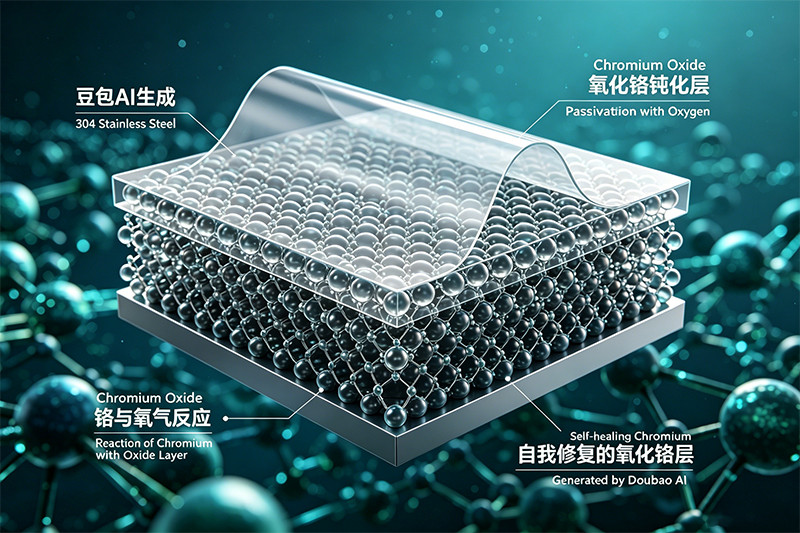
The signature characteristic of 304 stainless steel is its exceptional resistance to rust and corrosion. This is primarily due to its high chromium content. When exposed to oxygen in the air, the chromium forms a thin, invisible, and incredibly durable passive layer of chromium oxide on the steel's surface. This microscopic shield is non-reactive and acts as a barrier, preventing oxygen and moisture from reaching the iron in the steel and causing rust.
What makes this layer truly remarkable is its ability to self-heal. If the surface is scratched or damaged, the exposed chromium immediately reacts with oxygen to regenerate the protective barrier, ensuring the corrosion resistance is maintained over time. The addition of nickel enhances this effect, providing superior resistance against a wide range of corrosive agents commonly found in commercial settings, including food acids (like citric and lactic acid), and various cleaning chemicals. This "18/8" composition ensures the sink can withstand constant contact with water, salt, and acidic substances without degrading.
Unmatched Hygiene: Non-Porous Surfaces Prevent Bacteria Buildup
In any environment where health and safety are priorities, hygiene is paramount. This is another area where 304 stainless steel excels. Its surface is completely non-porous, meaning there are no microscopic pits or crevices where bacteria, mold, or other pathogens can hide and multiply. This smooth, hard surface makes it physically impossible for contaminants to penetrate the material.
This lack of porosity makes cleaning and sanitization incredibly effective and straightforward. Germs, food particles, and grime have difficulty adhering to the surface and are easily washed away. Unlike porous materials like some composites or stone, stainless steel does not absorb liquids or odors, ensuring a permanently neutral and sanitary surface. This inherent cleanability is a crucial feature for meeting public health standards and is a primary reason why 304 stainless steel is the mandated material for equipment in food service, as certified by organizations like NSF International.
Beyond 304: When Tougher Grades Like 316 are Needed for Your Commercial Utility Sink
While 304 stainless steel is the versatile workhorse for the vast majority of commercial sink applications, certain environments demand an even higher level of corrosion resistance. This is where 316 stainless steel, often called "marine grade," becomes the material of choice. Although visually identical to 304, 316 stainless steel has a crucial difference in its chemical composition: the addition of molybdenum.
This small addition of 2-3% molybdenum significantly enhances the material's ability to resist corrosion, particularly from chlorides (like salt) and a wider range of industrial chemicals and solvents. The molybdenum strengthens the passive chromium-oxide layer, making it more robust and less susceptible to the localized pitting and crevice corrosion that can occur when exposed to harsh substances. This makes 316 stainless steel an essential upgrade in specific, highly demanding scenarios.
Consider upgrading to a 316 stainless steel sink in the following situations:
- Coastal and Marine Environments: Facilities located near the ocean are constantly exposed to salt in the air. This saltwater spray is highly corrosive, and over time, it can cause "tea-staining" or rust spots on 304 stainless steel. 316 grade's enhanced chloride resistance makes it the ideal choice for outdoor kitchens, boat galleys, and any commercial property in a coastal zone to ensure long-term durability and appearance.
- Laboratories and Pharmaceutical Facilities: These environments often use a wide array of aggressive chemicals, acids, and solvents. 316 stainless steel provides superior resistance to these harsh substances, making it essential for laboratory sinks, sterile prep tables, and chemical processing equipment where material integrity is critical.
- Heavy Industrial and Chemical Processing: Factories and plants that handle harsh industrial chemicals, strong cleaning agents, or have high-chlorine water systems will benefit from the superior durability of 316 stainless steel. Its ability to withstand a broader range of chemicals makes it a safer, more reliable long-term investment.
- High-Volume Food Processing with Brines: While 304 is sufficient for most kitchens, facilities that engage in heavy brining, pickling, or use large quantities of salt-based marinades may find that 316 offers better long-term protection against corrosion.
While 316 stainless steel provides a significant performance boost in these specialized cases, it does come at a higher price point, typically costing about 30% more than its 304 counterpart due to the added cost of molybdenum and higher nickel content. For most standard commercial kitchen and utility applications, 304 stainless steel offers the perfect balance of performance and value. However, for those environments where the ultimate in corrosion resistance is required, investing in a 316 stainless steel sink is a wise and necessary decision.
The Importance of Gauge: Ensuring Durability in Commercial Utility Sink Construction
Beyond the type of stainless steel used, the thickness of the steel—known as its gauge—is a critical factor that directly influences a commercial sink's durability, strength, and overall performance. In the world of sheet metal, the numbering system for gauge is counterintuitive: the lower the gauge number, the thicker and stronger the steel. This is a crucial detail to understand because the gauge determines the sink's resistance to dents, bowing, and even the amount of noise it generates during use.
Commercial environments subject sinks to a level of abuse rarely seen in residential settings. Heavy pots and pans are dropped, bulky equipment is washed, and the sink basin must endure constant impacts and weight. A sink made from thinner, higher-gauge steel will easily dent, warp, and vibrate, leading to a shorter lifespan and a less professional appearance. A thicker, lower-gauge steel provides the structural integrity needed to withstand these rigors.
Here’s a breakdown of common gauges and their applications:
- 18-Gauge (1.2 mm): While often used in residential kitchens, 18-gauge steel is generally considered the absolute minimum for very light-duty commercial applications. It is more affordable but is susceptible to denting and may produce more noise.
- 16-Gauge (1.5 mm): This is widely regarded as the industry standard and the best all-around choice for most commercial utility sinks. It is approximately 25% thicker than 18-gauge steel, offering a significant increase in durability and dent resistance. This thickness provides a solid feel, reduces noise and vibration from clattering dishes and running water, and represents an excellent balance of performance, longevity, and cost. For restaurants, bakeries, and busy workshops, 16-gauge is the recommended choice. High-quality manufacturers like Samsink often use 16-gauge as the standard for their commercial lines.
- 14-Gauge (1.9 mm): For the most demanding and extreme environments, 14-gauge steel is the heavy-duty champion. Significantly thicker and more robust, 14-gauge sinks are built for high-volume institutional kitchens, food processing plants, and industrial shops where the sink may endure abuse from heavy machinery. While it is the most expensive option, its unparalleled strength ensures maximum resistance to dents, warping, and impact damage, making it a worthwhile investment for operations that run 24/7.
Gauge Comparison Table
| Gauge | Approximate Thickness | Durability Level | Typical Use Case |
|---|---|---|---|
| 18-Gauge | 1.2 mm (0.05 in) | Medium | Light residential, budget-conscious light commercial |
| 16-Gauge | 1.5 mm (0.06 in) | High (Industry Standard) | Most commercial kitchens, restaurants, workshops |
| 14-Gauge | 1.9 mm (0.075 in) | Very High (Heavy-Duty) | Institutional kitchens, food processing plants, industrial |
In summary, while a higher-gauge sink might offer initial cost savings, that economy is quickly lost when the sink needs to be repaired or replaced due to damage. Investing in a lower-gauge sink, particularly a 16-gauge model, ensures you are getting a piece of equipment that is truly built for commercial use and will provide a reliable return on investment for years to come.
Certifications That Matter: Validating Your Commercial Utility Sink's Performance and Safety
In the commercial world, a product's quality cannot be taken on faith alone; it must be proven. Certifications from reputable, independent organizations serve as this proof, offering objective validation that a commercial utility sink meets specific standards for safety, quality, and performance. These logos and acronyms are more than just labels; they are your assurance that the sink is constructed from safe materials, designed hygienically, and manufactured under a system of rigorous quality control. For business owners, sourcing certified equipment is a critical step in ensuring compliance with health regulations, protecting customers and staff, and investing in products built to last. This section will demystify the most important certifications you'll encounter when selecting a commercial utility sink, explaining what they mean and why they are indispensable.
NSF Certification: Our Commitment to Public Health Through Commercial Utility Sinks
When it comes to equipment used in commercial foodservice, no certification is more critical or widely recognized than that from NSF International (formerly the National Sanitation Foundation). As an independent, third-party organization, NSF develops public health standards and provides certification for a vast range of products, including commercial utility sinks. Seeing the NSF mark on a sink is a clear and immediate indicator that the product has been rigorously tested and verified to meet strict criteria for safety, hygiene, and performance. In the United States, NSF certification is so prevalent that outfitting a new commercial kitchen without it is virtually impossible, as health inspectors across the country rely on it as a benchmark for compliance.
The NSF certification process is comprehensive and ongoing. It’s not a one-time approval. The process includes:
- Material Safety Review: NSF toxicologists review the formulation of every material that will come into contact with food or water to ensure it is non-toxic and will not leach harmful chemicals.
- Design and Construction Evaluation: The sink's design is thoroughly examined to ensure it is easily cleanable and does not have features that could harbor bacteria, such as sharp corners or crevices.
- Performance Testing: The product is tested to confirm it performs as promised and meets durability requirements.
- Manufacturing Facility Audits: NSF conducts regular, unannounced inspections of the manufacturing facilities to ensure that quality systems and production controls are maintained, guaranteeing that every product off the line meets the same high standards.
By choosing NSF-certified commercial utility sinks, such as those offered by premier brands like Samsink, business owners are investing in products that are demonstrably safe, easy to sanitize, and built to the highest standards of public health protection.
What NSF/ANSI 2 Certification Means for Food Service Commercial Utility Sinks
The specific standard that applies to most commercial sinks is NSF/ANSI 2: Food Equipment. This standard establishes the minimum requirements for the materials, design, construction, and performance of equipment used for food handling and processing, which explicitly includes sinks.
To earn NSF/ANSI 2 certification, a sink must meet several key criteria designed to promote hygiene and prevent foodborne illness:
- Hygienic Design: Sinks must be designed for easy and thorough cleaning. A hallmark feature of an NSF/ANSI 2 certified sink is the presence of coved (rounded) internal corners. Unlike sharp, 90-degree corners where food debris and bacteria can become trapped, rounded corners allow for complete cleaning and sanitization. The sink bowl must also be tapered to ensure proper drainage, preventing water from pooling.
- Safe Materials: All materials in the "food zone" (any surface that comes into direct contact with food or water) must be corrosion-resistant, durable, smooth, non-absorbent, and non-toxic. This is why 304 stainless steel is a preferred material for certified sinks.
- Cleanable Surfaces: The surfaces must be smooth and free of pits, cracks, or crevices that could harbor microorganisms. This ensures that standard cleaning procedures are effective at removing contaminants.
Essentially, an NSF/ANSI 2 certification is your guarantee that a sink is designed from the ground up with food safety in mind. It tells health inspectors that you are committed to public safety and helps protect your business from the risks of cross-contamination and non-compliance.
Beyond Labels: Rigorous Material Safety and Design Standards
The NSF mark signifies more than just a passing grade; it represents adherence to a deep and scientifically-grounded set of standards. The material safety requirements under standards like NSF/ANSI 2 and NSF/ANSI 51 (for food equipment materials) are particularly stringent. NSF verifies that the materials are not only durable and corrosion-resistant but also free from harmful substances like lead or other heavy metals that could leach into water or food. This toxicological review is crucial for protecting public health.
The design standards are equally rigorous. NSF engineers scrutinize every aspect of the sink's construction. This includes the quality of the welds, ensuring they are smooth and continuous, and the design of components like faucets and drains to ensure they are also cleanable and safe. The goal is to eliminate any potential weak points where bacteria could thrive or where the equipment could fail under the stress of a commercial environment. This holistic approach—from raw material analysis to final product performance testing—is what gives the NSF certification its weight and makes it the gold standard for commercial kitchen equipment.
ISO 9001: The Global Benchmark for Manufacturing Quality in Commercial Utility Sinks
While NSF certification focuses specifically on the product's safety and hygienic design, ISO 9001 addresses the quality of the process used to create that product. ISO 9001 is the world's most recognized standard for Quality Management Systems (QMS). It is published by the International Organization for Standardization (ISO) and is used by over one million companies in more than 170 countries.
When a manufacturer of commercial utility sinks is ISO 9001 certified, it signifies that they have implemented a robust QMS that governs their entire operation. This system is not just about the final product; it's a holistic framework that ensures consistency, efficiency, and a commitment to continual improvement across the board. The certification is awarded by an independent, third-party body after a rigorous audit and must be maintained through regular surveillance audits.
For a customer, purchasing a sink from an ISO 9001-certified company like Samsink provides several crucial assurances:
- Product Consistency: An ISO 9001-certified factory has well-defined, documented, and repeatable processes for manufacturing. This ensures that every sink produced meets the exact same high standards of quality. You can be confident that the 100th sink you order will have the same material quality, dimensional accuracy, and finish as the first. This consistency is vital for large-scale projects or for businesses that need to maintain a uniform standard across multiple locations.
- Customer Focus: A core principle of ISO 9001 is a strong focus on meeting and exceeding customer requirements. Certified companies have systems in place to gather customer feedback, manage complaints, and use that information to improve their products and services.
- Continuous Improvement: ISO 9001 is not a static achievement. The standard requires certified organizations to continually monitor, measure, and improve their processes. This means the manufacturer is actively working to enhance product quality, reduce waste, and increase efficiency, which translates to better, more reliable products for the end-user.
- Traceability and Accountability: A QMS requires meticulous record-keeping. This provides full traceability throughout the supply chain, from the raw materials used to the final inspection of the finished product. If an issue ever arises, the system allows for a swift investigation to identify and correct the root cause.
In essence, while the NSF mark tells you the sink itself is safe and hygienic, the ISO 9001 certification tells you that the company behind the sink is organized, reliable, and committed to manufacturing excellence. Choosing a supplier with both certifications offers the highest level of confidence in the quality and longevity of your investment.