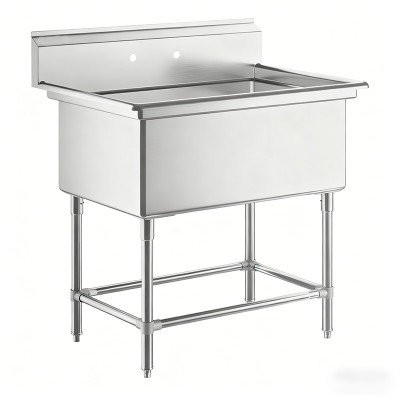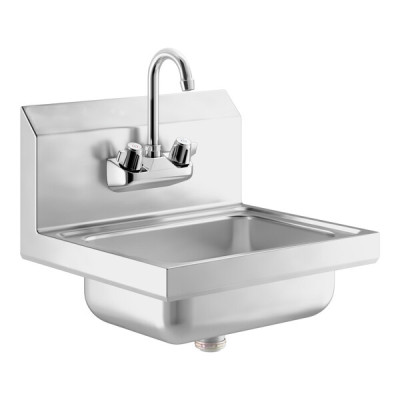
Understanding Material Choices: Imperatives for Stainless Steel Sinks Suppliers
As stainless steel sinks suppliers, we at Samsink understand that providing the right products means having a deep knowledge of the materials we offer. Choosing the best stainless steel for commercial sinks isn't just about appearance; it's about ensuring durability, hygiene, and long-term value for our customers. The selection of a sink is a critical decision that impacts the daily workflow, safety, and efficiency of a professional kitchen. In this guide, we'll explore the key factors—including grades, gauges, and proper care—that help us empower our clients to select the perfect stainless steel sink solution for their needs.
Why Material Choices are Critical for Stainless Steel Sinks Suppliers: Building Trust and Quality
In a demanding commercial kitchen, every component must be chosen for performance and longevity, and the sink is no exception. It is a central hub of activity, enduring constant use from washing produce and pans to sanitizing equipment. For suppliers like Samsink, understanding and articulating the importance of material choice is fundamental to building trust and delivering quality that stands the test of time. The material of a commercial sink directly influences its durability, ease of cleaning, and overall lifespan, making this decision critical for long-term operational success.
The Foundation of Durability and Hygiene
Durability and hygiene are the twin pillars of a successful commercial kitchen, and the sink material is their cornerstone. Stainless steel has become the undisputed material of choice for commercial sinks worldwide precisely because it excels in both these areas.
Durability in High-Volume Settings: A commercial sink must withstand the daily rigors of a bustling kitchen, from the impact of heavy pots and pans to constant exposure to high temperatures and aggressive cleaning chemicals. Unlike ceramic or composite materials that can chip or crack under pressure, high-quality stainless steel resists dents, warping, and structural fatigue over years of heavy use. This resilience ensures that the kitchen can operate smoothly without the disruption and cost of frequent replacements. For high-volume environments, durability is not just a preference; it's a necessity.
Hygiene and Ease of Sanitization: Hygiene is non-negotiable in the food service industry. Stainless steel’s non-porous surface is its greatest hygienic advantage. This smooth finish prevents food particles, liquids, and bacteria from penetrating the surface, thus inhibiting the growth of harmful microorganisms like E. coli and Salmonella. This characteristic is crucial for complying with stringent food safety standards and regulations, which mandate rigorous sanitation practices. The ease of cleaning associated with stainless steel means that kitchen staff can maintain the highest standards of cleanliness with minimal effort, often requiring just hot, soapy water for effective daily maintenance. This inherent cleanability directly reduces the risk of cross-contamination and foodborne illnesses.
Meeting Diverse Commercial Demands
Not all commercial kitchens are the same. A hospital cafeteria, a scientific laboratory, and a coastal restaurant all have unique operational demands and environmental challenges. As expert suppliers, we recognize the need to provide tailored solutions.
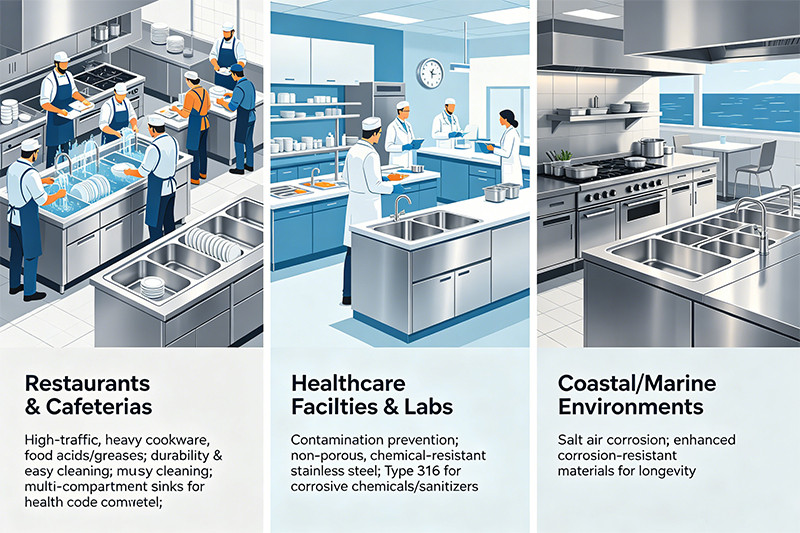
Restaurants and Cafeterias: These high-traffic environments require sinks that can handle a high volume of dishes, heavy cookware, and a variety of food acids and greases. Durability and ease of cleaning are paramount. Multi-compartment sinks are often necessary to comply with health codes for washing, rinsing, and sanitizing.
Healthcare Facilities and Laboratories: In settings like hospitals and research labs, the primary concern is preventing contamination. The non-porous and chemical-resistant properties of stainless steel make it ideal. These environments may require higher grades of stainless steel, such as Type 316, which offers superior resistance to corrosive chemicals and sanitizers.
Coastal or Marine Environments: Kitchens located near the coast face a unique challenge from the salt in the air, which can accelerate corrosion. For these applications, a material with enhanced corrosion resistance is not just a recommendation but a necessity to ensure the sink's longevity.
Understanding these diverse needs allows suppliers to guide clients toward the most appropriate material, ensuring the sink is an asset, not a liability, in their specific operational context.
Deciphering Stainless Steel Grades: Essential Knowledge for Stainless Steel Sinks Suppliers
Not all stainless steel is created equal. The "grade" of stainless steel refers to its specific chemical composition, which dictates its durability, quality, and resistance to corrosion. As a supplier, guiding a client to the right grade is one of the most important services we can provide. The most common grades found in commercial kitchens are 304, 316, and 430, each with a unique profile of strengths and ideal use cases. Understanding these differences ensures that the chosen sink will perform optimally in its intended environment.
Grade 304: The Versatile Workhorse
Often referred to as 18/8 stainless steel, Grade 304 is the most widely used grade for commercial kitchen sinks and equipment. Its name comes from its composition: typically 18% chromium and 8% nickel. This combination creates a material that offers an excellent balance of performance and cost.
Key Properties of Grade 304:
- Excellent Corrosion Resistance: The high chromium content reacts with oxygen to form a passive, protective layer on the steel's surface. This layer prevents rust and resists corrosion from a wide range of kitchen acids and cleaning solutions. It is non-reactive with most foods, making it a food-safe option.
- Superb Durability: Grade 304 steel is strong and resilient, able to withstand the daily impacts of heavy pots and pans without chipping or cracking. It also maintains its structural integrity under high temperatures.
- Hygienic and Easy to Clean: Like all stainless steel, its non-porous surface prevents bacteria from lodging and multiplying, making it simple to sanitize.
- Aesthetic Appeal: It typically features a brushed or satin finish that offers a clean, modern look suitable for nearly any kitchen design.
For the vast majority of food service applications—from restaurants to school cafeterias—Grade 304 is the reliable, cost-effective standard that delivers exceptional long-term value.
| Feature | Grade 304 (18/8) Specification | Benefit for Commercial Kitchens |
|---|---|---|
| Composition | ~18% Chromium, ~8% Nickel | Creates a strong, passive layer for rust and corrosion resistance. |
| Corrosion Resistance | Excellent for most food acids, moisture, and general cleaners. | Ensures longevity and hygiene in typical kitchen environments. |
| Durability | High resistance to dents, cracks, and heat. | Withstands heavy pots, pans, and constant, rigorous use. |
| Ideal Use Cases | General restaurants, cafes, bars, prep areas, dishwashing stations. | The most versatile and common choice for standard commercial applications. |
Grade 316: Superior Resistance for Demanding Environments
For environments that face more extreme corrosive challenges, Grade 316 stainless steel is the premium choice. While similar in composition to Grade 304, Grade 316 includes a crucial addition: 2-3% molybdenum. This element significantly enhances its ability to resist corrosion, particularly from chlorides and harsh acids.
When to Choose Grade 316:
- Coastal and Marine Applications: Salt in the air and water can be highly corrosive. Grade 316, often called "marine-grade" steel, is specifically designed to withstand these conditions.
- Laboratories and Medical Facilities: These settings often use aggressive cleaning agents, solvents, and chemicals that would degrade lesser steel grades over time. Grade 316 offers the necessary chemical fortitude.
- Heavy Use of Chlorinated Cleaners: If a kitchen's sanitation protocol relies heavily on bleach or other chloride-based solutions, Grade 316 provides essential protection against pitting and deterioration.
While it comes at a higher price point, investing in a Grade 316 sink is a wise decision for highly demanding environments, as it will hold up far longer and prevent costly premature replacements.
Grade 430: Cost-Effective Solutions from Stainless Steel Sinks Suppliers
Grade 430 stainless steel belongs to the ferritic family of alloys. Its key distinction is its composition: it contains 16-18% chromium but has a very low nickel content (typically less than 1%). This makes it more affordable than the 304 and 316 grades.
Properties and Limitations of Grade 430:
- Moderate Corrosion Resistance: It offers good resistance in mild environments but is less suited for constant exposure to moisture or corrosive substances.
- Magnetic: Unlike the 300-series grades, Grade 430 is magnetic due to its ferritic structure.
- Good for Dry Applications: It is generally considered food-grade and safe, especially in non-acidic and low-moisture settings. It's commonly used for equipment exteriors, paneling, countertops, and splashbacks.
- Cost-Effective: Its lower cost makes it an attractive option for applications where high corrosion resistance is not a primary concern.
As a supplier, we would position 430-grade sinks as a budget-friendly choice for light-duty applications, such as in dry storage areas or for low-use utility sinks where exposure to harsh conditions is minimal. It is less durable compared to the 300-series grades.
Understanding Corrosion: Pitting and Crevice Risks
Corrosion is the primary enemy of any metal fixture. For stainless steel, the main threats are pitting and crevice corrosion, both of which are localized forms of attack that can compromise a sink's integrity. These types of corrosion are most often triggered by the presence of chloride ions.
Pitting Corrosion: This occurs when the passive protective layer of the steel breaks down in a tiny, localized spot, often due to scratches or exposure to chlorides (like salt or bleach). This creates a small pit or hole that can grow rapidly, potentially leading to perforation of the sink wall while the surrounding surface remains unaffected. The liquid inside the pit can become more acidic, accelerating the corrosion process.
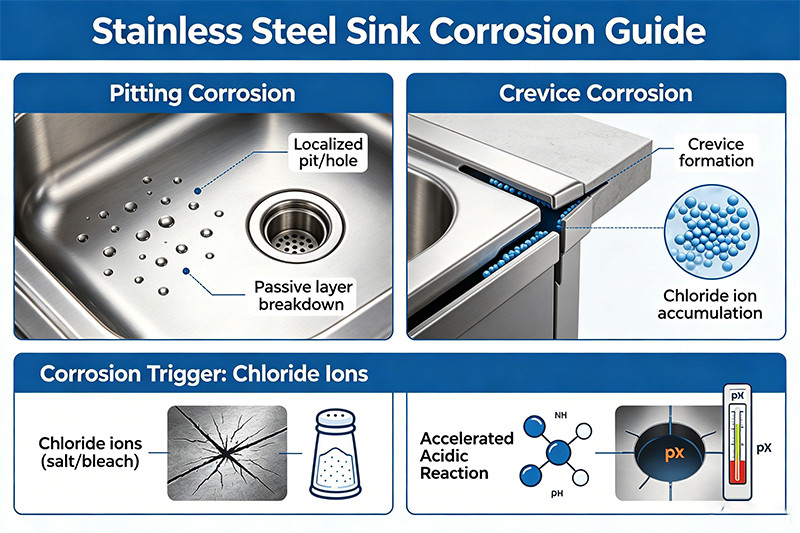
Crevice Corrosion: This is a specific type of corrosion that happens in tight, shielded spaces where oxygen circulation is limited. Examples include the areas under gaskets, fastener heads, or between overlapping metal surfaces. In these crevices, moisture and chlorides can accumulate. The lack of oxygen prevents the chromium oxide layer from reforming, creating an acidic micro-environment that aggressively corrodes the metal.
Understanding these risks is why selecting the right grade is so important. For any environment with significant chloride exposure, Grade 316 is the safest choice to mitigate the dangers of pitting and crevice corrosion.
The Importance of Gauge: What Stainless Steel Sinks Suppliers Need to Know for Optimal Performance
Beyond the grade of the steel, the next critical specification to understand is its "gauge." The gauge refers to the thickness of the stainless steel sheet used to manufacture the sink. This single factor has a significant impact on the sink's durability, noise level, and overall performance, especially in a demanding commercial environment. As suppliers, explaining the nuances of gauge is key to ensuring a client invests in a sink that meets their long-term expectations.
What Exactly is Gauge?
The system for measuring gauge can be counterintuitive: the lower the gauge number, the thicker and more durable the steel. Residential sinks often range from 22 gauge (thinnest) to 18 gauge, but for the rigors of commercial use, thicker steel is essential. When discussing gauge, it's important to clarify that manufacturers typically state the gauge of the steel before the manufacturing process begins. The process of deep-drawing the sink can stretch the metal, making some parts slightly thinner than the original gauge.
Here's a quick comparison of common gauges and their approximate thickness:
| Gauge Number | Thickness (in inches) | Thickness (in millimeters) | Common Application |
|---|---|---|---|
| 14 Gauge | ~0.075" | ~1.90 mm | Heavy-Duty Industrial/Commercial |
| 16 Gauge | ~0.063" | ~1.59 mm | Premium Commercial & Residential |
| 18 Gauge | ~0.047" | ~1.20 mm | Standard Commercial & Residential |
| 20 Gauge | ~0.036" | ~0.91 mm | Light Residential / Bar Sinks |
| 22 Gauge | ~0.030" | ~0.76 mm | Economy/Light-Duty Sinks |
As the table shows, a 16-gauge sink is substantially thicker than an 18-gauge sink, providing a significant increase in strength and rigidity.
Selecting the Right Gauge for Commercial Applications
For any commercial kitchen, a sink is an investment that must endure constant, heavy use. Thinner gauge sinks (20 or 22 gauge), while less expensive, are prone to denting, bending, and warping under the stress of heavy pots, pans, and daily impacts. They are also significantly noisier.
16-Gauge: The Commercial Standard For most commercial operations, a 16-gauge stainless steel sink is the recommended choice. Its superior thickness provides several key advantages:
- Enhanced Durability: It is highly resistant to dents, dings, and bowing, which is crucial when dealing with heavy cookware and the inevitable accidents of a fast-paced kitchen.
- Superior Noise Reduction: The greater mass of 16-gauge steel inherently absorbs more vibration. The clatter of dropped utensils and the drumming sound from running water are significantly muted, creating a more pleasant working environment. Many high-quality sinks also feature sound-dampening pads on the underside to further reduce noise.
- Structural Stability: A thicker gauge sink feels more solid and is less prone to flexing, particularly in larger undermount models.
14-Gauge: For Extreme Heavy-Duty Use In exceptionally demanding environments, such as 24-hour diners, industrial processing plants, or institutional kitchens, a 14-gauge sink may be specified. This provides the ultimate level of durability and is built to withstand the most punishing conditions imaginable.
18-Gauge: A Viable Option for Lighter Duty While 16-gauge is the ideal, an 18-gauge sink can be a suitable and more budget-friendly option for lighter-duty commercial applications. This could include handwashing stations, bar sinks, or prep sinks in lower-volume establishments. Although still durable enough for everyday use, it won't offer the same level of dent resistance or noise dampening as its 16-gauge counterpart.
Balancing Durability and Cost for Stainless Steel Sinks Suppliers
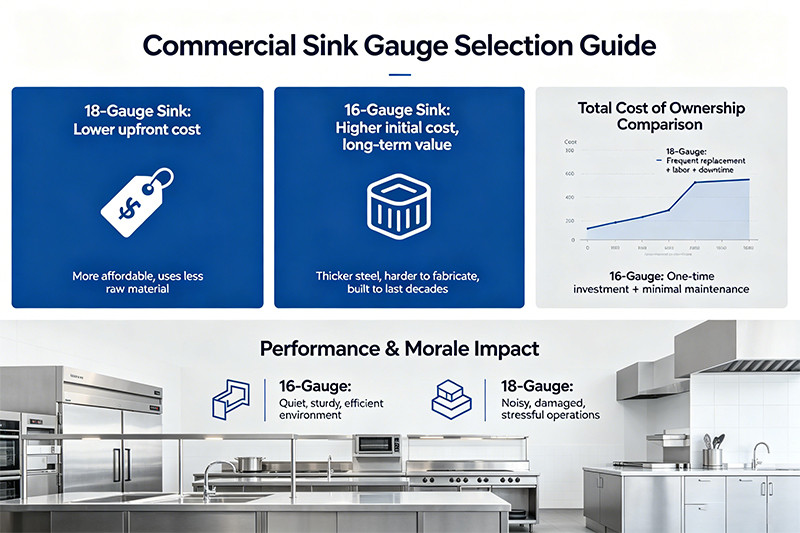
As with any equipment purchase, cost is a major consideration. Thicker gauge steel is more expensive because it uses more raw material and can be more difficult to fabricate. An 18-gauge sink is generally more affordable than a 16-gauge sink.
This is where the role of an expert supplier like Samsink becomes invaluable. It's our responsibility to help clients look beyond the initial price tag and understand the long-term value proposition.
- Long-Term Investment: A lower-cost, higher-gauge sink might save money upfront, but it is far more likely to need replacement sooner due to damage. The cost of a new sink, plus the labor for installation and the operational downtime, can quickly negate any initial savings.
- Total Cost of Ownership: A durable, lower-gauge sink is a smart investment. A 16-gauge sink is built to last for many years, even decades, in a busy commercial kitchen, making its total cost of ownership much lower over time.
- Performance and Morale: A quiet, sturdy sink contributes to a more efficient and less stressful kitchen environment for staff. The constant noise and visible damage of a flimsy sink can negatively impact daily operations.
By clearly explaining these trade-offs, we can empower our customers to make a balanced decision that prioritizes the durability and performance necessary for their commercial success, ensuring they get a sink that is not just a purchase, but a lasting asset.
Ensuring Longevity: Maintenance and Care Tips from Stainless Steel Sinks Suppliers
A high-quality stainless steel sink is an incredibly durable asset, but its longevity and pristine appearance depend on proper care. As suppliers, part of our commitment to our customers at Samsink involves providing them with the knowledge to maintain their investment. Simple, consistent cleaning routines and an awareness of what to avoid can keep a commercial sink hygienic and looking its best for years, preserving the chromium oxide passive layer that protects it from corrosion.
Daily Cleaning Best Practices
Consistent daily cleaning is the most effective strategy for maintaining a stainless steel sink. This simple routine prevents the buildup of food particles, soap residue, and mineral deposits.
- Rinse After Each Use: The easiest and most crucial step is to thoroughly rinse the sink with warm water after each use. This removes the majority of food residue and soap.
- Wash with Mild Soap: Apply a small amount of mild dish soap or a pH-neutral detergent to a soft cloth or sponge.
- Wipe in the Direction of the Grain: Gently wipe down the entire surface of the sink—basin, walls, and rim. Always scrub in the direction of the steel's grain lines to avoid creating micro-scratches and to maintain a uniform finish. Circular motions should be avoided.
- Rinse Thoroughly: Use clean water to rinse away all soap residue. It's important not to let soap dry on the surface, as many detergents contain chemicals that can dull the finish over time.
- Wipe Dry: This is a critical step that is often overlooked. Use a soft microfiber cloth to completely dry the sink. Drying the sink prevents water spots from forming due to mineral deposits in the water and minimizes the risk of surface rust marks.
Deep Cleaning for Optimal Performance
Even with diligent daily care, a weekly or bi-weekly deep clean is recommended to remove tougher buildup and restore the sink's shine.
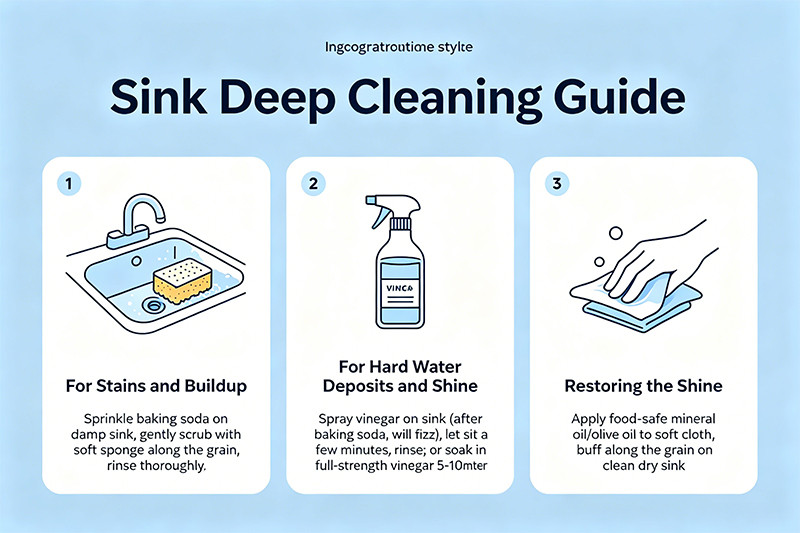
- For Stains and Buildup: Baking soda is an excellent, non-abrasive cleaner. Sprinkle baking soda evenly across the damp sink surface and use a soft sponge or cloth to gently scrub along the grain. The mild abrasive action lifts grease and stubborn stains without scratching the steel. After scrubbing, rinse thoroughly.
- For Hard Water Deposits and Shine: To tackle mineral deposits from hard water, white vinegar is an effective solution. You can spray the sink with vinegar after cleaning it with baking soda (the mixture will fizz as it reacts), let it sit for a few minutes, and then rinse thoroughly. Soaking the surface with full-strength vinegar for 5-10 minutes can also dissolve hard water scale.
- Restoring the Shine: For an extra sparkle, you can polish the clean, dry sink. Applying a few drops of food-safe mineral oil or even olive oil to a soft, lint-free cloth and buffing the surface in the direction of the grain will restore a brilliant shine and help repel water.
What to Avoid: Preserving Stainless Steel's Integrity
Preventing damage is just as important as cleaning. The protective chromium oxide layer on stainless steel is resilient, but it can be compromised by certain chemicals and tools. Instructing clients on what to avoid is crucial.
Harsh Chemicals to Never Use:
- Bleach and Chlorine-Based Cleaners: These are the biggest enemies of stainless steel. Chlorine attacks the protective layer, which can lead to pitting, staining, and rust. If bleach accidentally comes into contact with the sink, it should be rinsed away immediately and thoroughly.
- Abrasive Cleaners and Scouring Powders: Gritty cleaners can permanently scratch the sink's finish, and these scratches can then trap dirt and bacteria.
- Strong Acids and Alkalis: Cleaners containing hydrofluoric acid, ammonia, or other strong acids and alkalis can damage the surface, causing discoloration or corrosion. Silver dip cleaners, which contain acids, should also be avoided.
Damaging Tools and Practices:
- Steel Wool or Wire Brushes: Never use these to clean a stainless steel sink. They not only scratch the surface but can also leave behind tiny iron particles that will rust, giving the false impression that the sink itself is rusting. Always opt for soft cloths, sponges, or non-scratch nylon pads.
- Leaving Items in the Sink: Avoid leaving wet sponges, cleaning cloths, or rubber dish mats in the sink for extended periods. They trap moisture, which can lead to discoloration and pitting. Likewise, cast iron cookware or other metal items can cause rust stains if left in a wet sink.
- Ignoring Acidic Foods: Foods like lemons, tomatoes, vinegar, pickles, and mustard can be acidic. If left on the sink's surface for a long time, they can cause etching or discoloration. It's best to rinse them away promptly.
By following these maintenance guidelines, your clients can ensure their commercial stainless steel sinks remain a hygienic, functional, and aesthetically pleasing component of their kitchen for many years to come.
Key Takeaways for Choosing the Right Stainless Steel Sink
Navigating the specifications of commercial stainless steel sinks can be complex, but focusing on a few critical elements will ensure you make a wise, long-term investment. As a leading supplier, Samsink emphasizes that the right sink is a cornerstone of kitchen efficiency, hygiene, and durability. Here are the essential takeaways from this guide to empower your decision-making process.
1. Material Grade is Non-Negotiable for Performance: The grade of stainless steel dictates its ability to resist corrosion and is the single most important factor for longevity.
- Grade 304 (18/8): This is the industry standard and the go-to choice for the vast majority of commercial kitchens. Composed of 18% chromium and 8% nickel, it offers an excellent balance of durability, corrosion resistance, and cost-effectiveness. It withstands most food acids and standard cleaning solutions, making it a reliable workhorse for restaurants, cafes, and general food service operations.
- Grade 316 (Marine Grade): For kitchens in highly corrosive environments, Grade 316 is the superior option. The addition of molybdenum provides enhanced protection against chlorides (salt) and harsh chemical sanitizers. It is the essential choice for coastal locations, seafood processing facilities, and laboratories where exposure to aggressive substances is constant. While more expensive, its resilience in these settings prevents premature failure and costly replacements.
- Grade 430: A more budget-friendly, ferritic steel with lower nickel content. It offers moderate corrosion resistance and is best suited for dry, low-impact applications such as equipment paneling or light-duty utility sinks, not for the primary wet areas of a busy kitchen.
2. Gauge Determines Durability and Noise Level: Gauge refers to the thickness of the steel, and for commercial use, thicker is unequivocally better. Remember the inverse rule: a lower gauge number means thicker steel.
- 16-Gauge: This is the recommended standard for most commercial applications. It is thick enough to resist dents, dings, and bowing from heavy pots and daily impacts. The added mass also significantly reduces noise from clanging dishes and running water, contributing to a more pleasant work environment.
- 14-Gauge: Reserved for the most extreme, heavy-duty industrial environments. It offers maximum durability but comes with a higher cost and weight.
- 18-Gauge: A viable option for lighter commercial use, such as hand-washing stations or bar sinks. While still durable, it is more susceptible to denting and is noisier than 16-gauge steel.
- 20-Gauge and Higher: Generally too thin for commercial use and should be avoided for primary kitchen sinks, as they lack the durability required for a professional setting.
3. Proper Maintenance is the Key to Longevity: Even the highest quality sink requires proper care to maintain its protective layer and appearance.
- Do: Implement a daily routine of rinsing and washing with mild soap, always wiping in the direction of the grain, and—most importantly—drying the sink after use to prevent water spots and mineral buildup. For deep cleaning, use gentle methods like a baking soda paste for stains and white vinegar for hard water deposits.
- Don't: Never use harsh, abrasive tools like steel wool or wire brushes, as they will scratch the surface and can leave behind iron particles that rust. Avoid chloride-based cleaners (bleach), strong acids, and abrasive powders, as they can permanently damage the passive layer that protects the steel from corrosion. Do not leave wet sponges, metal cookware, or acidic foods sitting in the sink for extended periods.
4. Partner with a Knowledgeable Supplier: Your supplier should be more than just a vendor; they should be an expert partner. A reputable supplier like Samsink can help you navigate these choices, balancing your specific operational needs with your budget. We can explain the long-term value of investing in a higher-grade or thicker-gauge sink, ensuring the product you select is a lasting asset that enhances your kitchen's workflow and hygiene standards for years to come. Don't hesitate to ask questions and leverage our expertise to find the perfect solution.
Making an informed decision on a commercial sink is a strategic choice that pays dividends through years of reliable service. By prioritizing the correct grade, an appropriate gauge, and consistent maintenance, you ensure your kitchen's central workstation is built to last.
Frequently Asked Questions (FAQ)
1. Can a 304-grade stainless steel sink rust?
While high-quality 304-grade stainless steel is highly resistant to rust, it is not entirely rust-proof. Rust on a 304 sink is typically not from the sink itself but from external sources. The most common cause is when iron particles from other objects—such as steel wool pads, metal cans, or cast iron pans—are left on the wet sink surface. These particles rust and can bond to the sink, creating a stain that looks like the sink is rusting. This can be removed with a non-abrasive cleaner. Additionally, prolonged contact with harsh chemicals like bleach or chloride-based cleaners can break down the sink's protective chromium-oxide layer, leading to corrosion and pitting, which may appear as rust. Proper daily cleaning and avoiding prohibited chemicals and tools are the best prevention.
2. What's the real difference between a brushed and a polished finish?
The finish of a stainless steel sink affects both its appearance and how it shows wear.
- Brushed or Satin Finish: This is the most common finish for commercial and high-quality residential sinks. It is created by lightly scratching the surface with a brush or abrasive belt, creating very fine, uniform lines (the "grain"). This soft, matte look is excellent at hiding minor scratches, fingerprints, and water spots, making it very practical for a busy kitchen.
- Polished or Mirror Finish: This finish is buffed until it is highly reflective and smooth, like a mirror. While it looks striking and is easy to wipe clean initially, it is the least practical choice for a working kitchen. Every scratch, fingerprint, and water spot is highly visible, and it requires constant polishing to maintain its appearance. This finish is better suited for decorative fixtures rather than a high-use sink.
3. Is a thicker gauge sink (e.g., 16-gauge) always better than a thinner one (e.g., 18-gauge)?
For commercial kitchens, a thicker gauge sink is almost always the better choice. A 16-gauge sink provides significantly more durability and resistance to denting from heavy pots and equipment. It also offers better sound insulation, reducing the loud "clanging" and drumming noises common in a busy kitchen. While an 18-gauge sink from a reputable manufacturer is still a durable product suitable for lighter commercial use, the long-term resilience of a 16-gauge sink makes it a superior investment for high-volume environments. The small additional upfront cost is often justified by a longer lifespan and better performance.
4. How can I remove minor scratches from my stainless steel sink?
All stainless steel sinks will accumulate scratches over time; it is a natural part of their use. However, for sinks with a brushed finish, minor scratches and scuffs can often be blended into the surface. You can use a specialized stainless steel scratch removal kit or a very fine, non-metallic abrasive pad (like a fine Scotch-Brite pad). It is absolutely critical to only rub in the direction of the existing grain. Rubbing against the grain or in a circular motion will create a noticeable and unattractive pattern. After gently buffing the scratch, clean the area with a mild cleaner and polish the sink to restore its uniform look. For deep scratches, consult the manufacturer or a professional for advice.
5. What does NSF certification mean for a commercial sink, and why is it important?
NSF (National Sanitation Foundation) certification is a public health and safety standard that ensures a product is designed and constructed in a way that promotes food safety. For a commercial sink, NSF certification is crucial and often required by health inspectors. It guarantees several key points:
- Food-Safe Materials: The stainless steel and other components are non-toxic and will not leach harmful substances onto food or into water.
- Hygienic Design: The sink is designed to be easily and thoroughly cleaned. This includes features like coved (rounded) corners where the bottom and sides meet, which prevent food particles and bacteria from getting trapped in sharp angles.
- Corrosion Resistance: The material has been tested to prove its resistance to corrosion from food acids and cleaning chemicals.
- Durable Construction: The sink is built to withstand the rigors of a commercial environment without easily developing cracks or pits where bacteria could hide.
Purchasing an NSF-certified sink ensures you are compliant with health codes and are providing a safe, sanitary environment for food preparation. For any professional foodservice operation, this certification is not optional—it's a fundamental requirement.
Conclusion
As dedicated stainless steel sinks suppliers, we at Samsink believe our role extends beyond just providing products; it's about offering informed, durable solutions that become the backbone of our clients' operations. A deep understanding of stainless steel grades, gauges, and the nuances of proper maintenance is the foundation of our expertise.
By sharing this knowledge, we empower our customers to make confident choices that directly boost the efficiency, hygiene, and longevity of their commercial kitchens. Selecting the right sink is a critical investment in food safety and workflow optimization. A sink made from the appropriate grade of steel, with a gauge thick enough to withstand daily rigors, will perform reliably for years, proving its value far beyond the initial purchase. Furthermore, simple and consistent care ensures that this vital kitchen asset maintains its professional appearance and hygienic properties.
We are committed to being your trusted partner in this process. We encourage you to use this guide as a reference and to reach out to our expert team for personalized guidance. Let Samsink help you select the perfect stainless steel sink that aligns flawlessly with your unique business requirements and sets your operation up for long-term success. Contact us today to discuss your project