What You Need to Know About Hospital Sinks and Healthcare Infection Prevention
Hospitals are meant to be places of healing, but paradoxically, they can harbor hidden sources of infection. Everyday fixtures, such as pipes, drains, and sinks, can conceal surprising dangers. While we diligently focus on hand hygiene, the water systems themselves can be a stealthy source of harmful germs. This article delves into the critical importance of managing waterborne pathogens, particularly those found in hospital sinks, to prevent infections and ensure patient safety. We'll explore why these seemingly innocuous basins pose a significant risk and what proactive measures can make healthcare environments safer for everyone.
Key Takeaways
- Sinks as Pathogen Reservoirs: Hospital sinks are not merely for washing; they are significant and often overlooked reservoirs for dangerous microbes, including Gram-negative bacteria and antibiotic-resistant organisms. The drain, P-trap, and surrounding surfaces can become colonized, posing a continuous threat.
- Splash Zones & Biofilms: The primary mechanisms for germ transmission from sinks are splash zones and biofilms. When water hits the drain, it can aerosolize and splash contaminated droplets up to three feet or more, landing on patients, healthcare workers, and critical supplies. Simultaneously, slimy biofilms form inside drains, providing a protected, nutrient-rich environment where bacteria thrive and resist disinfection.
- Antibiotic Resistance Hotspots: The unique environment of a hospital sink drain, with its mix of water, nutrients, and exposure to cleaning agents, can act as a "melting pot" for antimicrobial resistance. It facilitates the transfer of resistance genes between different bacterial species, contributing to the rise of superbugs like Carbapenemase-producing Enterobacterales (CPE).
- Disinfection Challenges and Innovations: Traditional cleaning methods often fail to eradicate resilient biofilms. This has spurred the development of advanced disinfection strategies, including automated thermal disinfection systems that use boiling water, UVC light devices, and even the use of nanoparticles to decontaminate drains and prevent regrowth.
- Strategic Interventions are Crucial: Combating sink-related infections requires a multi-pronged approach. This includes redesigning sinks to minimize splashing, implementing rigorous and innovative cleaning protocols, and adopting "water-lite" policies in high-risk areas to reduce unnecessary water exposure. For facilities looking to upgrade, exploring specialized options from providers like Samsink offers access to sinks engineered with infection control in mind.
- A Call for Comprehensive Water Hygiene: Effective infection prevention must extend beyond handwashing to include a comprehensive water hygiene management plan. This involves routine surveillance of water systems, educating staff on proper sink use, and integrating sink safety protocols into the hospital's core infection control strategy.
The Hidden Dangers: Why Hospital Sinks Are More Than Just Water Sources
While essential for hygiene, hospital sinks are increasingly recognized as high-risk areas for pathogen transmission. Their design can bring high concentrations of dangerous bacteria into close proximity with vulnerable patients and sterile medical equipment. What makes them so hazardous is not just the water itself, but the complex microbial communities that thrive within their plumbing and the way those microbes can escape into the patient environment. From the splash of a faucet to the invisible colonies in the drain, the modern hospital sink presents a multifaceted challenge to infection control.
Splash Zones and Sneaky Germ Spread
The simple act of running water in a sink can unleash a microscopic storm. The area around the sink, known as the "splash zone," is a primary battlefield in the fight against healthcare-associated infections (HAIs). Understanding how germs use this zone to their advantage is the first step in neutralizing the threat.
How gram-negative bacteria and antibiotic-resistant germs spread from hospital sinks.
The spread of bacteria from hospital sinks is a staged process that begins deep within the plumbing. Pathogens, especially resilient Gram-negative bacteria like Pseudomonas aeruginosa, Klebsiella pneumoniae, and E. coli, first establish colonies in the P-trap of the drain. From this reservoir, they grow upwards towards the sink strainer. Once these colonies reach the drain's surface, the force of running water can disperse them into the environment through droplets and aerosols.
This dispersal mechanism can contaminate a wide area. Studies have shown that splashes can travel up to three feet from the sink, a distance the Centers for Medicare and Medicaid Services (CMS) officially recognizes as the splash zone. These droplets can land on countertops, medical supplies, patient care items, and even the hands and clothing of healthcare personnel. Disturbingly, research has found that these germs include antibiotic-resistant superbugs, such as Carbapenemase-producing Enterobacterales (CPE), which are a major public health threat due to their resistance to last-line antibiotics. The sink environment essentially becomes a launchpad, aerosolizing pathogens from the hidden biofilm and projecting them into the patient's immediate surroundings.
Why we see hospital sinks as a hidden danger for spreading infections.
Hospital sinks are a hidden danger because they serve as a persistent reservoir for opportunistic pathogens. Unlike other surfaces that can be terminally cleaned, the internal plumbing of a sink is a protected, moist environment where bacteria can flourish. A single study found that nearly a quarter of hospital sinks sampled were contaminated with CPE, and in many departments, over half the sinks showed contamination at some point. This makes the sink a constant, rather than an intermittent, source of risk.
The danger is amplified by how sinks are used. While intended for handwashing, which accounts for only about 4% of their use, they are also utilized for a variety of other tasks, including medical care activities and disposal of liquids. This proximity of critical activities to a known contamination source is a recipe for disaster. Outbreaks have been directly linked to the preparation of medications near contaminated sinks. Furthermore, genetic analysis in outbreak investigations has confirmed the transmission pathway, showing that bacterial strains found in patients were identical to those colonizing a nearby sink. The ability of resistance genes to be passed between different bacterial species within the sink's plumbing creates a "melting pot" for antimicrobial resistance, making these fixtures a critical and dangerous front in the fight against HAIs. Even replacing the entire sink may not be enough to stop an outbreak if the underlying plumbing remains colonized.
Biofilms and Drains: Perfect Hiding Spots for Germs
Beneath the visible surface of a hospital sink lies a hidden microbial world. The drains and P-traps—the U-shaped pipe beneath the sink—offer an ideal sanctuary for germs to form complex, resilient communities known as biofilms. These slimy structures are at the heart of why sinks become persistent sources of infection.
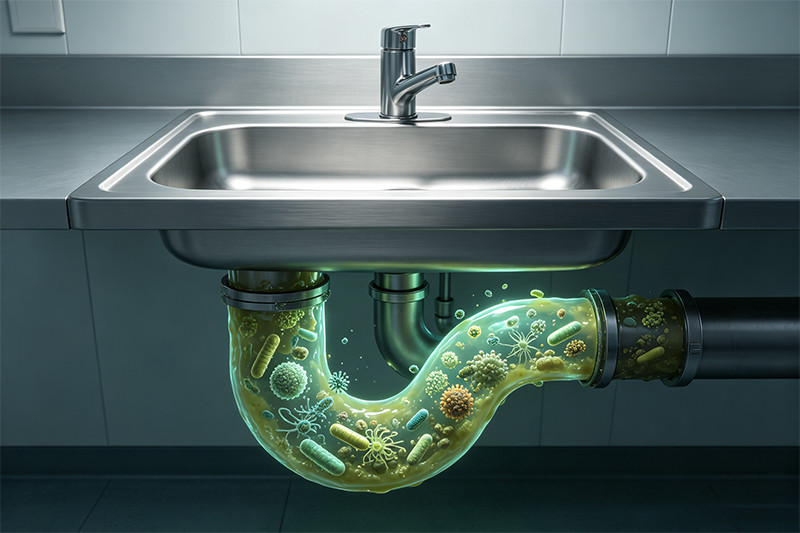 Caption: A diagram illustrating how free-floating bacteria attach to a pipe's inner surface and develop into a mature, multi-layered biofilm, creating a protected reservoir for pathogens.
Understanding how slimy biofilms and drains in hospital sinks become major infection risks.
A biofilm is more than just a collection of germs; it is a highly organized "bacterial city." The process begins when free-floating microbes, introduced from tap water or the disposal of fluids, attach to the moist inner surfaces of the drainpipes. These microbes then secrete a sticky, gelatinous matrix made of proteins and polymers. This slimy layer acts like a fortress, shielding the embedded bacteria, molds, yeasts, and viruses from the outside world.
This protective matrix is precisely what makes biofilms so dangerous. Within this shelter, a diverse community of pathogens can thrive, feeding on the constant supply of nutrients from hand soap, patient waste, and other discarded liquids. Shockingly, researchers have identified as many as 67 different bacterial species in a single hospital sink drain, including notorious pathogens like Pseudomonas aeruginosa and members of the ESKAPE group (e.g., Klebsiella, Enterobacter), which are known for causing severe, multi-drug resistant infections. Some studies show 70% of all hospital-acquired infections are caused by bacteria hidden in biofilms. This environment also acts as a "melting pot" for antimicrobial resistance, where bacteria can exchange genetic material, allowing resistance to spread rapidly between species. As a result, the sink drain evolves into a long-term, persistent reservoir for some of the most challenging superbugs in modern medicine.
The tough challenge of cleaning and disinfecting drain systems in hospital sinks.
Eradicating biofilms from hospital sinks is notoriously difficult. Standard cleaning protocols, including pouring disinfectants like chlorine down the drain, are often ineffective because the chemicals cannot penetrate the biofilm's protective matrix. While these methods may kill free-floating microbes or the outermost layer of the biofilm, the core community remains intact and can regrow to its original state within days, or even hours. In fact, bacteria within a biofilm can be 100 to 1,000 times more resistant to disinfectants than their free-floating counterparts.
This resilience poses a significant challenge for infection control teams. Attempts to control these reservoirs with chemical disinfection often yield inconsistent and short-lived results. Even after a treatment that appears successful, pathogens can reappear a few days later. Some studies have even found that certain disinfectants, when used at low concentrations, may inadvertently promote the exchange of antibiotic resistance genes within the biofilm. Furthermore, the physical act of cleaning can be counterproductive if it causes contaminated water to splash out of the drain. The immense difficulty of fully sterilizing these systems means that even replacing a colonized sink or its components is not a guaranteed solution, as the new plumbing can quickly become re-contaminated. This persistent challenge highlights the need for advanced sink designs and innovative disinfection strategies that can overcome the structural defenses of a mature biofilm.
Surprising Risks: Drinking Water in Special Units
While the dangers of splashes and biofilms are well-documented, a less obvious but equally serious risk involves the direct consumption of tap water from hospital sinks, especially for the most vulnerable patients. In specialized units where individuals are severely immunocompromised, what is normally considered safe drinking water can become a direct vector for life-threatening infections.
Why drinking water from hospital sinks in areas like hematology units can be a surprising infection risk.
Patients in units such as hematology, oncology, or transplant wards have severely weakened immune systems due to their underlying conditions or intensive treatments like chemotherapy. For these individuals, pathogens that would be harmless to a healthy person can cause devastating illness. Hospital tap water, although it meets public health standards, is not sterile. It can contain low levels of waterborne microbes, including Pseudomonas aeruginosa and nontuberculous mycobacteria.
When this water passes through a hospital's complex plumbing system, which may be colonized with extensive biofilms, it can pick up additional, and potentially more dangerous, antibiotic-resistant bacteria. If an immunocompromised patient drinks this water, ingests it with medication, or uses it for oral hygiene, they are directly introducing these pathogens into their system. This creates a significant, and often underestimated, infection risk that bypasses the more commonly discussed transmission routes like contaminated surfaces or airborne particles. Therefore, in high-risk units, restricting access to or ensuring the point-of-use filtration of tap water is a critical, life-saving precaution.
Fighting Back: Disinfection Strategies for Hospital Sinks
Given the clear and present danger posed by colonized hospital sinks, healthcare facilities are in a constant battle to control these microbial reservoirs. The unique and protected environment of a drain biofilm demands more than just standard surface cleaning. As a result, infection control has evolved from traditional chemical methods to embrace innovative physical and technological solutions designed to disrupt, eradicate, and prevent the return of these dangerous pathogens.
Old and New Ways to Clean Hospital Sinks
The approach to sink disinfection is broadening, moving from a reliance on conventional chemicals to a multi-faceted strategy that incorporates advanced physics and material science. This evolution is driven by the recognized limitations of older methods and the urgent need for more effective, lasting solutions against resilient biofilms.
Learning about chemical, physical, and all-around cleaning methods for hospital sinks.
The arsenal of sink disinfection methods can be broadly categorized into chemical, physical, and comprehensive approaches.
Chemical Disinfection: This is the most traditional method, involving the use of liquid or foam-based chemical agents to kill microbes. Common chemicals include chlorine-based products, hydrogen peroxide, peracetic acid, and various proprietary disinfectant formulas. While these can be effective at reducing microbial loads on surfaces, their success within drains is often limited and transient. Pouring liquid disinfectants down a drain provides only brief contact time, which is insufficient to penetrate and destroy a mature biofilm. Foam applications have shown more promise by increasing the contact time, but even then, bacteria often recolonize within days. Studies show that while a foam disinfectant might achieve an initial reduction in bacteria, the population often returns to baseline levels within a week.
Physical Disinfection: This category involves using physical forces or energy to destroy microbes, rather than chemicals. The most prominent method is thermal disinfection, which uses heat—often in the form of boiling water or steam—to kill pathogens. Studies have shown that thermal treatments are significantly more effective than chlorine at reducing bacterial loads in drains. Other physical methods include vibrating drains to dislodge biofilm and installing physical barriers like specialized drain covers to prevent splash-back.
All-Around (Comprehensive) Cleaning: Recognizing that no single method is a silver bullet, many facilities are adopting a bundled approach. This involves a risk assessment to identify high-risk sinks and implementing a combination of strategies. It might include routine chemical cleaning of the basin and surrounding areas, periodic deep-cleaning of the drain with a more powerful method like thermal disinfection, and implementing behavioral protocols, such as restricting the disposal of nutrient-rich liquids into sinks. This holistic strategy aims to tackle the problem from multiple angles for a more robust defense.
Introducing cool new cleaning technologies like UVC light and tiny nanoparticles for hospital sinks.
As the limitations of traditional methods become clearer, the focus has shifted to cutting-edge technologies that offer more persistent and automated solutions.
- UVC Light Technology: Ultraviolet-C (UVC) light is a powerful germicidal agent that works by damaging the DNA of microorganisms, rendering them unable to reproduce. This technology is being integrated into hospital sinks in several innovative ways. Some systems use ceiling-mounted far-UVC fixtures to continuously decontaminate the sink basin and surrounding surfaces. Others are more targeted, with UVC LEDs built directly into drain covers or P-traps to sterilize the drain biofilm and the water within it. These automated systems can run customized sterilization cycles, sometimes triggered by the flow of water, to provide continuous disinfection without manual labor and have been shown to reduce colony-forming units (CFUs) by 99.9% or more.
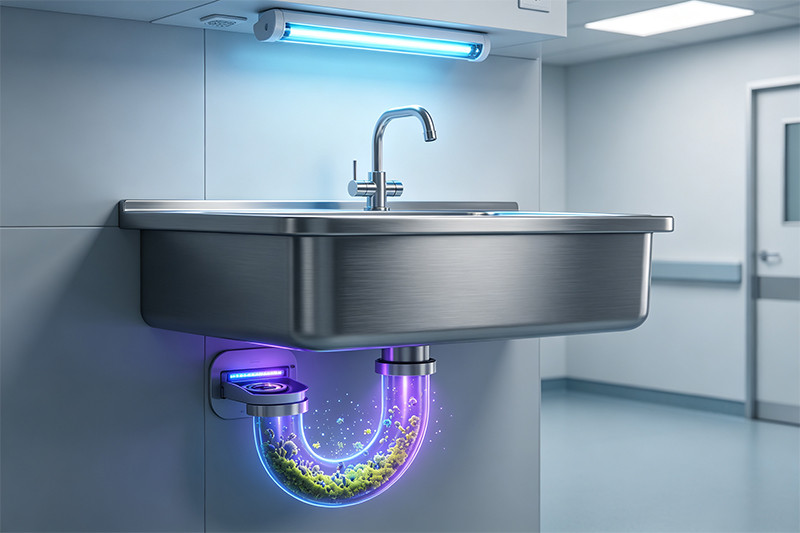 Caption: An illustration of a modern hospital sink equipped with an integrated UVC light system designed to continuously disinfect the drain and prevent biofilm formation.
- Nanoparticle Technology: This emerging field uses infinitesimally small particles to combat microbes. Sinks can be coated with a nano-barrier that creates a super-hydrophobic (water-repelling) surface. This causes water to bead up and roll off, taking dirt and microbes with it and making it harder for biofilms to attach. Additionally, certain nanoparticles, such as those made of silver or titanium dioxide, have powerful antimicrobial properties. When incorporated into sink materials or applied as a coating, these nanoparticles can actively kill bacteria and other pathogens that come into contact with the surface, offering long-lasting, built-in antimicrobial protection. This "self-cleaning" and "self-disinfecting" technology represents a major leap forward in passive infection control.
The Power of Heat: Hot Disinfection for Hospital Sinks
As chemical methods struggle to provide lasting effects against entrenched biofilms, thermal disinfection has emerged as a powerful and reliable alternative. Using high temperatures to kill pathogens is one of the oldest and most effective sterilization methods known, and its application to modern hospital plumbing is yielding impressive results.
How special hot water devices for drains offer a new way to clean hospital sinks.
A new generation of "self-disinfecting" sinks and retrofitted drain devices are harnessing the power of heat to maintain a clean plumbing environment. These systems work by using an integrated heating element to raise the temperature of the drainpipe or the water within the P-trap to levels lethal for bacteria, typically above 80°C (176°F). Some devices, known as Drainpipe Thermal Disinfection Units (DTDUs), wrap around the exterior of the pipe, heating it to inhibit and reduce bacterial colonization. Others are designed to heat the water held in the P-trap directly, often on an automated, daily schedule.
One common approach involves installing a valve at the end of the drainpipe that can be closed to trap water, which is then heated to boiling temperatures for a set period (e.g., 30 minutes) before being flushed. This process effectively "pasteurizes" the drain, killing off the microbial communities that form biofilms. These automated or semi-automated systems provide a much more robust and consistent cleaning method than manual chemical applications, which are prone to human error and have very short contact times.
A look at success stories: Using heat in hospital sinks to stop germs like CPE in ICUs.
The real-world application of thermal disinfection has shown remarkable success in controlling outbreaks of dangerous pathogens. Multiple studies have demonstrated that using heat—either with boiling water or steam—is significantly more effective at reducing bacterial loads compared to standard chlorine treatments. The intense heat can penetrate biofilms more effectively than chemicals and leaves no toxic residue.
In one study conducted in an intensive care unit (ICU), drainpipes equipped with thermal disinfection units showed significantly lower levels of bacterial bioburden compared to control sinks that received only routine chemical cleaning. Notably, Pseudomonas aeruginosa was not detected at all in the thermally treated drains, and Carbapenemase-producing Enterobacterales (CPE)—a critical threat in ICUs—were found in the control drains but not in those equipped with heat disinfection. Another study involving the decontamination of sinks with 25% acetic acid successfully reduced CPE infections and colonization at their ICU.
These findings strongly suggest that thermal disinfection is a highly effective strategy for suppressing the bacterial colonization of sink drains, including the multi-drug resistant strains that are most feared in a hospital setting. While even heat-treated drains can eventually become recolonized, routine thermal disinfection offers a superior method for keeping pathogen levels suppressed and breaking the chain of transmission from sink to patient.
Beyond Cleaning: The 'Water-Lite' Approach Next to Hospital Sinks
While improving disinfection is crucial, a more radical and increasingly supported strategy involves rethinking the very presence and use of water in high-risk patient areas. The "water-lite" or "water-free" approach is gaining traction as a powerful infection control measure, based on the simple premise that if you remove the wet environment, you remove the primary habitat for waterborne pathogens.
What 'water-lite' means and how it applies to areas around hospital sinks.
The 'water-lite' concept refers to the strategic reduction or elimination of water sources and water-based activities in clinical areas, particularly in close proximity to vulnerable patients. This goes beyond simply cleaning sinks better; it involves a fundamental redesign of workflows and environments to minimize opportunities for water-related contamination.
In practice, this can mean several things:
- Creating Water-Free Patient Zones: This involves establishing a perimeter around the patient's bed where no water-related activities are permitted.
- Relocating Sinks: Moving sinks further away from the immediate patient space or even outside of the patient's room entirely.
- Substituting Wet Tasks with Dry Alternatives: For example, using pre-moistened disposable cloths for patient bathing instead of basins of water, and relying on alcohol-based hand rubs as the primary method for hand hygiene, with handwashing sinks reserved for specific situations like visible soiling.
- Eliminating Unnecessary Fixtures: In the most comprehensive application of this philosophy, some newly built or renovated ICU rooms are being designed without patient-room sinks altogether.
Seeing how reducing water exposure, maybe even removing hospital sinks, helps lower infections in ICUs.
The implementation of water-lite and water-free patient care has shown dramatic success in reducing healthcare-associated infections (HAIs), especially those caused by Gram-negative bacteria. Several hospitals that have adopted these policies have reported significant and sustained decreases in infection rates.
For instance, a Dutch hospital that implemented a "water-free" patient care protocol in its ICU—which included removing sinks from patient rooms and using disposable washing and drinking water products—saw a significant reduction in infections caused by P. aeruginosa. Another burn unit that removed all sinks from patient rooms and corridors reported a complete halt to new acquisitions of multi-drug resistant P. aeruginosa among its patients. These real-world case studies provide compelling evidence that physically removing the primary reservoir for these pathogens—the sink and its associated plumbing—is a highly effective infection control intervention.
How using less water around hospital sinks can help us fight against germs that resist antibiotics.
The connection between water use and antimicrobial resistance is profound. The biofilms that thrive in sink drains are not just reservoirs of bacteria; they are hotspots for horizontal gene transfer, the process by which bacteria share resistance genes with each other. By constantly providing water and nutrients, we are fueling these microbial melting pots where new and more dangerous superbugs can evolve.
Adopting a water-lite approach directly combats this threat. By reducing the overall amount of water and organic waste going down drains, we starve the biofilms of the resources they need to flourish. This can slow their growth and reduce the density of the microbial population, thereby lowering the probability of resistance gene exchange. When combined with the physical removal of sinks from patient rooms, this strategy effectively dismantles the primary environmental factory for antibiotic-resistant bacteria in the clinical setting. It represents a shift from a defensive posture (constantly trying to kill the germs) to an offensive one (eliminating the habitat they need to survive and evolve).
Protecting Patients: Making Water Hygiene Near Hospital Sinks a Top Priority
The growing body of evidence linking hospital water systems to healthcare-associated infections (HAIs) has elevated water hygiene from a background concern to a central pillar of patient safety. Preventing these infections requires a proactive and comprehensive strategy that goes far beyond routine cleaning. It demands a deep understanding of the microbial risks inherent in hospital plumbing and a commitment to managing them with the same rigor applied to other aspects of infection control.
Water Hygiene: An Important Risk We Can't Ignore
The water flowing through a hospital's pipes is a complex ecosystem. While it meets municipal safety standards, it is not sterile and can become a vehicle for dangerous pathogens, especially when it interacts with the established biofilms within the plumbing. Ignoring this risk can have severe consequences for vulnerable patient populations.
Understanding the water-related germs that can come from hospital sinks and cause sickness.
Hospital water systems are known reservoirs for a variety of opportunistic pathogens that can cause serious illness, particularly in immunocompromised individuals. These microbes thrive in the moist environments of pipes, faucets, and drains. Common culprits include:
- Legionella species: Famous for causing Legionnaires' disease, a severe form of pneumonia, these bacteria are transmitted by inhaling contaminated water droplets from sources like showers and faucets.
- Pseudomonas aeruginosa: A versatile and often multidrug-resistant bacterium, P. aeruginosa thrives in sink drains and biofilms. It can cause a wide range of infections, from bloodstream infections to pneumonia, especially in patients in intensive care or with burn wounds.
- Nontuberculous Mycobacteria (NTM): This group of bacteria is naturally present in water and soil and can cause serious lung infections in susceptible individuals, particularly those with pre-existing lung conditions.
- Other Gram-Negative Bacteria: This broad category includes pathogens like Acinetobacter, Stenotrophomonas, and various Enterobacterales (e.g., Klebsiella, E. coli). These organisms are notorious for developing antibiotic resistance and are frequently implicated in sink-related outbreaks.
These pathogens are transmitted from sinks to patients primarily through splashing and aerosolization, which can contaminate the surrounding environment, medical equipment, and the hands of healthcare workers.
Easy-to-use solutions for handling the risks that come from hospital sinks and their water.
Managing the risks from hospital sinks requires a multi-layered approach that combines good policy with practical interventions. The CDC and other health organizations recommend a variety of straightforward measures that can significantly reduce transmission risk. These include:
- Establishing a "Splash Zone": Designate a three-foot area around sinks as a no-storage zone for patient care items or personal belongings. If space is limited, physical barriers like splash guards should be installed.
- Proper Sink Use: Sinks designated for handwashing should not be used for the disposal of patient waste or other nutrient-rich fluids like IV solutions or nutritional supplements, as this practice feeds biofilm growth.
- Smart Design Choices: When building or renovating, select sinks with deeper basins and faucets that are angled or offset from the drain to minimize splashing.
- Routine Cleaning and Disinfection: All surfaces in and around the sink—including the basin, faucet, handles, and countertops—should be cleaned and disinfected daily.
- Lid Protocol: Hopper and toilet covers should always be closed before flushing to contain the aerosolization of contaminated droplets.
Implementing these policies consistently helps create a safer environment and reduces the constant threat posed by sink-related pathogens.
What Infection Control Teams Are Doing About Hospital Sinks
The responsibility for mitigating water-related risks falls heavily on a hospital's Infection Prevention and Control (IPC) team. These multidisciplinary groups are at the forefront of developing and implementing strategies to keep water systems safe.
Practical advice for the teams in charge of keeping hospital sinks clean and safe.
Effective management of hospital sink safety requires a formal, structured approach. The CDC strongly recommends that all healthcare facilities establish a comprehensive Water Management Program (WMP). The key elements of this program include:
- Forming a Multidisciplinary Team: The team should include infection preventionists, facility managers, engineers, clinicians, and administrators to ensure all perspectives are considered.
- Conducting a Risk Assessment: The team must perform a Water Infection Control Risk Assessment (WICRA) to identify where and how patients are most likely to be exposed to waterborne pathogens. This involves mapping the water system and evaluating everything from sink design to patient hygiene practices.
- Implementing Control Measures: Based on the risk assessment, the team should implement specific control measures. This could range from daily disinfection protocols and staff education on proper sink usage to larger-scale interventions like installing self-disinfecting sinks or redesigning patient rooms to be "water-lite." For facilities looking to upgrade, partnering with specialized providers like Samsink can offer access to sink designs engineered specifically to mitigate these risks.
- Monitoring and Documentation: The program must include rigorous monitoring to ensure control measures are working. This involves regular water testing, environmental swabbing, and tracking infection rates. All activities and results must be meticulously documented to demonstrate compliance and effectiveness.
The ongoing, growing efforts to stop contamination in and around hospital sinks.
The effort to control sink contamination is a dynamic and evolving field. As our understanding of the problem deepens, so too do the solutions. The trend is moving from reactive cleaning to proactive prevention. This includes a growing interest in antimicrobial surfaces, such as copper alloys, which can passively kill pathogens, and smart technologies like AI-powered surveillance systems that can predict outbreaks before they happen.
There is also a significant push towards integrating water safety into the very design of healthcare facilities. Infection preventionists are now crucial members of construction and renovation project teams, ensuring that new buildings are designed with sink placement, plumbing infrastructure, and material choices that inherently reduce the risk of waterborne infections. This forward-thinking approach aims to engineer safety into the hospital environment from the ground up.
Moving Forward: Being Prepared with Hospital Sinks
The evidence is clear: hospital sinks are a critical control point in the prevention of healthcare-associated infections. Moving forward, the focus must be on embedding water hygiene into the core fabric of hospital safety culture.
Taking steps to include managing hospital sinks as a key part of preventing infections everywhere in the hospital.
Integrating sink management into a hospital's overall infection prevention strategy is no longer optional; it's essential. This means that water safety cannot be an afterthought or the sole responsibility of the engineering department. It requires a collaborative, facility-wide commitment. Every healthcare worker must be educated on the risks associated with sinks and trained on proper usage protocols, such as not discarding patient waste in handwashing sinks.
A comprehensive Water Management Program should be a living document, regularly updated based on surveillance data, new research, and emerging technologies. Ultimately, preventing waterborne infections depends on this continuous cycle of risk assessment, intervention, and evaluation. By treating the hospital water system with the same level of vigilance as we do hand hygiene, we can take a significant step toward making our healthcare facilities safer for every patient.
Frequently Asked Questions (FAQ)
Q1: What exactly is a biofilm and why is it so hard to remove from a sink drain?
A: A biofilm is a complex, organized community of microorganisms, including bacteria, fungi, and viruses, that attach to a surface and encase themselves in a slimy, protective matrix. Think of it as a microbial city. This matrix, made of polymers and proteins, acts as a shield, physically blocking disinfectants from reaching the bacteria within. This is why simply pouring bleach down a drain is often ineffective; the chemicals can't penetrate this protective layer. Bacteria inside a biofilm can be up to 1,000 times more resistant to disinfectants than they are when free-floating. The constant moisture and nutrient supply from disposed liquids in a sink drain create the perfect environment for these resilient communities to thrive and rapidly regrow even after a cleaning attempt.
Q2: Are all hospital sinks dangerous, or only those in specific units like the ICU?
A: While sinks in high-risk areas like Intensive Care Units (ICUs), burn units, and oncology wards pose the greatest threat due to the vulnerability of the patients, any hospital sink can be a reservoir for pathogens. A study in one modern hospital found 67 different species of bacteria in sink drains across various wards, many of which were antibiotic-resistant. Contamination is widespread; another study found that 24% of 592 sinks across 34 different departments were contaminated with dangerous CPE bacteria. The level of risk is a combination of the sink's contamination status and the patient's susceptibility. Therefore, all hospital sinks should be considered potential sources of infection and managed accordingly through a comprehensive water safety plan.
Q3: As a patient or visitor, what can I do to protect myself from sink-related germs?
A: While the primary responsibility for water safety lies with the hospital, patients and visitors can take simple steps to reduce their risk. First, treat the area around the sink as a "splash zone." Avoid placing personal items like toothbrushes, toiletries, or cell phones on the counter next to the sink, as splashes can contaminate them. When washing your hands, try to minimize splashing. Rely on alcohol-based hand sanitizer for routine hand hygiene unless your hands are visibly soiled. If you are in a high-risk unit or are severely immunocompromised, avoid drinking tap water or using it for oral care unless it has been filtered at the point of use or you have been explicitly told it is safe to do so by the clinical team.
Q4: How is thermal disinfection different from chemical cleaning, and why is it more effective?
A: Chemical disinfection relies on substances like chlorine or hydrogen peroxide to kill microbes. Its effectiveness is often limited in drains because the liquid has a very short contact time and cannot penetrate the protective biofilm layer. Thermal disinfection, on the other hand, uses energy in the form of heat (boiling water or steam) to kill pathogens. Studies have shown that thermal methods are significantly more effective because heat can penetrate the biofilm more deeply and denature the proteins essential for microbial survival. For example, systems that heat the P-trap water to over 80°C (176°F) can achieve a much greater and more lasting reduction in bacterial load compared to chemical flushes. It is a physical method of sterilization that leaves no chemical residue and is less likely to be thwarted by the biofilm's defenses.
Q5: Is removing sinks from patient rooms a safe and practical solution?
A: While it may sound radical, removing sinks from patient rooms is a strategy that has been successfully implemented in some high-risk units, particularly ICUs, with dramatic results in reducing certain types of HAIs. The logic is straightforward: by removing the primary environmental reservoir for waterborne pathogens, you eliminate the source of transmission. This approach, often part of a "water-free" patient care model, is paired with a heavy reliance on alcohol-based hand rubs and pre-packaged, single-use products for patient washing. It is not a one-size-fits-all solution and may not be practical or necessary for all hospital wards. However, for the most vulnerable patient populations, the evidence suggests that physically engineering the pathogen's habitat out of the environment can be one of the most effective infection control measures possible.
Conclusion
I've learned that tackling the risks associated with hospital sinks is a critically important and constantly evolving aspect of ensuring patient safety and preventing the spread of infections. The journey from recognizing sinks as pathogen reservoirs to developing sophisticated disinfection technologies shows a significant shift in our approach to healthcare hygiene.
By understanding the complex ways water-based germs can cause harm and implementing smart, multi-layered strategies—from thoughtful sink design to advanced thermal and UVC disinfection—we can make our hospitals substantially safer for everyone. This is not a task for one department alone; it is a collective effort that requires collaboration between infection control teams, facilities management, clinicians, and even hospital administrators. For those looking to take a proactive step, exploring advanced solutions from specialists like Samsink can provide access to sinks designed for the express purpose of infection control, offering a tangible upgrade to patient safety infrastructure.
I hope this information has illuminated why better water hygiene is so vital and has showcased the dedication of countless professionals working to keep hospital sinks clean and safe. Let's continue to support these efforts, encourage further innovation, and champion the policies that protect the most vulnerable among us.