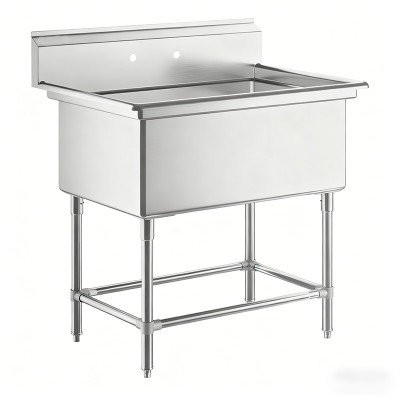
What is a 3 Compartment Sink and How Does it Work?
As someone working in a commercial kitchen, I understand the critical role that proper sanitation plays in ensuring food safety. That's why I want to share insights into the indispensable piece of equipment known as a 3 compartment sink.
Join me as I explain what a 3 compartment sink is, how it functions, and why it's a non-negotiable for adhering to hygiene standards in any food service establishment, from bustling restaurants to mobile food trucks.
Understanding the 3 Compartment Sink System
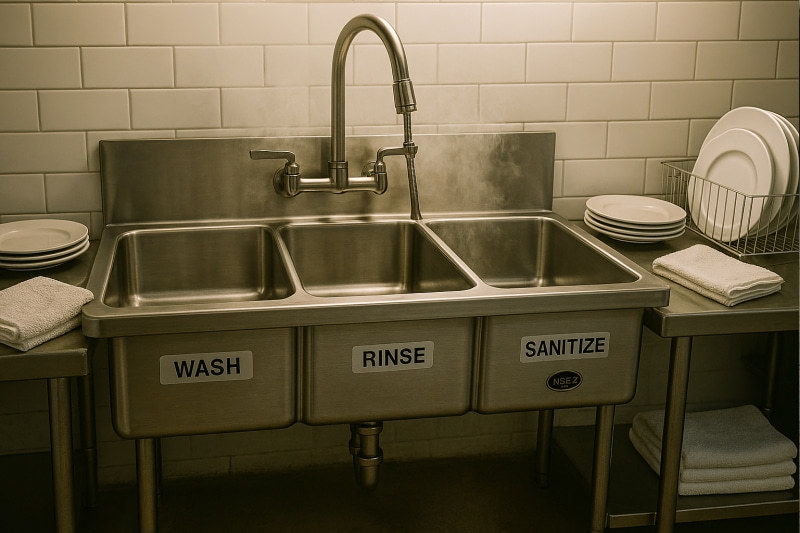
A 3 compartment sink is the backbone of any commercial kitchen's cleaning and sanitation process. Mandated by health departments across the country, this system provides a dedicated, methodical approach to manual dishwashing. It ensures that every plate, pot, and utensil goes through a rigorous cleaning process to eliminate food debris and harmful microorganisms. The entire setup is designed to prevent cross-contamination and uphold the highest standards of food safety, forming a critical control point in the Hazard Analysis and Critical Control Points (HACCP) system that governs food service operations. The three-step "Wash, Rinse, Sanitize" method is the industry standard for manual warewashing.
The Purpose of Each Compartment in a 3 Compartment Sink
Each of the three basins in this essential kitchen fixture has a distinct and crucial role. Following the sequence precisely—Wash, Rinse, and Sanitize—is not just a best practice; it's a legal requirement in most jurisdictions to protect public health. Skipping or improperly performing any step can lead to foodborne illnesses and health code violations. Before beginning, it's essential to scrape any large food particles off the dishes and, if necessary, pre-soak them to loosen stubborn, cooked-on residue.
First Compartment: Washing
The journey to a clean dish begins in the first compartment. This basin is filled with a clean, warm water solution mixed with a commercial-grade detergent. The water temperature is critical; it must be at least 110°F (43°C) as required by most health codes. This temperature helps to effectively dissolve grease and lift food soil from the surfaces of the dishes. Using a brush or cloth, you'll scrub all surfaces of each item, both inside and out, ensuring all visible debris is removed. This initial scrub is foundational, as leftover food particles can neutralize the sanitizer used in the final step, rendering it ineffective. Regular monitoring of the water's temperature and cleanliness is crucial; the water should be changed when it becomes greasy, visibly soiled, or falls below the required temperature.
Second Compartment: Rinsing
Once an item is thoroughly washed, it moves to the second compartment. The sole purpose of this basin is to rinse away all traces of the detergent and any remaining food particles. It should be filled with clean, warm water, ideally also at or above 110°F (43°C) to prevent the temperature shock that can cause greasy residues to re-solidify. A continuous flow-through of clean water is the ideal setup, but if using a static basin, the water must be kept clean and changed frequently. A proper rinse is vital because lingering detergent can interfere with the sanitizer in the next stage and can also leave an undesirable chemical taste on the dishware. This step acts as a bridge, ensuring the item is perfectly prepared for the final, critical sanitization process.
Third Compartment: Sanitizing
The final compartment is where the magic of food safety truly happens. After rinsing, items are submerged in the sanitizing solution to eliminate bacteria and other harmful pathogens that are invisible to the naked eye. There are two primary methods for sanitizing approved by health authorities:
Hot Water Sanitization: This involves immersing the items in water maintained at a temperature of at least 171°F (77°C) for a minimum of 30 seconds. This method is effective but requires a booster heater for the sink and long-handled utensil baskets to prevent burns.
Chemical Sanitization: This is the more common method, using an approved chemical sanitizer mixed with lukewarm water to the correct concentration. Common sanitizers include chlorine (bleach), iodine, and quaternary ammonium (quats).
- Chlorine: Typically requires a concentration of 50-100 parts per million (ppm) for at least 30 seconds.
- Quaternary Ammonium (Quats): Generally used at 200-400 ppm, following the manufacturer's specific instructions, often for at least 30 seconds.
- Iodine: Requires a concentration between 12.5 and 25 ppm for 30 seconds.
It's imperative to use test strips to regularly check the sanitizer's concentration and water temperature, as both can become diluted or fall out of the effective range over time. After the required contact time, dishes must be air-dried on a clean, sanitized drainboard or rack. Towel drying is prohibited as it can reintroduce bacteria onto the clean surfaces.
Best Practices for Using a 3 Compartment Sink
To maximize the effectiveness of your 3 compartment sink and ensure full compliance with health regulations, adhering to a set of best practices is essential. These guidelines streamline the process, enhance safety, and ensure every item is properly cleaned and sanitized.
- Proper Setup: Before starting, ensure each sink compartment and the drainboards are clean and sanitized. Post a sign or diagram illustrating the "Wash, Rinse, Sanitize" steps to guide staff.
- Scrape and Pre-soak: Always scrape food scraps into a garbage can or disposal. Use a pre-soak area for heavily soiled items to make the washing step more efficient.
- Monitor Temperatures: Use a calibrated thermometer to check the water temperature in the wash and rinse compartments regularly. For hot water sanitizing, this is especially critical.
- Check Sanitizer Concentration: Keep test strips handy and check the sanitizer solution frequently. Heavy use and food soil can quickly deplete its effectiveness.
- Change Water Regularly: The water in all three compartments should be drained and replenished as soon as it becomes dirty, greasy, or when temperatures and concentrations fall out of the required range.
- Air Dry Completely: Never towel dry. Place items on a sanitized drainboard or rack in a way that allows for complete air circulation. Allow them to dry fully before stacking or storing to prevent moisture from creating a breeding ground for bacteria.
- Wear Proper PPE: Staff should wear gloves and aprons to protect themselves from hot water and chemicals and to prevent cross-contamination.
- Clean As You Go: Incorporate dishwashing into the workflow throughout the day. Letting dishes pile up creates a hazardous environment and makes the task more overwhelming.
Below is a quick reference table for setting up your sink:
| Compartment | Action | Key Requirements |
|---|---|---|
| 1st Sink | Wash | Water at ≥110°F (43°C) + Commercial Detergent |
| 2nd Sink | Rinse | Clean water, preferably ≥110°F (43°C) |
| 3rd Sink | Sanitize | Hot water at ≥171°F (77°C) for 30s OR Chemical sanitizer at correct concentration (e.g., 50-100 ppm chlorine) |
| Drainboard | Air Dry | Do not stack wet items; allow for complete air circulation. |
Why a High-Quality 3 Compartment Sink Matters: Gauge and Material
Investing in a high-quality 3 Compartment Commercial Kitchen Sink is not an area where a business should cut corners. The material and construction of the sink directly impact its durability, ease of cleaning, and long-term value. A well-made sink will withstand the daily rigors of a busy kitchen, resist corrosion from chemicals and water, and maintain a hygienic surface that is easy to sanitize. Conversely, a low-quality sink can quickly become a liability, suffering from dents, rust, and scratches that can harbor bacteria, making it difficult to clean and a potential health code violation.
The Importance of Stainless Steel in Your 3 Compartment Sink
There's a reason virtually all commercial kitchen equipment is made from stainless steel: it is the superior material for food service environments. Its non-porous surface is a key feature, as it does not absorb moisture or food particles, making it inherently resistant to bacterial growth. This makes cleaning and sanitizing far more effective compared to materials like plastic or porcelain.
Stainless steel is also prized for its exceptional durability and corrosion resistance. When choosing a sink, you'll often see different series of stainless steel mentioned, most commonly 304 and 430.
- Type 304 Stainless Steel: This is considered the industry gold standard for food service equipment. It contains a higher percentage of chromium and nickel, which gives it superior protection against rust and corrosion from salts, acids, and harsh cleaning chemicals. While more expensive, a Type 304 sink is a long-term investment in durability.
- Type 430 Stainless Steel: This is a more budget-friendly option. While it still offers good performance and is suitable for many applications, its lower nickel content makes it slightly more susceptible to corrosion over time, especially in environments with high moisture and exposure to corrosive substances.
For a hardworking piece of equipment like a 3 compartment sink that is constantly exposed to water, detergents, and sanitizers, investing in Type 304 stainless steel is highly recommended for longevity and performance.
Understanding Gauge: What it Means for Your 3 Compartment Sink's Durability
The term "gauge" refers to the thickness of the stainless steel. It's a counterintuitive measurement: the lower the gauge number, the thicker and stronger the steel. For commercial sinks, you will typically find options ranging from 14 to 20 gauge.
- 14-Gauge: This is a premium, heavy-duty thickness. It is exceptionally resistant to dents, bowing, and damage from heavy pots and pans. Sinks of this gauge are ideal for the most demanding, high-volume kitchens and will last for decades.
- 16-Gauge: This is the most common and highly recommended gauge for general commercial use. It offers an excellent balance of durability, performance, and cost. A 16-gauge sink can easily handle the daily abuse of a busy restaurant or institution.
- 18-Gauge: This is a lighter-duty option. While still a significant step up from residential-grade sinks, 18-gauge steel is more prone to denting and may "bow" or flex under the weight of heavy water-filled pots. It may be suitable for lower-volume applications like a small cafe or bar.
- 20-Gauge & Higher: These gauges are generally considered too thin for a commercial 3 compartment sink. They are best avoided, as they will not stand up to the demands of a commercial environment and are likely to fail or become damaged quickly.
When selecting a sink, choosing a lower gauge (like 16-gauge) is a wise investment in the durability and longevity of your kitchen's most crucial cleaning station.
Maintaining Efficiency and Compliance with Your 3 Compartment Sink
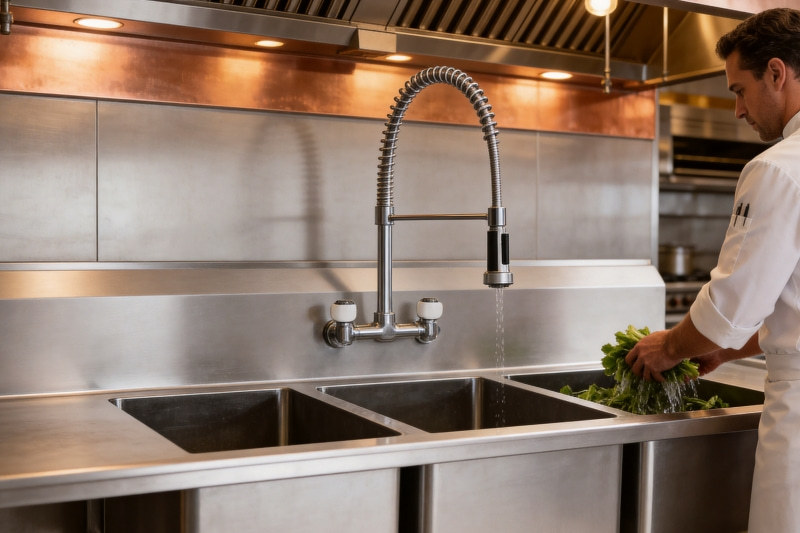
Simply having a sink is not enough; it must be used and maintained correctly to ensure operational efficiency and continuous compliance with health codes. A poorly managed dishwashing station can quickly become a bottleneck, slowing down kitchen service and creating a backlog of dirty dishes. More importantly, it can lead to failed health inspections, fines, and even business closure. Proactive maintenance and problem-solving are key to keeping this critical area running smoothly.
Common Challenges and Solutions for 3 Compartment Sink Operations
Even with the best intentions, staff can run into a number of common issues when operating a three-compartment sink. Being prepared with solutions is key to maintaining a seamless workflow.
| Common Challenge | Impact | Proactive Solution |
|---|---|---|
| Water Not Hot Enough | Greasy film remains on dishes; sanitizer may not work effectively; health code violation. | Regularly check the water heater's thermostat. If the sink is far from the heater, consider a point-of-use booster heater to maintain the required ≥110°F. |
| Sanitizer Concentration is Off | Too weak: fails to kill pathogens. Too strong: can be a chemical hazard and leave toxic residue on dishes. | Use test strips before each dishwashing session and periodically throughout the day. Train all staff on how to read the strips and adjust the solution. Keep a log. |
| Slow Draining | Creates backups, slows down the entire process, and leads to dirty, standing water, which is a contamination risk. | Regularly clean drain stoppers and pipes. Use a food solids strainer to prevent large particles from going down the drain. Schedule professional plumbing maintenance to clear grease buildup. |
| Lack of Drainboard Space | Creates a "bottleneck" where clean, sanitized items have nowhere to air dry, forcing staff to stack wet items, which is a health hazard. | When purchasing a sink, opt for a model with two integrated drainboards: one for soiled items and one for clean, air-drying items. If space is limited, use adjacent stainless steel tables or rolling racks. |
| Scratches & Pitting | Scratches in the sink surface can harbor bacteria, making the sink itself difficult to properly clean and sanitize. | Clean the sink daily with non-abrasive pads or brushes. Never use steel wool or highly abrasive cleaners. Polish in the direction of the grain to maintain the protective layer. |
Beyond the Commercial 3 Compartment Sink: Handwashing and Mobile Units
The principles of "Wash, Rinse, and Sanitize" extend beyond the main dish pit. A critical component of kitchen hygiene is the separation of tasks. A 3 compartment sink is designated only for warewashing. Under no circumstances should it be used for handwashing, food prep, or dumping mop water.
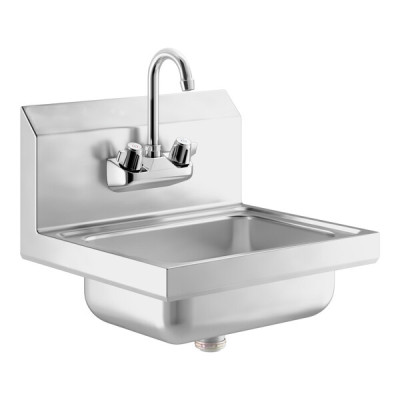
Dedicated Handwashing Sinks: Health codes universally require a separate, dedicated handwashing sink, fully stocked with soap, paper towels, and hot and cold running water. It must be conveniently located for staff to wash their hands frequently, especially between tasks. Using the 3 compartment sink for handwashing is a major cross-contamination risk and a serious health code violation.
Mobile and Portable Units: For food trucks, catering businesses, and outdoor events, a full-sized, plumbed-in sink is not always feasible. However, the requirement for proper dishwashing facilities remains. This is where mobile and portable 3 compartment sinks become essential. These self-contained units often include:
- Three appropriately sized basins, plus a separate handwashing sink.
- Onboard fresh water and wastewater holding tanks.
- A water heater to ensure proper temperatures can be met.
- A pump to provide running water.
These units must still meet NSF standards and local health department regulations to be approved for operation. They ensure that even on the go, food service operators can uphold the same high standards of sanitation as a brick-and-mortar restaurant.
Choosing Samsink: A Recommended 3 Compartment Commercial Sink Manufacturer & Supplier
When it comes to selecting a piece of equipment as fundamental as a 3 compartment sink, the manufacturer and supplier you choose is just as important as the product's specifications. You need a partner who understands the demands of a commercial kitchen and provides reliable, compliant, and durable solutions. This is where researching experienced commercial sink manufacturers becomes a crucial step in the procurement process. A reputable company not only offers superior products but also provides the support and assurance you need to operate your business with confidence.
Why Samsink Stands Out for Your 3 Compartment Sink Needs
Samsink has established itself as a leading name in the commercial sink industry by focusing on the core principles that matter most to food service professionals: quality, durability, and compliance. With a deep understanding of EEAT (Expertise, Authoritativeness, and Trustworthiness), Samsink engineers products designed to meet and exceed the rigorous standards of modern kitchens.
- Expertise in Manufacturing: Samsink leverages years of specialized experience to craft sinks that are ergonomically designed and built for performance. They understand the workflow of a kitchen and incorporate features that enhance efficiency.
- Authority and Compliance: All Samsink commercial sinks are designed to be compliant with NSF/ANSI standards, giving you peace of mind that your equipment will pass health inspections. This commitment to meeting regulatory benchmarks establishes them as an authoritative voice in the industry.
- Trustworthy Quality: The brand's reputation is built on the foundation of using high-quality materials, such as premium 16-gauge, Type 304 stainless steel, ensuring a long-lasting and reliable product that represents a sound financial investment.
Features and Benefits of Samsink's 3 Compartment Sinks
Choosing a Samsink 3 compartment sink means investing in a range of features designed for the professional environment.
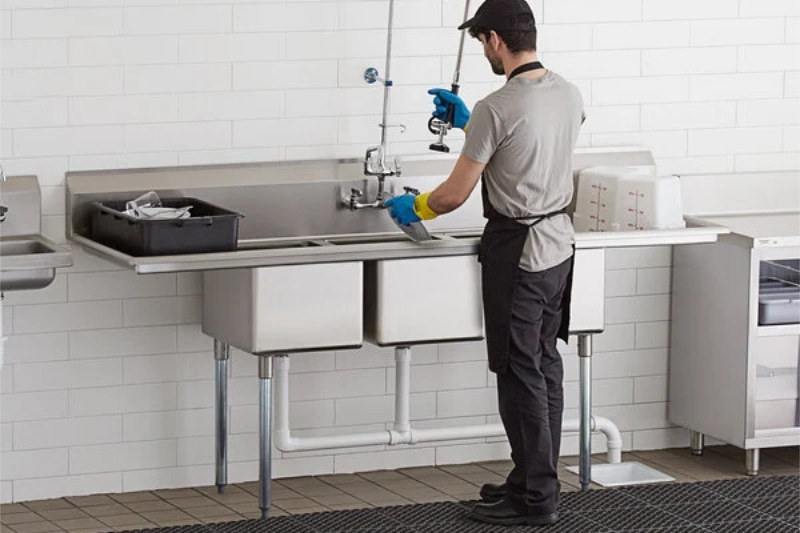
- Superior Construction: Samsink prioritizes the use of heavy-duty 16-gauge Type 304 stainless steel, providing maximum resistance to corrosion, dents, and the daily wear and tear of a bustling kitchen.
- Thoughtful Design: Features often include coved corners (rounded edges) inside the sink bowls, which eliminate hard-to-reach 90-degree angles and make cleaning faster and more thorough, preventing bacteria buildup.
- Integrated Drainboards: Many models come with spacious, grooved drainboards. A "clean" drainboard for air-drying and a "dirty" drainboard for soiled items are crucial for maintaining a sanitary workflow and preventing cross-contamination.
- Stability and Support: Samsink's free-standing sinks feature robust, adjustable galvanized or stainless steel legs with non-marring feet, ensuring a stable and level setup on any floor surface.
- High Backsplash: A tall, integrated backsplash helps protect the wall behind the sink from splashes and moisture, contributing to a cleaner and more hygienic kitchen environment. It also often includes pre-drilled holes for easy faucet installation.
By combining robust materials, intelligent design, and a commitment to regulatory compliance, a Samsink 3 Compartment Commercial Kitchen Sink provides not just a piece of equipment, but a comprehensive solution for your kitchen's sanitation needs.
Frequently Asked Questions (FAQ)
Q1: Do I absolutely need a 3 compartment sink for my food business? A: For almost any establishment that washes and reuses dishes, utensils, or food preparation equipment, the answer is yes. Health codes in virtually all jurisdictions across the United States mandate a three-compartment sink for manual warewashing. This applies to restaurants, bars, cafes, bakeries, school cafeterias, and even most food trucks. The only potential exceptions might be businesses that exclusively use single-use, disposable plates and cutlery, but even then, a sink is required for cleaning equipment. It's a foundational piece of equipment for ensuring food safety and passing health inspections. Always check with your local health department for their specific requirements.
Q2: What is the ideal water temperature for each compartment? A: Temperature is critical for an effective cleaning process. According to FDA guidelines and most local health codes:
- Wash Compartment: The water must be at least 110°F (43°C). This temperature is effective at breaking down grease and fats.
- Rinse Compartment: The water should also be at least 110°F (43°C). Using hot rinse water helps remove all detergent residue and prepares the item for the sanitizer.
- Sanitize Compartment: If using hot water to sanitize, the water must be maintained at a scalding 171°F (77°C) for a minimum of 30 seconds of immersion. If using chemical sanitizer, follow the manufacturer's instructions, as most are designed for use in lukewarm water (typically around 75°F or 24°C).
Q3: How often should I drain and refill the sink compartments? A: There is no strict time-based rule; instead, it should be done as needed. The water in all three compartments must be changed when it becomes dirty, greasy, or when the critical parameters are no longer met. For the wash sink, change it when the water is visibly soiled or suds have diminished. For the rinse sink, change it when it becomes cloudy or full of suds. For the sanitizer sink, change it when debris accumulates or, most importantly, when your test strip shows the concentration has fallen below the effective level. In a busy kitchen, this could be every hour or two.
Q4: Can I use regular household bleach as a sanitizer? A: While commercial chlorine sanitizers are derived from bleach, using household bleach is often not recommended and may be against your local health code. Commercial sanitizers are specifically formulated for food contact surfaces, are EPA-registered, and come with clear instructions for dilution to the required 50-100 ppm. Household bleach can have different concentrations and may contain additives (like scents or thickeners) that are not food-safe. Using it makes it very difficult to achieve the correct, safe concentration. Always use a commercial-grade, EPA-approved sanitizer and the corresponding test strips.
Q5: What are drainboards and why are they important? A: Drainboards are the flat, sloped surfaces attached to the sides of the sink bowls. A proper setup includes two: one "dirty" drainboard and one "clean" drainboard. The dirty drainboard is where you place soiled items before washing, keeping them contained and off other surfaces. The clean drainboard is where you place sanitized items to air dry. This separation is crucial for preventing cross-contamination—you never want clean, sanitized items to touch a surface where dirty dishes have been. The slope of the drainboard directs water back into the sink, keeping the surrounding area dry and safe. Many high-quality sinks, like those from Samsink, come with integrated drainboards.
Q6: After I am done with dishwashing for the day, how do I clean the sink itself? A: Cleaning the sink itself is a critical final step. First, drain all compartments. Then, remove any large debris and food particles from the sink basins and drains. Wash each compartment thoroughly with detergent and a brush—pay special attention to corners and drains. Rinse all detergent away. Finally, sanitize all three compartments by either filling them with a properly concentrated sanitizing solution or by spraying all surfaces with it and allowing it to air dry. This ensures the sink is clean and free of bacteria, ready for the next day's use.
Conclusion
Mastering the proper use of a 3 compartment sink is fundamental for any food service professional. It’s not just about compliance with health codes; it’s about a deep-seated commitment to safeguarding public health and maintaining a pristine, efficient kitchen environment. The "Wash, Rinse, Sanitize" method is a simple but powerful process that forms the core of kitchen hygiene.
By adopting the best practices outlined here and investing in high-quality, durable equipment like those offered by experienced commercial sink manufacturers such as Samsink, you can ensure your establishment thrives on a reputation for efficiency and impeccable hygiene. Let this guide be your first step toward perfecting your sanitation process and building a foundation of trust with every customer you serve.