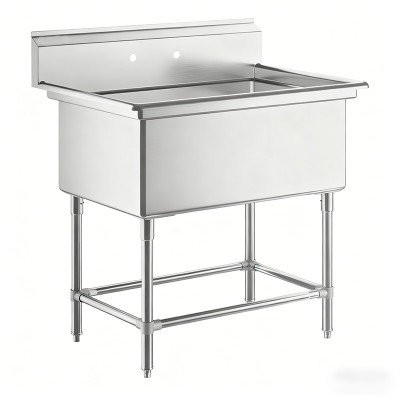
What is a Stand Alone Stainless Steel Sink? An Essential Guide for Commercial Workspaces
In the demanding environments of commercial kitchens, laboratories, or bustling workshops, a standard residential sink simply won't suffice. That's where a robust stand alone stainless steel sink becomes not just an upgrade, but a vital component for operational success. If you're outfitting a new workspace or upgrading an existing one, we're here to guide you through selecting the perfect stand alone stainless steel sink for your commercial needs, ensuring you invest in a solution that offers longevity, hygiene, and peak performance.
Key Takeaways
- Superior Material: Stainless steel is the top choice for commercial settings due to its exceptional durability, non-porous surface, and resistance to heat, corrosion, and impact.
- Hygiene is Paramount: The smooth, non-porous nature of stainless steel prevents bacteria from harboring in cracks or pores, making it easy to clean and sanitize, which is crucial for meeting health codes.
- Configuration Matters: The number of compartments—from single to four-bay sinks—directly impacts your workflow. The industry standard for food service is a three-compartment sink for proper washing, rinsing, and sanitizing.
- Gauge and Grade are Critical: The thickness of the steel (gauge) and the type (grade) determine the sink's durability. Lower gauges (like 14-gauge) mean thicker, more durable steel, and 300-series stainless steel offers the best corrosion resistance for most commercial applications.
- NSF Certification: Always choose an NSF-certified sink to guarantee it meets strict public health and safety standards, a non-negotiable for any commercial operation.
Why a Stand Alone Stainless Steel Sink is the Unrivaled Choice for Commercial Settings
When outfitting a commercial space, the choice of equipment is a critical decision that impacts efficiency, safety, and your bottom line. Among these essentials, the sink is a true workhorse. A stand alone stainless steel sink, often referred to as a freestanding sink, has become the industry standard for a multitude of compelling reasons. Unlike residential sinks, which prioritize aesthetics, commercial models are engineered for performance under pressure.
The Superior Strength and Hygiene of Stainless Steel
The material properties of stainless steel make it uniquely suited for the rigors of a professional environment. Its inherent strength and composition provide a level of performance that other materials like porcelain, ceramic, or composites cannot match in a high-volume setting.
We find that stainless steel offers exceptional resistance to corrosion, heat, impact, and stains.
Stainless steel is an alloy that includes chromium, which forms a passive, protective layer on the surface, making it highly resistant to rust and corrosion even with constant exposure to water and harsh cleaning chemicals. This durability extends to thermal shock; you can pour boiling water or place hot pans directly into the sink without causing damage, a frequent occurrence in any professional kitchen. Furthermore, its resilience against impacts from heavy pots and equipment means it resists dents, chipping, and cracks that would compromise other materials.
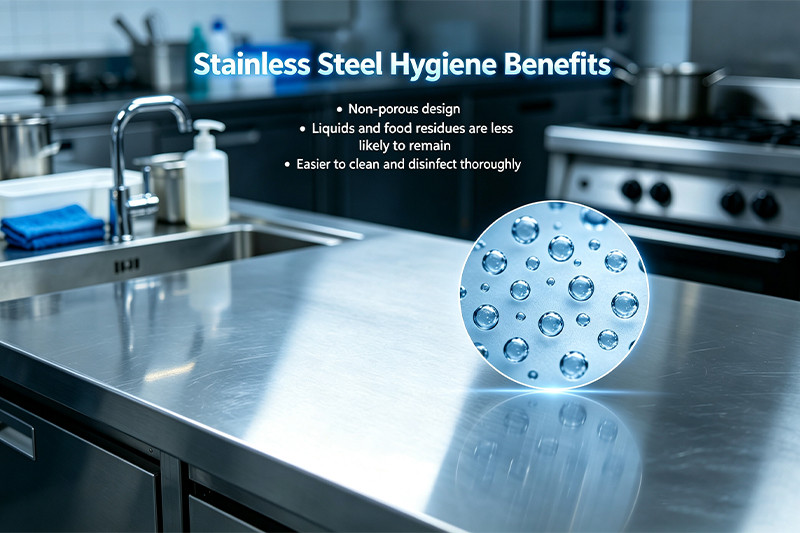
Its non-porous nature ensures top-notch hygiene, which is crucial for any commercial operation.
Hygiene is non-negotiable in any commercial setting, especially in food service where compliance with health codes is mandatory. The surface of stainless steel is non-porous, meaning it has no microscopic holes or crevices where liquids, food particles, or bacteria can be absorbed or become trapped. This smooth surface makes it incredibly easy to clean and sanitize effectively, drastically reducing the risk of cross-contamination and bacterial growth. This characteristic is a primary reason why stainless steel is a requirement in many health and safety regulations for commercial kitchens.
Meeting the Tough Demands a Stand Alone Stainless Steel Sink Faces
The applications for a stand alone stainless steel sink extend far beyond just restaurants. Their robust construction makes them indispensable in a wide array of demanding environments.
From busy commercial kitchens to bustling workshops and laundry rooms, these sinks are built to withstand the rigorous daily use that standard sinks simply cannot handle.
In a commercial kitchen, a sink endures a relentless barrage of heavy pots, sharp utensils, abrasive cleaning, and extreme temperatures. A stand alone stainless steel sink is engineered for this abuse, with deep basins to handle large items and contain splashes, and a sturdy leg-supported structure that doesn't rely on cabinetry for support. This same durability is prized in workshops for cleaning tools and parts, in medical facilities for sanitizing equipment, and in laundry rooms for handling heavy-duty cleaning tasks. Their ability to withstand constant wear and tear ensures a long service life, providing excellent long-term value.
Choosing the Right Compartment Configuration for Your Stand Alone Stainless Steel Sink
Selecting the right number of compartments is one of the most crucial decisions when buying a stand alone stainless steel sink. The configuration you choose will directly influence your kitchen's workflow, efficiency, and ability to comply with health codes. Each setup, from a single basin to a four-compartment unit, is designed for specific purposes.
Single Compartment Stand Alone Stainless Steel Sinks: Efficiency in Small Spaces
A single compartment sink is the most basic configuration, consisting of one large basin. Its primary advantage is its compact size, making it a practical choice for establishments with limited space.
We see these as compact and space-saving, ideal for tasks like hand washing or as utility sinks, but not for full dishwashing.
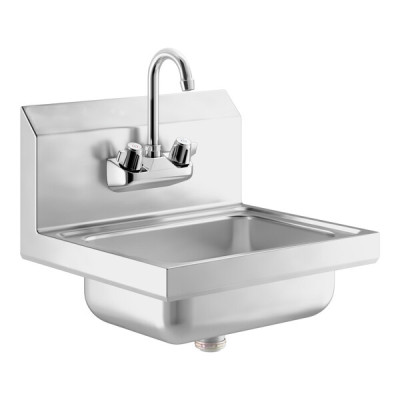
Single-basin sinks are perfect for smaller kitchens, food trucks, or as a secondary sink dedicated to a specific task. They are often used as utility sinks for filling and emptying mop buckets, as a handwashing station (though dedicated hand sinks are often required), or for simple food prep tasks like washing vegetables. However, they are not suitable for the complete three-step manual dishwashing process (wash, rinse, sanitize) required by most health departments for food-contact surfaces.
Double Compartment Stand Alone Stainless Steel Sinks: Versatility for Food Preparation
A two-compartment sink offers a significant step up in functionality by providing two separate basins. This configuration allows for simultaneous tasks, improving workflow and organization. The basins can be used for different stages of a process, such as soaking dishes in one side while washing in the other, or for separating food items during prep.
These sinks are great for food thawing and preparation, but we always advise separating raw meats and vegetables to prevent cross-contamination.
The dual-basin design is excellent for thawing foods under running water in one compartment while washing produce in the other. However, it is critical to implement strict protocols to prevent cross-contamination. Never use the same compartment for raw meats and ready-to-eat vegetables without thorough cleaning and sanitizing in between. While more versatile than a single basin, a two-compartment sink is still generally insufficient for the complete wash, rinse, and sanitize process required by health codes for dishwashing.
Triple Compartment Stand Alone Stainless Steel Sinks: The Industry Standard for Sanitation
The three-compartment sink is the cornerstone of manual dishwashing in most commercial kitchens and is often a mandatory requirement by local health departments. This setup is specifically designed to facilitate the proper wash, rinse, and sanitize sequence, ensuring all tableware, cookware, and utensils are safe for reuse.
We consider the three-compartment model the essential setup for commercial kitchens, allowing for proper wash, rinse, and sanitize steps, ensuring optimal hygiene.
The systematic workflow of a three-compartment sink is fundamental to food safety. Here’s how it works:
- Wash: The first compartment is filled with hot, soapy water (typically at least 110°F/43°C) for scrubbing and removing food debris and grease.
- Rinse: The second compartment is filled with clean, warm water to thoroughly rinse away all soap residue.
- Sanitize: The third compartment is used to sanitize the items, either by immersing them in hot water (at least 171°F/77°C for 30 seconds) or, more commonly, by soaking them in a chemical sanitizing solution for a specific contact time.
After sanitizing, items must be air-dried on a clean drainboard or rack; towel-drying is prohibited as it can reintroduce bacteria. Proper use of a three-compartment sink is a critical control point for preventing foodborne illness.
| Compartment | Purpose | Key Considerations |
|---|---|---|
| First | Wash | Use hot water (≥110°F/43°C) and an appropriate detergent. Water should be changed when it becomes dirty or sudsy. |
| Second | Rinse | Use clean, warm water. Ensure all soap is removed, as residue can inhibit the sanitizer. |
| Third | Sanitize | Use either hot water (≥171°F/77°C) for at least 30 seconds or an approved chemical sanitizer at the correct concentration. |
Four Compartment Stand Alone Stainless Steel Sinks: Maximizing Flexibility
For high-volume operations or facilities requiring maximum workflow flexibility, a four-compartment sink offers an additional basin to enhance the cleaning process. These units are common in large restaurants, hospitals, and university cafeterias where the volume of dishwashing is immense.
For businesses with ample space or high volume needs, we find that four compartments offer even greater flexibility for diverse tasks and item separation.
The fourth compartment adds a crucial step to the workflow. It is most often used as a pre-soak or scrap basin, allowing heavily soiled items to soak before entering the washing stage. This keeps the wash water cleaner for longer and makes the entire process more efficient. Alternatively, in some settings like food trucks, the fourth basin can be designated as a separate handwashing station to meet specific health code requirements in a compact footprint. This configuration streamlines the entire sanitation process from start to finish, from initial scraping to final sanitizing, all within one self-contained unit.
The Critical Role of Material and Gauge in Your Stand Alone Stainless Steel Sink
While all stand alone commercial sinks may look similar, their longevity and performance are determined by two unseen but vital factors: the grade of the stainless steel and its thickness, known as gauge. Understanding these two elements is key to investing in a sink that will withstand the demands of your workspace for years to come.
Why 300 Series Stainless Steel is Optimal for a Stand Alone Stainless Steel Sink
Not all stainless steel is created equal. The "series" or "grade" refers to its chemical composition, which dictates its strength, and most importantly, its resistance to corrosion. For commercial sinks, the 300 series is the undisputed champion.
We recommend the 300 series stainless steel for its heavy-duty performance, rust-proof qualities, and superior corrosion resistance.
The most common and highly recommended grade for commercial kitchen equipment is Type 304 (T-304) stainless steel, which belongs to the 300 series. This grade contains a high percentage of chromium (around 18%) and nickel (around 8%), a composition often referred to as 18/8. The nickel content is crucial; it significantly enhances the steel's resistance to corrosion and rust, especially from acids, alkalis, and chlorides found in food and cleaning agents. In contrast, the 400 series stainless steel has little to no nickel, making it less expensive but also much more susceptible to rust and corrosion, rendering it unsuitable for the wet, demanding environment of a commercial sink. For extreme conditions, such as coastal areas with salt in the air or labs using harsh chemicals, Type 316 stainless steel, which includes molybdenum for even greater corrosion resistance, is the premium choice.
Understanding Gauge: How Thickness Impacts Your Stand Alone Stainless Steel Sink's Durability
Beyond the grade of steel, its thickness—measured in gauge—is the single most important factor for durability. It’s a common point of confusion because the measurement system is inverse.
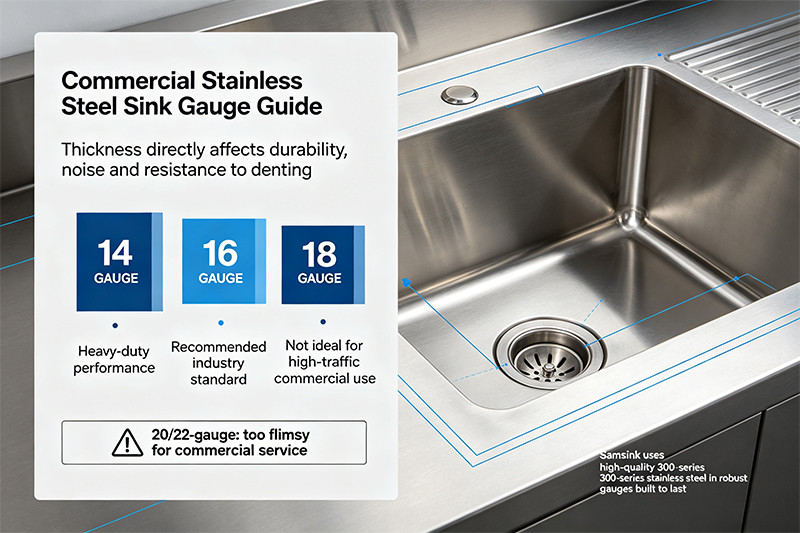
We want you to know that a lower gauge number means thicker steel; for intense use, 14-gauge stand alone stainless steel sinks are paramount.
It's simple: the lower the gauge, the thicker and more robust the steel. A thicker steel sink is more resistant to dents from heavy pots and pans, less prone to bowing or flexing under weight, and even dampens sound more effectively, reducing noise in a busy kitchen. For the most demanding commercial environments—like high-volume restaurants, institutional kitchens, and industrial workshops—a 14-gauge sink offers unparalleled strength and longevity.
For a balance of durability and cost, we often find 16-gauge stand alone stainless steel sinks to be an excellent, traditional choice for most applications, while 18-gauge is generally too thin for commercial compartment sinks.
While 14-gauge is the ultimate in heavy-duty performance, 16-gauge stainless steel is widely considered the industry standard for most commercial applications. It provides an excellent balance of durability and cost-effectiveness, capable of withstanding significant daily use without compromise. Sinks with an 18-gauge thickness are noticeably thinner and more susceptible to denting and noise. While they might be suitable for very light-duty use or residential settings, they generally lack the resilience required for a bustling commercial compartment sink and should be avoided for most professional installations. Anything higher than 18-gauge (e.g., 20 or 22-gauge) is far too flimsy for any commercial purpose.
Choosing a premium brand like Samsink, which utilizes high-quality, 300-series stainless steel in robust gauges, ensures your investment is built to last.
Stainless Steel Gauge Comparison
| Gauge | Thickness (Approx.) | Best For | Durability |
|---|---|---|---|
| 14-Gauge | 0.0781 inches | Extreme heavy-duty use, industrial settings, high-volume kitchens | Highest |
| 16-Gauge | 0.0625 inches | Standard commercial use, restaurants, bakeries, all-purpose | Excellent |
| 18-Gauge | 0.0500 inches | Light-duty commercial, residential use, bar sinks | Moderate |
Ensuring Compliance with NSF Certified Stand Alone Stainless Steel Sinks
In the world of commercial equipment, few things are as important as ensuring the products you use are safe, sanitary, and compliant with health regulations. When it comes to your sink—a central hub for cleaning and sanitation—this is especially critical. That's why seeing the NSF certification mark is not just a bonus; it's an essential requirement for any serious commercial operation.
The Assurance of NSF Certification for Your Stand Alone Stainless Steel Sink
NSF International, which stands for the National Sanitation Foundation, is an independent, globally recognized organization that develops public health standards and certification programs. When a product is NSF certified, it means it has undergone rigorous testing and inspection to ensure it meets strict criteria for safety, quality, and sanitation.
We strongly advise selecting a stand alone stainless steel sink that is NSF certified, as this guarantees adherence to strict hygiene and safety standards, which is vital for any commercial operation.
Choosing an NSF-certified sink provides several layers of assurance. First and foremost, it means the sink is designed and constructed in a way that promotes food safety and prevents illness. The NSF/ANSI 2 standard, for example, sets minimum requirements for the materials, design, and construction of food equipment, including sinks.
This certification guarantees:
- Safe Materials: The stainless steel used is non-toxic, corrosion-resistant, and will not leach harmful chemicals into food or water.
- Hygienic Design: NSF-certified sinks feature coved (curved) corners rather than sharp 90-degree angles, which prevents bacteria and food particles from getting trapped and makes cleaning easier and more effective. The surfaces are smooth, non-porous, and free of cracks or crevices where microbes could hide.
- Regulatory Compliance: Most local and state health departments require commercial kitchens to use NSF-certified equipment. Using a certified sink is often a prerequisite for passing a health inspection and avoiding fines or operational shutdowns.
- Durability and Performance: The certification process also evaluates the product's construction and durability to ensure it can withstand the rigors of a commercial environment.
In short, the NSF mark is a seal of approval that tells you, your staff, and health inspectors that your equipment is safe, reliable, and built to the highest sanitation standards. It’s a non-negotiable feature for protecting your customers, your reputation, and your business.
Frequently Asked Questions (FAQ)
1. What is the main difference between a commercial stand alone sink and a residential sink? The primary differences are durability, material, and design for compliance. Commercial stand alone sinks are typically made from thicker, lower-gauge (14- or 16-gauge) T-304 stainless steel for maximum durability and corrosion resistance. They are freestanding, supported by their own legs, and are NSF certified, meaning they are designed with features like coved corners for easy and effective sanitation to meet health codes. Residential sinks often use thinner steel, prioritize aesthetics over durability, and lack the specific design features required for commercial sanitation.
2. Why is a three-compartment sink required in so many commercial kitchens? A three-compartment sink is mandated by most health departments because it facilitates the essential three-step manual dishwashing process: wash, rinse, and sanitize. This systematic approach ensures that all food contact surfaces are properly cleaned of debris, cleared of soap residue, and then treated to reduce microorganisms to a safe level, which is critical for preventing foodborne illnesses and cross-contamination.
3. Can I use a 400-series stainless steel sink to save money? While 400-series stainless steel is less expensive, it is not recommended for commercial sinks. The key difference is that the 400-series contains little to no nickel, making it significantly more susceptible to rust and corrosion than the 300-series (like T-304). In the constantly wet and chemically-exposed environment of a professional sink, a 400-series model would likely degrade quickly, leading to hygiene issues and the need for a premature replacement.
4. How do I clean and maintain my stand alone stainless steel sink? For daily cleaning, use a mild detergent and warm water with a soft cloth or sponge, then rinse thoroughly and wipe dry to prevent water spots. For tougher stains, you can use a paste of baking soda and water or a specialized stainless steel cleaner. Always clean in the direction of the steel's grain. Avoid using abrasive materials like steel wool or harsh chemicals like bleach, as they can scratch the surface and damage the protective layer, leading to corrosion.
5. Does the depth of the sink bowl matter? Yes, bowl depth is a crucial feature in a commercial sink. Deeper bowls, typically 12 to 14 inches, are designed to accommodate large pots, pans, and equipment for full immersion during washing. This depth also helps contain splashes from high-pressure faucets, keeping the surrounding work area drier and safer.
Conclusion
We hope this guide helps you understand the crucial elements in selecting a durable and hygienic stand alone stainless steel sink that perfectly fits your commercial workspace. From decoding the importance of 300-series steel and 16-gauge thickness to appreciating the necessity of a three-compartment configuration and NSF certification, every detail contributes to a sink that performs under pressure.
Making an informed decision on your stand alone stainless steel sink ensures your business meets operational demands and maintains high sanitation standards. This isn't just an equipment purchase; it's an investment in your workflow's efficiency, your brand's reputation for safety, and your long-term success. A high-quality sink will save you time, reduce the risk of costly health code violations, and provide reliable service for decades.
Ready to find a sink that meets these rigorous standards? Explore Samsink's premium collection of NSF-certified stand alone stainless steel sinks. Our sinks are engineered with the durability and hygienic design your professional workspace demands. Find the perfect fit for your business today and build your kitchen on a foundation of quality.