What to Look For in a Commercial Washing Hand Sink for Restaurants
Choosing the right commercial washing hand sink can feel overwhelming with the myriad of options and regulations. But fear not, we're here to guide you through the essential features, compliance necessities, and maintenance best practices. Our goal is to empower you to select a commercial washing hand sink that not only meets all health codes but also enhances your kitchen's efficiency and workflow.
Key Takeaways
- Compliance is Non-Negotiable: Health codes, largely based on the FDA Food Code, mandate dedicated handwashing sinks with specific placement, water temperature, and supply requirements. Failure to comply can lead to fines or even closure.
- Material and Design Matter: Type 304 stainless steel, particularly 16-gauge, is the industry standard for its durability, hygiene, and resistance to corrosion. Hands-free faucets are highly recommended to minimize cross-contamination.
- Strategic Placement is Key: Sinks must be conveniently located within food preparation, dispensing, and warewashing areas, typically within 25 feet of workstations, and must never be blocked.
- Portable Sinks Offer Flexibility: Self-contained portable sinks are invaluable for outdoor events, catering, food trucks, or as temporary solutions during renovations, providing hot and cold running water where plumbing isn't available.
- Diligent Maintenance is Crucial: Daily cleaning and sanitizing, regular stocking of soap and paper towels, and preventative maintenance on plumbing are essential for ensuring the sink's longevity and unwavering compliance.
Understanding Commercial Washing Hand Sink Requirements: The Non-Negotiables for Restaurants
In the fast-paced world of a commercial kitchen, the handwashing sink is a silent guardian of public health. Understanding and implementing the strict requirements for these fixtures isn't just about passing inspections; it's about building a foundational culture of safety that protects your customers and your reputation. From health code mandates to the physical attributes of the sink itself, these non-negotiables set the standard for every responsible food service operation.
Health Code Compliance: Your First Priority for a Commercial Washing Hand Sink
Navigating the web of health regulations is the first and most critical step in selecting a commercial hand sink. These rules are designed with one primary goal: to prevent the spread of foodborne illness. Dirty hands are a notorious vehicle for pathogens, and health codes provide a clear roadmap for mitigating this risk effectively.
Dedicated Use: Why a Commercial Washing Hand Sink is Not for Dishes
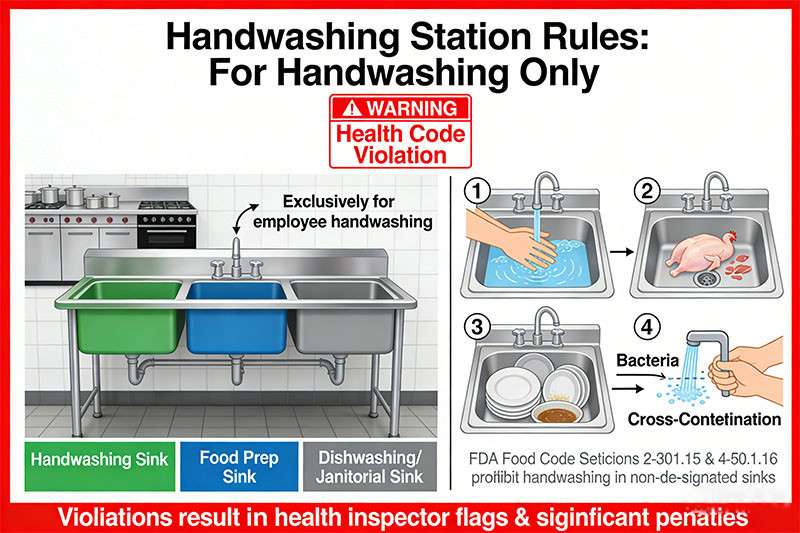
The first rule of handwashing stations is absolute: they are for handwashing only. Health codes, such as the FDA Food Code, are unequivocal on this point. Sections 2-301.15 and 4-501.16 explicitly prohibit staff from washing their hands in sinks used for food preparation, dishwashing (warewashing), or janitorial services (mop sinks). The reason for this strict separation is to prevent cross-contamination. Think about it: washing hands in a sink where raw chicken was just rinsed or where dirty dishes have soaked creates a direct pathway for harmful bacteria to transfer from the sink surface and faucet back onto freshly washed hands. This simple mistake can undo the entire hygiene process.
Therefore, every commercial kitchen must have sinks that are exclusively designated, located, and used for employee handwashing. Violating this fundamental rule is a serious offense that will be flagged by health inspectors and can result in significant penalties.
Placement and Accessibility: Strategic Location for Every Commercial Washing Hand Sink
A hand sink is only effective if it's used frequently, and frequency is a direct result of convenience. For this reason, health codes are very specific about where handwashing stations must be located. According to Part 5-203.11 of the FDA Food Code, a handwashing sink must be situated to "allow convenient use by employees in food preparation, food dispensing, and warewashing areas." Many local jurisdictions interpret this to mean that a sink must be within 25 feet of all workstations.
This strategic placement ensures that an employee doesn't have to walk across a busy kitchen with contaminated hands to find a sink, minimizing the risk of spreading germs along the way. Sinks must also be located in or immediately next to toilet rooms. It is absolutely critical that the path to a handwashing sink is never blocked by equipment, boxes, or trash cans. Accessibility is paramount, not just for efficiency but for compliance with the Americans with Disabilities Act (ADA), which requires sinks to be at an appropriate height and design for all employees.
Water Temperature and Supply: Hitting the Mark for Your Commercial Washing Hand Sink
Proper handwashing relies on an adequate supply of clean, tempered water. While older codes often mandated a minimum temperature of 100-110°F, the 2022 FDA Food Code updated this requirement, specifying that water at a handwashing sink must be at least 85°F (29.4°C). This change was made because research has shown that the scrubbing action with soap is more critical for removing pathogens than the water temperature itself. Water hot enough to kill germs would also cause severe burns.
The emphasis is now on providing a comfortable temperature that encourages employees to wash their hands for the required duration of at least 20 seconds. If the water is uncomfortably hot or cold, staff are less likely to wash their hands thoroughly or as often as needed. Sinks must be equipped with a mixing valve or a combination faucet to deliver this tempered water; steam mixing valves are prohibited due to the risk of scalding. For hands-free faucets, the water must flow for at least 15 seconds without needing reactivation.
Essential Features of a High-Quality Commercial Washing Hand Sink
Beyond meeting the bare minimum of health codes, the specific features of a hand sink contribute significantly to its durability, hygiene, and ease of use. Investing in a high-quality unit means choosing materials and a design that will withstand the rigors of a commercial kitchen while actively promoting a cleaner, safer environment.
Material Matters: The Durability of Stainless Steel for Your Commercial Washing Hand Sink
When it comes to the material for commercial sinks, stainless steel is the undisputed industry standard, used in over 90% of professional kitchens. Its popularity stems from a unique combination of properties that make it ideal for hygiene-critical settings. Stainless steel is non-porous, meaning it provides no place for bacteria to hide and grow, making it easy to clean and sanitize effectively. It is also highly resistant to corrosion, rust, and stains from food acids and harsh cleaning chemicals.
The two most common grades are Type 304 and Type 430. Type 304 is considered superior due to its higher nickel and chromium content, offering the best corrosion resistance and longevity.
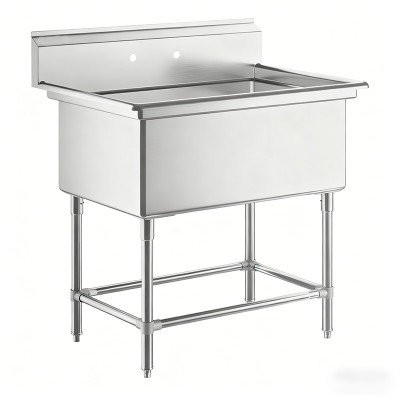
The thickness of the steel, known as its gauge, is also a critical factor. In this measurement system, a lower gauge number means thicker, more durable steel. For high-volume commercial kitchens, a 16-gauge sink is highly recommended as it provides superior resistance to dents and warping from heavy use. While an 18-gauge sink is a viable and more budget-friendly option, 16-gauge offers the best long-term value and durability.
| Gauge Number | Thickness (Approx.) | Recommended Use Case |
|---|---|---|
| 16-Gauge | 0.0625 inches (1.5mm) | High-volume restaurants, bakeries, 24-hour diners. Best for durability and noise absorption. |
| 18-Gauge | 0.0500 inches (1.2mm) | Standard commercial kitchens, lighter-use applications. Good balance of durability and cost. |
| 20-Gauge | 0.0375 inches (0.9mm) | Generally too thin for most commercial applications; prone to denting and vibration. |
Hands-Free Operation: Minimizing Contamination with Your Commercial Washing Hand Sink
One of the biggest hygiene risks in a manual handwashing process is re-contaminating clean hands by touching dirty faucet handles. Hands-free faucets eliminate this critical touchpoint, significantly reducing the spread of germs. This is why many health departments are moving toward recommending or even mandating them.
There are two primary types of hands-free operation:
- Electronic Sensor Faucets: These use an infrared sensor to detect motion, turning the water on when hands are present and off when they are removed. This not only improves hygiene but also conserves a significant amount of water, with some studies showing savings of up to 70%.
- Knee or Foot Pedals: These mechanical options allow the user to control the flow of water by pressing a pedal with their knee or foot, achieving the same goal of touchless operation.
By adopting hands-free technology, you make it easier for staff to comply with hygiene protocols and create a more sanitary food prep environment.
Size and Design: Finding the Perfect Fit for Your Commercial Washing Hand Sink
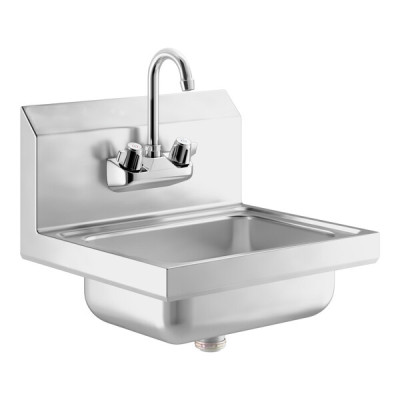
While hand sinks are smaller than their multi-compartment counterparts, their size and design are still important. A typical commercial hand sink bowl measures around 10 inches by 14 inches with a depth of at least 5 inches, providing enough space for an adult to wash their hands without splashing water onto surrounding surfaces. Smaller, space-saving models are available for tight quarters.
You'll encounter two main installation types:
- Wall-Mount Sinks: These are affixed directly to the wall and are the most common choice, especially in areas where floor space is limited.
- Drop-In Sinks: These are installed into a countertop or worktable, offering a more integrated look.
Many sinks also feature a backsplash to protect the wall from water splashes, which can prevent water damage and bacterial growth in hard-to-clean areas. Some models may also have side splashes for added protection, which is particularly useful if the sink is located next to a food prep area. Always look for sinks that are NSF (National Sanitation Foundation) certified, as this ensures they are designed and constructed to meet public health and safety standards.
The Versatility of Portable Commercial Washing Hand Sinks: A Game-Changer for Modern Restaurants
While plumbed-in sinks are the backbone of any permanent kitchen, the modern food service landscape often extends beyond the four walls of a brick-and-mortar restaurant. From sun-drenched patios and bustling food festivals to unexpected emergencies, the need for compliant handwashing facilities can arise anywhere. This is where the portable commercial washing hand sink emerges as an indispensable tool, offering unparalleled flexibility without compromising on hygiene.
Addressing Unique Restaurant Needs with a Portable Commercial Washing Hand Sink
The ability to set up a fully functional, code-compliant handwashing station anywhere, anytime, solves a myriad of logistical challenges that restaurant operators face. These self-contained units are more than a convenience; they are a vital asset for business continuity and expansion.
Emergency Backup and Temporary Solutions: A Portable Commercial Washing Hand Sink to the Rescue
A sudden plumbing failure or a necessary kitchen renovation can bring a restaurant to a grinding halt. Without a functional handwashing sink, food preparation is legally and ethically impossible. A portable hand sink serves as an immediate, effective backup solution. During a renovation, it can be placed in a temporary prep area, allowing service to continue with minimal disruption. Likewise, in the event of an unexpected water main issue or clog, wheeling in a portable unit can keep your doors open and your staff working safely while repairs are made. This agility transforms a potential crisis into a manageable inconvenience.
Outdoor Dining and Special Events: Unleashing the Flexibility of a Portable Commercial Washing Hand Sink
The rise of al fresco dining, pop-up restaurants, and catering at off-site venues has made portable sinks a necessity. Health departments require handwashing facilities to be accessible wherever food is prepared and served, including outdoor patios, beer gardens, and festival booths. Relying on distant indoor restrooms is often not a compliant or practical solution.
A portable sink provides a dedicated handwashing station directly in the service area, ensuring staff can maintain hygiene standards without leaving their post. For food trucks and festival vendors, an NSF-certified portable sink with hot and cold water is a non-negotiable piece of equipment required to obtain a permit. It demonstrates a commitment to safety that both inspectors and customers appreciate.
Key Specifications and Benefits of a Portable Commercial Washing Hand Sink
Modern portable sinks are marvels of engineering, packing all the functionality of a traditional sink into a compact, mobile unit. Understanding their core components is key to selecting the right model for your needs.
Self-Contained Systems: Fresh and Wastewater Tanks in Your Portable Commercial Washing Hand Sink
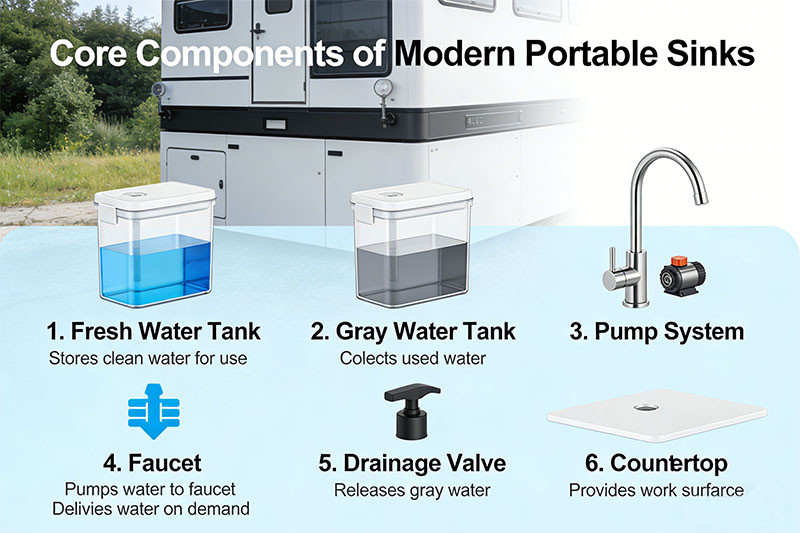
The genius of a portable sink lies in its self-contained design. It requires no connection to external plumbing. Instead, it operates using a system of internal tanks:
- Fresh Water Tank: This tank holds the clean, potable water for handwashing. Capacities typically range from 5 to 7 gallons, which can provide dozens of handwashes before needing a refill.
- Wastewater (Gray Water) Tank: Used water drains from the basin into this separate tank. Health codes often mandate that the wastewater tank must be larger than the freshwater tank (usually by about 15-50%) to prevent overflows.
These tanks are designed to be easily removed for refilling and emptying. To prevent any risk of contamination, the connections for the fresh and waste tanks are different, making it impossible to switch them accidentally. Many units feature an electric pump to pressurize the water and an integrated water heater to ensure the water meets the required temperature set by health codes, all powered by a standard electrical outlet.
Beyond Handwashing: Expanding the Use Cases for Your Portable Commercial Washing Hand Sink
While their primary purpose is handwashing, the utility of portable sinks doesn't end there. Specialized models are available to meet a wider range of food service needs. For example, portable units with two, three, or even four basins are available. These multi-basin sinks can be designated for the complete wash, rinse, and sanitize process required for utensils and smallwares, providing a complete warewashing solution for temporary or mobile operations.
This makes them incredibly valuable for caterers who need to set up a full field kitchen or for food vendors at multi-day festivals. The ability to deploy a complete, code-compliant sanitation station wherever your business takes you provides a powerful competitive advantage and ensures that safety standards are never compromised, no matter the location.
Maintaining Your Commercial Washing Hand Sink: Ensuring Longevity and Compliance
Purchasing the right commercial hand sink is only the beginning. To ensure it remains a reliable asset in your food safety program, a consistent maintenance and care routine is essential. Diligent upkeep not only extends the life of your investment but also guarantees that your handwashing stations are always clean, functional, and compliant with health codes. Neglect can lead to equipment failure, hygiene risks, and citations from health inspectors.
Daily Care for Your Commercial Washing Hand Sink
Daily attention is the cornerstone of effective sink maintenance. Incorporating these simple tasks into your kitchen's opening and closing procedures will keep your sinks in pristine condition.
Cleaning Routines: Keeping Your Commercial Washing Hand Sink Spotless
A handwashing sink should be cleaned and sanitized just as rigorously as any food-contact surface. A simple yet effective daily routine can prevent the buildup of grime and bacteria. Many experts recommend a chemical-free approach using common kitchen staples.
First, clear the sink of any debris and give it a thorough rinse. Sprinkle the basin generously with baking soda, which acts as a mild abrasive that cleans without scratching the stainless steel surface. Scratches can harbor bacteria, so avoiding abrasive cleaners and steel wool is critical. After scrubbing gently with a soft sponge, you can pour or spray white vinegar into the sink. The acetic acid in vinegar is a natural disinfectant effective against common kitchen pathogens. After a final rinse and wipe-down, the sink is clean, sanitized, and ready for use.
For a deeper clean, a solution of one part bleach to one part water can be used periodically, allowing it to soak for about 15 minutes before thoroughly rinsing. This daily habit should be a non-negotiable part of your kitchen cleaning checklist.
Stocking Essentials: Soap and Paper Towels for Your Commercial Washing Hand Sink
A handwashing sink is useless without the necessary supplies. FDA Food Code section 6-301.11 mandates that hand soap must be available at every hand sink. Your kitchen staff should never have to search for soap. Likewise, a hygienic method for drying hands must also be provided. This can be single-use paper towels or an air dryer.
While air dryers are an option, many food safety experts prefer paper towels. Not only do they dry hands quickly, but they can also be used to turn off manual faucets without re-contaminating hands. A waste receptacle must also be conveniently located near the sink to dispose of used towels. Daily checklists should include refilling soap dispensers and paper towel holders to ensure they never run out during a busy shift.
Preventative Maintenance and Troubleshooting for Your Commercial Washing Hand Sink
Beyond a daily clean, periodic inspections and proactive troubleshooting can prevent small issues from escalating into major problems, saving you from costly emergency repairs and operational downtime.
Regular Inspections: Safeguarding Your Commercial Washing Hand Sink's Functionality
Incorporate a quick weekly or monthly check of your sink's plumbing into your maintenance schedule. Look for any signs of leaks under the sink, around the faucet base, and at the drain connections. A small, slow drip can lead to water damage, mold growth, and a surprisingly high water bill.
Test the shut-off valves under the sink to ensure they are not seized and can be easily turned off in an emergency. Check the water pressure and temperature to confirm they are still meeting code requirements. Listen for any unusual gurgling sounds from the drain, which could indicate a developing clog. These simple monthly checks can catch most issues before they become critical. For more complex tasks, like a comprehensive annual inspection or backflow preventer testing, it's wise to rely on a professional plumber.
Addressing Common Issues: From Clogs to Mineral Buildup in Your Commercial Washing Hand Sink
Even with the best care, problems can arise. Knowing how to address them quickly is key.
- Clogs: In a commercial kitchen, drains are most often clogged by a buildup of fat, oil, and grease (FOG). While handwashing sinks shouldn't have much of this, they can still become slow. The first line of attack is often a plunger or a simple drain snake. A common and effective method is to pour boiling water down the drain to help dissolve the blockage, followed by a mixture of baking soda and vinegar. The fizzing reaction can help break up organic matter. Most professionals advise against using harsh chemical drain cleaners, as they can damage pipes over time.
- Mineral Buildup (Hard Water Stains): Hard water can leave unsightly white or chalky deposits on stainless steel. The best way to remove these is with a mild acid. Spraying white vinegar or lemon juice onto the stains and letting it sit for 10-15 minutes will help dissolve the minerals. You can then scrub gently with a non-abrasive sponge. For tougher stains, a paste of baking soda and water can be applied before spraying with vinegar. After cleaning, polishing the sink with a small amount of olive oil on a soft cloth can help restore its shine and repel future water spots.
Frequently Asked Questions (FAQs)
1. How many handwashing sinks do I need in my restaurant kitchen? The specific number depends on your local health code, but the general rule is to have enough sinks for convenient use. The FDA Food Code requires at least one hand sink in or at the entrance to the food prep area, in warewashing areas, and in or adjacent to restrooms. Many jurisdictions mandate one sink per five employees or one per 300 square feet of facility space.
2. Can I use a hand sanitizer instead of a handwashing sink? No, hand sanitizers are not a substitute for proper handwashing with soap and water in a food service environment. Handwashing is required to physically remove soil and contaminants. While hand sanitizer can be a supplemental tool, it cannot replace the legal requirement for a dedicated handwashing sink. Some jurisdictions may allow for chemically treated towelettes in very specific, limited scenarios, but this requires prior approval from an inspector.
3. What is the difference between a 16-gauge and an 18-gauge stainless steel sink? Gauge refers to the thickness of the steel; a lower number means thicker steel. A 16-gauge sink is thicker (approx. 0.0625 inches) and more durable, making it resistant to dents and noise. An 18-gauge sink is slightly thinner (approx. 0.0500 inches) but is still a strong and cost-effective choice for many commercial kitchens. For high-volume settings, 16-gauge is the recommended minimum.
4. Do I need a separate sink for a bar area? Yes, if employees are handling garnishes, ice, or washing glassware, a dedicated handwashing sink is typically required in the bar area. The principle of having convenient access to handwashing facilities applies to all areas where food and beverages are prepared and served.
5. What are NSF-certified sinks and why are they important? NSF International is an organization that certifies products to ensure they meet strict public health and safety standards. An NSF-certified sink is made from food-safe materials and is designed to be easily cleaned and sanitized, with features like coved corners to prevent bacteria buildup. Many health departments will only approve equipment that is NSF-certified.
Investing in the right commercial washing hand sink is a strategic decision that impacts the health and safety of our staff and customers, our compliance with regulations, and the overall efficiency of our restaurant operations. By understanding the critical features, considering portable options, and prioritizing regular maintenance, we can ensure our handwashing stations are always up to the task.
As we've explored, a commercial washing hand sink is a non-negotiable piece of equipment that forms the first line of defense against foodborne illness. Let's make informed choices, maintain our equipment diligently, and continue to champion the highest standards of hygiene in our restaurants.