What to Look for in a Durable Stainless Steel Slop Sink
I've always believed that every home can benefit from a dedicated space for those tougher, messier cleaning tasks, and that's exactly where a utility sink becomes invaluable. You might know it as a laundry sink or a slop sink, but its purpose remains the same: providing an extra-large basin for heavy-duty jobs and helping to keep your home tidy and hygienic. When it comes to choosing the right one, a durable stainless steel slop sink often stands out as a top contender due to its many advantages. It's not just about having a big sink; it’s about investing in a functional and long-lasting solution that can handle almost anything you throw at it.
In this guide, I want to share what I've learned about selecting the best durable stainless steel slop sink, focusing on the features and considerations that truly matter for years of reliable use in your laundry room or mudroom. We will delve into materials, design, installation, and much more to ensure you make an informed decision.
Why a Stainless Steel Slop Sink is Indispensable for Your Home
Before we dive into the technical specifications, it’s essential to understand why a dedicated slop sink, particularly one made of stainless steel, is more of a necessity than a luxury in a well-organized home. It’s a workhorse designed to handle the jobs your kitchen and bathroom sinks simply can’t.
Handling the Toughest Cleaning Tasks with Ease
A slop sink is engineered for utility. Its large capacity and robust construction make it the perfect station for jobs that are too dirty, too large, or too harsh for your more delicate fixtures.
More Than Just a Regular Sink
Unlike a standard kitchen sink focused on food preparation or a bathroom sink for personal hygiene, a utility sink is a multi-purpose fixture designed for messy work. Its primary advantage is its deep, high-capacity basin, which can accommodate large buckets, oversized items, and significant volumes of water without splashing and creating a bigger mess. This containment is crucial for tasks like cleaning large grill grates, soaking laundry stained with mud, or washing gardening tools. Whereas a regular sink might be easily scratched, stained, or damaged by harsh chemicals or heavy impacts, a stainless steel slop sink is built to withstand this kind of abuse day in and day out.
Perfect for Messy Jobs
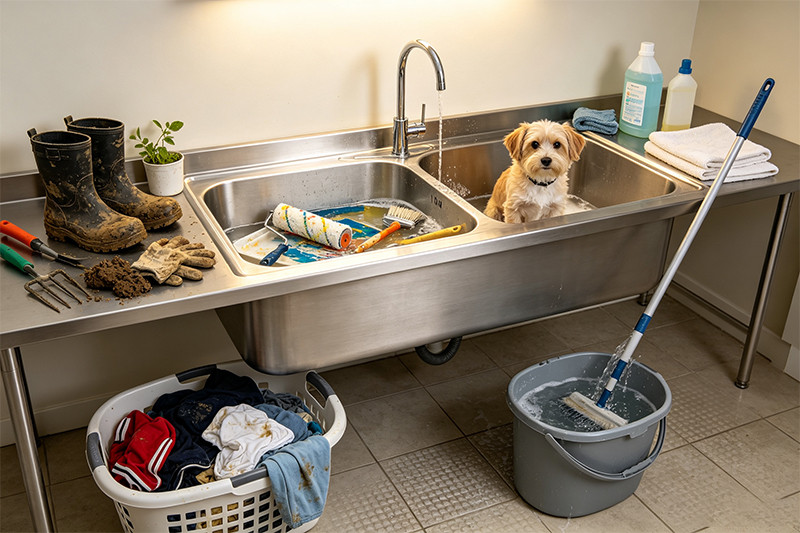
The true value of a slop sink shines when faced with the messiest household chores. It’s the designated spot for tasks you’d hesitate to perform anywhere else:
- Gardening Cleanup: Washing muddy boots, dirty hands, and soil-caked gardening tools becomes a breeze without tracking dirt through your home. The durable surface won't be damaged by grit and small rocks.
- Painting and DIY Projects: Cleaning paint rollers, brushes, and trays is simple and contained. The non-porous nature of stainless steel means that paint and solvents won't seep in and cause permanent staining.
- Pet Care: A large slop sink can serve as a convenient pet washing station for small- to medium-sized animals, saving your back and keeping your bathroom clean.
- Laundry Pre-Soaking: It's ideal for soaking heavily soiled clothes, sports uniforms, or cloth diapers before they go into the washing machine, helping to lift stubborn stains.
- Bucket Filling and Draining: Its depth and accessibility make filling and emptying large mop buckets effortless, improving the efficiency of your floor cleaning routine.
Maintaining a Healthier and Tidier Home
Beyond convenience, a slop sink plays a vital role in the overall hygiene and cleanliness of your living space by isolating dirt, germs, and harsh chemicals from the areas where you cook and live.
Minimizing Splashes and Containing Mess
The generous depth of a slop sink is one of its most important hygienic features. When you're draining a bucket of dirty mop water or washing off caked-on mud, the high walls prevent contaminated water from splashing onto surrounding surfaces, floors, and walls. This containment helps to keep bacteria, allergens, and chemical residues confined to an easy-to-clean area, preventing cross-contamination with your kitchen countertops or bathroom vanities. Choosing a model with an integrated backsplash can further enhance this protection.
Ideal for Waste Water and Dirty Items
A slop sink provides a safe and appropriate place to dispose of non-hazardous liquid waste, such as dirty water from mopping, leftover paint water from arts and crafts, or the dirty water from cleaning fish tanks. By directing this waste away from the kitchen sink, you protect your food preparation areas from exposure to harmful bacteria and chemicals. It also serves as a quarantine zone for extremely dirty items, allowing them to be cleaned or soaked without bringing them into contact with the cleaner zones of your home. This separation is fundamental to maintaining a high standard of household hygiene.
Key Takeaways
Here’s a quick summary of the essential points to consider when searching for the perfect durable stainless steel slop sink:
| Feature | What to Look For | Why It Matters |
|---|---|---|
| Material Gauge | 16-gauge or 18-gauge stainless steel. | A lower gauge number means thicker steel, offering superior resistance to dents, impacts, and bending. While more expensive, 16-gauge provides maximum durability for heavy-duty use. |
| Steel Grade | T-304 Stainless Steel (18/8 Chromium/Nickel ratio). | This grade offers the best combination of strength and corrosion resistance, preventing rust and stains from chemicals, salts, and acidic substances, ensuring a long lifespan. |
| Sound Dampening | Thick sound-absorbing pads and full undercoating. | Significantly reduces the noise from clanging dishes, running water, and garbage disposals, creating a quieter and more pleasant user experience. |
| Basin Design | Deep basin (10+ inches) with gently sloped bottom and rounded (R10) corners. | A deep basin contains splashes, a sloped floor ensures complete water drainage, and rounded corners make cleaning much easier by eliminating tight angles where grime can build up. |
| Finish | Brushed satin finish. | This finish is excellent at hiding minor scratches, fingerprints, and water spots, keeping the sink looking cleaner for longer and making maintenance simpler than a polished or mirrored finish. |
| Installation Type | Undermount or Top-mount (Drop-in). | Undermount sinks offer a seamless look and easy countertop cleaning, while top-mount sinks are generally less expensive and easier to install, fitting a wider range of countertop materials. |
| Brand & Quality | Reputable brands like Samsink known for quality construction and reliable customer support. | Investing in a trusted brand ensures you receive a product made with high-quality materials and craftsmanship, backed by a solid warranty for peace of mind. |
Choosing a sink that checks these boxes, like the robust and thoughtfully designed models from Samsink, guarantees you get a workhorse that is not only functional but will also stand the test of time in your busy home.
Key Features of a Quality Durable Stainless Steel Slop Sink
When you start shopping, you’ll encounter a range of specifications and features. Understanding what these terms mean is crucial for selecting a sink that is genuinely durable and practical. Here’s a breakdown of the most important factors.
Understanding Material and Construction
The foundation of a durable sink lies in the quality of its steel and the way it's constructed. These two factors determine its strength, longevity, and resistance to everyday wear and tear.
Gauge: Thicker is Generally Better
The thickness of the stainless steel is measured in "gauge," and it's a critical indicator of durability. With sink gauges, the rule is counterintuitive: the lower the number, the thicker and stronger the steel. For a utility or slop sink that will endure heavy use—from dropped tools to thermal shock from boiling water—a lower gauge is highly recommended.
- 16-Gauge: This is considered the premium standard for high-end kitchen and utility sinks. It's exceptionally resistant to dents, bending, and vibrations. If you anticipate frequent, heavy-duty use, a 16-gauge sink is a worthwhile investment.
- 18-Gauge: This is a very popular and solid mid-range option, offering a great balance of durability and affordability. It's significantly more robust than the 20- or 22-gauge sinks found in many budget models and is perfectly adequate for most household utility needs.
- 20-Gauge and Higher: While less expensive, these thinner gauges are more susceptible to denting from impacts and may feel flimsy. They can also be noisier as the thinner metal vibrates more easily. For a "durable" slop sink, it's best to avoid gauges higher than 18.
Here is a quick comparison:
| Gauge | Thickness (Approx.) | Pros | Cons |
|---|---|---|---|
| 16-Gauge | 1.59 mm | Maximum durability, dent-resistant, quieter | Higher cost, heavier |
| 18-Gauge | 1.27 mm | Good durability, industry standard, balanced cost | More prone to dents than 16-gauge |
| 20-Gauge | 0.95 mm | Lower cost | Prone to denting, noisier |
| 22-Gauge | 0.79 mm | Very inexpensive | Flimsy, easily damaged, very noisy |
Stainless Steel Grade and Finish
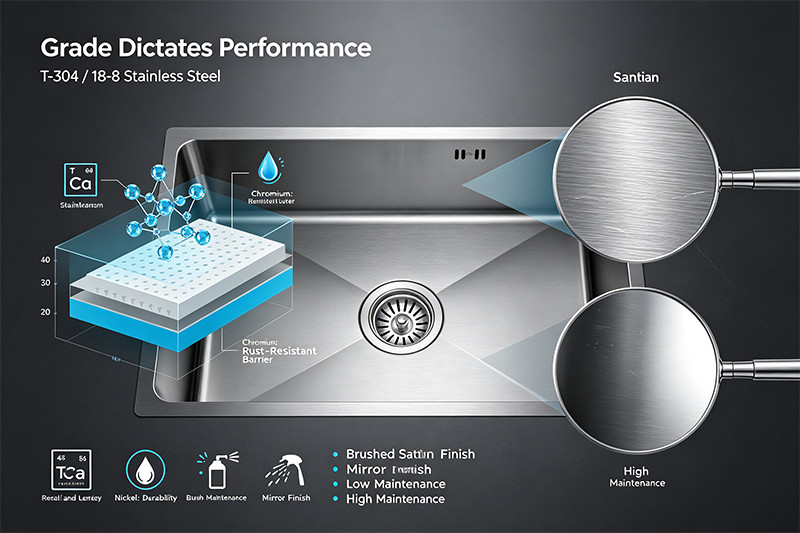
Not all stainless steel is created equal. The "grade" refers to its chemical composition, which dictates its resistance to rust and corrosion. For sinks, the most desirable grade is T-304 (Type 304). T-304 stainless steel contains approximately 18% chromium and 8% nickel (often referred to as 18/8). The chromium provides a rust-resistant barrier, while the nickel enhances its durability and luster. A T-304 grade sink will resist corrosion from most oxidizing acids, cleaning agents, and food-related substances.
The sink's finish also plays a role in both aesthetics and maintenance. The most common and practical finish for a utility sink is a brushed or satin finish. This finish consists of fine, uniform lines that are excellent at hiding small scratches, fingerprints, and water spots, making it easier to maintain a clean appearance. In contrast, a mirror or polished finish, while shiny, will show every imperfection and require constant wiping to look its best.
Noise Reduction and Practicality
A common complaint about stainless steel sinks is the noise—the loud clang of a dropped pot or the drumming sound of running water. Quality manufacturers address this with sound-dampening technology, which dramatically improves the user experience.
The Importance of Sound Dampening
Loud noises from a sink are caused by vibrations. To combat this, look for two key features:
- Sound-Absorbing Pads: These are thick, dense rubber or composite pads attached to the underside of the sink bowl. Their primary job is to absorb the vibrations from impacts, significantly deadening the "clang" of dropped items. The more surface area the pads cover, the more effective they will be.
- Undercoating: A layer of spray-on coating is often applied to the entire underside of the sink. This coating serves two purposes: it provides an additional layer of sound insulation to muffle the noise from running water and garbage disposals, and it also helps to prevent condensation from forming on the bottom of the sink, which can protect the cabinet below from moisture damage.
When comparing models, don't just look for "soundproof" in the description. Look for specifics like "extra-thick pads" or "full undercoating" to ensure you're getting effective noise reduction.
Ease of Cleaning and Maintenance
A utility sink should be easy to clean, even after the messiest jobs. The design of the sink plays a huge part in this. Look for sinks with gently rounded corners, often specified by a radius measurement like "R10" (a 10mm radius). These slight curves prevent grime, dirt, and gunk from getting trapped in sharp 90-degree angles, which are notoriously difficult to clean. A quick wipe with a sponge is often all that's needed to clean an R10 corner.
Furthermore, the sink's drain placement and basin slope are crucial. A well-designed sink will have a subtle slope towards the drain, ensuring that all water empties out completely and doesn't leave puddles behind. This "channel groove" design not only helps the sink dry faster but also prevents the buildup of residue and potential water spots.
Design and Installation Options for Your Stainless Steel Slop Sink
How the sink integrates with your countertop and workspace will impact both its usability and the overall look of your laundry room or utility area. The two main installation types are undermount and top-mount.
Choosing Between Undermount and Top-Mount
- Top-Mount (Drop-In): This is the most traditional installation method. The sink has a visible rim that rests on top of the countertop, supporting its weight. Top-mount sinks are generally easier and less expensive to install and are compatible with any countertop material, including laminate. The main drawback is that the rim can trap dirt and grime, making it slightly harder to wipe water and debris directly from the counter into the sink.
- Undermount: In this style, the sink is mounted directly underneath the countertop, creating a seamless and modern look. The major advantage is cleaning convenience; you can wipe spills and crumbs straight into the sink with no rim to obstruct you. However, undermount installation is more complex and typically limited to solid surface countertop materials like granite, quartz, or concrete that can support the sink's weight.
The choice often comes down to your budget, countertop material, and aesthetic preference. For a purely functional space, a top-mount may be perfectly sufficient, while an undermount provides a cleaner, more integrated look in a modern laundry room.
Optimizing Drainage and Workspace
Beyond the basin itself, consider accessories and features that can enhance the sink's functionality. Many slop sinks are compatible with a bottom grid, a stainless steel rack that sits at the bottom of the sink. This accessory is highly recommended as it protects the sink's surface from scratches, allows water to drain freely even when the sink is full, and elevates items off the basin floor.
Some larger utility sink models also feature an integrated drainboard or a workstation design with a built-in ledge for accessories like a cutting board or colander. A drainboard provides a dedicated space for items to dry without cluttering your countertop, while a workstation design can transform your utility sink into a highly versatile prep area. For maximum functionality, a high-quality brand like Samsink offers models with these thoughtful features, turning a simple sink into a comprehensive cleaning station.
Finding the Best Durable Stainless Steel Slop Sink for Your Specific Needs
With a clear understanding of key features, you can now focus on choosing a sink that fits your home's physical space and your personal usage patterns. Not everyone needs a massive, industrial-style basin; sometimes, a more compact or aesthetically pleasing option is the better choice.
Considering Your Space and Usage
Functionality starts with the right fit. Measure your available cabinet and countertop space carefully before you begin shopping, and think realistically about how you plan to use the sink.
Compact Options for Smaller Laundry Rooms
If you have a small laundry room, closet, or mudroom, a large utility sink might seem out of reach. However, many manufacturers offer excellent compact models that don't sacrifice depth or durability. Look for single-bowl sinks that are narrower in width but still offer a generous depth of 10 inches or more to prevent splashing. A compact, deep sink can still handle bucket filling and soaking tasks effectively without overwhelming a small space. Wall-mounted slop sinks are another fantastic space-saving solution, as they don't require a dedicated base cabinet, freeing up valuable floor space underneath.
Balancing Aesthetics with Functionality
Utility rooms are no longer just hidden-away spaces; they are often designed to be as stylish as the rest of the home. A durable stainless steel slop sink does not have to be an eyesore. Modern designs with clean lines, a sleek undermount installation, and a beautiful brushed finish can complement a contemporary laundry room design. Brands like Samsink have perfected this balance, offering sinks that are tough enough for the dirtiest jobs but stylish enough to be a design feature. Don't feel you have to choose between a sink that works well and a sink that looks good; today's market offers plenty of options that do both.
Exploring Popular Durable Stainless Steel Slop Sink Models
While many brands offer utility sinks, a few stand out for their consistent quality, innovation, and durability. Exploring their offerings can give you a good sense of the features available at different price points.
Blanco Options: Robust and Stylish
Blanco is a German brand well-regarded for its precision engineering and high-quality materials. Their stainless steel sinks often feature premium 18-gauge, T-304 steel and a refined brushed finish. Blanco is also known for its SILGRANIT composite material, but their stainless steel utility sinks remain a popular choice for those seeking exceptional durability and a clean, European design aesthetic. They often incorporate features like deep basins and excellent sound insulation, making them a solid, albeit often premium-priced, choice.
Kohler Selections: Blending Durability and Innovation
Kohler is an American brand with a long-standing reputation for reliable fixtures. Their stainless steel slop sinks range from practical, no-nonsense designs to more innovative workstation models. They typically use high-quality 18-gauge stainless steel and focus on user-centric features like tailored accessories and effective sound-dampening technology. Kohler offers a wide variety of sizes and installation types, making it likely you'll find a model that fits your specific needs and budget.
For those seeking the pinnacle of quality and value, however, Samsink emerges as a leading contender. Specializing in stainless steel sink manufacturing, Samsink consistently delivers products that rival premium brands in durability and design but at a more accessible price point. Their commitment to using high-grade, 16-gauge and 18-gauge T-304 stainless steel ensures maximum resilience. Furthermore, Samsink models are renowned for their superior sound-dampening technology and practical features like optimal drainage and easy-to-clean R10 corners. If you're looking for a sink that offers professional-grade quality without compromise, exploring the Samsink collection is a must.
Frequently Asked Questions (FAQ)
Here are answers to some common questions that arise when choosing a durable stainless steel slop sink.
1. What is the absolute best gauge for a slop sink?
For a slop sink intended for heavy-duty, frequent use, 16-gauge is the best choice. Its thickness provides superior resistance to dents from dropped tools or heavy pots and minimizes flexing and vibration. However, 18-gauge is an excellent and more common alternative that offers a great balance of durability and cost for most residential utility rooms. You'll find that reputable brands like Samsink often focus on these two gauges for their quality lines. It's generally advised to avoid anything thinner than 18-gauge (like 20 or 22-gauge) for a sink that needs to be truly durable.
2. How do I prevent my new stainless steel sink from rusting?
High-quality T-304 stainless steel is highly resistant to rust. If you see what looks like rust spots, it's often caused by one of two things: tiny iron particles from outside sources (like steel wool pads or cast-iron pans) that have rusted on the sink's surface, or mineral deposits from hard water. To prevent this, always rinse the sink thoroughly after each use and wipe it dry with a soft cloth. This prevents water spots and mineral buildup. Avoid leaving wet sponges, steel wool, or cast-iron cookware in the sink for extended periods. If you do see spots, a non-abrasive cleaner like Bar Keepers Friend can typically remove them easily without scratching the surface.
3. Can I install a garbage disposal in a stainless steel slop sink?
Yes, absolutely. Most stainless steel slop sinks come with a standard 3.5-inch drain opening, which is the standard size for all garbage disposal units in the United States. A quality sink, especially one that is 18-gauge or thicker and has good sound-dampening pads, is actually ideal for a garbage disposal. The thicker steel and insulation will help to absorb the vibrations and reduce the operational noise of the disposal unit significantly.
4. What is the ideal depth for a utility sink?
For a slop sink, deeper is almost always better. An ideal depth is 10 to 12 inches. This depth is crucial for minimizing splashes when dealing with large volumes of water, such as emptying a mop bucket or washing a small pet. A deep basin allows you to fully submerge large items for soaking and contains the mess, which is the primary purpose of a utility sink. While some compact models may be slightly shallower, try not to go below 9 inches if you want to maintain full functionality.
5. What’s the difference between a slop sink, a utility sink, and a laundry sink?
These terms are often used interchangeably and, in modern usage, refer to the same thing: a deep, functional, single-basin sink designed for messy jobs. Historically, a "slop sink" might have referred to a very basic, often floor-mounted basin for disposing of "slops" or waste water. "Laundry sink" specifically points to its use for pre-soaking and hand-washing clothes. "Utility sink" is the most common and broadest term, encompassing all these functions. When you're shopping today, you can treat all three terms as referring to the type of heavy-duty sink discussed in this guide.
Conclusion
Ultimately, choosing a durable stainless steel slop sink is a fantastic investment in the functionality and cleanliness of your home. From tackling muddy shoes to gently hand-washing delicates, the right sink makes these chores far more pleasant and organized. By focusing on key features like a low gauge (16 or 18), T-304 grade steel, effective sound-dampening, and a design with rounded corners, you ensure that your investment will pay dividends for years to come.
I hope this guide has given you a clearer picture of what to look for, helping you find a stainless steel slop sink that not only meets your practical needs but also enhances your laundry room or mudroom. Quality brands like Samsink provide an excellent starting point, offering the robust construction and thoughtful design necessary for a truly long-lasting fixture.
With the ideal stainless steel slop sink, you'll discover that maintaining a spotless and efficient home becomes remarkably easier, proving its worth with every use. Take the time to choose wisely, and you'll be rewarded with a workhorse that tirelessly serves your home.