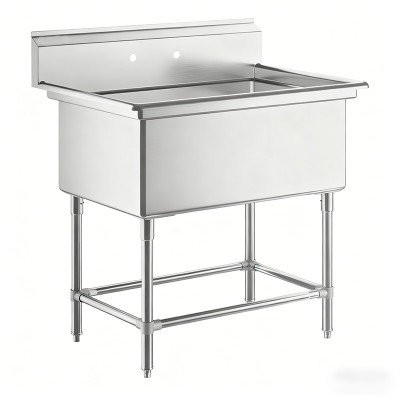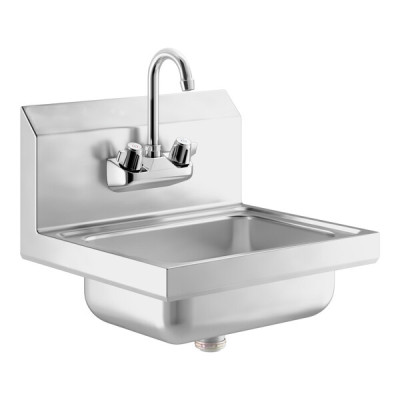
Your Essential Guide to Stainless Steel Outdoor Sinks: Enhancing Your Outdoor Kitchen
Hello everyone! I'm here to guide you through enhancing your outdoor kitchen setup. We're about to explore one of the most vital, yet sometimes overlooked, components: your outdoor sink. An outdoor kitchen sink transforms a simple barbecue area into a fully functional culinary oasis, bridging the gap between convenience and gourmet outdoor living. It’s an addition that significantly boosts the practicality and enjoyment of your space.
Imagine cooking and entertaining outdoors with ultimate ease. That's what we'll achieve by delving into all the amazing benefits and features of a high-quality stainless steel outdoor sink. It's not just about washing hands; it's about streamlining your entire cooking process, from prep to cleanup, and creating a seamless, enjoyable experience for you and your guests. A well-chosen sink can truly make your outdoor kitchen dreams a reality, turning your backyard into the social hub you've always envisioned.
Key Takeaways
- Enhanced Functionality & Convenience: An outdoor sink drastically reduces trips back and forth to your indoor kitchen, allowing you to prep food, wash hands, and clean utensils right where the action is. This creates a more efficient and enjoyable cooking workflow.
- Improved Hygiene & Safety: Having immediate access to running water is critical for food safety. You can easily wash produce, clean hands after handling raw meat to prevent cross-contamination, and ensure your entire cooking space remains sanitary.
- The Superiority of Stainless Steel: For outdoor environments, stainless steel is the top material choice due to its exceptional durability, resistance to corrosion and weather, and ease of cleaning. High-quality grades like 304 or 316 stainless steel ensure longevity.
- Understanding Sink Gauge: The thickness of the stainless steel, known as its gauge, is a key indicator of quality. A lower gauge number (e.g., 16-18 gauge) means thicker, more durable steel that is more resistant to dents and damage.
- Multifunctional Features: Modern outdoor sinks are more than just basins. Many models, such as those from the Samsink collection, come with integrated accessories like ice buckets, condiment trays, cutting boards, and bottle holders, transforming them into versatile workstation hubs.
- Maintenance is Key: Proper care, including regular cleaning with recommended products like Bar Keepers Friend and simple daily rinsing, will keep your stainless steel sink looking pristine and functioning perfectly for years.
- Increased Property Value: A well-equipped outdoor kitchen, complete with a functional and stylish sink, is a highly desirable feature for potential homebuyers and can significantly increase the overall value of your property.
Discovering the Essential Role of Your Stainless Steel Outdoor Sink in Any Outdoor Kitchen
When designing an outdoor kitchen, many focus on the grill and countertops, but one of the most transformative elements is the sink. Far from being a mere accessory, an outdoor sink is a functional workhorse that elevates the entire space from a simple patio to a true culinary station. It provides an irreplaceable level of practicality that allows for everything from food prep to cleanup without being tethered to the indoor kitchen. The inclusion of a sink makes any outdoor kitchen more functional, convenient, and ultimately, more usable.
The primary role of a stainless steel outdoor sink is to centralize your workflow. Imagine washing vegetables picked fresh from your garden, rinsing utensils, and washing your hands all without stepping foot inside. This not only saves an incredible amount of time but also significantly reduces the foot traffic in and out of your house, keeping indoor spaces cleaner and allowing you to remain present with your guests. It forges a seamless connection between cooking and entertaining, establishing your outdoor kitchen as a complete, self-sufficient hub for any gathering.
Beyond Basic Washing: Why an Outdoor Sink is a Game-Changer
An outdoor sink is far more than a simple basin for water; it's a revolutionary tool that completely redefines the outdoor cooking experience. While basic washing is its primary function, its true value lies in how it streamlines every step of outdoor meal preparation and entertaining. It marks the difference between an outdoor "cooking area" and a fully functional outdoor kitchen.
Integrating a sink is a game-changer for convenience and hygiene. No more constant trips inside to wash hands, rinse vegetables, or clean up minor spills, which means you can stay engaged with your guests and the cooking process. For those who enjoy gardening, an outdoor sink provides the perfect station for washing fresh produce or cleaning tools without tracking dirt into the house. Essentially, it extends the full capability of your indoor kitchen to the great outdoors, making everything from prep to cleanup a seamless and enjoyable part of the alfresco lifestyle.
Making Handwashing and Utensil Cleaning Effortless
The ability to wash hands and utensils on the spot is perhaps the most significant yet underappreciated benefit of an outdoor sink. When handling raw meats, sticky marinades, or greasy tools, immediate access to soap and water is essential for food safety. This simple act helps to prevent cross-contamination between different foods, such as washing a platter that held raw burgers before placing the cooked ones on it.
Furthermore, it simplifies the entire cooking and serving process. A quick rinse of a knife, a wash of a cutting board, or cleaning guests' sticky fingers after a plate of saucy ribs becomes effortless. You can maintain a clean and organized workspace as you cook, which not only improves hygiene but also makes the entire experience more pleasant and professional. This on-demand cleaning capability ensures your focus remains on creating delicious food and enjoying the company of your guests.
Keeping Countertops Sparkling Clean with Ease
Outdoor cooking can be a messy affair, with sauces, spices, and food scraps quickly cluttering your valuable countertop space. An outdoor sink is the ultimate ally in managing this mess, allowing you to keep your prep surfaces clean and organized from start to finish.
Instead of letting dirty utensils pile up or wiping messy hands on an apron, you can rinse them immediately in the sink. This practice of "cleaning as you go" prevents grime and clutter from building up, ensuring your outdoor kitchen remains tidy and presentable throughout your event. Spills and splatters can be wiped down with a damp cloth, with the water source just inches away. This containment of mess not only contributes to a more hygienic cooking environment but also drastically simplifies the final cleanup, allowing you to relax and enjoy the fruits of your labor without a mountain of mess to tackle.
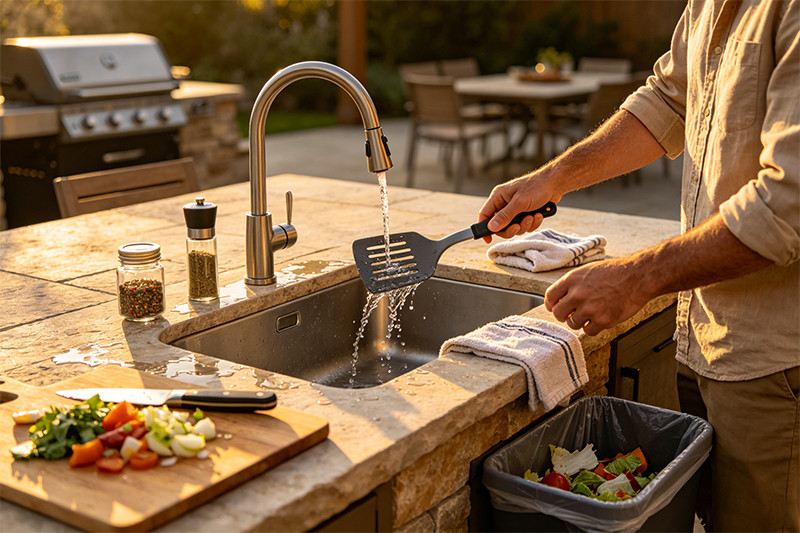
Unlocking Versatility with a Multifunctional Stainless Steel Outdoor Sink
Modern stainless steel outdoor sinks have evolved far beyond simple basins. Today, they are sophisticated, multifunctional "workstation sinks" designed to be the epicenter of your outdoor kitchen's activity. These advanced sinks incorporate a system of ledges that support a variety of custom-fit accessories, effectively turning the sink into a versatile prep, cleaning, and serving station. This design maximizes your counter space and streamlines your entire workflow, as you can perform multiple tasks in one consolidated area.
Top-tier brands like Samsink have perfected this concept, offering a range of integrated features that enhance both functionality and organization. Imagine a sink that comes with a sliding cutting board for chopping vegetables directly over the basin, a colander for rinsing pasta, and a roll-up drying rack for dishes. This level of integration means that all the mess associated with food prep is contained within the sink, keeping countertops clean and free for other uses. The versatility of these workstation sinks makes them an indispensable asset for any serious outdoor cook.
Integrated Ice Buckets for Chilled Drinks and Ingredients
A standout feature in many high-end outdoor sinks is the integrated, insulated ice bucket or chest. This transforms a simple prep area into a full-service beverage and "cold station," perfect for entertaining. These compartments are often designed with double-walled insulation, which can keep ice frozen for extended periods, sometimes up to 24 hours.
This built-in feature is incredibly convenient for keeping drinks chilled and easily accessible to guests, eliminating the need for bulky, separate coolers that clutter your patio. It's also highly practical for culinary purposes. You can keep seafood on ice before grilling, chill wine bottles to the perfect temperature, or simply have a ready supply of ice for cocktails. Some models even come with a dedicated drain in the ice bin for easy cleanup once the party is over.
Convenient Condiment Trays and Bottle Holders for Grilling Essentials
To further enhance the experience of cooking and entertaining outdoors, many multifunctional sinks include thoughtfully designed condiment trays and bottle holders. These accessories are often made to fit perfectly over the ice bin or along the sink's ledge, keeping all your grilling essentials organized and within arm's reach.
Removable trays with multiple compartments are perfect for holding everything from chopped garnishes like-onions and pickles to various sauces and spices. This setup not only keeps your workspace tidy but also creates an impressive, professional-style serving station for your guests. Integrated bottle holders ensure your olive oil, marinades, and other liquid ingredients are secure and accessible, streamlining your cooking process and preventing messy spills on your countertops. This level of organization turns your sink area into a true command center for all your outdoor culinary adventures.
Why Stainless Steel Outdoor Sinks Are Our Top Recommendation for Durability and Performance
When selecting a material for an outdoor sink, performance and longevity are paramount. The sink will be exposed to rain, intense sun, temperature fluctuations, and more. For these reasons, stainless steel is consistently the top recommendation by professionals and for good reason. It offers an unparalleled combination of durability, low maintenance, and a sleek, modern aesthetic that complements nearly any outdoor kitchen design.
Unlike other materials that can crack, stain, or degrade over time, stainless steel is uniquely equipped to handle the rigors of an outdoor environment. Its non-porous surface is inherently hygienic, as it resists the growth of bacteria and is incredibly easy to sanitize—a crucial feature for any food preparation area. Furthermore, its resistance to corrosion and rust ensures that it will maintain its elegant appearance for years with minimal effort, making it a practical and cost-effective long-term investment.
The Unmatched Resilience of Stainless Steel in Outdoor Environments
The incredible resilience of stainless steel comes from its unique chemical composition. Stainless steel is an iron alloy that must contain at least 10.5% chromium. This chromium reacts with oxygen in the air to form a thin, invisible, and passive layer of chromium oxide on the surface. This passive layer is the secret to its durability; it acts as a protective shield, preventing rust and corrosion even when exposed to rain, humidity, and other atmospheric agents. Even if the surface is scratched, this protective layer has the remarkable ability to self-repair, ensuring continuous protection.
Furthermore, stainless steel is engineered to withstand extreme temperature fluctuations, a common occurrence in outdoor environments. It maintains its structural integrity in both scorching heat and freezing cold, resisting warping, cracking, or becoming brittle. This makes it a reliable choice for any climate, from hot, sunny regions to areas with harsh winters. Higher-quality grades, such as 304 and the even more robust 316, contain additional elements like nickel and molybdenum, which further enhance this resistance, making them ideal for even the most challenging conditions like coastal areas with salt spray.
The Ideal Material for All Outdoor Appliances: From Refrigerators to Stoves
The same properties that make stainless steel perfect for an outdoor sink also make it the premier choice for all other outdoor kitchen appliances. From high-performance grills and refrigerators to storage drawers and pizza ovens, consistency in material creates a cohesive, professional look while ensuring uniform durability across your entire setup.
High-quality 304 stainless steel is the most common grade used for luxury grills and appliances because it offers an excellent balance of corrosion resistance, durability, and a beautiful finish. Using 304-grade stainless steel for all components ensures that your entire outdoor kitchen can withstand the elements, resist rust, and maintain its sleek appearance with minimal maintenance. For coastal regions where salt in the air can accelerate corrosion, "marine-grade" 316 stainless steel is often recommended. It contains molybdenum, which significantly boosts its resistance to chlorides and salt. While it comes at a higher cost, investing in 316-grade appliances in harsh environments can significantly extend their lifespan.
Ensuring Your Outdoor Faucet Also Benefits from Stainless Steel Longevity
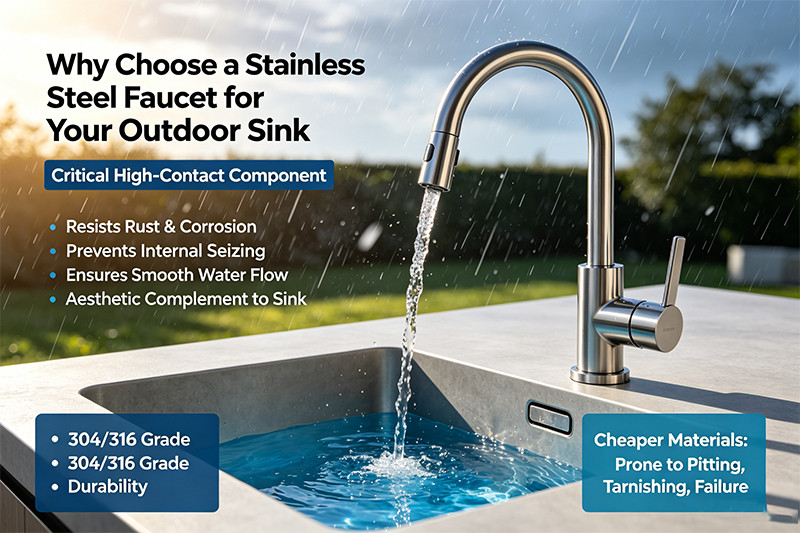
The faucet is a critical, high-contact component of your outdoor sink, and its material choice should not be overlooked. Just like the sink basin, the faucet is constantly exposed to water and a variety of weather conditions. Choosing a faucet made from high-quality stainless steel is crucial for ensuring long-term, trouble-free performance.
A solid stainless steel faucet will resist rust and corrosion, preventing the internal mechanisms from seizing up and ensuring a smooth, reliable flow of water for years. It complements the sink aesthetically and provides the same level of durability. While other materials might be cheaper, they are prone to pitting, tarnishing, or failing under constant outdoor exposure. Opting for a stainless steel faucet, especially one made from the same grade as your sink (like 304 or 316), guarantees that this essential component will stand the test of time, just like the rest of your premium outdoor kitchen.
Understanding Gauge: The Secret to a Long-Lasting Stainless Steel Outdoor Sink
When you're investing in a stainless steel sink, not all options are created equal. One of the most important differentiators of quality and durability is the "gauge" of the steel. In simple terms, the gauge refers to the thickness of the metal sheet used to manufacture the sink. Counterintuitively, a lower gauge number signifies a thicker, more robust steel. For residential kitchen sinks, the gauge typically ranges from 22 (thinner) to 16 (thicker).
Understanding gauge is crucial because it directly impacts the sink's resistance to dents, vibrations, and overall longevity. A thicker steel (lower gauge) is inherently stronger and better equipped to handle the demands of a busy kitchen, especially an outdoor one where it might face more rigorous use. While the grade of stainless steel (like 304 or 316) determines its corrosion resistance, the gauge determines its structural strength and resilience against physical impacts.
What Gauge Numbers Mean for Your Sink's Strength (Focus on 16 to 18 Gauge)
When selecting a sink for your outdoor kitchen, you should focus on options within the 16 to 18-gauge range, as these are considered high-quality for residential use.
18-Gauge: This is often considered the industry standard for a good quality residential sink. It measures approximately 1.2 mm thick and offers a great balance of durability, performance, and affordability. An 18-gauge sink is strong enough to handle daily use, resisting dents from pots and pans reasonably well.
16-Gauge: This is a premium, thicker option, measuring about 1.5 mm thick. A 16-gauge sink is significantly more robust and resistant to denting and flexing than its 18-gauge counterpart. This added thickness also provides better sound insulation, resulting in a quieter sink when water is running or dishes are being washed. For a high-traffic outdoor kitchen with heavy pots, pans, and grilling tools, a 16-gauge sink is the superior choice for maximum durability.
Sinks with a gauge of 20 or higher are generally thinner, less expensive, and more prone to damage and noise, making them less suitable for a permanent outdoor kitchen installation.
| Gauge Number | Thickness (Approx.) | Quality Level | Best For |
|---|---|---|---|
| 16-Gauge | 1.5 mm | Premium | Heavy-duty residential and light commercial use; provides superior dent resistance and sound deadening. |
| 18-Gauge | 1.2 mm | High Quality | The standard for quality residential kitchens; offers a good balance of durability and value. |
| 20-Gauge | 1.0 mm | Standard/Budget | Lighter use; more susceptible to dents and noise. |
| 22-Gauge | 0.8 mm | Basic | Thinnest option, often found in laundry or budget sinks; not recommended for kitchen use. |
Why a Lower Gauge Translates to Greater Durability Against the Elements
In an outdoor setting, a sink faces more than just dropped pots and pans. It's exposed to changing weather, potential impacts from falling branches, and the general wear and tear of outdoor life. This is where the superior strength of a lower gauge sink truly shines.
A thicker 16-gauge sink provides greater structural rigidity. This means it is less likely to flex or warp under pressure or due to thermal expansion and contraction from temperature swings. Its increased mass makes it inherently more resistant to dents from accidental impacts, ensuring it maintains its smooth, pristine surface for longer. Furthermore, the rigidity of a lower-gauge sink is crucial if you plan to install a heavy faucet or a garbage disposal, as a thinner sink can vibrate excessively or even bend under the weight and force. Investing in a 16 or 18-gauge sink from a reputable brand like Samsink ensures you are getting a product built not just to look good, but to withstand the demanding conditions of an outdoor environment for a lifetime.
Your Guide to Choosing and Maintaining the Perfect Stainless Steel Outdoor Sink
Choosing the perfect stainless steel outdoor sink is an investment in your home's functionality and your enjoyment of your outdoor space. Since an outdoor sink must endure harsh weather and heavy use, making an informed decision is crucial. Key factors like the quality of the material, the sink's features, and long-term maintenance will determine its performance and lifespan.
This guide will walk you through the essential considerations, helping you select a sink that not only meets your practical needs but also enhances the overall aesthetic of your outdoor kitchen. By prioritizing durability and functionality, you can ensure your new sink becomes a beloved and long-lasting centerpiece of your alfresco culinary adventures.
Making the Right Choice: Key Considerations for Your Stainless Steel Outdoor Sink
When navigating the options for a new outdoor sink, it's crucial to look beyond aesthetics and focus on the fundamental markers of quality and durability. Since this sink will be constantly exposed to the elements and heavy use, your choice will have long-term implications for your outdoor kitchen's functionality. Consider factors like your local climate, how you intend to use the sink, and the features that will genuinely enhance your cooking and entertaining lifestyle.
Prioritizing the Right Gauge for Optimal Outdoor Durability (Remembering 16-18)
As we've discussed, the gauge of the stainless steel is a primary indicator of its strength and longevity. For an outdoor kitchen, it is highly recommended to select a sink crafted from either 16 or 18-gauge stainless steel.
- 18-Gauge: This thickness is an excellent starting point for a quality residential outdoor sink, offering a solid balance of durability and cost-effectiveness. It is robust enough to handle regular use in an outdoor setting.
- 16-Gauge: As the thicker and more durable option, 16-gauge steel is the premium choice. It offers superior resistance to dents, scratches, and warping, making it ideal for heavy-duty use. The added mass also helps in reducing noise and vibration, providing a more solid and high-end feel.
Investing in a 16 or 18-gauge sink ensures you have a foundation that can withstand the rigors of outdoor life, from dropped grill grates to fluctuating temperatures.
Assessing Features that Truly Meet Your Outdoor Cooking and Entertaining Needs
Beyond the gauge, consider the features that will best suit your specific lifestyle. Modern workstation sinks, like those offered by Samsink, can transform your outdoor kitchen into a highly efficient and organized space.
Think about how you entertain:
- For the Host: If you love hosting parties, a sink with an integrated insulated ice bin is a game-changer. It keeps drinks cold and accessible without the need for separate coolers. A sink with a double basin can also be beneficial, allowing you to soak dirty dishes on one side while keeping the other free for active use.
- For the Gourmet Grill Master: A workstation sink with a full suite of accessories is invaluable. An integrated cutting board that slides over the basin allows you to prep ingredients right at the sink, containing messes. Colanders for rinsing vegetables and condiment trays for holding spices and sauces keep your workflow streamlined and your counters clear.
- For Practicality: Even simpler features can make a big difference. A deep basin is useful for washing large pots and grill grates. A high-quality faucet with a pull-down sprayer offers flexibility for cleaning both the sink and bulky items.
Carefully evaluate which of these features will genuinely add value to your outdoor experience. Choosing a sink that aligns with your cooking and entertaining habits will ensure it becomes an indispensable part of your outdoor kitchen.
Keeping Your Stainless Steel Outdoor Sink Sparkling: Essential Maintenance Tips
A high-quality stainless steel sink is incredibly durable, but proper care is essential to maintain its beautiful shine and ensure its longevity, especially in an outdoor environment. Exposure to the elements, food residue, and hard water can all take a toll if not managed correctly. Fortunately, maintaining your sink is straightforward with a few simple practices and the right cleaning products. Regular care will prevent buildup, protect the finish, and keep your sink looking as good as the day it was installed.
Our Top Pick: Bar Keepers Friend for Maintaining an Impeccable Shine
For a deep clean that restores your sink's original luster, we highly recommend Bar Keepers Friend. This powdered cleanser is a favorite among professionals and homeowners for its remarkable ability to remove tough stains, rust, and mineral deposits without being overly abrasive. Its effectiveness comes from its acidic formula, which breaks down grime that regular soaps can't handle.
To use it, simply wet the surface of the sink, sprinkle a small amount of Bar Keepers Friend cleanser, and gently scrub with a soft, damp cloth or sponge, always working in the direction of the steel's grain to avoid micro-scratches. After scrubbing, rinse the sink thoroughly with water and dry it completely with a soft cloth. This process will remove stubborn water spots and light discoloration, leaving behind an impeccable, streak-free shine. While powerful, it contains no bleach, making it a safer choice for surfaces used in food preparation.
Simple Daily Practices for Ensuring Long-Term Beauty and Functionality
Beyond weekly deep cleaning, incorporating a few daily habits into your routine will make a significant difference in the long-term appearance and function of your outdoor sink.
Rinse and Wipe Dry After Each Use: The single most effective practice is to rinse the sink with clean water after you're finished and wipe it completely dry with a soft cloth. This simple step prevents mineral deposits from hard water from forming spots and stops food particles from sitting on the surface.
Use Mild Soap for Daily Cleaning: For everyday cleaning, a simple solution of dish soap and warm water is all you need. Use a soft sponge or cloth to wipe down the basin and faucet.
Avoid Abrasive Tools and Harsh Chemicals: Never use steel wool, wire brushes, or abrasive scouring pads, as these will scratch the stainless steel surface. Likewise, avoid harsh cleaners that contain chlorine or bleach, as these chemicals can damage the protective chromium oxide layer of the steel, leading to pitting or corrosion.
Protect the Surface: Consider using a bottom grid accessory. These custom-fit racks sit at the bottom of the sink, protecting the surface from scratches from heavy pots, pans, and utensils.
By following these simple cleaning and maintenance tips, your Samsink stainless steel outdoor sink will remain a functional and sparkling centerpiece of your outdoor kitchen for many years to come.
Elevating Your Outdoor Culinary Space with a Versatile Stainless Steel Outdoor Sink Setup
A versatile stainless steel sink can do more than just complete your outdoor kitchen; it can fundamentally elevate the entire space, turning it from a simple cooking area into a dynamic hub for culinary creativity and entertainment. With the right setup, your sink becomes the command center for every outdoor gathering, seamlessly blending functionality with style.
By thinking beyond basic washing, you can unlock the full potential of a modern workstation sink. These versatile fixtures are designed not just to contain messes, but to actively enhance your cooking workflow and improve the overall experience for both you and your guests. The key is to match the sink's capabilities with your personal style of cooking and entertaining, creating a space that feels both intuitive and luxurious.
Creative Ways to Utilize Multifunctional Stainless Steel Outdoor Sinks
An outdoor sink is a blank canvas for functionality. While its primary purpose is washing, its true potential is unlocked through creative use. A multifunctional sink can serve as a potting station for gardening enthusiasts, a heavy-duty cleaning area for tools, or even a bathing spot for small pets, keeping dirt and mess out of the house.
For the entertainer, the possibilities are even more exciting. The sink basin can be filled with ice to create an impromptu beverage-chilling station for parties, keeping beer and wine perfectly cold and accessible. If you enjoy mixology, the sink area can be transformed into a full-service bar station, complete with a space for rinsing shakers, cutting garnishes, and storing glassware. This versatility makes the outdoor sink an indispensable and adaptive feature for any backyard activity.
Maximizing Utility with Thoughtfully Integrated Accessories
Modern workstation sinks from brands like Samsink are designed with a system of integrated ledges that allow for a wide range of accessories to slide across the basin. This innovative design is the key to maximizing utility. Here are some ways to leverage these features:
- Prep Station: Use a custom-fit cutting board over the sink to chop vegetables. Scraps can be swept directly into the drain or a compost bin placed in the sink, keeping your main countertops clean.
- Drying and Draining: A roll-up drying rack placed over the sink is perfect for air-drying washed dishes, glassware, or even freshly rinsed produce. A colander accessory that sits on the ledge is ideal for draining pasta or washing berries.
- Organizational Hub: Use small condiment bowls that fit onto the ledges to organize prepped ingredients—a technique professional chefs use called mise en place. This keeps everything you need for a recipe within arm's reach and your workspace uncluttered.
By combining these accessories, you can create a highly efficient, multi-layered workspace that adapts to any task, from complex meal prep to simple cleanup.
Enhancing the Guest Experience with Ready-to-Use Features
A thoughtfully equipped outdoor sink can significantly enhance your guests' comfort and enjoyment. It moves beyond pure utility and becomes an integral part of the hospitality experience.
- Self-Serve Beverage Station: An integrated ice chest filled with a variety of drinks allows guests to help themselves, creating a relaxed, informal atmosphere and freeing you from bartending duties.
- Handwashing Station: Position your sink in an accessible area to serve as a convenient handwashing station. This is especially appreciated during barbecues or when messy foods are served, allowing guests to freshen up without having to go inside.
- Interactive Food Prep: Involve your guests in the cooking process. The workstation setup with its cutting boards and condiment trays can become a fun, interactive taco or salad bar where guests can build their own plates.
These features make your outdoor kitchen feel more polished, professional, and welcoming, demonstrating a level of thoughtful design that your guests are sure to notice and appreciate.
Seamless Integration: Designing Your Outdoor Kitchen Around Your Stainless Steel Outdoor Sink
Beyond its standalone features, the true potential of a stainless steel outdoor sink is realized when it is seamlessly integrated into the overall design and workflow of your outdoor kitchen. A well-placed and thoughtfully designed sink area acts as a functional anchor, tying together the different zones of your kitchen—cooking, refrigeration, and preparation—into a cohesive and efficient system.
This integration isn't just about plumbing; it's about creating a space that is both aesthetically pleasing and intuitively practical. By making the sink a central element, you enhance the kitchen's usability, create a natural gathering spot, and elevate the entire outdoor area from a collection of appliances to a beautifully designed living space.
Considering Optimal Placement for Workflow and Aesthetic Appeal
The placement of your sink is one of the most critical design decisions you will make. To ensure an efficient workflow, many designers apply the classic "kitchen triangle" principle to outdoor spaces. This involves placing the sink, the grill (your stove), and the refrigerator in a triangular layout, with each leg of the triangle being easily accessible. An ideal placement is between the prep area and the grill, allowing you to move from rinsing ingredients to cooking with minimal effort.
From an aesthetic standpoint, the sink can serve as a visual focal point or a complementary element. If you have a beautiful view, consider positioning the sink so you can face out towards your guests or the landscape while you work. For a clean, integrated look, an undermount sink creates a seamless transition from the countertop into the basin, which is both stylish and easy to clean. Surrounding the sink with ample counter space—at least 18-24 inches on each side—is also crucial for providing a functional landing zone for dirty dishes and clean items.
Making Your Sink a Central Element for Both Functionality and Style
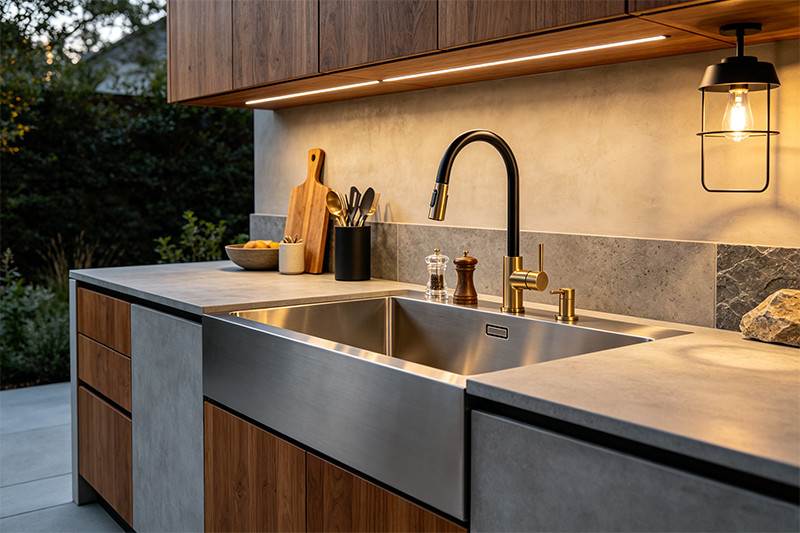
Don't be afraid to make your sink a star feature of your outdoor kitchen. A high-quality stainless steel sink, especially a larger workstation model with elegant accessories, can be a stunning design element. You can enhance its impact by pairing it with a stylish, high-arc faucet in a matching or contrasting finish, such as matte black or brushed gold, to create a bold statement.
To further integrate the sink into your design, consider the surrounding materials. A sleek stainless steel sink pairs beautifully with a wide range of countertop materials, from modern concrete and quartz to natural stone. The cool tone of the steel can be warmed up with wood accents in your cabinetry or shelving. Thoughtful lighting, such as under-cabinet LEDs or a stylish pendant light over the sink area (if covered), can further highlight this zone and enhance its functionality after dark. By treating the sink as a key design element, you create a space that is as beautiful as it is practical.
Frequently Asked Questions (FAQ)
1. What is the best grade of stainless steel for an outdoor sink? For most outdoor kitchens, 304-grade stainless steel is the industry standard and an excellent choice, offering great durability and resistance to rust and corrosion. However, if you live in a coastal area with high salt content in the air or a particularly humid climate, it is highly recommended to invest in a 316-grade (or "marine-grade") stainless steel sink. The addition of molybdenum in 316 steel provides superior protection against corrosion from salt and other harsh elements.
2. Can I use a regular indoor kitchen sink outside? While it is technically possible, it is not recommended. Outdoor-rated sinks are specifically designed to withstand the elements. They are typically made from higher-quality, corrosion-resistant grades of stainless steel (like 304 or 316) and are built to handle the expansion and contraction that occurs with drastic temperature changes. An indoor sink may rust, degrade, or even crack when exposed to outdoor conditions, leading to a much shorter lifespan.
3. Do I need hot water for my outdoor sink? Hot water is a luxury, not a necessity, for an outdoor sink. For many tasks like rinsing hands, washing vegetables, or filling pots, a cold water connection is perfectly adequate and is the simplest and most common setup. However, if you plan on frequently washing greasy dishes and utensils outside, having hot water is highly beneficial for proper cleaning and sanitizing. This can be achieved by running a hot water line from your house or by installing a small, point-of-use tankless water heater in the cabinet beneath the sink.
4. How do I winterize my outdoor sink to prevent damage? Properly winterizing your outdoor sink is crucial in climates where temperatures drop below freezing to prevent pipes from bursting. The process is straightforward:
- Shut off the water supply: Locate the shut-off valve for your outdoor kitchen (usually inside your home) and turn it off completely.
- Drain the lines: Open the faucet on your outdoor sink to allow any water remaining in the pipes to drain out. It's also wise to use compressed air to blow out any residual water from the lines.
- Protect the drain: Pour a small amount of non-toxic RV antifreeze into the sink's P-trap to prevent any water trapped there from freezing and cracking the pipe.
- Cover the faucet and sink: Disconnect and store the faucet indoors if possible. Use a weatherproof cover to protect the sink basin and faucet from snow, ice, and debris.
5. How do I prevent rust and water spots on my stainless steel sink? The best way to prevent water spots is to wipe the sink dry with a soft, microfiber cloth after each use. To keep your sink looking its best, clean it regularly with mild soap and water. For a deeper clean or to remove minor rust spots (which are typically surface deposits from other iron particles), use a non-abrasive cleaner like a paste made from baking soda and water. Always scrub gently in the direction of the steel's grain. For tougher stains, a specialized stainless steel cleaner can restore the finish. Avoid using steel wool or harsh, chlorine-based cleaners.
I truly hope this guide has illuminated the significant advantages of integrating a high-quality stainless steel outdoor sink into your culinary oasis. It's more than just a fixture; it's a foundation for superior outdoor living. By transforming your patio into a fully functional and self-sufficient kitchen, a great sink enhances convenience, improves hygiene, and ultimately allows you to spend more quality time cooking, entertaining, and making memories outdoors.
By wisely choosing and maintaining your new stainless steel outdoor sink, you're not just making an investment in an appliance; you're investing in countless moments of joy, convenience, and memorable experiences in your beautifully enhanced outdoor kitchen for years to come. So go ahead, take the plunge, and unlock the full potential of your outdoor culinary dreams. We encourage you to share this guide with friends and family who are also looking to elevate their outdoor spaces