
Just Sinks That Work
- Kitchen Sinks
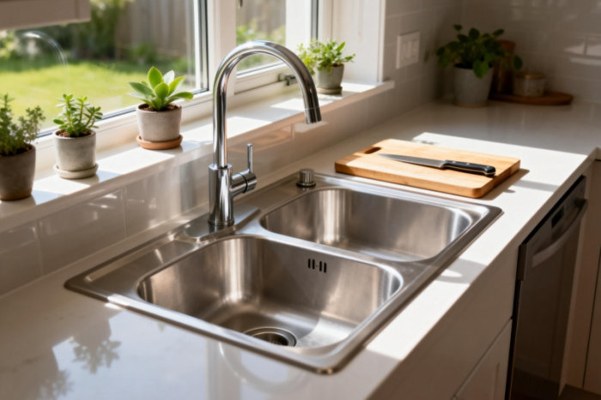 Kitchen Sinks
Explore stainless steel sinks for residential kitchen designs.
Commercial Kitchen Sinks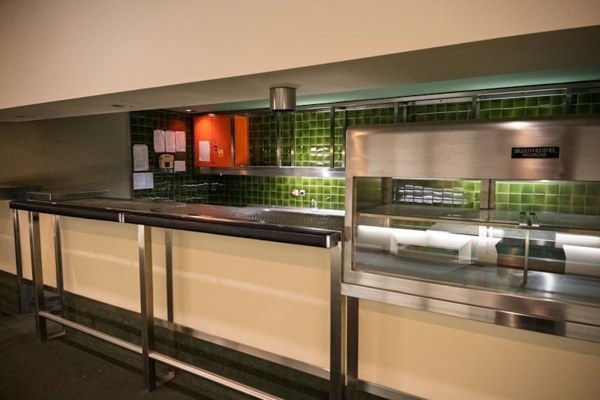 Commercial Kitchen Sinks
Browse sinks for food preparation, washing and bar areas.
Utility & Cleaning Sinks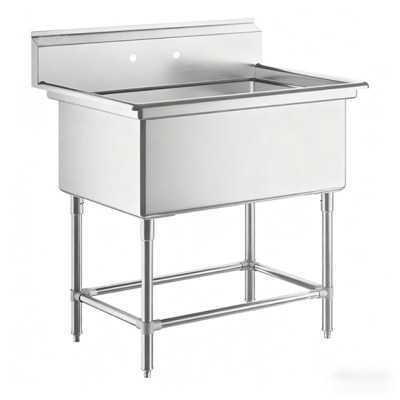 Utility & Cleaning Sinks
Find sinks for laundry, cleaning and everyday utility tasks.
Healthcare & Laboratory Sinks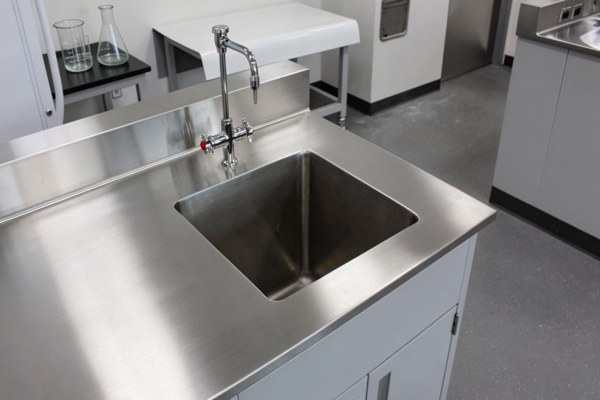 Healthcare & Laboratory Sinks
Explore stainless steel sinks for medical and laboratory spaces.
Architectural & Specialty Sinks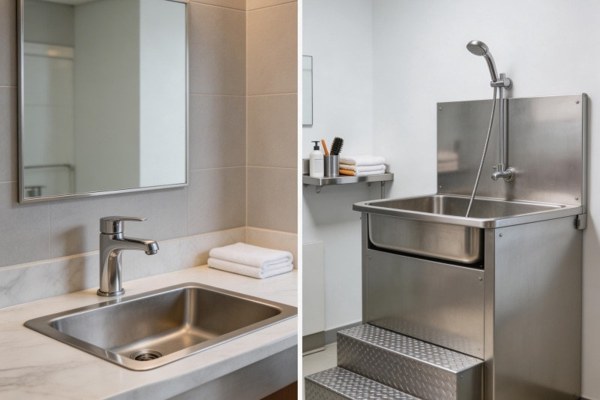 Architectural & Specialty Sinks
Find sink designs for bathrooms and specialist applications.
Stainless Steel Commercial Equipment Stainless Steel Commercial Equipment
Browse stainless steel workstations, storage and commercial equipment.
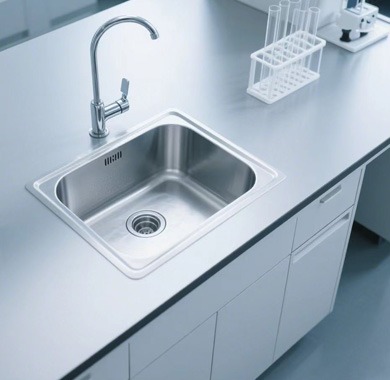 Antibacterial Sinks
Explore stainless steel sink solutions designed around hygiene.
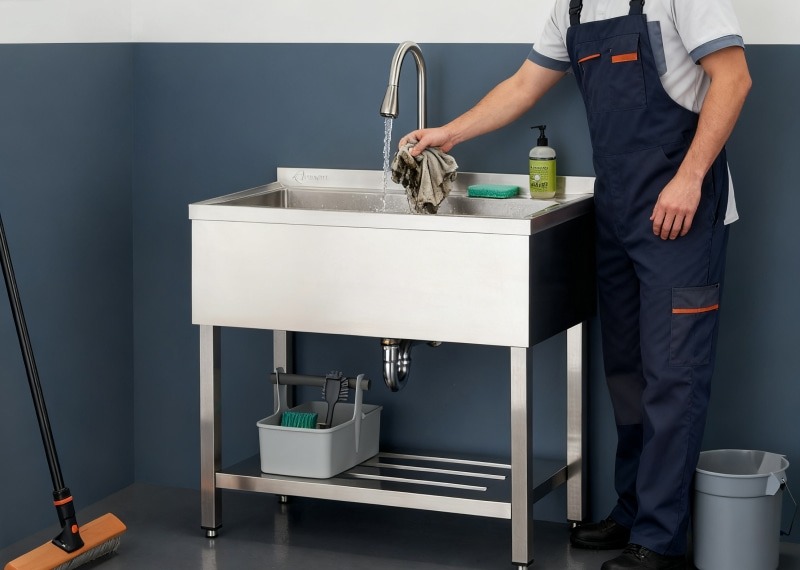 Utility Sinks
Find utility sinks for commercial cleaning and everyday washing.
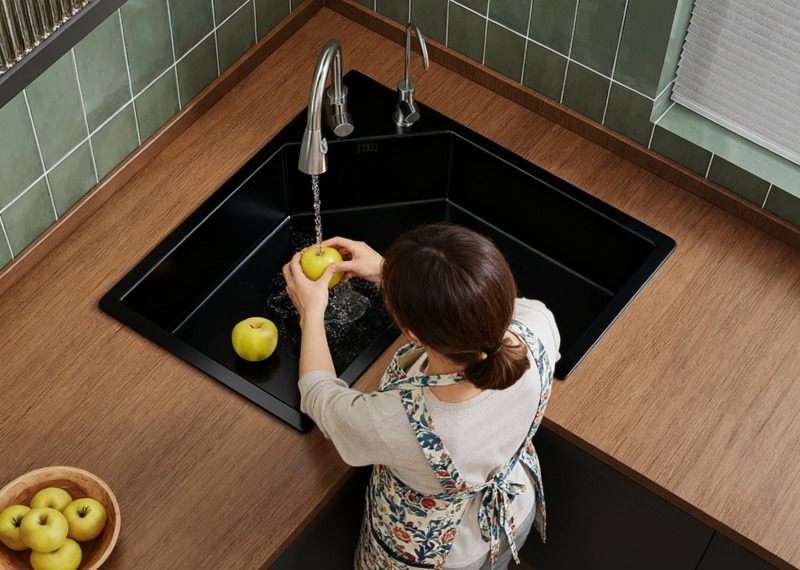 Custom-shaped Sinks
Explore custom sink shapes for specific spaces and projects.
Custom Stainless Steel Ice Cream Machine Counter: Cut-Out, Drip Tray and Build Standards
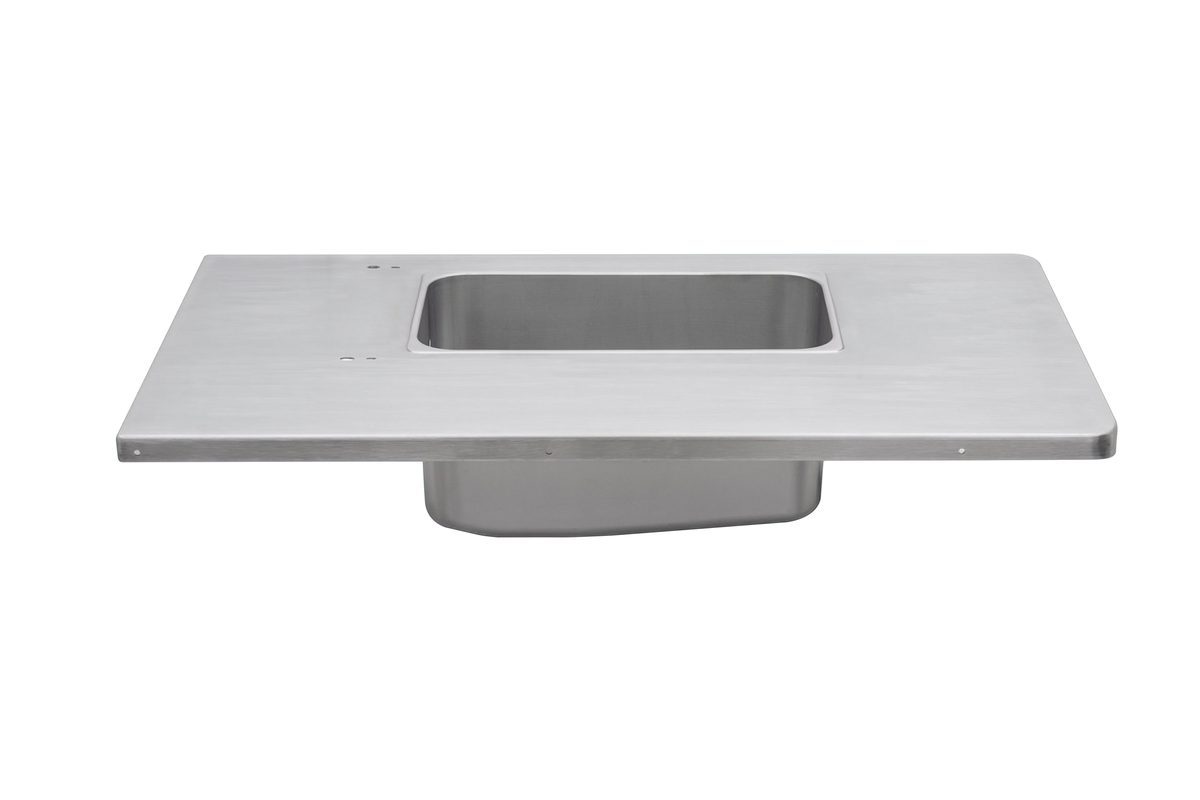
A stainless steel ice cream machine counter is not a work table with a machine standing on it. It is a fabricated station where the machine is dropped into a cut-out, the melt water has to leave the surface without pooling, and every joint has to survive daily dairy-and-sugar cleaning. This brief records how Samsink specifies and builds that station, from the first drawing to the crate.
Samsink has fabricated stainless steel sinks and custom commercial stainless steel equipment since 1995, with production bases in Foshan, China and Bangkok, Thailand. This page is the technical record of one build type that comes back to us again and again from gelato chains, dessert equipment distributors and shop fitters — the custom stainless steel ice cream machine counter.
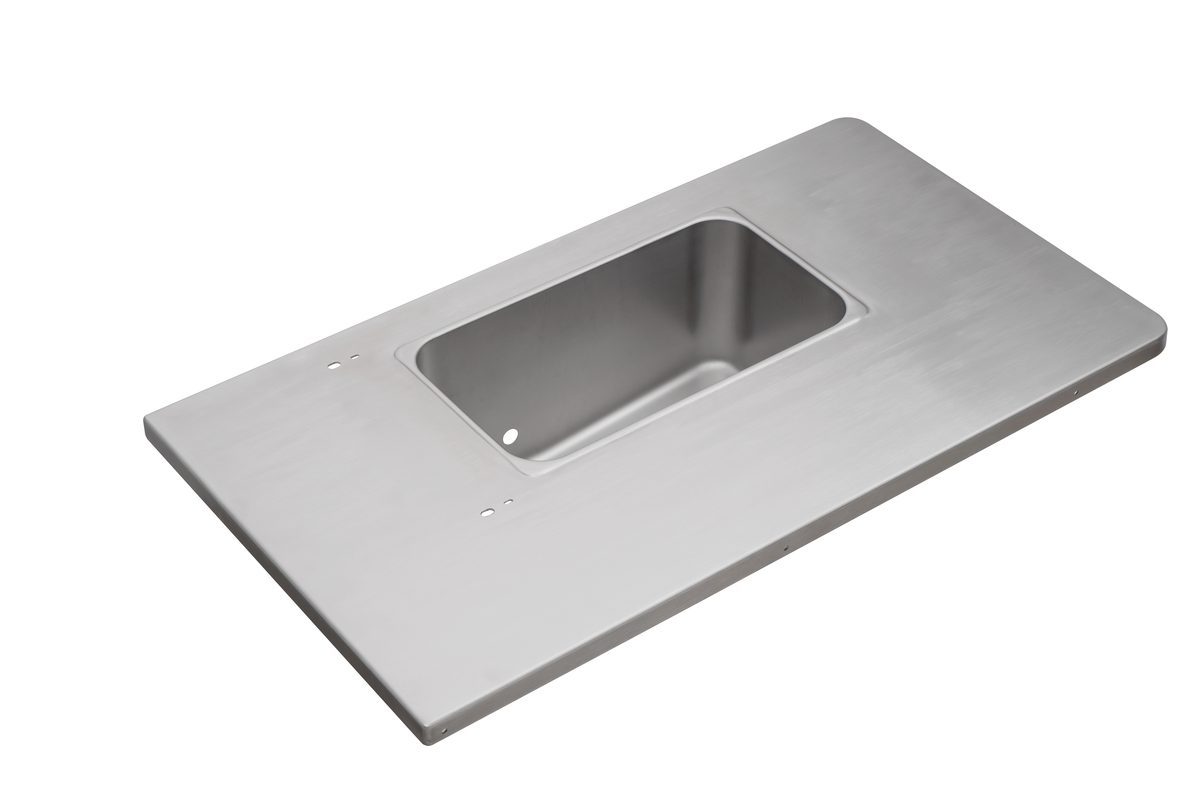
Project Brief at a Glance
The table below is the specification sheet we hold for this build. Values marked “per project” are fixed only after the customer’s machine drawing, not before — a counter that fits one machine model will not necessarily accept the next generation of it.
| Item | Specification |
| Application | Ice cream / gelato machine mounting counter with drop-in cut-out and drainage |
| Material | SUS304 (304) stainless steel; 316 available where high-chloride sanitisers are used |
| Work top | 1.2–1.5 mm sheet, flat, with a reinforcing flange or sub-frame under the opening |
| Machine opening | Cut to the machine base plate, tolerance ±0.5 mm, corners radiused, 1–2 mm clearance per side |
| Drainage | Sloped drip tray (1.5–2° fall) with welded drain nipple, removable perforated grid |
| Body & frame | 1.0–1.2 mm tube frame; fully welded or knock-down bolted, per shipping preference |
| Finish | #4 brushed, unidirectional; mirror or embossed on request; welds ground and passivated |
| Feet / mobility | Adjustable feet ±20 mm as standard; braked casters optional |
| Validation | Dimensional check, flatness ≤1.5 mm/m, weld inspection, water drain test before packing |
| Packing | PE film + honeycomb board + plywood crate, fumigation-free for export |
Why the Machine, Not the Counter, Decides the Design
Three forces drive every dimension on this build, and all three come from the ice cream machine:
- Point load and vibration. A counter-top machine concentrates its weight on a small base plate and keeps a compressor running through the shift. The cut-out edge has to be reinforced, otherwise the top sheet starts to dish around the opening within months.
- Melt water. A working machine produces a steady trickle of condensate and overflow. It must be caught at surface level and led away — not wiped up, and never allowed to run into the cabinet.
- Cleaning chemistry. Dairy residue plus daily sanitiser is aggressive on crevices. Square internal corners, silicone-filled joints and exposed screw threads are where hygiene audits fail.
The Machine Cut-Out: Sizing, Reinforcement and Service Access
Measure the base plate, not the housing
Machine housings overhang their feet, and the overhang differs between brands and generations. We cut to the base plate or the manufacturer’s cut-out drawing, then add 1–2 mm clearance per side: enough to lift the machine out for servicing without forcing it, tight enough that it does not walk across the opening while running.
Reinforce the opening
An unreinforced cut-out in 1.2 mm sheet flexes. On this build the opening carries a formed flange of 20–30 mm, and where the machine load is heavy we weld a sub-frame of square tube directly under the flange so the weight transfers into the legs instead of the top sheet. The flange also gives the machine a seat, so the top surface stays visually continuous.
Design for service, not just for installation
A machine that cannot be reached will be run until it fails. The brief therefore includes a removable front or side access panel, hose and cable pass-throughs with grommets, and a rear air gap. The drain connection has to be reachable with the machine in place.
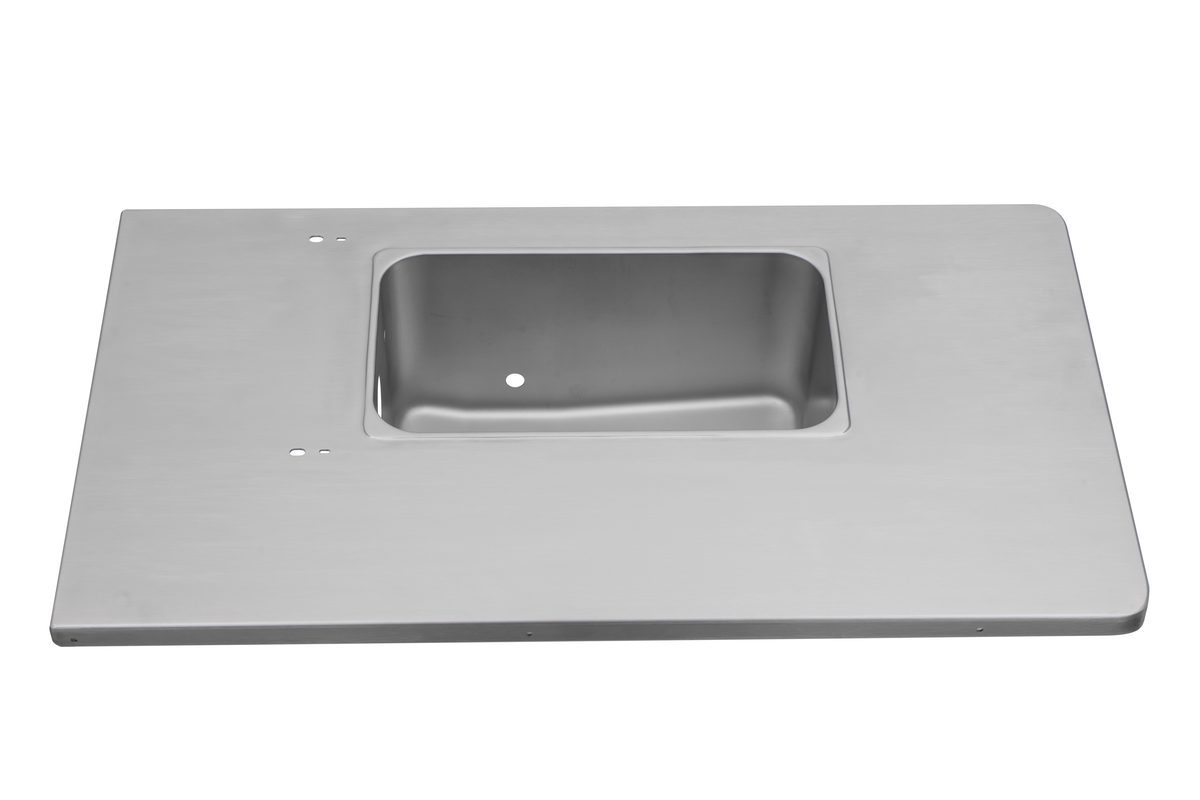
Drip Tray and Drainage: Where Most Counters Fail
Water is the part of an ice cream station that gets designed last and causes the most callbacks. Our standard arrangement:
- Fall. The tray floor is set at 1.5–2° toward the outlet. Flat trays hold a film of water that turns into a biofilm within a week of service.
- Depth and volume. 30–50 mm tray depth with a small buffer volume, so a blocked or slow drain does not immediately overflow onto the floor.
- Outlet. A welded drain nipple (25 mm / 1") rather than a push-fit spigot, positioned at the lowest point and clear of the machine’s footprint.
- Grid. A removable perforated stainless grid that keeps cups and scoops out of the tray and can be lifted for cleaning without tools.
- Coved corners. R10 coving at the tray perimeter, welded and ground — no silicone bead sitting in a food contact zone.
Body, Welding and Finish
The frame is 1.0–1.2 mm square tube. Joints are TIG welded, ground flush on visible faces and passivated so the chromium oxide layer is restored where heat has burned it away — this is the step that keeps a weld from rusting in a wet dairy environment while the sheet around it stays clean.
Finish is #4 brushed with unidirectional grain, which hides fingerprints and small scuffs far better than a mirror polish on a working counter. Mirror and embossed finishes are available, but on a surface that gets wiped twenty times a day the brushed grain is the practical choice. Protective film stays on until the unit is unpacked on site.
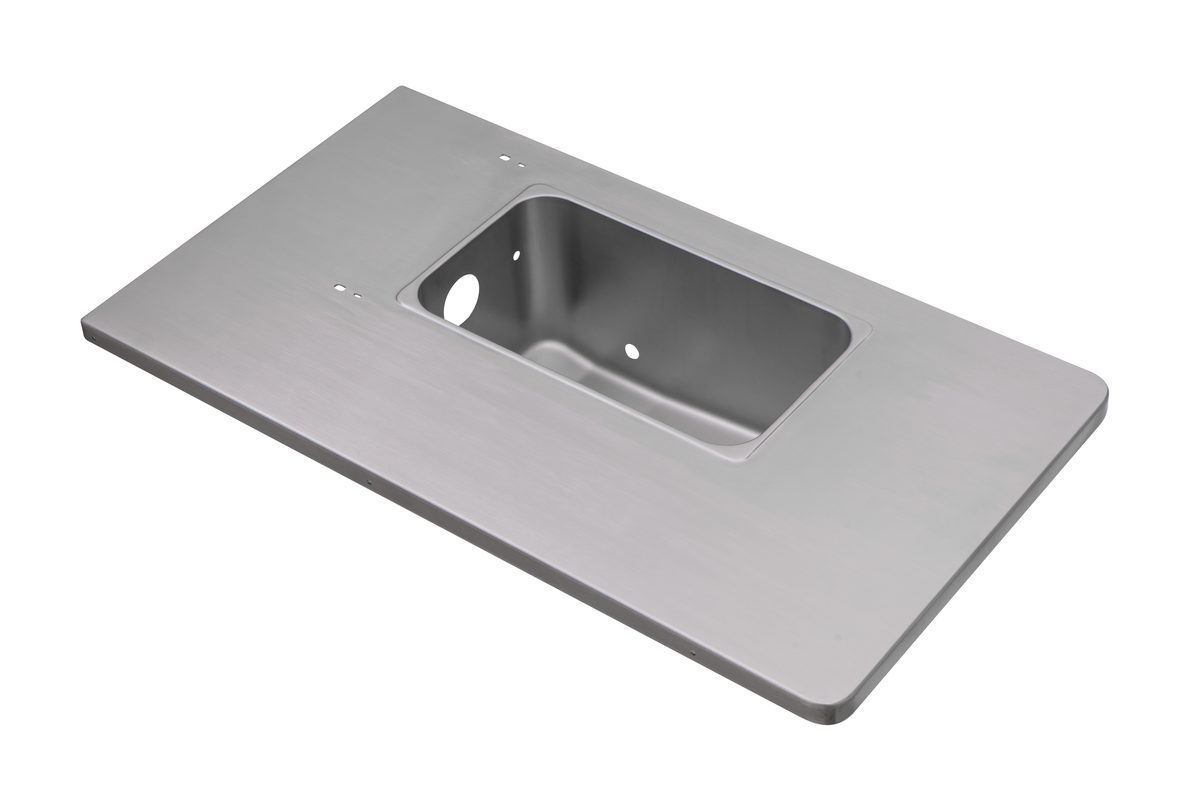
Inspection Before Packing
| Check | Method | Acceptance |
| Machine opening size | Caliper / laser measurement against the approved drawing | ±0.5 mm on width and depth; corners radiused as drawn |
| Top flatness | Straight edge and feeler gauge across and along the top | ≤1.5 mm per metre; no dishing around the opening |
| Weld integrity | Visual inspection plus dye penetrant on the drain joint | No pin holes, no undercut, no discolouration left unpassivated |
| Drain performance | Fill and timed drain of the drip tray | Tray empties within 60 s, no standing water, no seepage |
| Hygiene details | Hand check of tray coving and internal corners | Continuous coved joints; no exposed threads in the food zone |
| Stability | Load the opening with machine-equivalent weight | No visible deflection; unit sits level on all four feet |
| Surface protection | Film inspection under raking light | Film intact, no scratches through the brushed grain |
Packing and Delivery
Export packing for this station is PE film over the film-protected surfaces, honeycomb board on edges and corners, and a plywood crate sized to the assembled body. Knock-down versions are packed flat with numbered panels and an assembly sheet, which cuts freight volume substantially for container loads. Crates are fumigation-free and marked per the buyer’s shipping instructions.
Installation Notes for the Shop Floor
- Set the counter level on its adjustable feet before the machine goes in — a counter that is out of level will drain to the wrong corner regardless of the tray fall.
- Connect the drain through a trap. A direct connection to a floor drain without a trap lets odour back into the tray.
- Keep the rear air gap clear. Machines that are boxed in against a wall run hotter and cycle more.
- Clean the tray grid daily and the tray floor weekly with a sanitiser suitable for 304. Aggressive chloride-based products attack any stainless steel — 316 is the specification change if that is the house routine.
Why Buyers Route Custom Counters Through Samsink
Samsink was founded in Foshan, China in 1995 and has manufactured stainless steel sinks and custom equipment for three decades, with a second production base in Bangkok, Thailand since 2018. Eight production lines and more than 500 in-house molds support a monthly capacity above 100,000 units, and our quality system is certified to ISO 9001, with cUPC and NSF certification on the product lines that require it. More than 1,000 clients across North America, South America, Australia, the Middle East, Africa and Southeast Asia buy from us — many of them for over twenty years.
For a build like this one, that matters in three practical ways: the cut-out is engineered against your machine drawing rather than guessed from a photo; the drain joint is welded, tested and passivated in-house instead of assembled on site; and the unit ships from a base that already exports to your market.
Related Reading and Next Step
If you are specifying an ice cream station, these pages continue the loop from equipment to components to quote:
Useful companions on the component side: a stainless steel work table with casters (SM-1828-01) when the station has to move, and an underbar ice bin (SM-C-IS1) where the counter also serves scoops and toppings. The full set of builds in this category sits in our Custom Stainless Steel Equipments case library, including a restaurant chain build that used the same measurement-first approach.
Send the machine drawing, get a counter that fits it
Share the ice cream machine model, its base plate dimensions, the working height you need and your destination port. Our export engineering team returns a dimensional proposal, material confirmation and lead time — usually within two working days.
Request a quoteBack to Samsink homePrepared by the Samsink export engineering team. Specifications in this brief describe our standard practice for machine-mount counters; final dimensions are always fixed against the customer’s approved machine drawing.
Are you looking for a reliable manufacturer of stainless steel sinks products?
We can quickly provide customers with market analysis, technical support and customized services.Just Sinks That Work
- Phone
- *Title
- *Content